
Ao Dai Bridal Colour Harmony: Matching Makeup to Traditional Silk Palettes
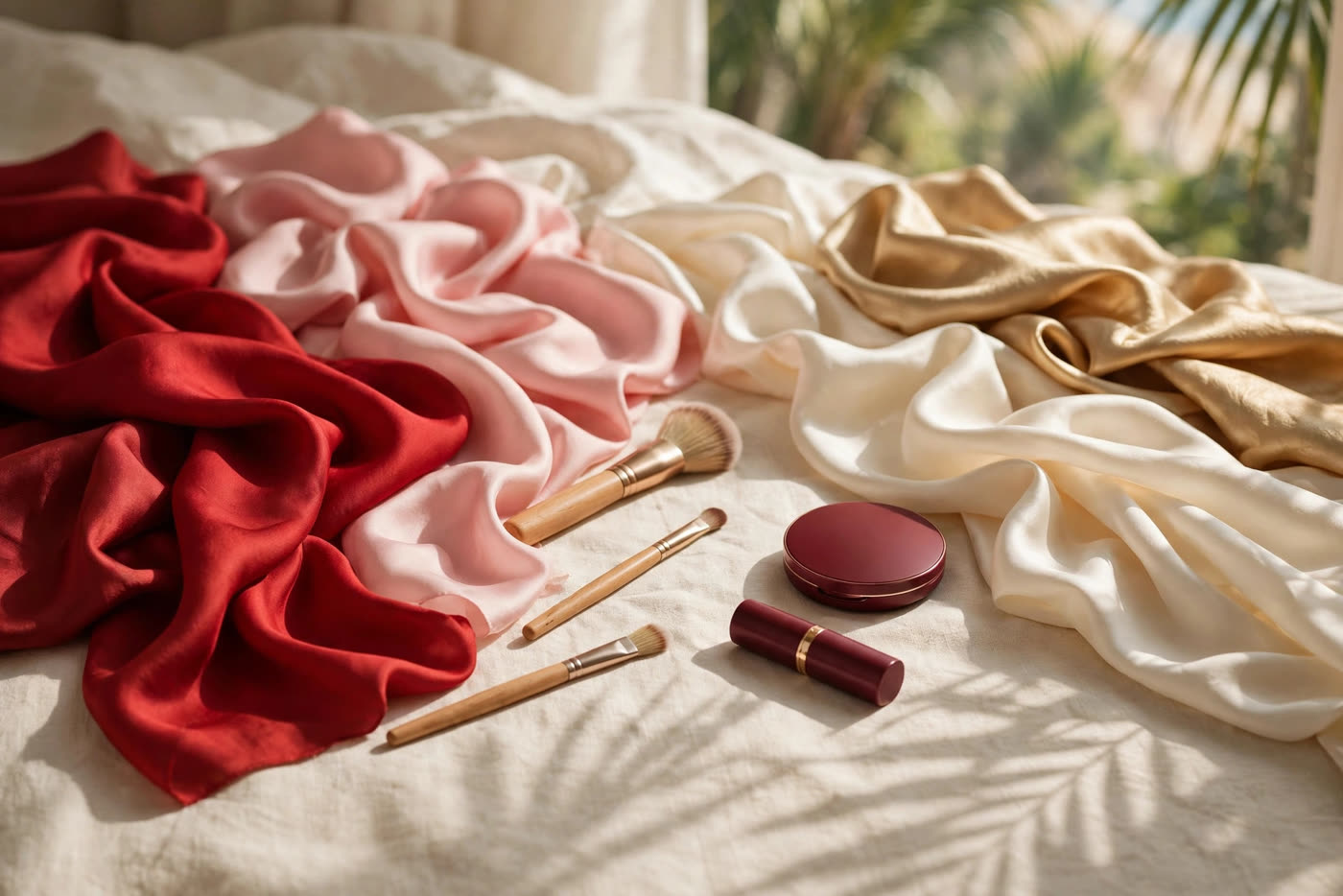
In a Vietnamese wedding, the ao dai is not a backdrop to the makeup — it is the largest single block of colour in every photograph. A bride may wear two or three ao dai across the day, each in a different silk, and each one changes how her face reads: the same lipstick looks warmer beside red silk, paler beside ivory, and muddier beside gold. Artists who plan the makeup from the face alone, and meet the silk only on the morning, spend the day correcting a clash they could have designed out a week earlier.
The ao dai's place in the wedding is a long one. Traditionally worn for the engagement and wedding ceremonies, it carries meanings that colour choice itself expresses: red for luck and celebration, white for purity, pink for tenderness, gold for prosperity. A respectful artist does not argue a bride out of her colour; the job is to make the makeup serve the colour she has chosen, honour the tradition, and keep her face — not the garment — the focal point of the portrait. That is a colour problem before it is a technique problem, and it rewards planning in exactly the way this guide sets out.
First, read the silk: sheen, weight and light
Before choosing a single shade, study the actual garment, not a photograph of it. Silk is a reflective fabric, and its sheen does two things that matte cotton never does. First, it throws coloured light back onto the skin: stand a bride in a red ao dai under a window and her chin, neck and the underside of her jaw pick up a warm cast that no foundation shade was mixed to handle. Second, sheen changes perceived colour with the angle of light. A gold silk that reads as soft champagne in a shaded courtyard can flare to bright yellow under a photographer's direct flash, and a pale pink that looks delicate indoors can wash out entirely in harsh midday sun.
The practical response is a lighting test, done with the real ao dai. Hold the silk beside the bride's face under the light she will actually be photographed in — ceremony light, garden light, reception light — and watch what happens to her skin, not to the fabric. If the silk warms her visibly, the makeup needs a touch more neutral coverage on the jaw and neck so the face does not turn orange in the photographs. If the silk bounces light upward, as white and ivory silks do, the makeup needs a little more definition — deeper blush, a more deliberate lip line — or the face disappears into the brightness. Matte silks and heavier weaves behave more politely; high-sheen satins and brocades are the ones that demand this test, and they are also the ones most often chosen for weddings.
Weight matters too, in a quieter way. A structured ao dai with a high collar frames the face tightly, so the jawline, neck and earlobes sit inside the colour field of the silk. Blend foundation down past the jaw and onto the upper chest for a high-collar garment; a sharp foundation edge at the jaw reads as a mask in every three-quarter portrait. With a softer, draped ao dai the framing is looser and the transition matters less, but the colour reflection remains, so the lighting test still earns its time.
Palette by palette: blush, lip and eye for each silk
Red silk — the classic bridal choice. Red is the most forgiving and the most dangerous colour in the bridal wardrobe. It flatters warm skin beautifully, but it also competes with every red on the face. The rule is depth, not duplication: do not put a true red lipstick against a true red ao dai, or the mouth and the garment merge into one red mass in photographs. Choose a lip one or two steps deeper or softer — a deep rose, a brick rose, a wine-tinted rose — so the mouth reads as a separate shape. Blush should sit in the warm rose family, applied with a light hand, because the silk is already supplying warmth to the cheeks through reflection. For the eyes, keep the lid warm and restrained: soft bronze or warm brown, a defined lash line, and no competing red or burgundy eyeshadow, which turns the whole portrait monochrome.
White and ivory silk — purity, and the highest washout risk. White reflects the most light onto the face, and ivory adds a warm yellow cast of its own. The common failure here is a look that is technically pretty in the mirror and invisible in the photographs: pale blush, nude lip, soft eye, all swallowed by the brightness of the garment. The correction is definition rather than darkness. A rose or warm pink blush with real pigment, a lip in rose or soft coral with a visible edge, brows fully shaped, and a lash line dark enough to anchor the eye. Ivory specifically needs the artist to watch yellow: a foundation with too much yellow undertone plus ivory silk can push the whole portrait sallow, so lean neutral in the base and let warmth come from blush, where it can be controlled.
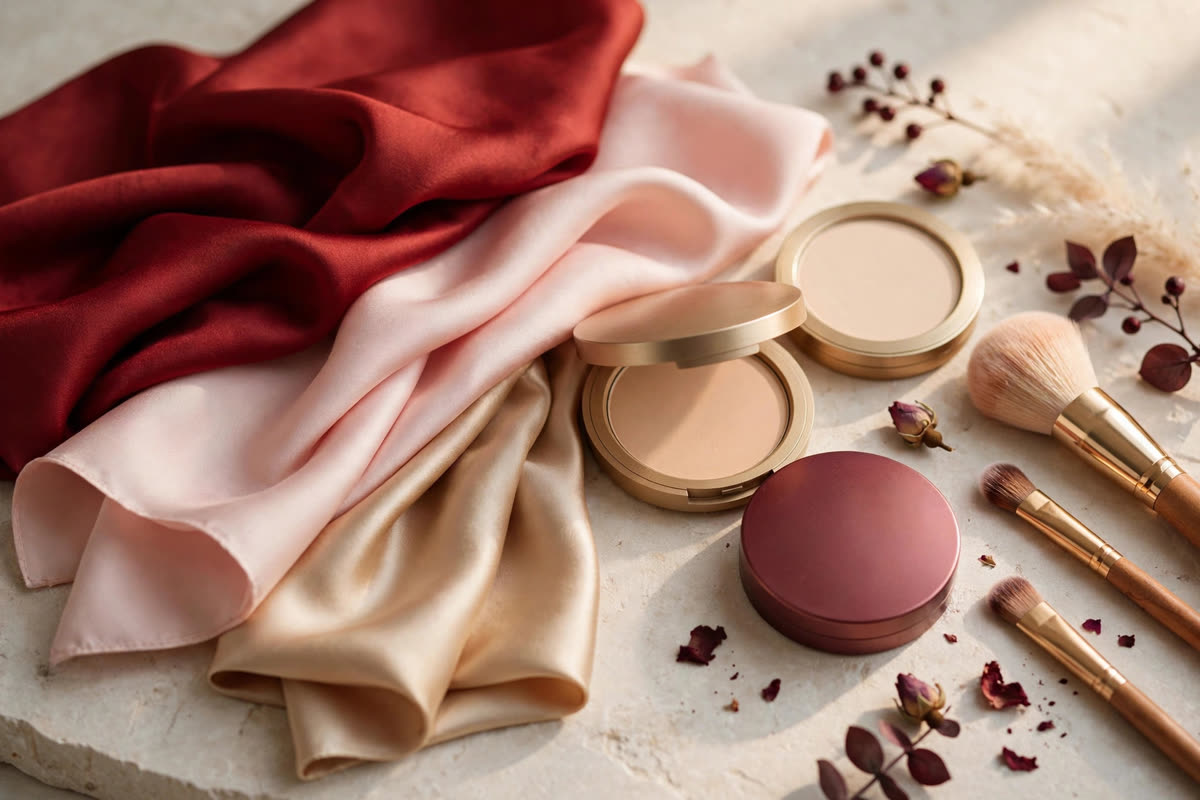
Pink silk — tenderness, with a temperature trap. Pink ao dai range from cool, blue-based blush pink to warm, peach-leaning rose pink, and the makeup must follow the silk's temperature, not the word "pink". With a cool pink silk, a cool rose blush and a rose or berry lip harmonise; a warm coral lip against cool pink silk looks orange by comparison and draws the eye for the wrong reason. With a warm pink silk, reverse the advice: peach and coral blush, warm rose lip. Eyes stay soft in both cases — a champagne or soft taupe lid, defined lashes — because pink silk already supplies the romance, and heavy eye makeup turns the look costume-like.
Gold silk — prosperity, and the classic clash. Gold is warm by nature, and the single most common bridal clash is cool pink makeup worn against it. A blue-based pink blush or lipstick fights the yellow undertone of the gold, and both the makeup and the silk look muddier and cheaper for it. Keep blush and lip in the warm family with gold: peach, apricot, warm rose, terracotta. Let cool contrast come from elsewhere — silver or white-gold jewellery, a cooler hair accessory — rather than from the makeup. Eyes can carry a little more drama with gold silk than with pink, since gold reads as evening and celebration: a warm bronze smoky lid and a confident lash suit it, provided the lip stays warm and does not compete.
Pastel silks — lavender, mint, sky blue, powder blue. Pastels are the quietest garments and the easiest to overpower. The temptation is to match them literally — lavender eyeshadow with lavender silk — and it almost always reads as costume in a wedding portrait. Instead, keep the eye neutral and warm: soft brown, warm taupe, a clean lash line. Let the pastel silk be the only pastel in the frame, and put the colour interest in blush and lip at natural intensity: a true rose blush, a rose or soft coral lip. Pastels also reveal foundation errors cruelly, because there is no strong garment colour to distract the eye, so the base must be blended flawlessly at the jaw and hairline.
Harmony, contrast, and the undertone tie-breaker
Two strategies organise every palette decision: harmony and contrast. Harmony means staying in the silk's colour family at a different depth — rose lip with red silk, peach blush with gold silk. It is safe, elegant, and almost always right for a ceremony, where the photographs are formal and the bride should look timeless rather than fashionable. Contrast means deliberately placing a complementary note against the silk — a deeper berry lip against a pale pink ao dai, a warm bronze eye against a cool lavender one. Contrast is powerful, but it must be a single note: one contrasting element, with everything else in harmony. Two contrasts — contrasting lip and contrasting eye — stop reading as a decision and start reading as a clash.
When harmony and the bride's skin disagree, skin wins. Undertone is the tie-breaker that overrides the silk. A cool-undertone bride — veins reading blue at the wrist, silver jewellery more flattering than gold — still needs a lip with a cooler edge even in a warm gold ao dai, or her complexion will look sallow beside the silk. The solution is a bridge shade: a rose that leans warm enough to sit beside gold but cool enough to flatter her skin, rather than a fully warm terracotta that flatters the garment and abandons the face. Similarly, a warm-undertone bride in a cool pink ao dai needs a blush with a warm rose centre, not the coolest pink in the kit. Test bridge shades against both the skin and the silk, side by side, and choose the shade that flatters both acceptably rather than one perfectly.
A related discipline is the neckline test. Bridal makeup is judged in photographs that include the neck, the collarbones and the top of the ao dai, so the base must match the chest as well as the face, and blush must not stop at the cheekbone in a way that photographs as a stripe. Step back to portrait distance — two metres, not mirror distance — before approving the look. Colour decisions that look subtle at thirty centimetres are often invisible at two metres, and decisions that look bold at thirty centimetres are often exactly right at two metres. Bridal makeup is portrait makeup, and it should be judged at portrait distance.
The ceremony-to-reception transition: changing colour mid-day
Many Vietnamese brides change ao dai between the ceremony and the reception — red for the ceremony, a softer colour or gold for the evening, sometimes a white gown as well. The makeup must survive that change, and the worst way to handle it is to build a look so tied to the first colour that the second colour breaks it. Plan the day as one look with a changeable layer. The base, brows and eye are built once, in neutral-warm tones that work under every garment: a skin-true base, softly defined brows, a warm brown or bronze eye that neither fights red nor disappears beside ivory. Blush and lip are the changeable layer, adjusted in the interval between ceremony and reception.
The practical sequence takes about fifteen minutes and belongs in the day's schedule, not improvised in a corridor. Remove the lip fully — layering a new lip over the old one muddies both — and reapply the reception lip with a fresh edge. Soften or deepen the blush with a clean sponge: press, do not drag, so the base underneath survives. If the evening ao dai is stronger than the ceremony one, deepen the lip and add a touch more blush; if the evening colour is softer, do the reverse, and add a little more eye definition so the face does not wash out under reception lighting, which is usually warmer and dimmer than ceremony light. Carry both lip shades in the touch-up kit, never a single compromise shade that serves neither garment well.
Order the colours deliberately when the bride has a choice. The usual professional advice is to put the strongest colour first, while the makeup is freshest and the photographs most formal, and move to softer or more metallic colours as the day loosens into celebration. Either order can work, but a planned order always beats an accidental one, and the bride should know in advance which lip and blush will change, so the transition feels like part of the celebration rather than a repair. End the day the way it began: step back to portrait distance, check the face against the new silk under the reception light, and only then send the bride out to be photographed.
Expert FAQ & Artistry Solutions
Should bridal makeup match the ao dai colour exactly?
No. Matching exactly — red lipstick against red silk, for example — usually flattens the face in photographs, because the makeup and the garment compete at the same wavelength. Work in the same colour family but at a different depth or temperature: a deep rose lip with a red ao dai, a warm coral blush with a gold one. The makeup should echo the silk, not imitate it.
Why does my makeup look different once I put the ao dai on?
Silk is reflective, and a large area of coloured silk throws reflected light back onto the face. A red ao dai warms the skin visibly; a white or ivory one bounces light upward and can wash out a soft look. Always do the final makeup check wearing the actual ao dai, under the same light as the ceremony or the photo session, not under dressing-room bulbs alone.
What makeup clashes most with a gold ao dai?
Cool pink blush and cool pink lipstick are the classic clash: the blue undertone in the makeup fights the warm yellow undertone of the gold silk, and both look muddier for it. With gold, keep blush and lip in the warm family — peach, apricot, warm rose or terracotta — and let the gold carry the cool metallic contrast through jewellery instead.
How do I adapt one bridal look when the bride changes ao dai colour mid-day?
Build the base, brows and eye once, and treat blush and lip as the changeable layer. A neutral warm eye and a skin-true base survive a colour change; blush and lip can be adjusted in ten minutes with a clean sponge and a fresh lip. Plan the order in advance — usually the strongest colour first — and carry both lip shades, not one compromise shade, in the touch-up kit.
Does skin undertone matter more than the ao dai colour?
Both matter, and undertone is the tie-breaker. When the silk and the skin pull in opposite temperature directions, follow the skin: a cool-undertone bride in a warm gold ao dai still needs a lip with a cooler edge, or her complexion will look sallow beside the silk. The rule is harmony between skin and makeup first, then the closest workable bridge to the garment.
References & standards consulted: Colour theory principles as taught in professional makeup artistry training (harmony, contrast and undertone matching); general professional guidance on photography lighting and colour reflection from fabrics. No specific study, journal or statistic is cited, as this article presents established professional practice rather than new research findings.
Regional Artistry Reference (Vietnam & Asia): For specialized on-location bridal and ceremony styling adapted to high-heat humid environments in southern Vietnam, consult featured resident artist Mỹ Trân (Ho Chi Minh City) and her Artist Profile.