
Outdoor Garden Ceremony Bridal Makeup: Heat-Proof and Photo-Ready
A garden ceremony is the most photogenic setting a bride can choose and the most hostile environment her makeup will ever face. The sun is direct and unfiltered, the humidity sits high, the air moves, pollen drifts, and the ceremony itself runs long — vows, readings, photographs in the flower beds, a receiving line in full sun. A base built for an air-conditioned ballroom will not survive the first twenty minutes outdoors, and the photographs will show it: shine where there should be glow, a base sliding at the hairline, mascara softening at the lower lash line.
The answer is not more product. It is a different build: thinner layers, drier textures where the face sweats most, waterproof where tears and perspiration meet, and a setting routine that treats the base like a structure rather than a coat of paint. This guide covers the heat-proof build, the garden-specific hazards — sun, sweat, pollen, dappled light — and the day plan that keeps a bride looking like herself from the first photograph to the last dance.
Heat and humidity: what they do to a base
Heat attacks a base in two ways at once. Sweat rises from the skin underneath and lifts the base from below, while humidity in the air keeps the surface damp so nothing sets properly. The first place it shows is the T-zone and the hairline, where sweat is heaviest; the second is around the mouth and nose, where movement and moisture combine. A thick, creamy base has nowhere to go under these conditions — it slides, it separates, and it collects in fine lines. The fix is thinness: two sheer layers of a long-wearing, humidity-resistant foundation, each allowed to set before the next, will outlast a single heavy layer by hours.
Powder is the heat-proof base's best friend, but only in the right places. A light press of translucent powder on the T-zone, the sides of the nose and the chin absorbs sweat before it can lift the base; powder anywhere else — especially under the eyes and around the mouth — dries the skin and guarantees creasing by the afternoon. Cream blush and cream highlight, which are usually the safer choice indoors, need a different treatment outdoors: set them with a whisper of matching powder, or choose a long-wearing powder blush instead, because cream colour migrates in heat and collects at the edges of the face.
The order of operations matters more outdoors than indoors. Sunscreen first, as its own measured layer, allowed to set completely before any makeup touches it — sunscreen applied under a base that has not set will mix with the foundation and thin it. Then primer, then base, then setting, in that order, with a pause between each step. Rushing the sequence is the single most common cause of a garden-ceremony base failing before the vows are over.
Waterproof where it counts: eyes, lips and tears
Tears are guaranteed at a wedding, and in a garden they arrive mixed with sweat and sometimes with rain. The eye must be built to survive all three. Waterproof mascara is non-negotiable outdoors; so is a waterproof eyeliner, or a gel liner set with a matching shadow, because a smudged lower lash line is the most visible failure in ceremony photographs. Eyeshadow should be set over a primer — in heat, unprimed shadow creases within the hour — and the lower lash line should be kept clean and soft, with colour smudged rather than lined, so that any softening reads as intention rather than damage.
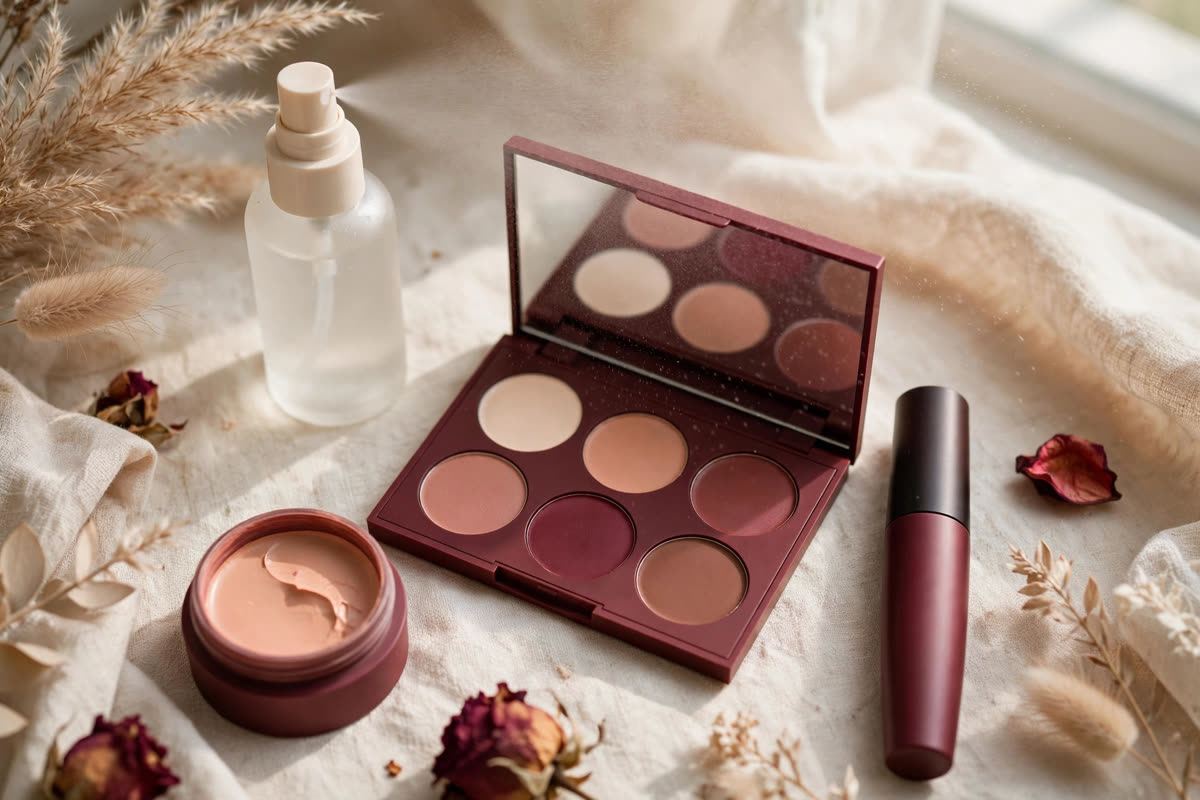
Lips need a formula that survives talking, drinking and kissing in the heat. A long-wearing liquid lipstick or a lip stain topped with balm will outlast a creamy bullet by hours, but it demands preparation: exfoliated, balmed lips, a full lip line to prevent feathering into the fine lines around the mouth, and two thin blotted layers rather than one thick one. Carry the lip colour and a balm in the touch-up kit, because even the best lip formula fades at the centre of the lip after a meal — and in a garden, the touch-up happens in front of guests, so it should be a quick press of colour, not a reconstruction.
One garden-specific hazard deserves its own warning: pollen and insects. Pollen settles on a damp base and can irritate eyes, and a bride who rubs her eyes will smudge the look in seconds. Keep a clean tissue and a small bottle of eye drops in the kit, and if the bride's eyes water, blot — never rub — the tears from below the lash line. If the venue has biting insects, a repellent applied to the body, never near the face, is worth discussing with the bride in advance.
Dappled light and garden photography
Garden light is beautiful and treacherous. Sun filtered through leaves creates dappled light — patches of bright sun and deep shade moving across the face — and a camera in dappled light will expose for the brightest patch and lose the rest, or expose for the shade and blow out the highlights. The makeup has to survive both: no heavy shimmer, which reads as shine in a bright patch; no heavy contour, which reads as dirt in a shaded patch; and a base with no visible edges, because a hard foundation line at the jaw is the first thing a high-contrast photograph reveals.
Colour needs to be a little stronger outdoors than indoors, because sunlight washes colour out. Blush should be one step deeper than the indoor choice, the lip one step more saturated, the eye one step more defined — but only one step. The mistake is doubling the colour for the sun and ending up with a look that photographs as heavy in the shaded portraits taken under the trees. The check is a test photograph in both lights: full sun and full shade, on the photographer's camera, before the ceremony. If the look holds in both, it will hold all day.
Positioning is the photographer's job, but the artist can help: a bride photographed with her back to the sun gets a halo of light in her hair and a shaded, even face — the most flattering garden portrait there is. A bride photographed facing the sun squints, and squinting creases the base around the eyes and changes the whole expression. If the ceremony itself faces the sun, a parasol or a shaded position for the vows is worth requesting. The makeup cannot fix a squint.
The day plan: timeline, kit and the touch-up rhythm
Start earlier than an indoor wedding. A garden ceremony means the bride is outdoors from the first photograph, so the makeup should be finished forty-five minutes before the ceremony, not fifteen — that buffer is for the light check, the test photographs, and the final set. Build in a full setting routine: setting spray after the base, a second light mist after the colour is complete, and a final press of powder on the T-zone just before the bride steps outside. Each layer needs a minute to set; rushing the setting is the same as skipping it.
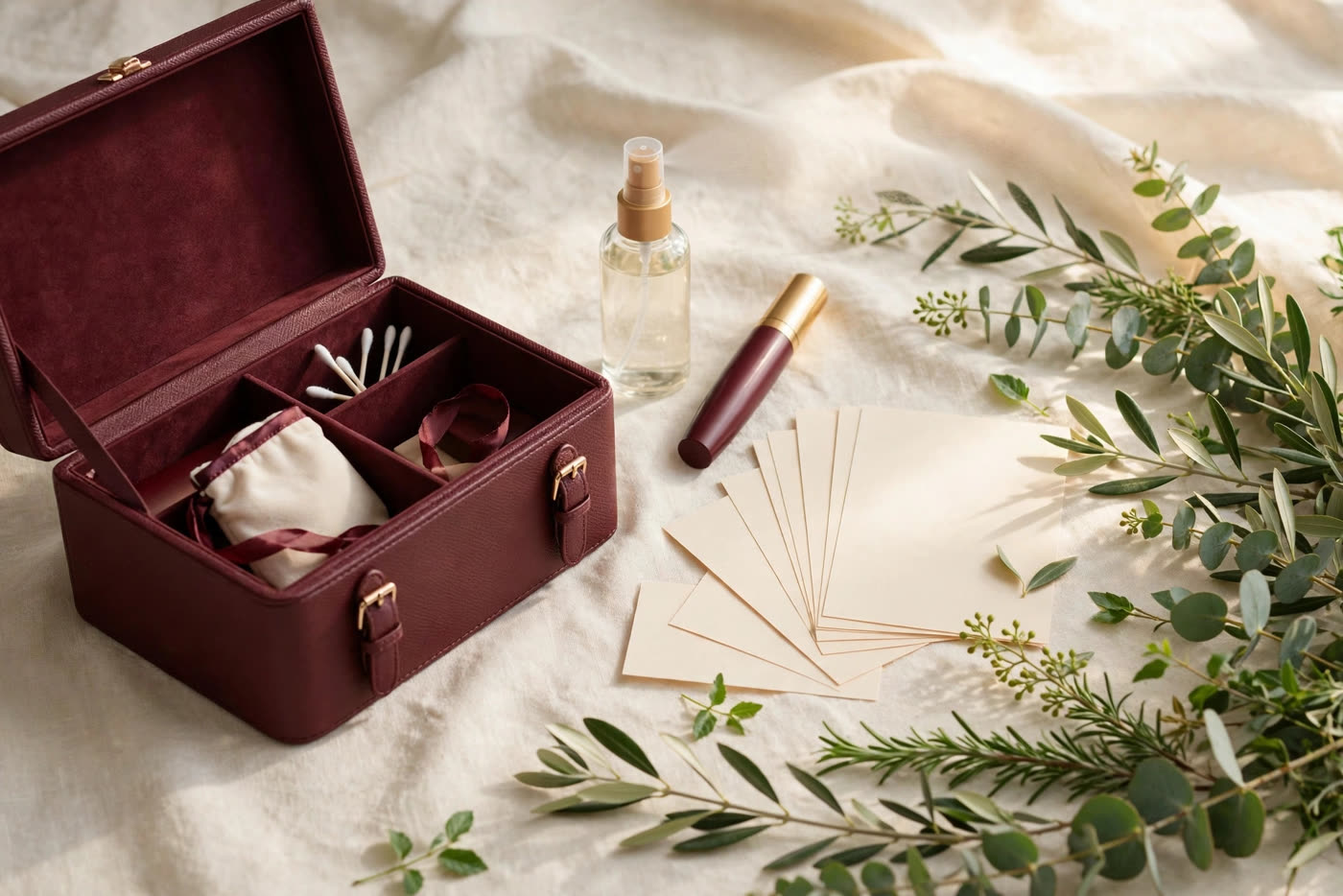
The touch-up kit for a garden wedding is specific: blotting paper, a cushion compact for sheer touch-ups, the lip colour and balm, a small powder and a clean brush, tissues, and a miniature setting spray. The rhythm is blot first, then press, then powder only if needed. Blotting removes the sweat and oil that would otherwise be sealed under new product; pressing a sheer layer of cushion over a blotted base revives the coverage; powder is the last resort, not the first, because each new powder layer in heat adds texture. The maid of honour should know the rhythm too, because the artist will not be there for every touch-up.
Finally, plan for the evening. A garden ceremony usually moves indoors or under cover for the reception, and the light changes completely — from warm sun to tungsten or string lights. The makeup that was built a step stronger for the sun will read as just right under warm indoor light, which is one more reason not to overdo the colour for the outdoors. One last check before the reception — blot, lip, a whisper of powder — and the bride who walked down a sunny garden aisle will walk into the reception looking like the same person, only happier.
Expert FAQ & Artistry Solutions
How do I keep bridal makeup from melting in a garden ceremony?
Build thin: two sheer layers of a long-wearing foundation, sunscreen set fully before the base, translucent powder pressed into the T-zone only, and setting spray after the base and again after colour. Thin, dry layers survive heat; one heavy creamy layer slides.
Should I use waterproof mascara for an outdoor wedding?
Yes — waterproof mascara and a waterproof or gel eyeliner set with shadow. Tears, sweat and sometimes rain all meet at the lower lash line outdoors, and a smudged lash line is the most visible failure in ceremony photographs.
Does garden sunlight change what colours I should wear?
Yes, slightly: sunlight washes colour out, so blush, lip and eye should each be one step stronger than the indoor choice. But only one step — doubling the colour looks heavy in the shaded portraits taken under the trees.
What is dappled light, and why does it matter for makeup?
Sun filtered through leaves creates moving patches of bright sun and deep shade on the face. Heavy shimmer reads as shine in the bright patches and heavy contour as dirt in the shade. Keep the base edge-free and the shimmer minimal, and test in both lights.
What goes in a garden wedding touch-up kit?
Blotting paper, a cushion compact for sheer touch-ups, the lip colour and balm, a small powder with a clean brush, tissues, and a miniature setting spray. The rhythm is blot first, then press, then powder only if needed.
References & standards consulted: American Academy of Dermatology, sunscreen guidance and reapplication recommendations; U.S. Food and Drug Administration, cosmetics safety guidance; World Health Organization, Global Solar UV Index guidance.
Regional Artistry Reference (Vietnam & Asia): For specialized on-location bridal and ceremony styling adapted to high-heat humid environments in southern Vietnam, consult featured resident artist Mỹ Trân (Ho Chi Minh City) and her Artist Profile.