
Bronzer for Fair Skin: Warmth Without the Orange Cast
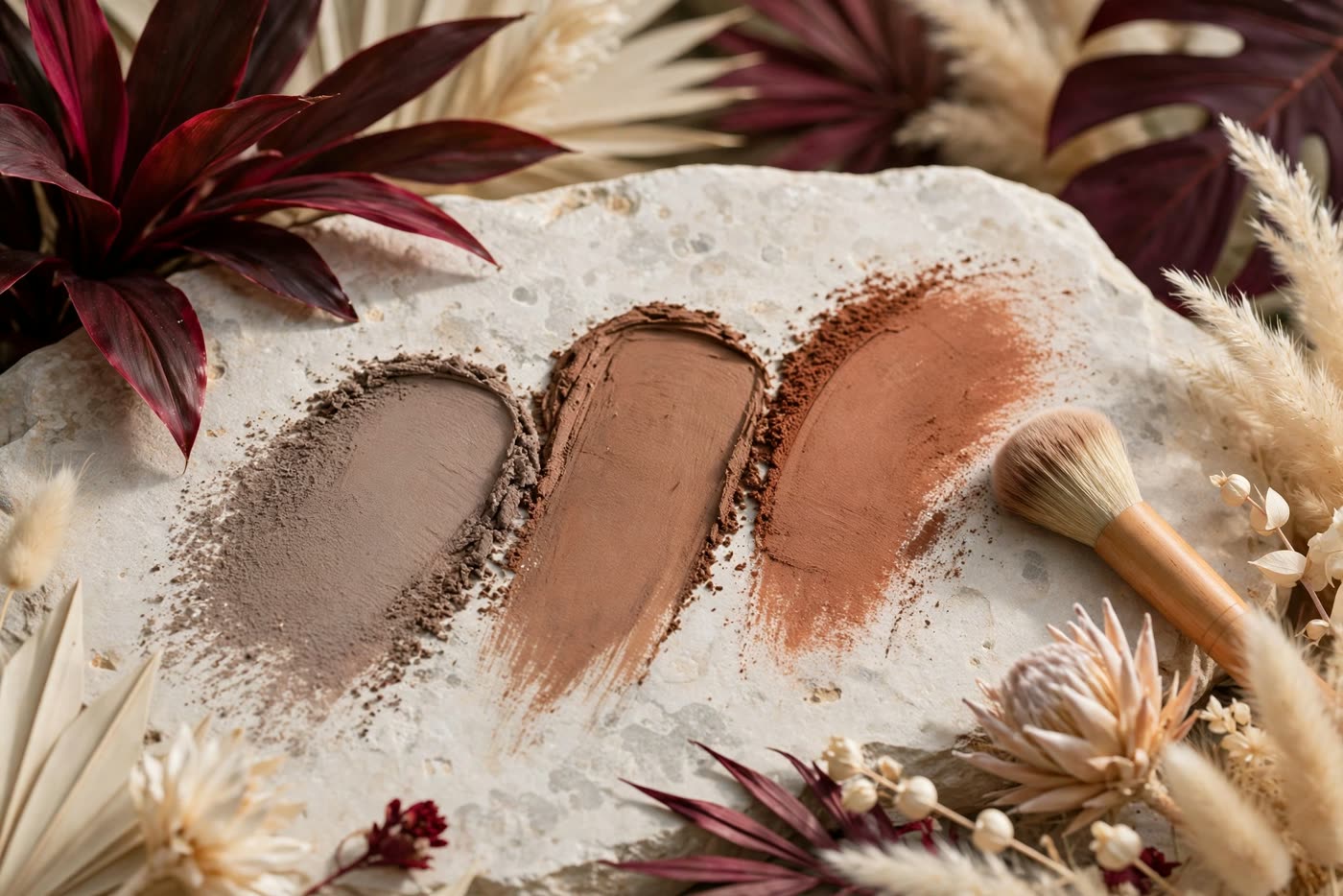
Every fair-skinned person who has tried bronzer knows the same disappointment. The promise is a healthy glow, a touch of sun, a face that looks as if it has spent a weekend outdoors. The result, too often, is an orange cast — a warm, muddy tint across the cheeks and forehead that reads as product from across the room and as a bad spray tan up close. The disappointment is so common that many fair-skinned people give up on bronzer entirely, which is a shame, because the problem is not bronzer. The problem is the shade, the depth and the finish — three choices, each of which has a right answer for fair skin, and each of which is easy to get wrong in a shop.
The reason bronzer turns orange on fair skin is not mysterious, and it is not a failure of technique. It is colour science: a bronzer that is too warm, too deep or too shimmery for the skin it sits on will always read as orange, because the skin has nothing to absorb the warmth into. On deeper skin, the same bronzer disappears into the skin's own warmth and reads as glow. On fair skin, there is nowhere for the warmth to go, so it sits on the surface and shows. The fix is not to apply less of the wrong shade — although less always helps — but to choose the right shade in the first place, and to place it where the sun would actually put it.
Why bronzer turns orange on fair skin
The first cause is undertone. Most bronzers are formulated warm — they are designed to imitate a tan, and a tan is warm — so they carry red, orange or golden undertones that suit medium and deep skin beautifully. On fair skin, which is usually cool or neutral in undertone, those warm undertones have nothing to balance them, and the eye reads them as orange. The second cause is depth: a bronzer two or three shades deeper than the skin creates too much contrast, and contrast makes colour read as colour — the eye sees the product, not the skin. The third cause is finish: a shimmery bronzer catches the light and amplifies whatever colour it carries, so a warm shimmer bronzer reads as orange glitter, the worst version of all three problems at once.
There is a fourth cause that is rarely discussed: oxidation. Some bronzer formulas darken slightly as they warm on the skin and mix with the skin's natural oils, so a shade that looked right in the shop looks a step deeper and warmer by the afternoon. This is why the only honest test of a bronzer is a full day's wear, not a swatch on the back of the hand. And there is a fifth, simpler cause: placement. Bronzer applied where the sun does not hit — under the cheekbones, along the jawline, in a heavy band across the forehead — reads as contour gone wrong, and contour in the wrong shade reads as dirt. The shade, the depth, the finish and the placement all have to be right together.
Choosing the shade: the undertone rule
The rule for fair skin is simple: choose a bronzer that is cool or neutral, never warm. Look for shades described as taupe, cool brown, neutral beige or ash brown — the colour of a real shadow on pale skin — and avoid anything described as golden, terracotta, copper or sun-kissed, because those words are warnings on fair skin. The shade should be only one step deeper than the skin, not two or three: hold the bronzer against the jawline in daylight and it should look like a soft shadow, not a stripe. If it is visible as a colour from half a metre away, it is too deep or too warm, and no amount of blending will save it.
Finish matters as much as shade. On fair skin, a matte bronzer is almost always the right choice, because matte reads as shadow and shadow reads as structure, while shimmer reads as light and light on the wrong colour reads as orange. A satin finish — a soft sheen, not a glitter — can work if the shade is right, but a glittery or metallic bronzer on fair skin is a mistake in almost every case. And consider the formula: a cream bronzer, pressed in with a damp sponge or a fingertip, melts into fair skin more forgivingly than a powder, because it sheers out and can be built up slowly. A powder bronzer is easier to over-apply, and on fair skin over-application is the fastest route to orange. If you use powder, use a large, fluffy brush, tap off the excess, and apply in two light passes rather than one heavy one.
Placement: where the sun actually hits
Bronzer should go where the sun would put colour on the face — and the sun is specific about where that is. The high points: the tops of the cheekbones, the bridge of the nose, the centre of the forehead, and the chin. Not the hollows of the cheeks, not under the jawline, not in a band across the whole forehead. The classic mistake is to treat bronzer as contour, sweeping it under the cheekbones to create shadow. On fair skin, bronzer under the cheekbone reads as a brown stripe, because the shade is too warm to be a shadow and too deep to be a glow. Contour belongs to a cool taupe contour product; bronzer belongs to the high points, where the sun would catch it.
Apply with a light hand and build slowly. Sweep the bronzer over the high points with a large, fluffy brush, using a circular motion and almost no pressure, and then blend the edges until there is no visible line — a bronzer that can be seen as a patch has not been blended, it has been placed. Check the result in daylight, not in the bathroom mirror, because warm bathroom light forgives an orange cast that daylight will expose. And check it again after an hour: if the bronzer has darkened as it warmed on the skin, the shade is a step too deep, and the next purchase should be a step lighter. The most flattering bronzer on fair skin is the one nobody can see — the face simply looks as if it has been outdoors.
The one-shade test and the daylight check
The honest test of a bronzer takes a day, not a minute. Apply it in the morning, in daylight, on one side of the face only — the left cheek, the left side of the forehead — and leave the other side bare. Go about the day, and check the face at midday and again in the evening, in daylight each time. If the bronzed side looks like the bare side, only warmer and healthier, the shade is right. If the bronzed side looks orange, muddy or visibly made-up next to the bare side, the shade is wrong — too warm, too deep, or both — and the answer is a different shade, not a different technique. This half-face test is the fastest way to settle an argument with a product, and it costs nothing but a morning.
Two final habits protect the result. First, keep the bronzer off the neck and the chest unless the whole look is bronzed: a bronzed face on a pale neck is the giveaway that the colour is product, not sun, and the contrast is worst in photographs. If the neckline is low, blend the bronzer down the neck and across the collarbones in a whisper, so the face and the body read as one colour. Second, remember the context: bronzer is a daylight and evening technique, and its most flattering form is the one that disappears. A fair face with a touch of cool taupe bronzer on the high points, blended until it is a warmth rather than a colour, looks like a face that has spent a weekend by the sea — and nobody, including the person wearing it, will be able to say exactly why.
Expert FAQ & Artistry Solutions
Why does bronzer always look orange on my fair skin?
Because most bronzers are formulated warm, to imitate a tan — and on fair, usually cool or neutral skin, that warmth has nothing to balance it, so the eye reads it as orange. The fix is a cool or neutral taupe-brown bronzer, one step deeper than the skin, in a matte finish — not a warmer or deeper shade applied more lightly.
What bronzer shade should fair skin choose?
A cool or neutral shade — taupe, cool brown, neutral beige or ash brown — one step deeper than the skin, in a matte finish. Avoid anything described as golden, terracotta, copper or sun-kissed. Hold it against the jawline in daylight: it should look like a soft shadow, not a stripe.
Is cream or powder bronzer better for fair skin?
Cream is more forgiving, because it melts into the skin and can be built up slowly with a damp sponge or fingertip. Powder is easier to over-apply, and over-application is the fastest route to orange on fair skin. If you use powder, use a large fluffy brush, tap off the excess, and apply in two light passes.
Where should bronzer go on a fair face?
On the high points where the sun would put colour: the tops of the cheekbones, the bridge of the nose, the centre of the forehead and the chin. Not under the cheekbones or along the jawline — that is contour, and bronzer in the wrong place reads as a brown stripe.
How do I test a bronzer before buying it?
Apply it on one side of the face only, in daylight, and compare the two sides at midday and in the evening. If the bronzed side looks like the bare side, only warmer and healthier, the shade is right. If it looks orange or muddy next to the bare side, the shade is wrong — change the shade, not the technique.
References & standards consulted: U.S. Food and Drug Administration, cosmetics safety and labelling guidance, including colour additive regulations; Cosmetic Ingredient Review, safety assessments for common cosmetic ingredients; American Academy of Dermatology, cosmetic and makeup application guidance.
Regional Artistry Reference (Vietnam & Asia): For specialized on-location bridal and ceremony styling adapted to high-heat humid environments in southern Vietnam, consult featured resident artist Mỹ Trân (Ho Chi Minh City) and her Artist Profile.