
Cream Contour vs Powder Contour: Blend, Wear and Finish Compared
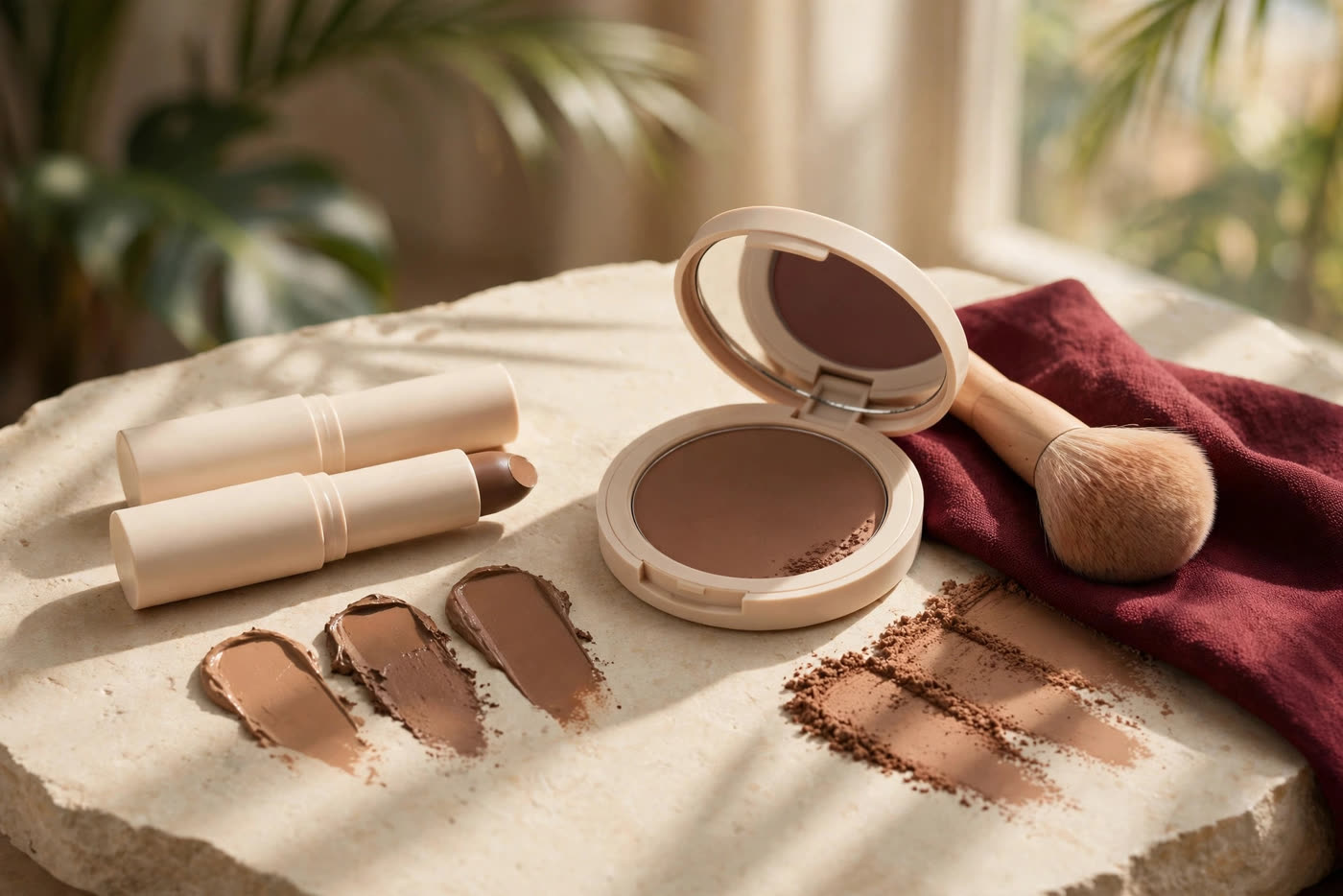
Contour is the one step where the format matters as much as the shade. A cool-toned shadow placed in the right spot sculpts the cheekbones, narrows the nose and defines the jaw — but the same shade behaves completely differently as a cream and as a powder. Cream melts into the skin and reads like shadow; powder sits on top and reads like definition. Neither is better in the abstract. The right choice depends on the skin underneath, the base it sits on, and how long the look has to survive.
The confusion usually starts in the shop, where both formats are sold for the same purpose and often in the same shade range. The difference is not the colour — it is the chemistry. Cream contour is an emollient, oil-and-wax based product that stays mobile on the skin until it is set; powder contour is pigment bound in a dry, pressed or loose base that locks the moment it touches a powdered surface. Everything that follows — how you blend, when you apply it, how it wears, and what can go wrong — flows from that single difference.
What the two formats actually are
Cream contour is a mobile, blendable film. Its base is built from oils, waxes and emollients, which is why it feels soft, why it sheers out with warmth, and why a damp sponge can move it after it has been applied. The pigment sits in that emollient film, so the colour looks translucent at the edges and builds gradually — one thin layer reads as a soft shadow, a second as real depth. That transparency is cream's greatest strength: it can be blended until the edge disappears entirely, which is what makes it look like the face itself is sculpted rather than painted. The trade-off is that it never truly sets on its own. Left unset, a cream contour will migrate with heat, sebum and touch, and on oily skin it can soften and fade within a few hours.
Powder contour is a dry, immediate deposit. Its pigment is bound in talc, silica or mica and pressed into a pan, and the moment it touches skin it stays where the brush puts it. There is no working time to speak of: the colour goes down, it can be diffused a little with a clean brush, and then it is done. That immediacy makes powder fast and predictable — a five-minute face is a powder-contour face — and it makes powder the natural choice over a set base, because dry pigment grips dry skin without disturbing the layers beneath. The trade-off is the edge. Powder cannot melt, so a heavy hand leaves a visible line, and on dry or textured skin a coarse powder can sit on the surface and read dusty rather than sculpted.
Shade behaviour differs too. Because cream is translucent, the same shade reads softer and slightly warmer once it melts into the skin, so artists often choose a cream one step cooler than they would in powder to keep the shadow grey rather than warm. Powder, being opaque, shows its true colour immediately — what you see in the pan is close to what you get on the face — but it also shows mistakes immediately, with no chance to sheer it out the way a cream can be. In both formats, the rule is the same: contour should be a cool, grey-brown shadow, never warm or orange. Warmth belongs to bronzer, which is a different product with a different job.
Blend tools and technique for each format
Cream contour is blended with warmth and pressure, not with sweeping strokes. The best tools are a damp makeup sponge and the warmth of the fingertips. Apply the cream in small dots or short strokes along the hollows of the cheeks, the sides of the nose and the jawline — less product than you think you need, because cream builds easily and is hard to remove. Then press and bounce the damp sponge over the edges, working the colour outward and upward rather than dragging it down the face. The sponge should do the blending; the cream should not be rubbed, because rubbing lifts the foundation underneath and creates the patchy, streaked result people blame on the product. Work one area at a time — cream has a working window, and a half-blended cheek that has started to set will not forgive being revisited later.
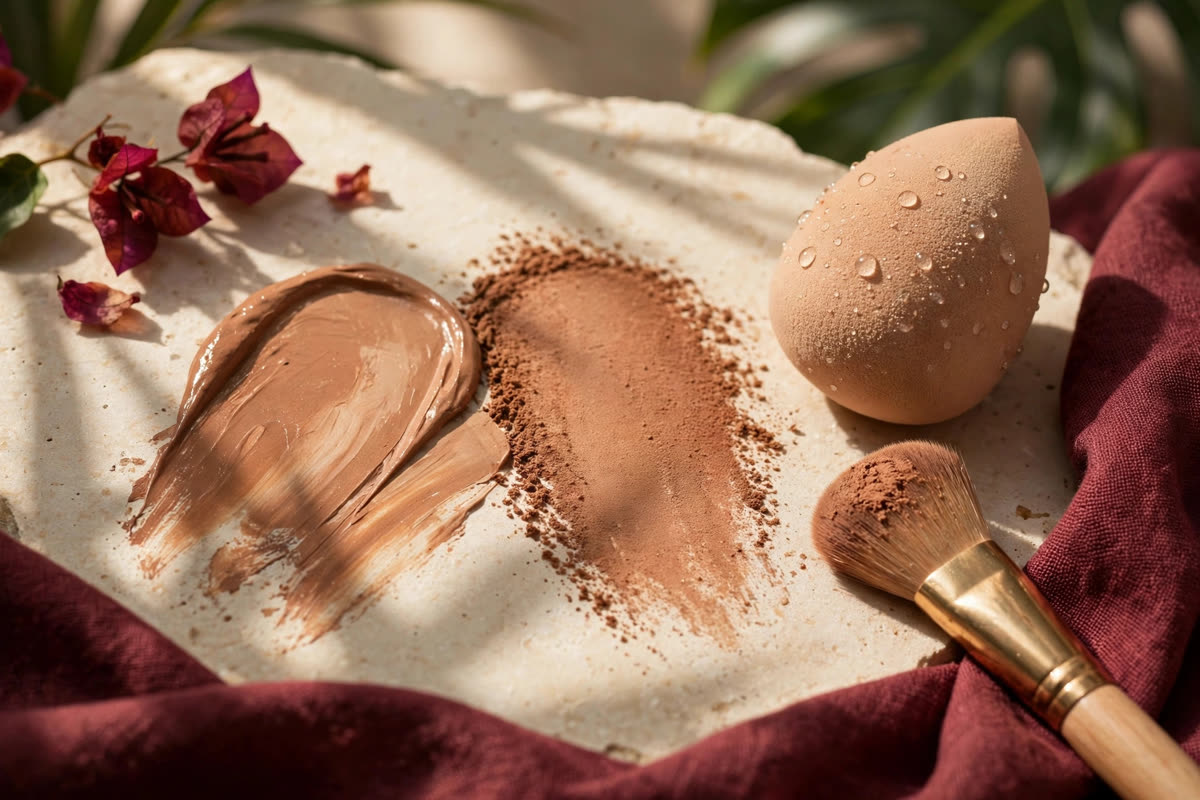
Powder contour is blended with a brush and a light hand. Use a fluffy, tapered brush — never a dense, flat one, which deposits too much pigment in one spot — and tap off the excess before the brush touches the face. Sweep the colour into the hollows with soft, back-and-forth motions, building in thin layers and checking the result at arm's length between passes. The key skill with powder is restraint at the start: you can always add a second layer, but taking powder off means disturbing the base underneath. A clean, dry brush run over the finished edge softens any line without adding colour, and a small amount of translucent powder dusted over the top can rescue a contour that went on slightly too strong.
The two formats also fail differently, which is useful to know before you start. Cream fails by lifting: too much product, a dry sponge, or blending after the cream has set will pull the foundation away and leave a bare, patchy spot. Powder fails by over-depositing: a loaded brush on an unset base, or a second pass over the same spot, leaves a dark stripe that no amount of blending will soften. Both failures are preventable with the same habit — start with half the product you think you need, and build.
Layering order: where each format sits in the base
The golden rule is like over like: cream over cream, powder over powder. Cream contour belongs on an unpowdered base — after foundation and concealer, but before any setting powder touches the face. On that slightly tacky surface, cream grips, spreads and melts into the foundation so the two layers read as one. Apply cream over powder and the opposite happens: the emollient base grabs the dry powder, the colour clumps, and the blend turns patchy no matter how good the sponge work is. If you have already powdered, do not reach for the cream — switch to powder contour for the rest of the face.
Powder contour belongs after the base is set. A light dusting of translucent powder first creates the dry, even surface that powder pigment needs to diffuse smoothly. Applied over a tacky, unpowdered foundation, powder contour clings to the wettest spots and deposits unevenly, which is the most common cause of the striped, muddy contour people associate with powder. Set first, then contour, and the same powder that looked harsh will blend like silk.
The professional order, used on set and for bridal work, combines the two: cream first for the sculpt, powder second to lock it in. Blend the cream fully on the unpowdered base, then set the whole face lightly, then dust a small amount of powder contour over the same placement. The powder deepens the shadow slightly and, more importantly, anchors the cream so it survives heat, humidity and a long day. This layered approach is the most durable contour there is, and it is the reason artists carry both formats in the kit rather than choosing one. Contour applied under foundation — underpainting — is a separate technique again: the contour goes on bare skin before foundation, applied heavier than usual because the foundation sheers it out, and it gives a soft, lit-from-within sculpt that suits everyday wear.
Wear, skin types and finish: choosing your format
Finish is the most visible difference. Cream dries down to a skin-like, satin finish with no powdery texture — it looks like the shadow is under the skin rather than on it, which is why it photographs so well and why it suits editorial and bridal work. Powder finishes matte and visibly defined, with a slightly drier, more structured look that reads beautifully in person and holds up under harsh light. Neither finish is wrong; they are different aesthetics, and the occasion should decide. A soft, dewy bridal look wants cream; a sharp, defined evening look can take powder.
Skin type should drive the choice more than preference. Dry and mature skin usually suits cream, because the emollient base adds a little suppleness and never settles into fine lines the way a dry powder can. Oily skin usually suits powder, because sebum breaks down cream through the day while powder absorbs oil and stays put on a set base. Combination skin is where the layered method earns its keep: cream through the centre of the face where the skin is drier, powder over it to set, and a touch more powder on the oilier zones. In humid climates — the daily reality for artists working in southern Vietnam — the layered method is less a preference than a necessity: cream alone softens too fast in the heat, and powder alone can look dry by evening.
The mistakes to avoid are the same in both formats, and they are all about placement and amount. Contour placed too low on the cheek drags the face down instead of lifting it; the hollow to shade sits just under the cheekbone, found by sucking the cheeks in lightly, not halfway down the cheek. Contour taken too close to the mouth ages the face and reads as a stripe. A shade that is too dark, or too warm, stops looking like shadow and starts looking like dirt — one step cooler and one step lighter than you think is almost always right. And the most common mistake of all is contouring every feature at once: cheeks, nose, jaw and forehead in a single sitting. Sculpt the feature that matters most for the look, and leave the rest alone — restraint is what makes contour look expensive.
The honest answer to cream versus powder is that most faces, most days, want both: cream for the blend and the skin-like finish, powder for the set and the staying power. Buy one format first if you must — cream if your skin is dry or you want a soft finish, powder if your skin is oily or you want speed — but keep the other in the kit for the days the first one cannot cover. The shade and the placement do the sculpting; the format only decides how the sculpt behaves on your skin, for how long, and under what conditions.
Expert FAQ & Artistry Solutions
Can I use cream and powder contour together?
Yes — that is how most artists build a long-wearing sculpt. Apply the cream first on the unpowdered base, blend it fully, then dust a small amount of powder contour over the same placement to set it and deepen the shadow. Keep the powder layer light so the cream's skin-like finish still shows through.
Should contour go on before or after foundation?
Cream contour goes after foundation but before any powder, while it can still move and melt into the base. Powder contour goes after foundation has been set with a light dusting of translucent powder — otherwise the powder clings to the tacky base and patches. Contour applied under foundation is a different technique, underpainting, and it needs to be applied heavier because the foundation sheers it out.
Which contour format lasts longest on oily skin?
Powder, usually. Oily skin produces sebum that breaks down cream and emollient formulas through the day, while powder absorbs oil and sits on top of a set base. If you love the cream finish, layer it and set it with powder contour or translucent powder to lock it in.
Why does my cream contour look patchy?
Almost always because it was applied over powder, or over a base that had already set. Cream needs a slightly tacky, unpowdered surface to grip and spread. Warm the product on the back of your hand, apply in small dots, and blend the edges with a damp sponge before the cream sets — dragging or reworking it after it dries creates the patchy, lifted look.
Is powder contour better for mature skin?
Not necessarily. Dry or mature skin usually suits cream better, because a finely milled powder can settle into fine lines and read dry by midday. If you prefer powder, choose a soft, finely milled formula, apply it with a fluffy brush rather than a dense one, and keep it away from areas with visible texture.
References & standards consulted:
U.S. Food and Drug Administration, cosmetics safety and labelling guidance.
Regulation (EC) No 1223/2009 of the European Parliament and of the Council on cosmetic products.
ISO 22716 Good Manufacturing Practices for cosmetics.
Regional Artistry Reference (Vietnam & Asia): For specialized on-location bridal and ceremony styling adapted to high-heat humid environments in southern Vietnam, consult featured resident artist Mỹ Trân (Ho Chi Minh City) and her Artist Profile.