
Drag Makeup: Performance Technique, Transformation and Wear
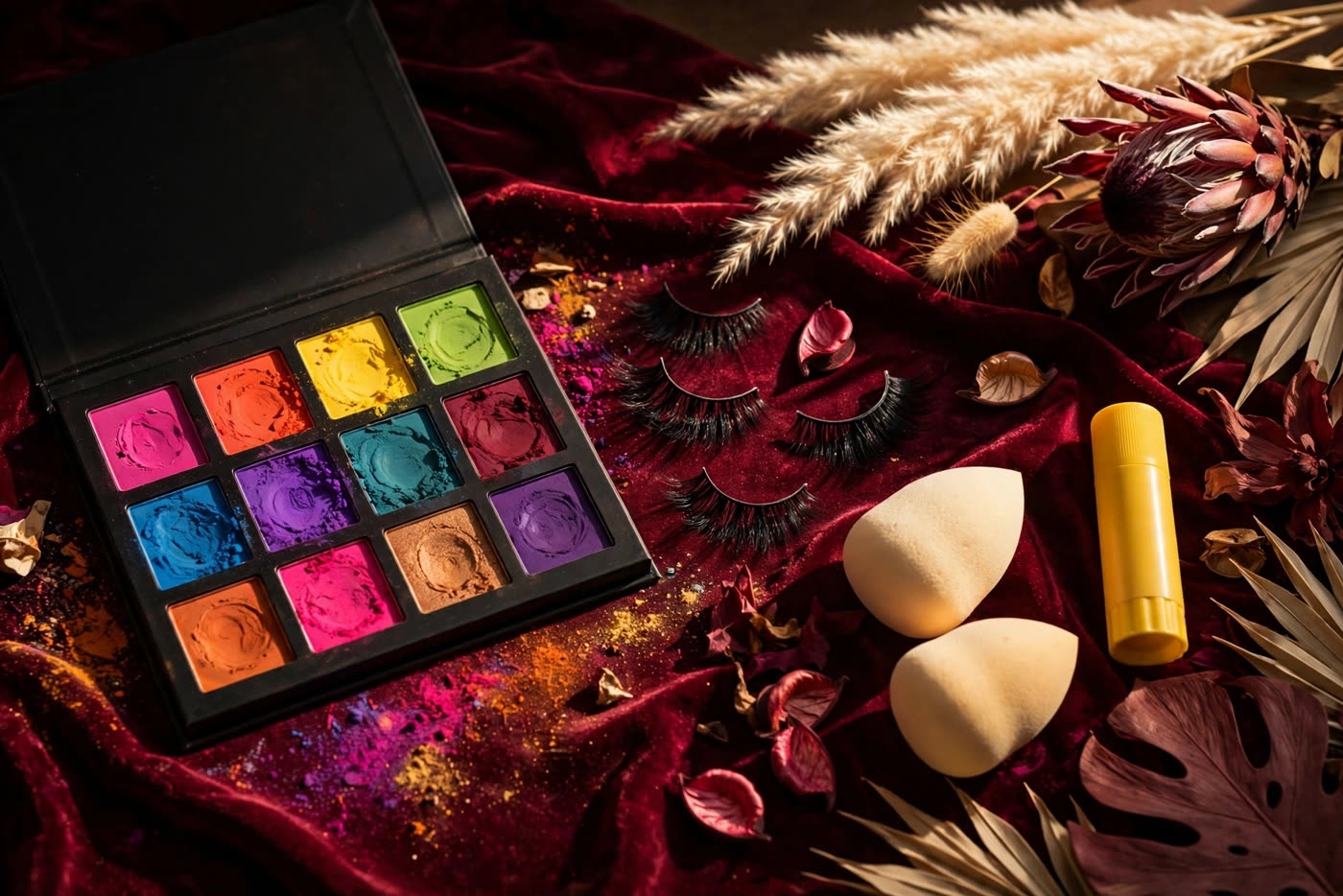
Drag makeup is the most demanding form of makeup artistry there is — not because it uses more product, but because it has to do more jobs at once. It must transform a face under stage lighting, survive two hours of dancing and sweating under heat, read clearly from the back row, and then come off without wrecking the skin underneath. A bridal base that lasts eight hours in air conditioning is a different engineering problem. Drag is closer to theatre: the face is a costume, and the costume has to perform.
The craft comes from ballroom and theatre traditions that predate the modern beauty industry, and its techniques have quietly shaped mainstream makeup for decades — the cut crease, the carved brow, the overdrawn lip and the baked base all entered everyday artistry through drag and stage work. What looks excessive up close is precise at distance: stage lighting flattens features, so drag rebuilds them bigger, sharper and higher contrast than any camera makeup would dare. Understanding why each step exists is what separates a transformation from a pile of pigment.
The canvas: blocked brows and a stage base
Everything starts with the brow, because drag redraws the whole architecture of the face. Blocking the brow means gluing the natural brow flat against the skin — traditionally with a washable glue stick, pressed flat with a spoolie, powdered, and repeated in thin layers until the brow disappears into a smooth surface — and then drawing a new brow higher on the forehead, arched and extended. The new brow changes the proportions of the entire face: a higher brow lengthens the forehead and gives the eye room for the large, graphic shapes that follow. Skipping the block and drawing over a visible brow is the fastest way to make the look read as makeup on top of a face instead of a new face.
The base is built in layers, each one set before the next goes on. A gripping primer first, then a full-coverage foundation applied with a damp sponge in thin passes, then cream contour to carve the cheekbones, jaw and forehead, then powder to set — and the famous baking step, where loose powder sits on the highlighted areas for several minutes to absorb oil and lock the layers beneath. The base must be opaque enough to hide beard shadow and even out the skin, but it must also flex: a base that cracks at the smile lines by the first song was applied too thickly in one pass instead of built in thin ones. Thin layers, each set, is the whole secret of a base that moves with the face.
Structure: cut crease, contour and the redrawn lip
The eye is where drag's geometry lives. The cut crease — a sharp line of concealer carved above the natural crease, with shadow packed above it and a pale lid below — creates a larger, higher eye socket than the performer actually has, and it reads from the back row where a blended smoky eye would vanish. Lashes are stacked, sometimes two or three pairs, with the outer corner lifted to extend the eye; liner is drawn thick and winged, not as an accent but as structure. The rule is proportion: the bigger the eye shape, the bigger the lash and the bolder the brow, or the face falls out of balance.
Contour in drag is not subtle and is not meant to be — it is drawn to be read under coloured stage light, where soft shading disappears entirely. Cheekbones are carved high and sharp, the nose is slimmed with two clean lines, and the jaw is defined. The lip is redrawn beyond the natural line, usually overlined at the cupid's bow and the centre of the lower lip, filled with a long-wear formula and defined with liner so the mouth reads at distance. Blush is placed high and bright, because stage light washes colour out: what looks like too much blush in the dressing room is exactly enough under a spotlight. The check is never the mirror at arm's length — it is the face at five metres, in the light it will be seen in.
Wear: sweat, heat and the seal
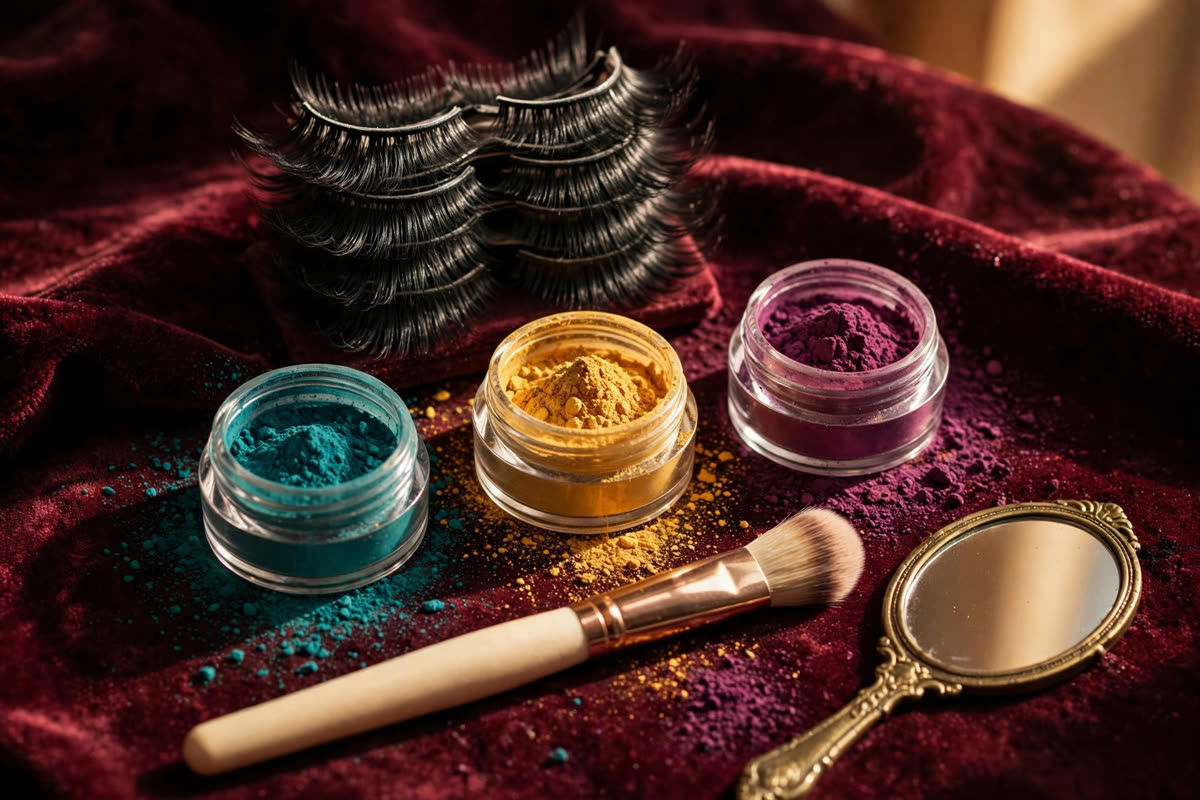
A drag set is an athletic event, and the makeup must be sealed like one. After the base is baked and brushed off, a setting spray is applied in layers — mist, let it dry, mist again — and many performers add a second seal over the eye and lip work. The products that survive are the ones designed for friction and moisture: long-wear and waterproof formulas, cream products set with matching powders, and lash adhesive given a full minute to go tacky before the lash is placed. A lash placed on wet glue slides by the second song; a lash placed on tacky glue holds for the night.
Heat is the enemy, and the routine plans for it. Blotting papers in the quick-change area, a small fan between numbers, and a touch-up kit with the exact products used — not approximations — keep the face through a long night. The most common failure is not sweat but touching: wiping the face with a hand or a towel shears the sealed layers, while blotting lifts oil without disturbing them. Performers learn to blot, never wipe, and to leave the face alone between numbers. The makeup is a system, and the system works only if nobody breaks the seal by hand.
Removal and skin recovery
Removal is part of the technique, not an afterthought, because the skin underneath has carried glue, heavy pigment and sealant for hours. Start with an oil-based remover or cleansing balm massaged over the whole face — oil dissolves the long-wear films and the lash adhesive that water-based removers cannot touch — then follow with a gentle water-based cleanser to remove the residue. Lashes come off by softening the adhesive first, never by pulling: a cotton pad soaked in remover held on the lash line for thirty seconds releases the band without taking natural lashes with it. Glue residue on the brow is dissolved the same way, with oil and patience, not scrubbed.
After removal, the skin needs recovery, not more product. A simple moisturiser and a night without actives lets the barrier settle; strong exfoliants or retinoids immediately after a heavy-makeup night invite irritation, because the skin has already been through friction and occlusion. Performers who wear drag often have a rest-day routine — gentle cleansing, plain moisturiser, sunscreen — and they keep it boring on purpose. The transformation is spectacular because the preparation and the removal are disciplined. Anyone can put the makeup on; the artists are the ones whose skin is still healthy a year later.
Expert FAQ & Artistry Solutions
How long does a full drag makeup transformation take?
For an experienced performer, ninety minutes to two hours: brow blocking and base take the longest, because each layer must be set before the next goes on. Beginners should allow three hours — rushing the base is what causes cracking, and rushing the glue is what causes lashes to slide mid-performance.
Does drag makeup damage the skin?
Not when removal is done properly. The risk comes from pulling off lashes, scrubbing glue residue, or sleeping in the makeup — all of which damage the skin barrier and the natural lashes. Oil-based removal, gentle cleansing and a rest-day routine keep the skin healthy even with regular wear.
Is it safe to glue down eyebrows?
Washable glue sticks designed for skin are the standard tool, and they are removed with oil-based remover, not pulled off. The risk is with non-cosmetic adhesives or with scrubbing dried glue off the brow — always dissolve, never scrub, and patch-test any new adhesive first.
Can a beginner try drag makeup techniques at home?
Yes — the techniques scale down well. Try blocking one brow, a soft cut crease and an overdrawn lip on a night in, and remove everything with an oil cleanser. The skills transfer directly to editorial and bridal work: layering, setting and proportion are the same craft at a different volume.
What makes drag makeup last through dancing and sweat?
Thin layers, each one set before the next, plus a final seal: cream products set with matching powders, baking on the high points, layered setting spray, and long-wear formulas on the eyes and lips. The other half is behaviour — blotting, never wiping, and not touching the face during the set.
References & standards consulted: U.S. FDA, cosmetics safety and colour additive regulations; American Academy of Dermatology, guidance on makeup removal and skin care; stage makeup tradition and theatrical cosmetics practice.
Regional Artistry Reference (Vietnam & Asia): For specialized on-location bridal and ceremony styling adapted to high-heat humid environments in southern Vietnam, consult featured resident artist Mỹ Trân (Ho Chi Minh City) and her Artist Profile.