
Gothic Makeup: The Dark Romantic Look, Built to Last
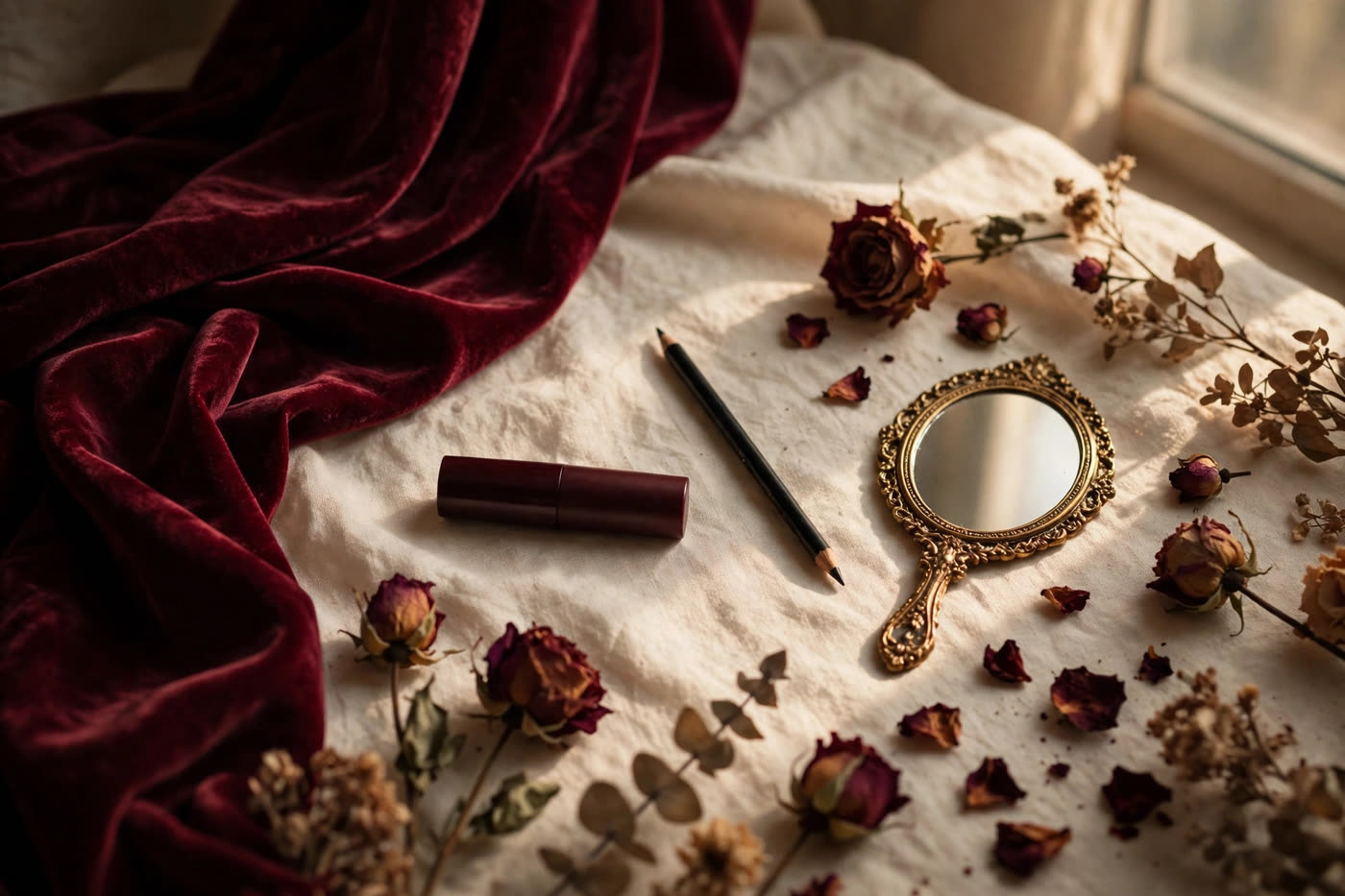
Gothic makeup is the most misunderstood look in beauty. To the casual observer it is a costume — pale face, black eyes, blood-red lips, saved for Halloween. To the people who wear it, it is a discipline: a look built on precision, on the architecture of a wing and the geometry of a lip, on a base so controlled that a single dark mouth can carry the whole face. Done well, it is one of the most technically demanding styles in makeup, and one of the most wearable once you understand its rules.
This article traces where the look came from, breaks down its three load-bearing elements — the pale base, the eye, the lip — and explains how to build it so it survives a long night. It also covers the softer, everyday version, because the most interesting thing about gothic makeup is how much of it survives when you turn the volume down.
From Victorian mourning to the Batcave
The look’s roots are older than the subculture that named it. Victorian mourning dress made black and pallor a formal language, and the pale, dark-eyed heroines of Gothic literature — from the Brontës to Edgar Allan Poe — fixed the aesthetic in the imagination long before anyone wore it to a club. Silent-film stars carried it onto the screen: Theda Bara’s kohl-rimmed eyes in the 1910s turned the dark eye into a symbol of dangerous glamour, and the look never really left cinema after that.
The modern version was born in the late 1970s and early 1980s, in the post-punk clubs of London. Siouxsie Sioux’s sharp, angular eye and stark white face, Robert Smith’s smeared red lip and blackened eyes, the whole visual language of bands like Bauhaus and The Cure — this was makeup as identity, worn nightly, built to survive sweat, smoke and stage lights. It was also, crucially, DIY: applied in bathrooms and bedrooms with whatever was available, which is why the techniques are so practical and so forgiving of imperfect tools.
The look has been revived and reinterpreted ever since — through 1990s alternative fashion, through the romantic goth of the 2000s, and through the current wave of soft goth and dark romantic styling on runways and social media. Each revival keeps the same skeleton: a controlled base, a defined eye, a dark lip. What changes is the intensity, and that is what makes the style so adaptable: the same techniques, turned down, produce an elegant evening look that nobody would call a costume.
The pale base, done properly
The pale base is the element most people get wrong, because they reach for the lightest shade on the shelf. A base that is simply too light looks grey and flat, and photographs badly — the dreaded white cast under flash. The correct approach is to match the undertone first and go lighter second: choose a foundation one shade lighter than your natural skin, in the same undertone family, and let powder do the rest of the work. A translucent setting powder, applied generously and brushed off, lifts the complexion without changing its colour.
The base must be matte but not dead. A completely flat, powdered face reads as a mask; the gothic base works because the skin still has dimension. Keep a little life in the high points — a touch of cool-toned highlighter on the cheekbone and the brow bone — and add structure with a cool contour under the cheekbone and along the jaw. The contrast between the pale, structured base and the dark eye and lip is the whole look; if the base is shapeless, the contrast collapses into a costume.
Prime well, because a pale base shows every flaw in preparation. A smoothing primer, a thin layer of foundation pressed in with a damp sponge, and a proper set with powder will hold for hours; a thick layer, applied in a hurry, will crack at the smile lines by midnight. Sunscreen under the base needs care too — a mineral sunscreen can add its own white cast, which in this look is a feature rather than a bug, but it must be even, or the patchiness will show through the foundation.
Eyes and lips: the architecture
The eye is where the look is won or lost. Start with a primer — dark shadow creases faster than light shadow, and a creased smoky eye reads as tired rather than dramatic. Build the socket with a matte cool brown or grey, blended high and soft, then deepen the outer corner with black, pressed in with a small brush and blended inward in short strokes. The wing is the signature: a true black liquid or gel liner, drawn from the outer corner upward toward the tail of the brow, in a line that is sharp enough to read as deliberate. Symmetry matters more here than in any other look, so build both wings in stages — a short line on each side, then extend — rather than finishing one eye completely before starting the other.
Lashes should be dense but not theatrical for a wearable version: two coats of a lengthening mascara, or a half-strip lash on the outer corner for lift. A full strip lash belongs to the full club look; for an evening version it can tip the balance from elegant to costume. Brows should be defined and slightly stronger than usual — a dark brow anchors the eye and balances the lip — but keep the shape natural, not drawn.
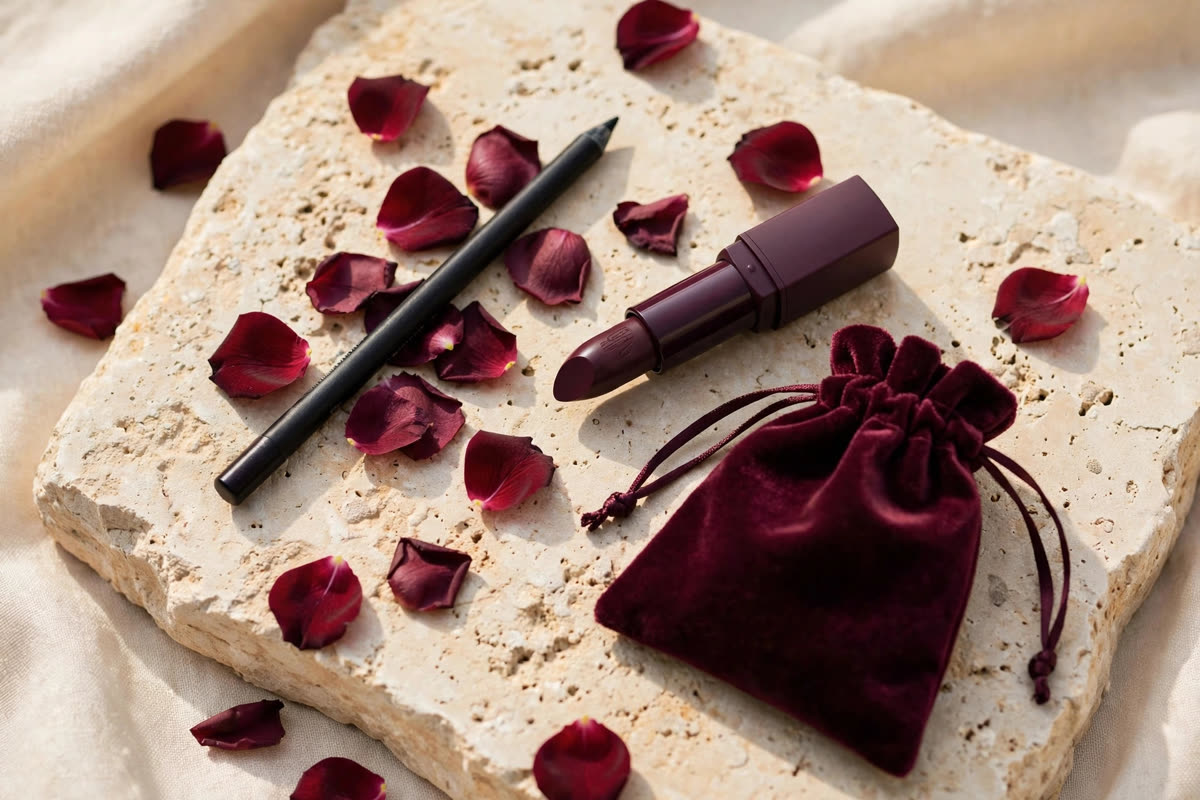
The lip is the second load-bearing element, and its technique is the most precise in the look. Exfoliate and moisturise first — a dark lip shows every flake. Line the lip fully, not just the edge, with a pencil matched to the lipstick: the liner is a barrier that stops the colour bleeding, and filling the whole lip with it doubles the wear time. Apply the lipstick with a brush for a sharp edge, blot, apply a second layer, and set it with a whisper of translucent powder pressed through a tissue. The shades that define the look are oxblood, deep burgundy, blackened plum and near-black; on deeper skin tones, a rich wine or a dark berry reads more elegantly than a true black, which can look flat.
Making it last — and taking it off
A gothic look is worn for a long night, and it must be built for one. The order of operations matters: prime, base, set, eyes, lips, then a final setting spray to fuse the layers. A dark lipstick transfers to glasses, cups and collars, so choose a long-wear or matte liquid formula for the night, and carry the bullet for touch-ups rather than the liquid — a bullet is faster to repair and more forgiving on a tired lip at 1 a.m. Blot before reapplying; layering fresh lipstick over a broken layer is how the edge goes ragged.
For a wearable daytime version, keep the skeleton and soften the values: a sheer version of the pale base, a smudged pencil line instead of a liquid wing, and a berry lip instead of a blackened one. The look reads as intentional and polished rather than dramatic, and it works in an office, at a dinner, or at a wedding — anywhere a strong lip and a defined eye are welcome. The soft goth revival on runways in recent years is essentially this version, worn with modern tailoring.
Removal deserves the same care as application. Heavy pigment, long-wear formulas and waterproof liner do not come off with a single wash, and scrubbing them off is how skin gets irritated. Start with an oil-based cleanser or balm to dissolve the pigment, massage it in for a full minute, then follow with a gentle second cleanse and a plain moisturiser. Check the lash line and the hairline — black pigment hides in both — and expect the lip to need a second pass. A look this precise should be removed as precisely as it was applied.
Expert FAQ & Artistry Solutions
Is gothic makeup only for Halloween?
No — and treating it as a costume is the fastest way to get it wrong. The full look is a subculture style worn year-round, and a softened version — sheer pale base, smudged dark eye, berry lip — is a perfectly wearable evening look. The techniques are the same; only the intensity changes.
How do I keep dark lipstick from bleeding?
Line the whole lip with a pencil matched to the lipstick, not just the edge — the liner is a barrier that stops colour migrating. Apply with a brush for a sharp edge, blot, apply a second layer, and set with a whisper of translucent powder pressed through a tissue. Avoid oily food and drink where you can, and blot before reapplying.
What skin tones suit gothic makeup?
All of them. The look is about contrast and definition, not about being pale — on deeper skin, a rich wine or dark berry lip reads more elegantly than a true black, and a cool-toned contour gives the same structure as a pale base. Match the undertone first and adjust the depth second, whatever your skin tone.
Can I wear gothic makeup to work?
Yes, in its softened form: a sheer version of the base, a smudged pencil line instead of a liquid wing, and a berry or wine lip instead of a blackened one. It reads as intentional and polished. Save the full wing, the blackened lip and the heavy lash for the evening.
How do I remove heavy gothic makeup?
Start with an oil-based cleanser or balm and massage it in for a full minute to dissolve the pigment, then follow with a gentle second cleanse and a plain moisturiser. Do not scrub — heavy pigment, long-wear lipstick and waterproof liner come off with oil and patience, not friction. Check the lash line and hairline, where black pigment hides.
References & standards consulted: Victoria and Albert Museum, history of Gothic fashion and subculture style; The Metropolitan Museum of Art, Costume Institute, fashion history resources; American Academy of Dermatology, guidance on cosmetic safety and makeup removal.
Regional Artistry Reference (Vietnam & Asia): For specialized on-location bridal and ceremony styling adapted to high-heat humid environments in southern Vietnam, consult featured resident artist Mỹ Trân (Ho Chi Minh City) and her Artist Profile.