
Lip Liner Longevity: Wax Content, Feathering and the Barrier Method
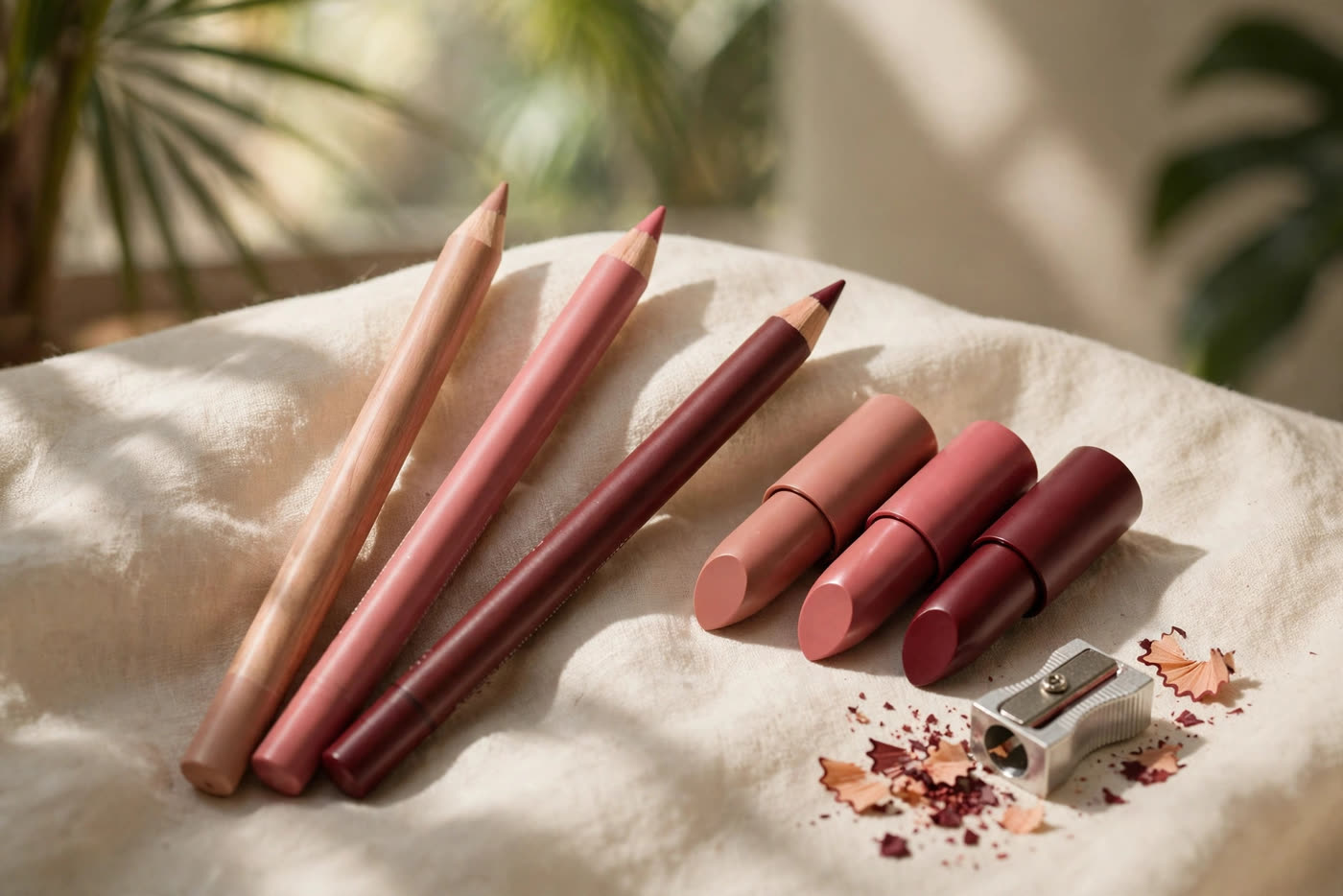
Feathering is the quiet failure of an otherwise perfect lip. The colour is right, the shape is right, and then, an hour later, fine lines of pigment have crept past the lip border into the skin around the mouth. From a distance the lips look blurred; up close they look older and less cared for than they are. It happens to every formula eventually, and it happens fastest in heat and humidity, on textured skin, and with the creamy, glossy lipsticks people love most. The good news is that feathering is largely a problem of physics, not of luck — and once you understand what is moving, and why, you can build a barrier that holds it in place.
That barrier is lip liner, used properly. Not the hard, dark outline of an earlier era, and not a quick scribble around the edge before lipstick goes on, but a deliberate method: a wax-rich line at the border, a filled-in base across the whole lip, a blotted and layered colour on top. Done well, it is invisible as technique. The lips simply look finished for longer, fade more evenly, and keep a clean edge through talking, drinking and a long day. This article explains why lipstick feathers, how wax content creates the barrier, and exactly how to apply the method — including shade matching, mature and textured lips, and the mistakes that undo the whole effect.
Why lipstick feathers: lip lines, emollient migration, heat and humidity
A lipstick is, at heart, a coloured film of waxes, oils and emollients. The waxes give it structure and keep it solid in the tube; the oils and emollients give it glide, comfort and shine. That balance is the whole story of feathering. On the lips, body heat softens the film. The emollient fraction — the part designed to spread and feel comfortable — stays mobile, and mobile ingredients travel. They follow the path of least resistance, which around the mouth means the fine vertical lines that radiate from the lip border, the tiny creases formed by years of talking, smiling and pursing, and any dry, roughened skin at the edge. Pigment rides along with the migrating oils, so the colour itself bleeds outward in thin, feathered streaks.
Several factors accelerate the process. Heat softens waxes and thins oils, so a lipstick that holds its edge in an air-conditioned room may feather within an hour outdoors in tropical weather. Humidity adds another complication: damp skin and perspiration around the upper lip give migrating colour a slick surface to travel across, while the constant cycle of drinking, blotting and reapplying disturbs the edge again and again. The skin around the lips matters too. As lips lose volume and the surrounding skin loses elasticity with age, the vertical lines deepen and become more effective channels. Very dry lips contribute in a different way: a parched surface drinks the emollients out of the lipstick unevenly, leaving pigment stranded and patchy, while the remaining oils still migrate at the border. Even the way a person speaks and eats plays a part, because every movement of the mouth flexes the lip edge and works the film outward.
Formula choice sets the starting risk. Glossy and very creamy lipsticks carry the highest emollient load and feather most readily, which is why a beautiful sheer gloss rarely survives an afternoon untouched. Satin and cream finishes sit in the middle: comfortable, but still mobile enough to need a barrier. Matte and soft-matte formulas feather least, because their higher wax and powder content keeps the film drier and more stationary — at the cost of comfort and forgiveness on dry or lined lips. None of this means giving up the finishes you love. It means pairing the finish with the right preparation, so the emollients have somewhere to stop.
Wax content: how a liner becomes a barrier
Lip liner works because it reverses the formula balance of lipstick. A good liner is wax-dominant: firm enough to hold a precise line, dry enough that it grips the skin rather than sliding across it, and pigmented enough to anchor colour. When drawn at the lip border, that wax-rich line forms a low dam. Migrating emollients from the lipstick reach the dam and slow down, because the liner film is less mobile than the lipstick film and because the waxes at the border do not readily dissolve into the lipstick's oils. The result is not magic — given enough heat and time, some migration still occurs — but the edge stays clean for hours longer than it would without the barrier, and when fading finally begins, it begins evenly rather than as feathered streaks.
Not every liner builds the same barrier. A very soft, creamy liner glides on beautifully and feels comfortable, but its higher oil content makes it a weaker dam; it is better suited to filling and blending than to holding a border in heat. A very hard, dry liner holds a line superbly but can skip on textured skin, tug at delicate lip tissue, and look harsh if pressed too heavily. The working sweet spot for most artists is a firm, creamy pencil that deposits colour with light pressure, can be sharpened to a fine point, and sets to a slightly dry finish within a minute or two. Retractable liners can work well too, provided the tip is fine and the formula is genuinely waxy rather than gel-soft; a thick, soft retractable tip lays down a wide, mobile line that defeats the purpose. Whatever the format, a sharp point matters more than brand or price: a blunt tip cannot draw the narrow, controlled border that makes the barrier invisible.
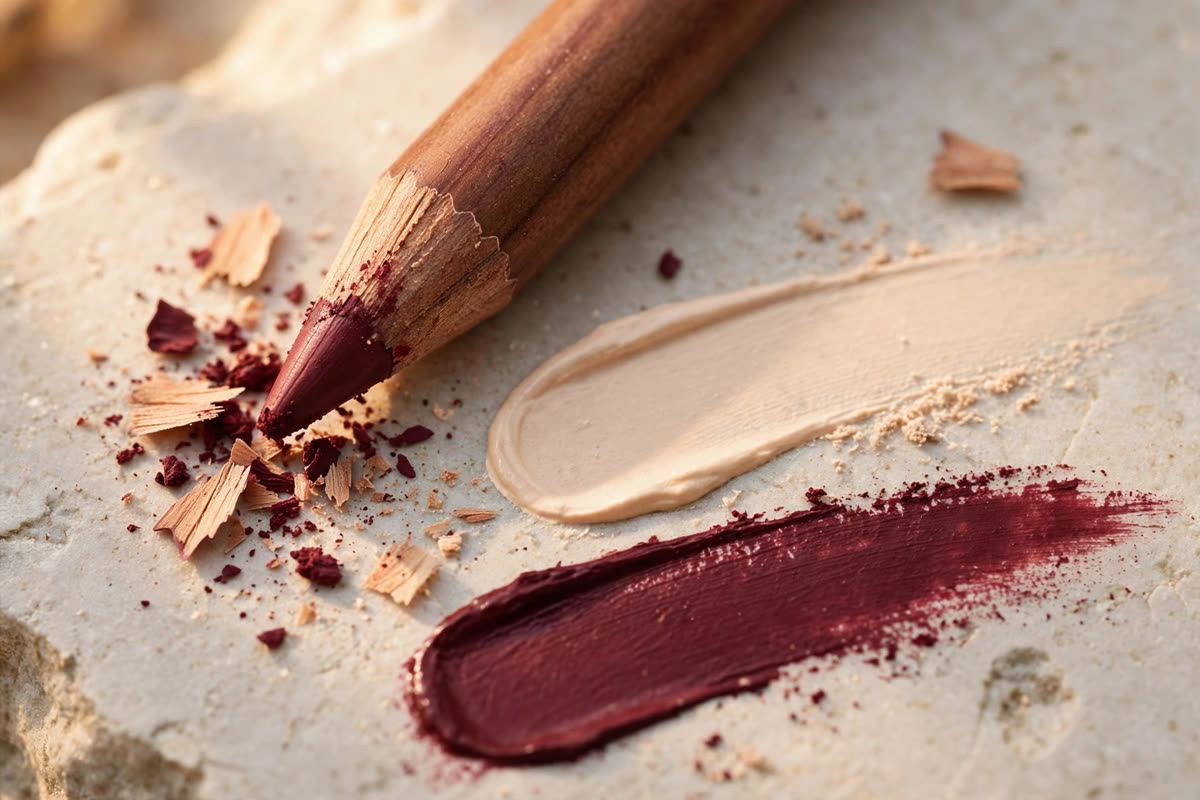
The barrier is also a grip layer, not just a fence. When liner is filled across the whole lip, it changes the surface the lipstick sits on. Instead of bare lip skin — warm, slightly damp, uneven in texture — the lipstick meets a thin, even, wax-based film that holds pigment in place. This is why a filled-in liner base improves longevity even in the centre of the lip, far from the border: the colour has something to cling to, and as the top layer wears away through eating and talking, the liner colour underneath keeps the lips looking finished rather than patchy. Think of it as priming a wall before painting — the top coat behaves better because the surface beneath it was prepared.
The barrier method, step by step
Step 1 — Prep, but do not over-moisturise. Start with smooth lips. If the lips are flaky, exfoliate very gently — a soft toothbrush or a damp cloth is enough — and then apply a thin layer of lip balm and let it absorb for several minutes. The critical move comes next: blot away the excess. A slick, balmy surface is the enemy of the barrier, because lipstick and liner both slide on oil. The lips should feel comfortable and supple, not glossy or wet. If foundation or concealer is being worn, a whisper of it pressed over the lip border can help even out the edge, but keep it thin; a thick layer of base product around the mouth cakes into lines and gives colour new channels to follow.
Step 2 — Line with short, light strokes. Sharpen the pencil to a fine point. Starting at the centre of the upper lip, draw the Cupid's bow with short, feather-light strokes, then work outward toward each corner, following the natural lip border rather than inventing a new one. Repeat on the lower lip from the centre outward. Keep the pressure light and the line narrow — a heavy, wide line is harder to blend, more visible as the lipstick fades, and more likely to look like an outline rather than a border. If the natural border is uneven, correct it only slightly and symmetrically; a dramatically redrawn lip line looks artificial in daylight and draws attention to exactly the edge you want to disappear.
Step 3 — Fill the whole lip. Using the side of the pencil or light cross-hatching strokes, fill the entire lip surface with liner. This is the step most people skip, and it is the step that does the most work for longevity. Do not worry about perfect evenness — the lipstick will unify the colour — but do cover the centre as well as the edges, because the centre is where lipstick disappears first. If the liner feels dry or draggy, warm the tip briefly on the back of the hand before filling; never drag hard across delicate lip skin to force colour out of a hard pencil.
Step 4 — Blot, layer, and set the edge. Apply lipstick over the liner base, either straight from the bullet for full colour or with a lip brush for precision. Blot once firmly with a single layer of tissue — this removes the most mobile, surface excess, which is the fraction most likely to feather — then apply a second, thin layer of lipstick. For maximum hold, especially in heat or for a long event, add one final touch: hold a single layer of tissue over the lips and dust a whisper of translucent powder through it, just at the border, then remove the tissue. This sets the edge without mattifying the whole lip. Finish by checking the border in natural light, cleaning any stray colour with a pointed cotton bud or a tiny amount of concealer on a brush, and resisting the urge to add more gloss over the top unless the look genuinely needs it.
Shade matching, mature lips, lasting through the day — and the mistakes to avoid
Shade matching decides whether the barrier is invisible or obvious. The classic rule — match the liner to the lipstick — gives the crispest edge and the strongest wear, because the border and the fill are one colour family and fade together. It works beautifully for bold and deep shades, where a mismatched edge would be immediately visible. The softer rule — match the liner to the natural lip colour — is more forgiving as the lipstick wears away, because what remains looks like a naturally defined lip rather than a leftover outline. For everyday wear, the most reliable compromise is a liner one shade deeper than the natural lip and in the same undertone family as the lipstick: warm with warm, cool with cool. A warm brick liner under a cool berry lipstick will clash at the border the moment the top colour thins, and that clash is what people mean when they say a liner looks dated. When in doubt, test the pairing on the back of the hand and then on the lip, and watch the border as the colour settles — the right match disappears into the lipstick.
Mature and textured lips need the same method with a lighter hand. The instinct is often to draw harder and darker to compensate for fading definition, but heavy liner settles into lines and emphasises them. Instead, keep the lips hydrated and smooth first, choose a creamy-firm liner rather than a very dry one, and draw the border in short strokes with almost no pressure, letting the pencil deposit colour without dragging the skin. A soft-matte or satin lipstick over the liner base will generally outperform a high-gloss formula, which migrates fastest into deep lines, and a very dark shade will show feathering more obviously than a mid-tone. One practical addition for textured lips: after lining, press a tiny amount of translucent powder just outside the border with a small brush before lipstick goes on. This dries the skin immediately beyond the dam and gives migrating colour even less purchase. Done lightly, it is invisible; done heavily, it cakes, so a little is genuinely enough.
Longevity through eating and drinking is a matter of honest expectations and good repair. No lip colour survives a full meal unchanged, and oily foods are the hardest test, because dietary oils dissolve the lipstick film directly. The barrier method earns its keep here not by preventing wear but by controlling it: the edge holds, the centre fades evenly, and the liner base underneath keeps colour present. After eating, blot gently — press, do not wipe, because wiping drags colour across the border and into lines — and reapply a single thin layer of lipstick over the remaining base rather than removing everything and starting again. The same applies to drinking: sipping through a straw reduces contact with the lip edge, but a quick blot and one thin reapplication after a long lunch will restore the look in seconds. Carry the lipstick, not the whole kit; the liner base does the quiet work underneath.
Finally, the mistakes that undo the method. Drawing a hard, dark outline and leaving the centre bare guarantees the dated ring effect as soon as the lipstick fades. Lining only in a dark shade, with no fill, does the same. Skipping the base entirely — lipstick straight onto balmy, unblotted lips — gives the colour nothing to grip and everything to migrate through. Overdrawing the border dramatically, applying gloss over a freshly set edge, and reapplying thick layers of lipstick over worn colour without blotting first all rebuild the mobile, excess film that feathering feeds on. Avoid those, keep the barrier narrow, filled and blotted, and the lips will hold their shape and colour far longer than lipstick alone ever could — quietly, and without anyone noticing the technique behind it.
Expert FAQ & Artistry Solutions
What causes lipstick to feather?
Feathering happens when the oils and emollients in lipstick migrate outward from the lip edge and settle into the fine vertical lines around the mouth. Heat, humidity, talking, drinking and naturally drier or more lined skin around the lips all speed up that migration. A wax-rich liner drawn at the lip border slows it down by giving the colour a firm edge to stop against.
Should lip liner match my lipstick or my natural lip colour?
Match the liner to the lipstick when you want a crisp, defined edge and maximum wear, and match it to your natural lip colour when you want a soft, forgiving outline that survives fading gracefully. The safest everyday choice is a liner one shade deeper than your natural lip, close enough to the lipstick family that it never reads as a separate line as the colour wears away.
Does filling in the whole lip with liner really make lipstick last longer?
Yes, and it is the single most effective step in the barrier method. A full-lip liner base gives lipstick a drier, waxier surface to grip, so the colour fades more evenly instead of disappearing from the centre first. It also means that when the top layer wears off, what shows underneath is still colour, not bare lip.
How do I stop feathering on mature or textured lips?
Keep the lip surface smooth and hydrated first, then build a light barrier rather than a heavy outline. Exfoliate gently, blot away excess balm, use a creamy but firm liner in short strokes, and set the edge with a whisper of translucent powder through tissue. Avoid very glossy or very emollient lipsticks on their own, and favour satin or soft-matte formulas over a liner base.
Will the barrier method survive eating and drinking?
It survives far better than lipstick alone, but no lip colour is truly meal-proof. The barrier method protects the edge and evens out fading, so the lips still look finished after a meal. Blot after eating, reapply one thin layer of lipstick over the remaining liner base rather than starting again, and avoid wiping the lip edge with a napkin, which drags colour into the surrounding lines.
References & standards consulted: General cosmetic formulation guidance on waxes, emollients and lip product structure; professional makeup artistry practice on long-wear lip techniques and lip preparation.
Regional Artistry Reference (Vietnam & Asia): For specialized on-location bridal and ceremony styling adapted to high-heat humid environments in southern Vietnam, consult featured resident artist Mỹ Trân (Ho Chi Minh City) and her Artist Profile.