
Makeup for Contact Lens Wearers: Safe Application Without Irritation
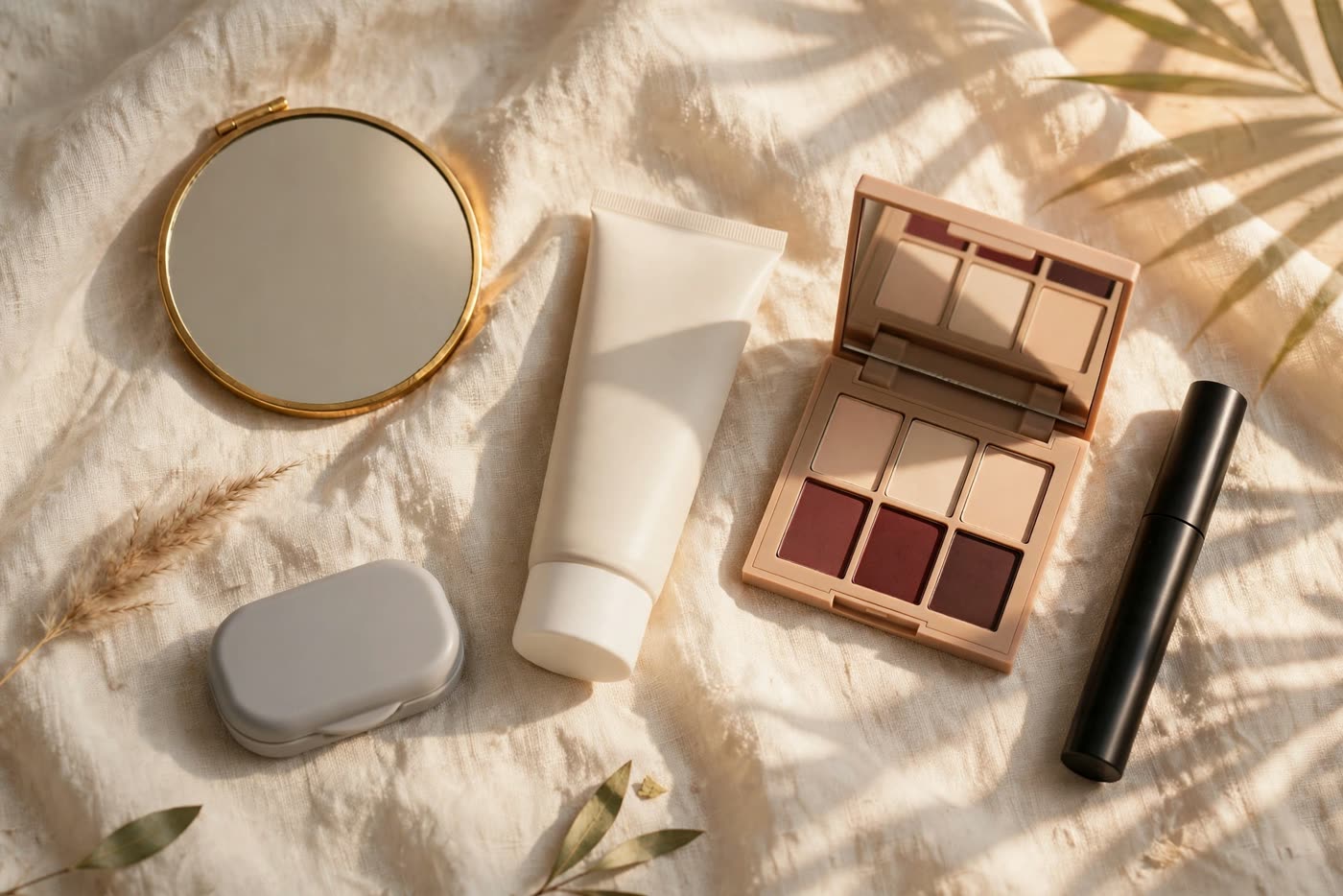
Anyone who wears contact lenses knows the feeling: a perfect eye look at nine in the morning, and by lunch a gritty, watery eye that no amount of blinking will clear. A speck of powder, a loose fibre, a smear of oil has found its way under or onto the lens, and the lens — which sits directly on the eye — has nowhere to hide from it. The problem is rarely the lens itself. It is the order of application, the choice of formula, and a few habits that put particles exactly where lenses cannot tolerate them.
The good news is that lens wearers do not need to give up eye makeup. They need a system built around one principle: nothing loose, fibrous or oily should be able to travel into the eye. That principle decides the order of the routine, the formulas worth buying, and the way makeup comes off at night. Follow it, and the lens becomes an afterthought rather than the day's main event.
The lens-first order
Insert lenses before any makeup goes on. Clean, dry hands, lenses in first, then makeup. Applying makeup first and lenses second means fingers that have touched pigment, cream and powder are handling the lens, and every trace transfers straight onto its surface. It also means the lens must slide over a made-up eyelid, dragging product with it. Lens first, makeup second, every single time — including touch-ups, when hands should be washed before the lens is ever adjusted.
The same logic governs removal, in reverse: remove lenses before removing makeup. Taking makeup off while lenses are still in pushes dissolved pigment, oil and cleanser across the lens surface and can trap debris underneath it. Lenses out, stored or discarded as their type requires, and only then does the remover come out. This single habit prevents most of the irritation lens wearers blame on their makeup.
Between those two bookends, keep a simple rule for the working day: if an eye itches, do not rub it. Rubbing folds a lens, grinds particles into the cornea and smears the look at the same time. Step away, wash your hands, and if the discomfort persists, remove the lens, inspect it, and rinse it with the solution your eye care professional recommends. A look can be repaired; a scratched cornea cannot be undone in a mirror.
Formulas that stay where they belong
Cream and liquid formulas beat loose powder around the eyes. Loose powder is designed to become airborne, and airborne particles are exactly what a lens catches. Cream eyeshadow, cream liner applied with a brush, and pressed — never loose — powder for setting the under-eye area all reduce fallout dramatically. When powder is unavoidable, press it on with a damp sponge rather than dusting it from a brush, and keep the eyes closed until the excess is tapped away.
Mascara choice matters more than any other product. Fibre mascaras, which build length with tiny fibres, are the worst option for lens wearers: the fibres shed, migrate and lodge under the lens. Tubing mascaras, which wrap each lash in a polymer sleeve that slides off with warm water, are the safest widely available choice, followed by conventional non-fibre formulas. Waterproof mascara is not forbidden, but it demands more rubbing at removal, which is itself a risk — tubing formulas give most of the staying power with far less friction.
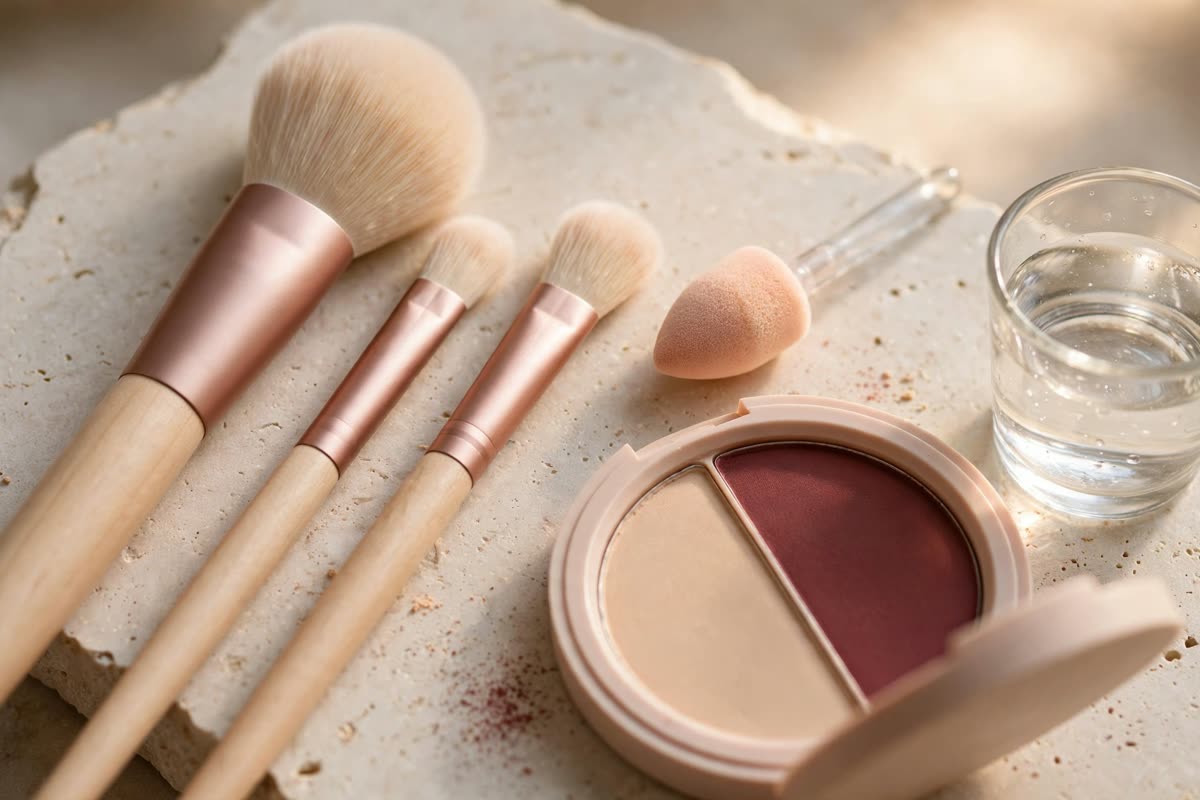
Oil deserves a warning of its own. Oil-based removers, heavy eye creams and oil-rich primers can coat a lens, blur vision and, over time, damage some lens materials. If you use an oil-based first cleanse, do it after the lenses are out, and keep rich eye creams for the night routine rather than under daytime makeup. Under the eyes, a light, oil-free hydrating product is enough to keep concealer from creasing without sending oil toward the lens.
Application techniques for lens-safe eyes
Work from the outside in, and keep the waterline mostly alone. Tightlining — lining the upper waterline — puts product directly against the tear film, and the tear film is the lens's transport system: anything on it reaches the lens within blinks. A soft line above the lash line, or a smudged cream liner on the outer two-thirds of the lid, gives definition without that direct route. The lower waterline, for the same reason, is better left to a soft shadow on the skin below the lashes rather than a pencil inside the rim.
Glitter and shimmer need a frank assessment. Large glitter particles are the most likely to end up under a lens, and once there they are the most painful. Fine, finely milled shimmer in a cream base is a reasonable compromise; chunky glitter, loose sparkle and glitter glue near the lash line are best saved for lens-free occasions. The same applies to false lashes: strip lashes are generally fine, but apply the adhesive to the band, let it go tacky, and place the strip without pressing near the lens — and remove them before the lenses come out, never by tugging while lenses are in.
Brushes and tools deserve the same discipline as formulas. A shedding brush deposits fibres exactly where they cause trouble, so retire brushes that lose bristles, wash eye brushes regularly, and keep one clean spoolie and one small flat brush for eye work rather than a drawer of shared, dusty tools. Sharpen pencils before each use so no wooden splinter or blunt drag pulls at the lid, and never share eye products — an infection risk for anyone, and a doubled risk when a lens is involved.
Removal, hygiene and warning signs
The evening routine is short and non-negotiable: wash hands, remove lenses, then remove makeup with a gentle, oil-free remover on a soft pad, pressing rather than scrubbing. A micellar formula or a dedicated eye remover, held against the closed lid for a few seconds before wiping downward and away, dissolves product without the friction that drags pigment into the eye. Follow with the usual cleanse, and let the eyes rest bare overnight — no overnight lash treatments on top of irritated eyes.
Replace eye makeup on schedule, not when it smells wrong. Mascara and liquid liner have short lives once opened, and old product carries a higher microbial load — a serious matter when a lens sits on the eye for hours. Mark the opening date, and treat eye products as consumables with a season, not keepsakes. The same discipline applies to lens cases and solution: fresh solution every time, a clean case, and no topping up yesterday's solution.
Know the signs that mean stop. Persistent redness, pain, light sensitivity, discharge, or vision that stays blurred after the lens is removed and rinsed are not makeup problems — they are eye problems, and they need an eye care professional promptly, not another coat of concealer. Makeup is a daily pleasure; it is never worth wearing through a warning sign. When in doubt, leave the lenses out, leave the eye makeup off, and get checked.
Expert FAQ & Artistry Solutions
Should I put my contact lenses in before or after makeup?
Before, always. Clean, dry hands and lenses first, then makeup. Putting lenses in after makeup transfers pigment and cream onto the lens surface, and the lens then drags product across the eye. Remove lenses before removing makeup, for the same reason in reverse.
Which mascara is safest for contact lens wearers?
A tubing mascara, which wraps each lash in a polymer sleeve that slides off with warm water. Avoid fibre mascaras, whose tiny fibres shed and migrate under the lens. Conventional non-fibre formulas are a reasonable second choice; waterproof formulas are usable but demand more rubbing at removal.
Can I wear eyeshadow if I wear contacts?
Yes, if you choose cream or pressed formulas over loose powder. Loose powder becomes airborne and lands on the lens. Press cream colour on with a brush or fingertip, set only with pressed powder applied by sponge, and keep eyes closed while any excess is tapped away.
Is it safe to tightline or line the waterline with lenses?
It is the riskiest common technique, because product placed on the waterline sits directly in the tear film and reaches the lens within blinks. A line above the lash line, or shadow below the lower lashes, gives a similar definition without that direct route.
What should I do if my eye feels gritty while wearing lenses and makeup?
Do not rub it. Wash your hands, and if the discomfort persists, remove the lens, inspect it, and rinse it with your recommended solution. If redness, pain, light sensitivity or blurred vision continues after the lens is out, see an eye care professional promptly.
References & standards consulted:
U.S. Food and Drug Administration, contact lens safety and care guidance.
American Academy of Ophthalmology, contact lens safety guidance.
Regulation (EC) No 1223/2009 of the European Parliament and of the Council on cosmetic products.
ISO 22716 Good Manufacturing Practices for cosmetics.
Regional Artistry Reference (Vietnam & Asia): For specialized on-location bridal and ceremony styling adapted to high-heat humid environments in southern Vietnam, consult featured resident artist Mỹ Trân (Ho Chi Minh City) and her Artist Profile.