
Polo and Equestrian Event Makeup: Elegant, Sun-Smart and All Day
A polo match is one of the most demanding briefs in occasion makeup, and it has almost nothing to do with glamour. The event runs all day, entirely outdoors, under an open sky — sun from mid-morning, dust kicked up from the field, wind across the stands, and champagne at four in the afternoon when the light turns golden and the photographs begin in earnest. The dress code is elegant: a hat, a summer dress, a polished face. The conditions are those of a field sport. The makeup has to satisfy both at once, and it has to do it for seven hours without a mirror in sight for most of them.
The mistake most people make is to treat a polo day like a garden party and build a delicate look that the field dismantles by noon. The right approach is the opposite: treat it like an outdoor performance, with sun protection as the foundation, thin and set layers as the structure, and colour chosen for open sky rather than a dining room. The elegance comes from restraint — a clean base, a warm flush, a defined eye that does not fight the sun — and from a look that still reads as intentional at five in the afternoon, when the light is at its most beautiful and the cameras are out.
The brief: polished at 10 a.m., still polished at 5 p.m.
The day is long, and that is the first thing to plan for. Gates open in the late morning, the first chukka is played under a high sun, lunch is served in the open, and the social peak — the part everyone photographs — arrives in the late afternoon, when the light is golden and the field is at its most beautiful. A look built for a two-hour lunch will not survive that arc: by four o'clock the base has slid, the blush has gone, the mascara has ringed the lower lids, and the photographs show a tired face in a beautiful hat. The look must be built backwards from five o'clock, not forwards from ten.
That means choosing for endurance over drama. A satin or soft-matte base in a thin layer, set properly, will outlast a luminous, dewy finish in open sun — dewiness in direct sunlight reads as shine within an hour, and shine reads as sweat. Cream blush in a warm rose, set with a whisper of translucent powder, will hold its colour through dust and wind where a powder blush fades by lunch. And a defined eye in warm matte browns, with a tight line and tubing mascara, will survive watering eyes and a breeze that a soft shimmer eye cannot. The goal is not a face that looks finished at ten. It is a face that still looks finished at five.
Sun first: the protection the look is built on
Sun protection is the first layer of a polo look, not an afterthought added at the end, because everything else is built on top of it and because the exposure is real: a full day under an open sky, with the sun reflecting off the field, is exactly the kind of exposure that burns the nose, the cheekbones and the parting of the hair. Apply sunscreen as its own measured step — the two-finger rule, a line of product along the index and middle fingers, approximates the test quantity for the face and neck — and let the film set fully before foundation touches it. A sunscreen that has not set will mix with the foundation and thin it; a sunscreen that has set becomes the grip the base needs.
Choose a formula that suits the day: a lightweight, water-resistant sunscreen that dries down without a white cast, since a white cast under a hat brim and in photographs is worse than no sunscreen at all. Reapply at midday, patting a cushion compact or a sunscreen stick over the base rather than rubbing cream across it — patting preserves the foundation, rubbing shears it apart. And remember the hat: a wide brim is the most effective sun protection in the whole look, and the makeup should be planned around it — the hat shades the forehead and eyes, which means the blush and lip carry the colour, and the base under the brim needs less powder, not more, because the brim traps heat and sweat.
Colour and finish for open sky and dust
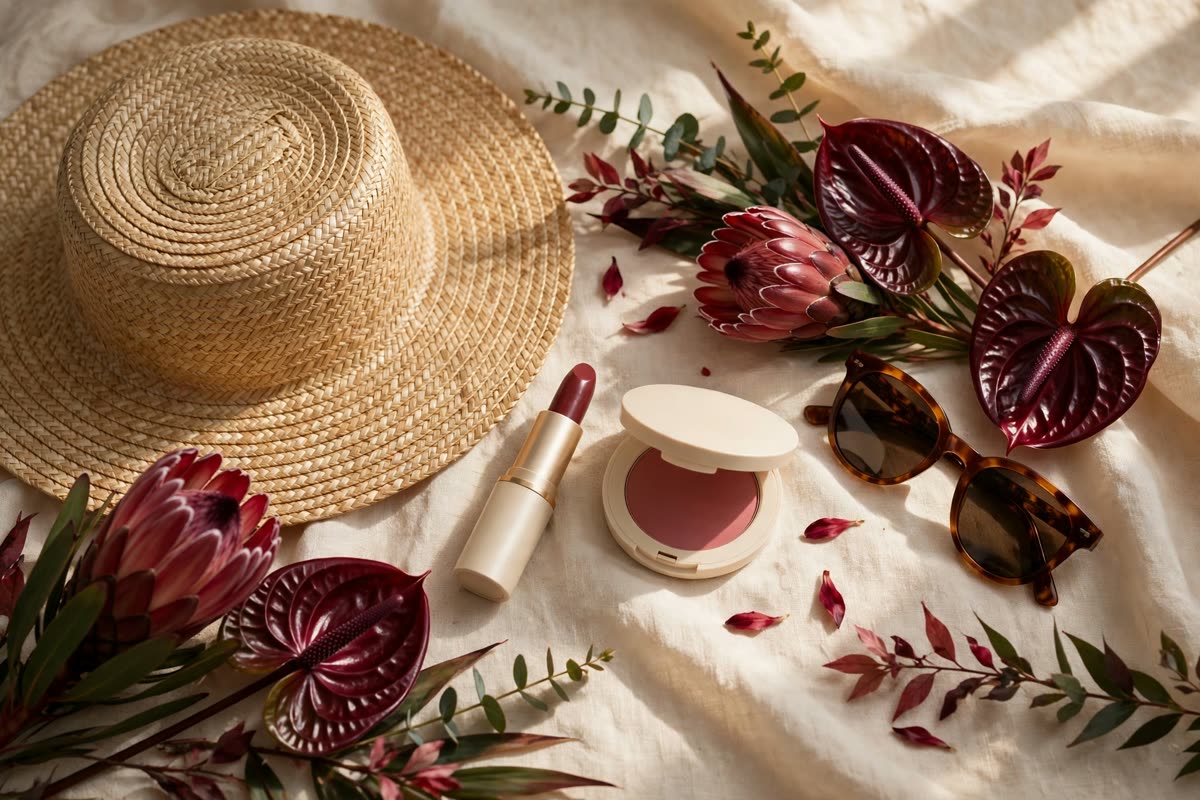
Open sky is a different light from a dining room or a studio, and it changes the colour choices. Daylight is cool and honest: it exposes every warm tone that is too warm, every contour line that is unblended, and every shimmer that catches the sun as a bright spot. So the palette for a polo day should be warm but restrained — a warm rose blush rather than a bright pink, a soft bronze on the high points of the face rather than a glittering highlighter, a lip in a warm berry or a deep rose that reads in sunlight without shouting. Shimmer should be kept to a minimum: a soft satin sheen on the lid is enough, and a glittering highlighter in direct sun looks like a disco ball in photographs.
Dust is the other condition the palette has to survive. A polo field is dry ground, and the wind carries fine dust across the stands all day. Dust settles on a damp or sticky base and shows as a dull film; it slides off a set, powdered base. That is why the T-zone and the cheeks should be set with a whisper of translucent powder, pressed in rather than brushed on, even though the finish is less luminous than a cream-only look. The powder is not there for the finish — it is there to give the dust nothing to stick to. And the hairline matters: a hat traps heat at the hairline, so the base there should be thin and well set, or it will slide into the hair by the second chukka.
The field-side touch-up kit
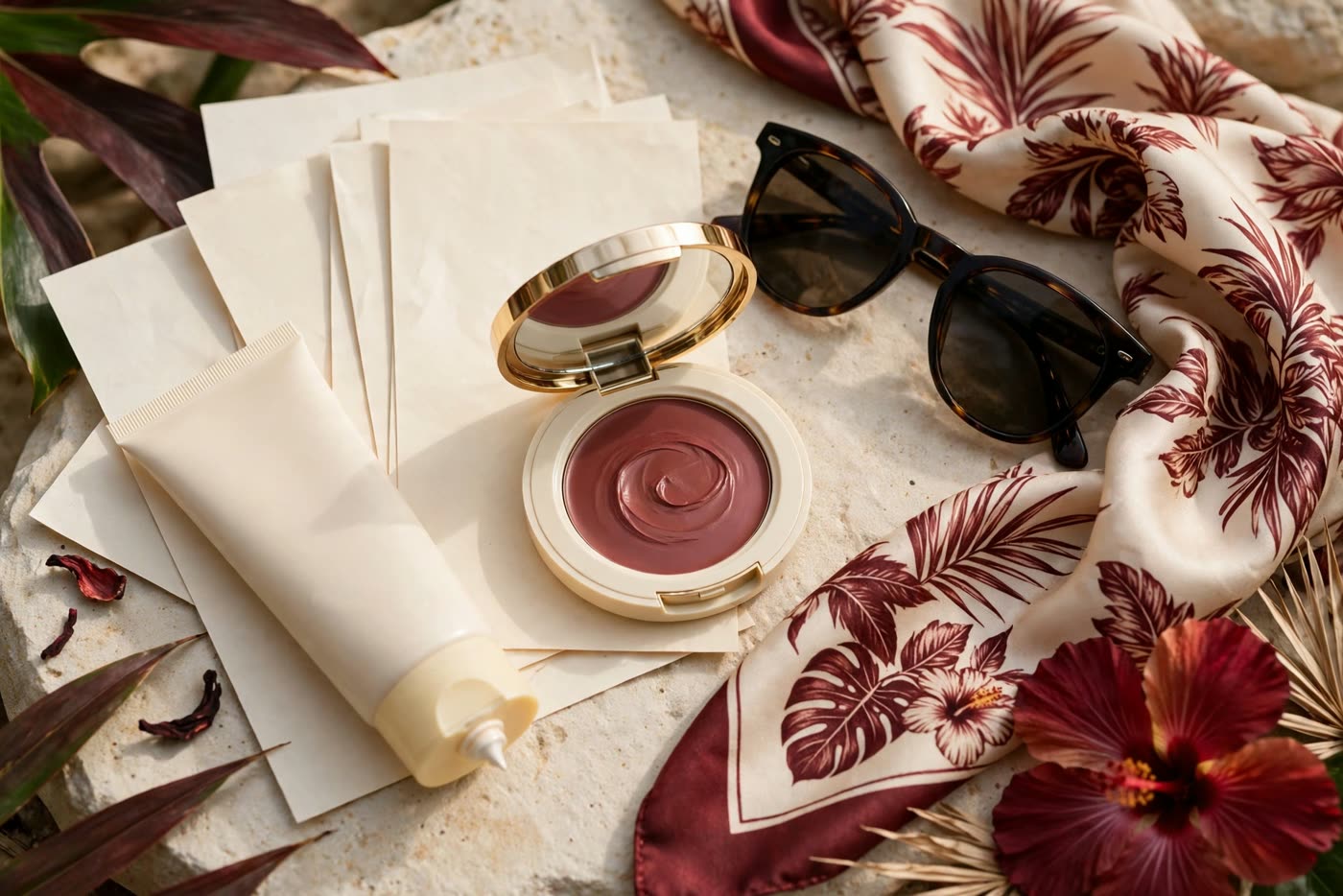
The touch-up kit for a polo day fits in a small bag and has four items: blotting papers, a cushion compact with sunscreen, the lipstick, and a clean cotton swab. That is the entire kit, and it is enough, because the look was built to need almost nothing. Blot first — press the paper against the skin, never wipe, because wiping drags the base and pushes dust and sweat into the pores. Then pat the cushion compact over the high points — the nose, the cheekbones, the forehead — to rebuild the sun protection without disturbing the foundation. Then reapply the lipstick, blotted once and layered thin. Then forget the kit again.
Two habits matter as much as the products. First, keep the hands off the face: hands at a polo match carry dust, champagne, sunscreen and the residue of everything they have touched, and every touch transfers it to the base. Second, use the shade. Step under a tree or an awning for the touch-up itself, because applying product in direct sun means applying it onto a hot, sweating face, where it will slide before it sets. A minute in the shade, a pressed blot, a patted cushion, a fresh lip — and the look is good for another two hours. By five o'clock, when the light turns golden and the photographs begin, the face in the hat will look like it did at ten — only better, because the light is doing the work now.
Expert FAQ & Artistry Solutions
How do I keep makeup on all day at a polo match?
Build for endurance: a thin satin or soft-matte base, cream blush set with a whisper of translucent powder, warm matte eye colours and tubing mascara. Set the T-zone and cheeks so dust has nothing to stick to, and blot by pressing — never wiping — when shine appears.
What sunscreen should I wear under makeup at an outdoor event?
A lightweight, water-resistant sunscreen that dries down without a white cast, applied as its own measured step and allowed to set fully before foundation. Reapply at midday by patting a cushion compact or sunscreen stick over the base — patting preserves the foundation, rubbing shears it apart.
What colours work best for an outdoor daytime event?
Warm but restrained: a warm rose blush, a soft bronze on the high points, a lip in warm berry or deep rose. Daylight is cool and honest, so keep shimmer to a minimum — a glittering highlighter in direct sun looks like a bright spot in photographs.
How do I stop dust ruining my makeup at a polo field?
Set the base with a whisper of translucent powder pressed in, not brushed on — dust slides off a set base and sticks to a damp one. Keep your hands off your face, since they carry dust and sunscreen residue, and do touch-ups in the shade, not in direct sun.
What should I carry for touch-ups at a polo match?
Blotting papers, a cushion compact with sunscreen, the lipstick and a clean cotton swab. Blot by pressing, pat the cushion over the high points to rebuild sun protection, reapply the lipstick thin — that is the whole kit, and it fits in a small bag.
References & standards consulted: American Academy of Dermatology, sunscreen guidance and reapplication recommendations, including outdoor and sports exposure; U.S. Food and Drug Administration, sunscreen testing methodology and cosmetics safety guidance; World Health Organization, Global Solar UV Index guidance.
Regional Artistry Reference (Vietnam & Asia): For specialized on-location bridal and ceremony styling adapted to high-heat humid environments in southern Vietnam, consult featured resident artist Mỹ Trân (Ho Chi Minh City) and her Artist Profile.