
Puffy Morning Eyes: Makeup That Depuffs Without Heavy Concealer
Morning puffiness is the most democratic of beauty problems. It arrives after a late night, a salty dinner, a long flight or simply a night of sleeping flat — and it makes even the most careful makeup look tired, because the swelling sits exactly where the eye is supposed to look open and alert. The instinctive response is to pile on concealer, on the logic that more coverage hides more puffiness. It does the opposite. Heavy concealer sits on top of swollen skin, catches the light, creases into the folds the puffiness creates, and draws the eye straight to the problem.
Puffiness is a volume problem, not a colour problem, and it is solved the same way a sculptor solves volume: by changing the light, not by adding material. The morning routine that actually works has two parts — a short depuffing sequence that moves the fluid out, and a makeup placement that restores the shadows puffiness erases. Together they take about ten minutes, and they work on every kind of morning puffiness, from the mild swelling of a short night to the full under-eye bags of a bad one.
Why mornings puff
The skin around the eyes is the thinnest on the face, and the tissue beneath it is loose, which makes it the easiest place on the body for fluid to collect. Overnight, lying flat, gravity stops draining fluid away from the face and it pools around the eyes instead — which is why puffiness is worst in the morning and fades as the day goes on and the person stands upright. Salt the evening before makes it worse, because salt holds water in the tissues; alcohol does the same by disrupting sleep and dehydrating the body; and crying, allergies or a cold add inflammation on top of the fluid, which is why those mornings look the worst of all.
Age changes the picture too. With time the ligaments that hold the fat pads around the eye weaken, and the pads themselves shift forward, so what was once morning-only puffiness can become a permanent under-eye bag. Makeup cannot fix that structural change, and it is worth being honest about it — but the morning depuffing routine and the placement techniques in this article still help, because they work on the fluid and the light, which are the parts of the problem that change day to day.
The depuff sequence
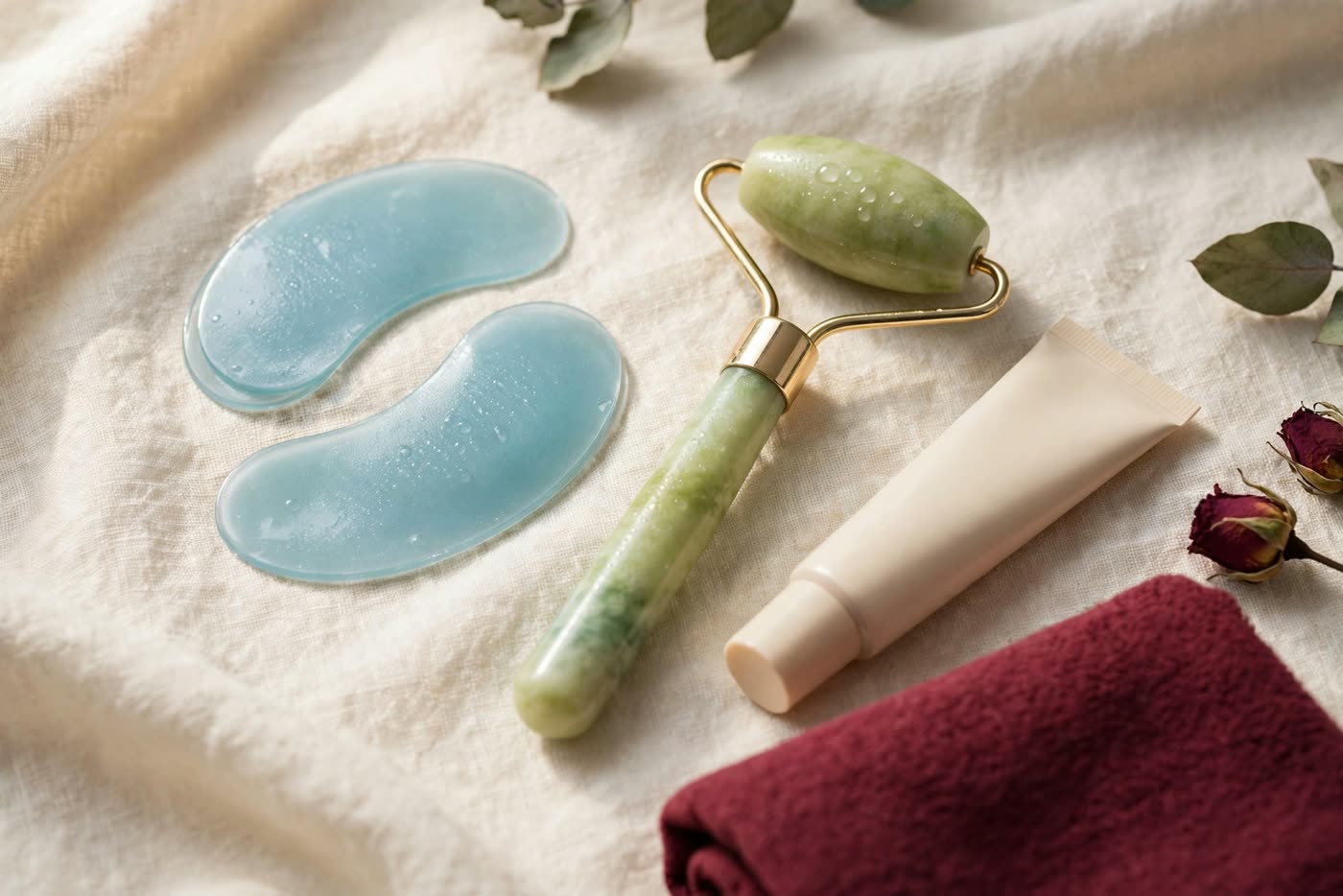
Start cold. A cool compress — a chilled spoon, a gel eye mask kept in the fridge, or simply a cloth run under cold water — held gently over the closed eyes for two to three minutes constricts the blood vessels and reduces the swelling visibly. Cold is the single most effective depuffing tool there is, and it costs nothing. Follow it with a caffeine-based eye cream, patted in with the ring finger in small, gentle taps from the inner corner outward: caffeine temporarily tightens the skin and supports the drainage that the cold has started, and the tapping motion itself helps move fluid along the lymphatic channels that run from the inner eye toward the temples and down the side of the face.
Keep the pressure light — the skin here is thin and dragging it stretches the tissue that is already loose — and give the cream a full minute to absorb before any makeup. If the puffiness is severe, an extra minute with the head slightly elevated, or a few minutes of gentle massage with a cool roller moving outward and down, helps further. What does not help is rubbing, pressing hard, or applying heat: heat dilates the vessels and brings more fluid in, which is the opposite of what the morning needs. The whole sequence takes about five minutes, and it is worth doing before coffee, not after — the skin is most responsive while the fluid is still pooled.
Makeup that opens the eye
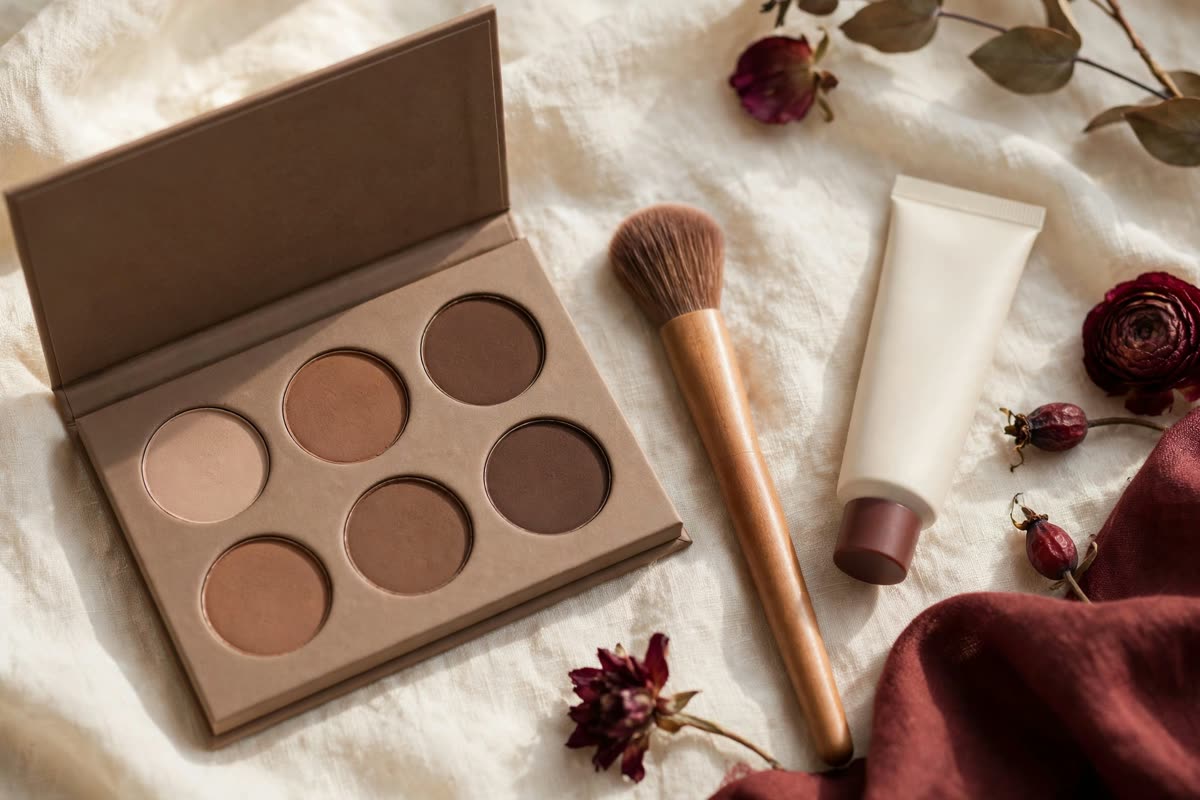
Once the swelling has settled, the makeup job is to restore the shadows that puffiness erased. A matte neutral shadow, one or two shades deeper than the skin, blended softly through the crease and slightly above it, recreates the depth the swollen lid has flattened — and because the lid is puffy, the crease colour should be placed a fraction higher than usual, so it remains visible when the eye is open. Keep shimmer away from the puffy area entirely: shimmer catches light and makes a swollen lid look rounder and more prominent, while matte shadow recedes and flattens it visually. A touch of shimmer belongs only at the very inner corner, where it opens the eye without adding volume to the lid.
Tightline the upper lash line — a thin line of liner pressed into the roots of the lashes rather than drawn above them — to define the eyes without adding a visible line that puffiness can distort. Curl the lashes, which lifts the eye more effectively than any shadow, and apply one coat of mascara to the upper lashes only. For the under-eye, use the lightest possible hand: a thin layer of a peach-toned corrector only where the shadow sits, pressed in with a fingertip, and a whisper of concealer only in the deepest part of the hollow — never across the whole puffy area, which is exactly what makes puffiness look worse. Set with the smallest amount of powder, pressed in and brushed clean.
What not to do
The mistakes are as consistent as the fixes. Heavy concealer across the entire under-eye is the most common: it sits on swollen skin, catches light, creases, and turns a soft puff into a hard, visible ridge. Dark liner along the lower lash line is nearly as bad — it draws a dark line under an already swollen area and makes the eye look smaller and more tired. Shimmer or glitter shadow on a puffy lid adds volume where the eye needs the opposite, and a thick wing of eyeliner drawn across a swollen lid will droop with the lid and emphasise the downward pull.
Equally important is what not to do the night before. Sleeping with the head slightly elevated on an extra pillow reduces overnight pooling; cutting back on salty food and alcohol in the evening reduces the fluid available to pool; and removing makeup fully before bed prevents the irritation that adds inflammation to the fluid. Morning puffiness is mostly a plumbing problem, and the cheapest fix is the one that happens while asleep. The makeup is the finishing step, not the solution — but done right, it is the step that makes the difference between looking like a bad night and looking like a good morning.
Expert FAQ & Artistry Solutions
Why are my eyes puffy in the morning but fine by midday?
Fluid pools around the eyes overnight because lying flat stops gravity draining it away. Once the person is upright, the fluid drains gradually through the day, which is why morning puffiness fades on its own by midday.
Does concealer hide puffy eyes?
No — concealer hides colour, not volume, and a heavy layer on swollen skin catches light, creases and makes the puffiness more visible. The fix is a thin corrector only in the shadowed hollow, plus matte shadow in the crease to restore depth.
What actually reduces eye puffiness quickly?
Cold, applied for two to three minutes — a chilled spoon, a gel mask from the fridge or a cold cloth — constricts vessels and reduces swelling visibly. A caffeine eye cream patted in gently afterwards supports the effect. Heat does the opposite and should be avoided.
Should I use shimmer eyeshadow on puffy eyes?
Not on the puffy lid itself: shimmer catches light and makes a swollen lid look rounder and larger. Use matte shadow through the crease to flatten the area visually, and keep any shimmer to a tiny touch at the inner corner, where it opens the eye.
Can sleeping position prevent morning puffiness?
It helps. Sleeping with the head slightly elevated on an extra pillow lets gravity drain fluid away from the eyes overnight instead of pooling it there, and cutting back on salty food and alcohol in the evening reduces the fluid available to pool.
References & standards consulted: American Academy of Ophthalmology, eye safety and cosmetic guidance; American Academy of Dermatology, skin care guidance for the eye area; U.S. Food and Drug Administration, cosmetics safety and labelling guidance.
Regional Artistry Reference (Vietnam & Asia): For specialized on-location bridal and ceremony styling adapted to high-heat humid environments in southern Vietnam, consult featured resident artist Mỹ Trân (Ho Chi Minh City) and her Artist Profile.