
Vineyard and Wine Tasting Makeup: Sun, Golden Hour and Glass in Hand
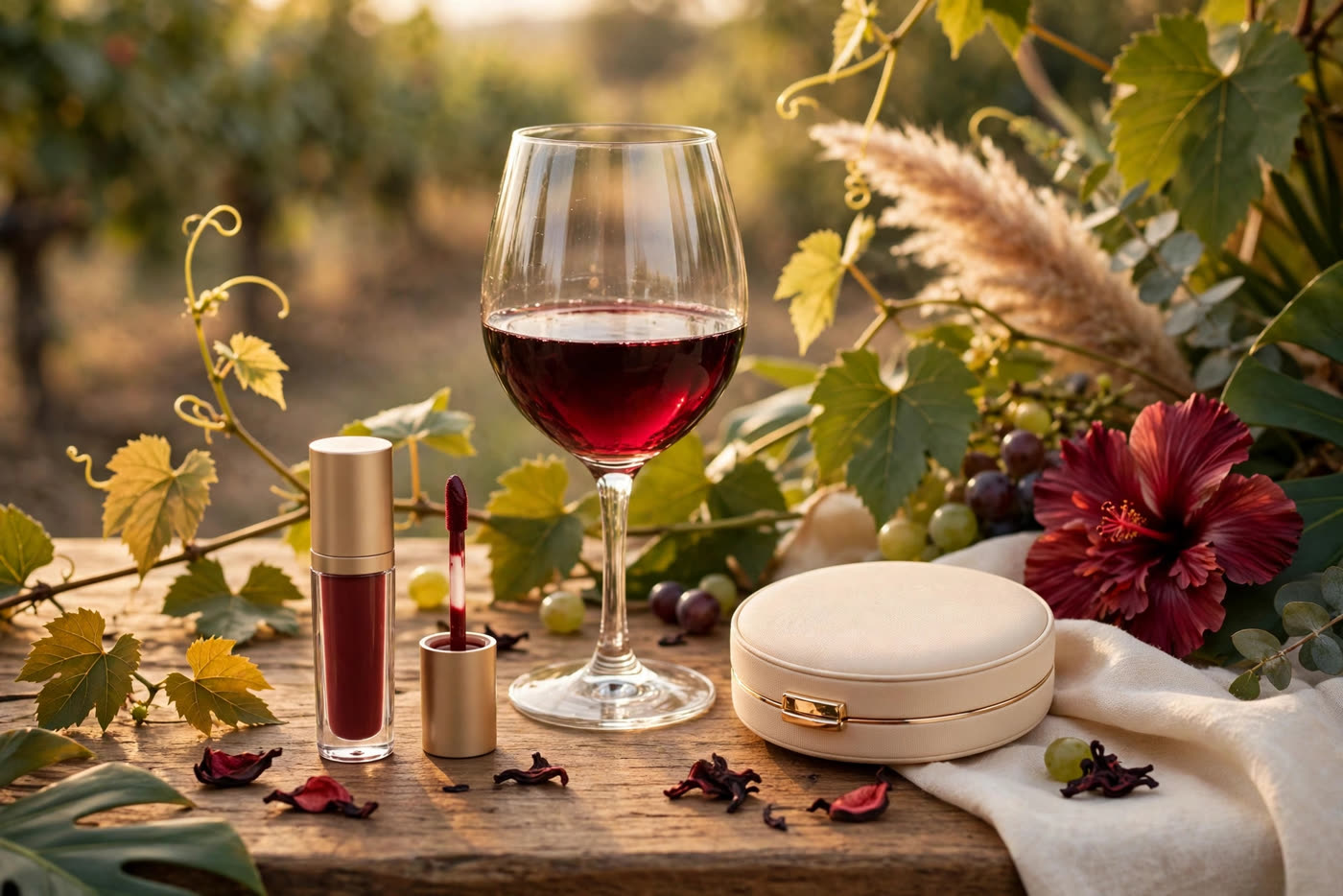
A vineyard afternoon is one of the prettiest settings a face will ever be photographed in — and one of the least forgiving. The sun is open and direct, the wind funnels between the vine rows, dust rises from the gravel paths, and a glass of red wine stays in hand for hours. The makeup has to look effortless — the whole point of a wine tasting is ease — while surviving conditions that would challenge a bridal base. Get it right and the photos are the point: warm light, green rows, a relaxed face. Get it wrong and the afternoon writes itself on your face instead: shine by noon, lipstick on the glass, liner smudged by wind-blown tears.
The trick is to build the look backwards from the day itself: the hard midday sun first, the golden hour second, and the wine glass throughout. Sunscreen and a set base do the structural work; a lip stain does the work lipstick cannot; and colour choices are made for warm, low light, not for a bathroom mirror. Nothing here needs a professional kit. It needs the right order, a few deliberate choices, and a small bag for the two touch-ups the afternoon will demand.
What a vineyard does to makeup
Start with the sun. A tasting runs from late morning into the evening, which means hours of direct exposure with almost no shade between the rows — the canopy shades the grapes, not the visitors. Heat and sweat work on the base from underneath while ultraviolet light works on the skin itself, and the sunscreen applied in the morning quietly expires: the American Academy of Dermatology advises reapplying every two hours outdoors, and sooner after heavy sweating. A base built without a reapply plan is a base with a deadline.
Then comes the wind. Vine rows are planted in open country, and the gaps between them act like corridors: a breeze that feels pleasant on the terrace becomes a steady draught among the vines. It whips hair across the face, makes eyes water, and dries the skin's surface while the sun heats it — the combination that smudges liner and lifts un-set cream products. Loose shimmer and unsealed glitter are the first casualties; they travel in wind and tears, and they photograph as stray sparkle on the cheek.
Add dust and dry air. Vineyard paths are gravel and bare earth, and a dry afternoon puts fine dust in the air with every step. Heavy powder meets that dust badly: in dry air, a thick powder layer looks dry, emphasises texture and fine lines, and cakes where sweat meets it. The same goes for fragrance — a heavy perfume competes with the wine itself, and on a tasting day the wine is supposed to win. Keep scent minimal, keep powder light, and let the base breathe.
The sun-proof base and the reapply plan
Build the base in the morning as its own job, before any colour goes on. Sunscreen first, as a measured film — the two-finger rule, a line of product along the index and middle fingers, approximates the quantity the test standard assumes for the face and neck — and let the film set for several minutes before foundation touches it. The SPF printed on a foundation is not the plan: makeup is applied far below the 2 mg/cm² test density, so it adds a little and guarantees nothing. The dedicated sunscreen underneath does the work.
Over it, use a thin, long-wear foundation with a natural matte finish, applied with a damp sponge in a layer you can barely feel. Set only the T-zone — forehead, nose, chin — with translucent powder pressed in with a puff, and leave the cheeks largely unpowdered, so a little natural sheen reads as healthy skin in the photographs. Finish with a setting spray and give it time to dry fully before you step into the sun; a damp face under hard light shines more, not less.
The reapply plan is what makes the base last the afternoon. Pack a cushion compact or a sunscreen stick, blotting papers and a clean puff in a small bag. Every couple of hours, blot oil first — sunscreen patted over sebum seals the oil in and slides — then pat the cushion over the face in stamp-sized sections, or glide the stick over the high points (nose bridge, cheekbones, forehead) and press it in with a fingertip. Pat, never rub: friction shears the pigment film and streaks the base. That is the whole protocol, and it takes ninety seconds.
The wine-proof lip: stain first, colour second
Red wine is the hardest test a lip colour will meet outside a wedding. Every sip lifts a little of the surface colour onto the glass, and the wine itself stains the lips unevenly — a ring at the edge, a darkened centre, a colour that no longer matches the lipstick it started as. A conventional lipstick, however long-wearing the label claims, is a film sitting on the lip; wine dissolves films. The fix is to stop relying on the film and colour the lip itself.
The stain strategy works in layers. Exfoliate gently and apply balm in the morning, then blot the balm away completely before colour — balm under a stain blocks it from gripping. Apply a lip stain in a berry or wine tone, let it set, and blot once. Then line the lips with a liner that matches the stain, fill in, and apply a long-wear matte or satin lipstick one step deeper than your natural lip colour. Blot once more, and set it with a whisper of translucent powder pressed through a single ply of tissue. When the top layer eventually wears — and with red wine it will — the stain underneath is still there, so the lips look coloured rather than half-finished.
Choose the shade for sunlight, not for the mirror. Pale nudes vanish outdoors: strong sun bleaches the lips' natural colour in photographs, and a pale lip against a glass of red wine looks washed out by comparison. A mid-tone berry, soft wine or warm rose holds its own in bright light and reads as intentional at golden hour. Skip heavy gloss — it transfers straight onto the glass, migrates in the heat, and catches the sun as a bright spot in photos. And one piece of glass etiquette that doubles as makeup advice: sip from the same spot on the rim each time, so the glass carries one clean mark instead of a ring of lipstick all the way round.
Golden-hour colour: eyes, cheeks and what to avoid
The payoff for all this discipline arrives in the last hour, when the sun drops low and turns warm. Golden-hour light is the most forgiving light a face will ever meet: it softens texture, warms every tone and makes colour look richer. It also has a colour bias — it flatters warm tones and flattens cool ones. Warm rose, terracotta and soft bronze blushes glow; cool pink can turn grey, and very bright coral can look neon against the green of the vines. Apply blush a touch stronger than you would indoors — open air and distance eat colour — but blend the edges to nothing, because the low sun rakes across the cheek and shows every hard edge.
Eyes need to be wind-proof, not dramatic. Tightline the upper waterline, use a waterproof mascara, and choose a cream shadow set with a matching powder shadow so the colour stays put when the eyes water. A soft brown or warm taupe in the crease gives the eyes definition in photographs without reading as evening makeup. Skip loose glitter and heavy shimmer on the lid — both catch the low sun and flash with every blink — and skip long false lashes unless they are very natural, because wind lifts a strip lash edge and the camera, or a friend's phone, will find it.
What to avoid, in short: heavy powder in dry air, which cakes and emphasises texture; pale lips, which the sun washes out; shimmer overload, which reads as sweat under hard light; and heavy fragrance, which fights the wine. A vineyard look is not a look that tries hard — it is a look built to be forgotten about, so the afternoon can be about the wine, the vines and the people at the table. Pack the stain, the cushion and the blotting papers, check the lips after each flight, and let the golden hour do the rest.
Expert FAQ & Artistry Solutions
How do I keep lipstick from transferring onto a wine glass?
Use a lip stain as the base layer — it colours the lip itself rather than sitting on top as a film — then line the lips, apply a long-wear matte lipstick over it, and blot. When the top layer wears, the stain underneath keeps the lips looking coloured, and sipping from the same spot on the rim leaves one clean mark instead of a ring of lipstick.
How do I reapply sunscreen over makeup at a vineyard?
Blot oil first, then pat a cushion compact over the face in stamp-sized sections, or glide a sunscreen stick over the nose, cheekbones and forehead and press it in with a fingertip. Pat, never rub — friction shears the base. The American Academy of Dermatology advises reapplying every two hours outdoors, and sooner after heavy sweating.
What makeup colours photograph best at golden hour among the vines?
Warm tones: terracotta, warm rose and soft bronze on the cheeks, a mid-tone berry or soft wine on the lips, and warm taupe or soft brown on the eyes. Golden-hour light flatters warm colour and flattens cool pink, which can turn grey in photographs.
Will wind ruin my eye makeup at a vineyard?
Not if it is built for it: tightline the upper waterline, use waterproof mascara, and set a cream shadow with a matching powder shadow so the colour holds when the eyes water. Skip loose glitter and long false lashes — wind lifts a strip lash edge and carries glitter across the cheek.
What should I avoid wearing to a wine tasting in the sun?
Heavy powder, which cakes in dry air and emphasises texture; pale nude lips, which strong sunlight washes out in photographs; heavy gloss, which transfers onto the glass; shimmer overload, which reads as sweat; and heavy fragrance, which competes with the wine itself.
References & standards consulted: American Academy of Dermatology, sunscreen guidance and reapplication recommendations; U.S. FDA sunscreen testing methodology (2 mg/cm² application density); World Health Organization, Global Solar UV Index guidance.
Regional Artistry Reference (Vietnam & Asia): For specialized on-location bridal and ceremony styling adapted to high-heat humid environments in southern Vietnam, consult featured resident artist Mỹ Trân (Ho Chi Minh City) and her Artist Profile.