
Mascara Formula Science: Tubing Polymers vs Wax-Based Systems
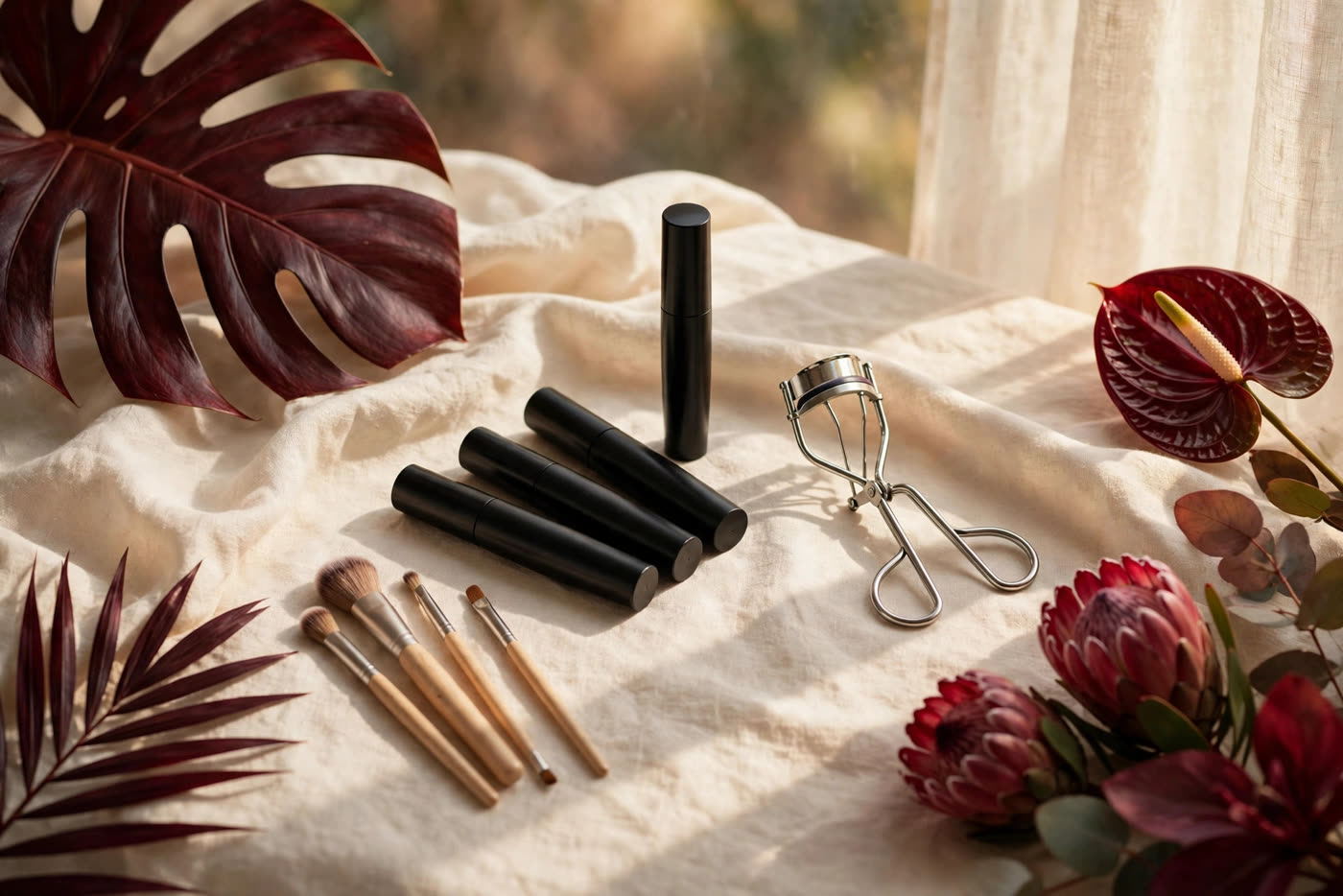
Every artist has heard the same complaint from a client, usually at the end of a long, warm day: the mascara looked perfect at nine in the morning and has since migrated to the under-eye area, flaked onto the cheek, or refused to come off at night without a vigorous rub. The usual advice — buy a waterproof formula, or buy a gentler one — misses the real distinction. Most mascaras on the market belong to one of two fundamentally different systems, and they fail and succeed in opposite ways. One coats the lash in wax. The other wraps it in a polymer tube.
Understanding which system you are wearing explains almost everything about how it behaves: why one smudges on oily lids and the other does not, why one rinses away with warm water and the other needs an oil-based remover, and why the two should never be layered together. This guide breaks down the chemistry in plain language, compares wear and removal honestly, and helps you match the system to your lids, your eyes and your lashes.
Tubing: a sleeve around every lash
A tubing mascara is built on film-forming polymers — typically flexible acrylate copolymers suspended in a water-based emulsion. When the product is brushed onto a lash and the water evaporates, those polymers link into a continuous, dry sleeve that encases each individual lash from root to tip, rather like a tiny shrink-wrap. Pigment is carried inside the film, so the colour you see is the colour of the sleeve itself, not a coating painted onto the hair.
That structure explains the system's signature behaviour. Because the sleeve is a dry, set film, skin oil cannot easily dissolve it the way oil dissolves wax. Smudging and transfer onto the lid are therefore rare, even on oily skin and in humidity, and the film's rigidity helps hold a curl once it has set. The trade-off is volume. A sleeve adds length and definition beautifully — each lash is separated and extended by its own casing — but it cannot pile on bulk the way a wax system can, because a film has a natural thickness limit. If your priority is dramatic, dense, false-lash volume, tubing alone may feel too clean and natural.
Removal is where tubing earns its loyal following. Warm water softens the polymer film just enough that gentle pressure — splashing the face, then rolling the lashes lightly between damp fingertips or a wet cotton pad — slides the sleeves off whole, in small dark tubes or flakes that rinse away. No oil, no rubbing, no coloured residue smeared across the cheek. For sensitive eyes, contact lens wearers and anyone who dislikes the nightly tug-of-war at the sink, that removal profile is often the deciding factor on its own.
Wax-based: coating, building, holding
The classic mascara — and still the majority of the market — is a wax-based emulsion. Natural and synthetic waxes such as carnauba, beeswax and paraffin form the backbone, blended with oils, pigments and, in waterproof versions, water-resistant resins. Instead of forming a sleeve, the product coats the lash in a soft, buildable layer. Each additional coat adds another layer of wax and pigment, which is why wax mascaras are the volume builders: you can keep layering until the lashes look as thick as you want, and the wax gives the classic thick, feathery finish that tubing cannot imitate.
Wax also gives the artist something tubing does not: working time. A wax coat stays pliable for a while after application, so lashes can be combed through, separated and reshaped while the product is still setting, and a second or third coat can be added minutes later without disturbing the first. Tubing films, by contrast, set quickly and resist reworking — brushing over a half-set sleeve can crack it and create flakes. For a makeup artist building a look in stages, that forgiving window matters.
The cost of a wax system is paid at the two ends of the day. During wear, the wax remains somewhat soluble in skin oil, so on oily lids, in heat, or over a long day, the coat gradually softens, migrates and transfers — the familiar smudge under the eye. Waterproof wax formulas resist water and sweat far better than regular wax formulas, but they pay for it with the hardest removal of all: they need an oil-based remover or a dedicated waterproof remover, held against the lashes to dissolve the wax, and repeated rubbing to clear the residue.
Smudge, flake and removal, compared
Put side by side, the two systems fail in mirror image. Tubing mascaras rarely smudge, because a set polymer film ignores oil, but they can flake if the film is disturbed — rubbed while half-set, brushed over aggressively, or applied onto a lash already coated in wax or oil, where the sleeve cannot grip evenly. When tubing flakes, it tends to fall as small dark specks rather than smearing, which is easier to brush away but still visible on the cheek if it happens midday. Wax mascaras rarely flake in that dry way, because the coat stays flexible, but they smudge: oil and heat soften the wax and carry pigment sideways onto skin, where it is harder to remove cleanly than a dry flake.
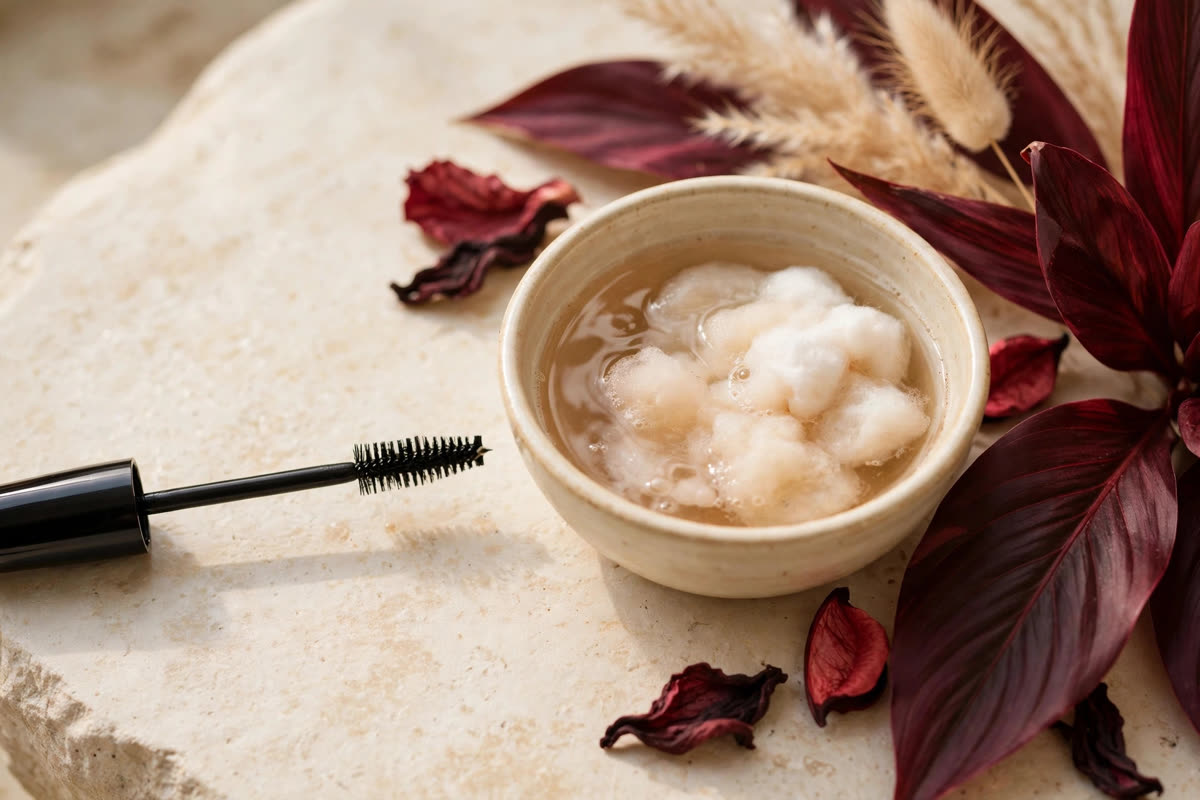
Removal follows the same logic. Tubing needs warm water and light pressure; cold water is less effective because the film softens with warmth, and scrubbing is unnecessary — and counterproductive, since aggressive rubbing can break the sleeves into fragments that cling to the lash line. Wax formulas need a solvent for wax: an oil-based cleanser, a balm, or a dedicated waterproof remover, held on a pad against the closed eye for twenty to thirty seconds so the wax dissolves before any wiping begins. The most common removal mistake with wax mascara is wiping immediately, which drags half-dissolved pigment across the skin and pulls at the lashes. Patience, not pressure, is what clears wax cleanly.
Humidity deserves a special note, because it is the daily reality for artists working in tropical climates. Sweat and moisture soften wax coats and encourage transfer, while a set polymer sleeve is largely unbothered by water vapour once dry. That is why tubing formulas have become a quiet staple in bridal and outdoor work in hot, humid regions: the lashes look the same at the end of an outdoor ceremony as they did at the start, with no panda-eye touch-up required in between.
Choosing your system: lids, eyes, extensions and layering
Oily lids and hooded eyes. If mascara transfer is your recurring problem, tubing is usually the answer. The polymer sleeve does not dissolve in lid oil, and because the film sets dry, it is far less likely to stamp itself onto the lid crease when the eye opens and closes. Pair it with a light dusting of translucent powder on the lid first, and transfer becomes a rarity rather than an expectation. Wax formulas can work here too, but they need help: a waterproof version, a lash primer, and a setting step, and even then a long humid day may defeat them.
Sensitive eyes and contact lenses. Tubing wins again, for a different reason: removal. The warm-water slide-off avoids both the oil residue that can blur contact lenses and the rubbing that irritates sensitive eyes and the delicate skin around them. Wax formulas are not forbidden for sensitive eyes — many are ophthalmologist-tested and fragrance-free — but their removal routine is inherently more abrasive. Whatever system you choose, avoid formulas with loose fibres if your eyes are easily irritated; fibres can migrate into the eye during wear.
Lash extensions: proceed with caution. This is the one area where neither system gets a blanket recommendation. Many lash technicians advise against all mascara on extensions, because application adds weight, removal tugs at the adhesive bonds, and residue can weaken the bond over time. Tubing mascara is the gentler of the two for removal, since it needs only warm water, but the rolling motion used to slide the tubes off still stresses the bonds. If your technician allows mascara, apply sparingly and only to the tips, never at the base where the extensions are bonded, and remove with the lightest possible touch.
Layering and brush geometry. The golden rule is one system per wear. Tubing over wax fails because the polymers cannot form a continuous sleeve over a waxy, oily surface; the result is clumping and patchy peeling. Wax over tubing is no better, because the wax coat masks the sleeve and reintroduces the smudging you chose tubing to avoid. Within a system, though, layering works: two thin coats of tubing build length without clumps, and two to three coats of wax build volume. Brush geometry shapes the result as much as the formula. A slim, densely bristled brush separates and defines, suiting tubing's lengthening character; a large, fluffy or hourglass brush deposits more product per stroke and suits wax volume building. And one practical note for both systems: wipe excess product off the wand before the first stroke, work one eye at a time, and never pump the wand in the tube — that forces air into the formula, dries it out, and shortens the life of the product.
Expert FAQ & Artistry Solutions
How do I know if my mascara is a tubing formula?
Check the removal test: tubing mascara comes off in small dark tubes or flakes when you splash warm water on your lashes and gently roll them between your fingertips. Wax-based and waterproof formulas instead smear or dissolve into colour when an oil-based remover or micellar water is applied. If the packaging does not say tubing, the warm-water test is the reliable giveaway.
Is tubing mascara better for oily eyelids?
Usually, yes. Tubing polymers set into a dry sleeve that oil cannot easily dissolve, so the product is far less likely to transfer onto the lid or under-eye area during a long, humid day. Wax-based formulas can soften as skin oil migrates through them, which is the classic cause of afternoon panda eyes on oily lids.
Can I use tubing mascara with lash extensions?
Be cautious and ask your lash technician first. Tubing mascara is gentler to remove than waterproof formulas because it needs only warm water, but the rolling motion used to slide the tubes off can tug at extension bonds, and many technicians advise against any mascara on extensions. If your technician allows it, apply only to the tips and remove with the lightest possible touch.
Can I layer tubing mascara over a wax-based mascara?
It is not a combination artists recommend. The tubing polymers need a clean lash surface to form a continuous sleeve; applied over a waxy, oily coat they grip unevenly, clump, and may peel off in patches. Choose one system per wear, and if you want volume plus tubing wear, use a tubing primer or a tubing formula with a volumising brush instead.
Does tubing mascara hold a curl as well as waterproof mascara?
Often it holds a curl very well, because the polymer sleeve sets in a dry, rigid film that resists moisture and humidity. Waterproof wax formulas also hold curl strongly, but they rely on water-resistant waxes and resins that need oil-based removal. For straight lashes in humidity, a tubing formula is usually the lower-maintenance route to a lasting curl.
References & standards consulted: U.S. Food and Drug Administration, cosmetics guidance on product safety and labelling; Regulation (EC) No 1223/2009 of the European Parliament and of the Council on cosmetic products; ISO 22716:2007, Cosmetics — Good Manufacturing Practices (GMP) — Guidelines on Good Manufacturing Practices.
Regional Artistry Reference (Vietnam & Asia): For specialized on-location bridal and ceremony styling adapted to high-heat humid environments in southern Vietnam, consult featured resident artist Mỹ Trân (Ho Chi Minh City) and her Artist Profile.