
Pore-Blurring Primers: Silicone Fill Science and the Smooth-Canvas Myth
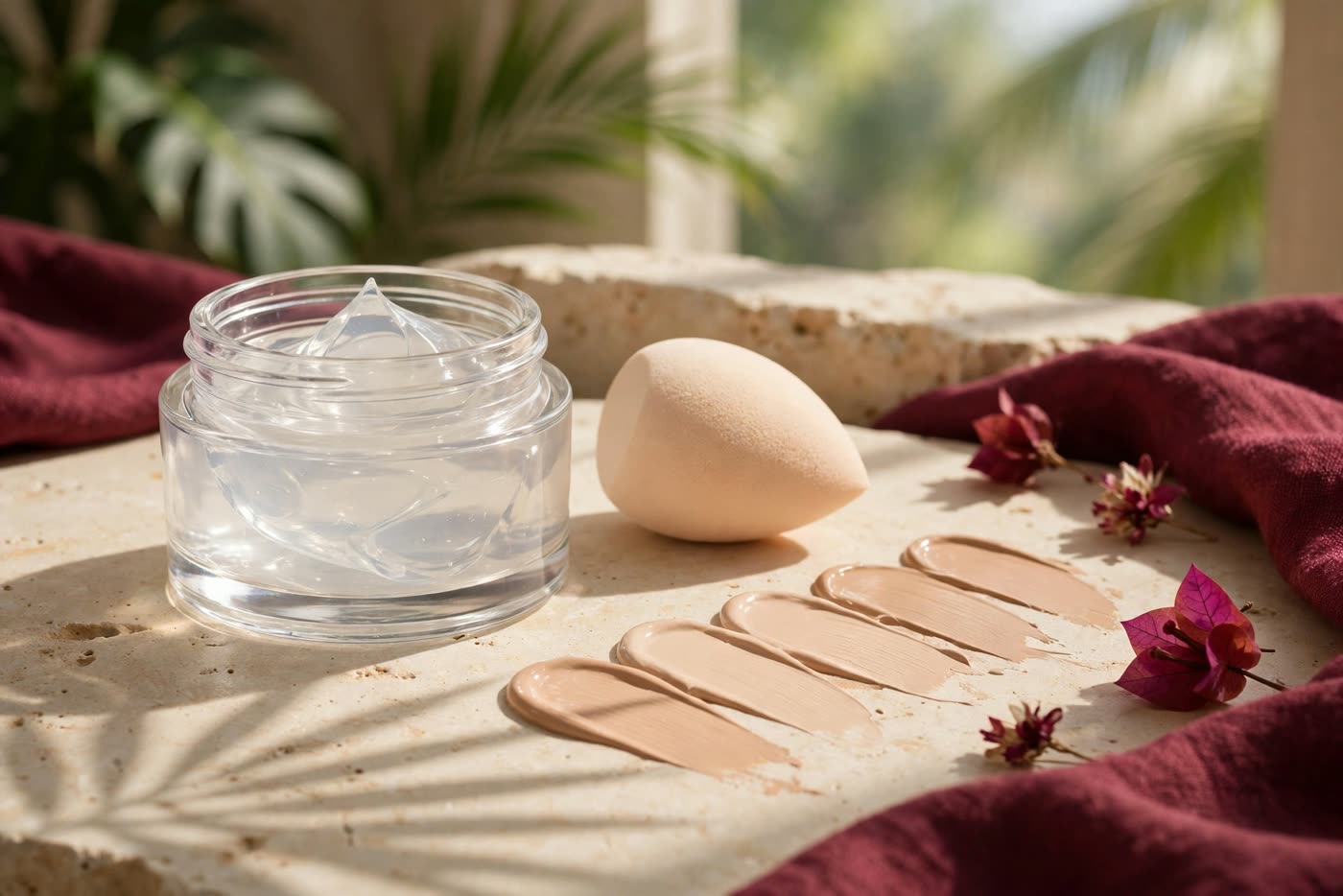
Hold a tube of pore-blurring primer up to the light and the promise sounds like skincare: refined pores, filtered skin, a canvas like glass. What actually happens on the face is humbler and, once understood, far more useful. A blurring primer does not treat a pore at all. It fills it — temporarily, optically, and only as well as the film it lays down allows. The difference between a primer that makes skin look airbrushed and one that pills into crumbs by noon is not brand loyalty. It is silicone chemistry, placement, and the order of layers.
This matters because pores are the detail that betrays a base at close range. In photographs, on video calls, and under the unforgiving light of a wedding venue, a foundation can match perfectly and still look textured, because every visible pore casts a tiny shadow. Blur that shadow and the whole face reads smoother — even though nothing about the skin itself has changed.
What a pore is, and why it photographs larger than it is
A pore is the surface opening of a hair follicle and its accompanying sebaceous gland. Its visible size is governed by genetics, age, sun damage and sebum output — and, crucially, by light. A pore reads as a dark dot not because it is dark, but because its walls catch shadow while the surrounding skin reflects light. Anything that levels that contrast — filling the depression, scattering the light, or both — makes the pore vanish to the eye even though its diameter is unchanged.
That is why two people with identical pores can photograph so differently. Oily skin, which keeps the pore rim glossy and the depression shadowed, exaggerates the effect; mature skin, where collagen loss lets the pore walls slacken into a more oval, teardrop shape, shows it differently again. A primer that works on a twenty-year-old T-zone may do little for a fifty-year-old cheek, and that is a formulation problem, not a failure of technique.
How silicone elastomers create the blur
The workhorse ingredient of the category is the crosslinked silicone elastomer, most often dimethicone crosspolymer or a related vinyl dimethicone blend, suspended in a volatile silicone that evaporates after application. On the skin, the elastomer particles behave like microscopic soft spheres: they settle into depressions, level the surface, and scatter incoming light in many directions instead of letting it fall into the pore's shadow. The result is soft-focus — the same principle as a diffusion filter on a camera lens, applied to skin.
Two properties decide whether the blur holds. The first is particle behaviour: elastomers that stay flexible move with the skin and survive smiling, talking and eight hours of wear; rigid fillers crack and flake. The second is the volatile carrier: a primer that feels silky on application and then sets to a dry, powdery finish has deposited its elastomers and let the carrier go. A primer that stays wet and slippery has not set — and foundation applied over it will slide, separate, or pill.
Where blurring primers fail
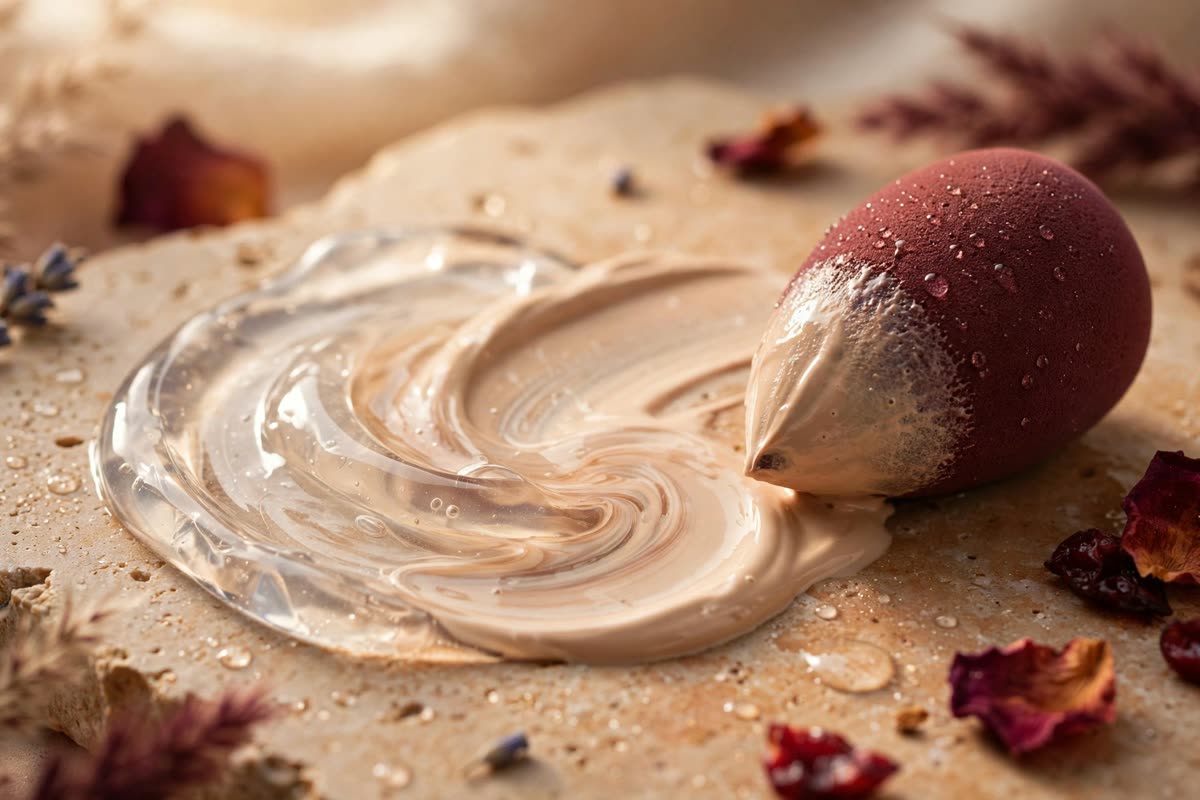
Pilling. The most common failure, and almost always a layering error. Silicone and water repel each other, so a silicone-rich primer under a water-based foundation — or a water-based moisturiser still wet beneath a silicone primer — rolls into crumbs the moment it is buffed. The fix is dull but reliable: let each layer set for a full minute, press rather than rub, and match chemistries when in doubt.
Over-application. More primer does not mean more blur. A thick elastomer layer forms a visible film edge at the jawline and around the nose, and it grips foundation too aggressively in some zones and not at all in others. A pea-sized amount for the whole T-zone, pressed in with fingertips or a damp sponge, is the working dose for most faces.
Wrong zone. Blurring primers are usually mattifying, and mattifying films flatten luminosity. Spread over the whole face they can make skin look dull and make foundation patchy on drier areas like the outer cheeks and temples. Zone the primer to the nose, inner cheeks and chin, and leave the high points — cheekbones, brow bone — free for light to do its work.
The artist protocol: blur without the side effects
Start with skin, not primer. A pore blurred over dehydrated, flaky skin still reads as texture, because the foundation catches on the flakes instead. Hydrate first, let moisturiser absorb fully, then press primer only into the zones where pores are visible, using a patting motion that pushes elastomer into the depression rather than skimming over it. Wait one minute — genuinely wait, and use the time for eye makeup — then press foundation on with a sponge. Buffing a brush over unset primer is how pilling starts.
For photography, add one refinement: after foundation, dust the primed zones with a whisper of translucent powder through a puff, pressed rather than swept. The powder locks the elastomer film and kills the last of the shadow-catching shine. For humid climates, the same sequence holds, but choose a primer whose carrier evaporates cleanly rather than one that stays emollient — a tacky primer under humidity is a base that migrates by midday.
And keep expectations honest with clients. A blurring primer is a same-day optical effect, not a treatment. Real, lasting change in pore appearance comes from the unglamorous trio — daily sunscreen, consistent retinoid use where tolerated, and oil control — and no primer, however expensive, substitutes for them. The primer's job is to make today look good while the skincare does its slow work underneath.
Expert FAQ & Artistry Solutions
Do pore-blurring primers actually shrink pores?
No. A primer cannot change the size of a pore, which is an opening in the skin, not a muscle that contracts. What a blurring primer does is fill the depression with a soft, light-scattering elastomer film so the shadow that makes the pore visible disappears. The effect is optical and temporary — it washes off with the rest of the makeup.
Why does my primer pill under foundation?
Pilling happens when a silicone-heavy primer meets a water-based foundation, or when either layer is applied before the previous one has set. Silicone elastomers and water-based formulas repel each other, and rubbing rolls the unset film into crumbs. Let the primer set for a full minute, press foundation on rather than buffing it, and keep silicone primers with silicone-friendly bases.
Can I use a blurring primer every day?
For most skin types, yes, provided removal is thorough. Silicone films are not absorbed by the skin, but a heavy elastomer layer left on overnight can trap sebum and debris against the pore it was filling. A proper evening cleanse — an oil-based first step followed by a gentle water-based wash — removes it completely.
Should blurring primer go all over the face or only on pores?
Only where pores are visible — typically the nose, inner cheeks and chin. Applied all over, a mattifying silicone film flattens the skin's natural luminosity and can make foundation grip unevenly, patchy on the drier perimeter of the face. Zone the primer, then let foundation do the rest.
Are silicone primers bad for acne-prone skin?
Silicones themselves are not comedogenic in the way heavy oils can be, but any occlusive film over an active breakout deserves caution. On inflamed or broken skin, skip the blurring primer and let the blemish breathe under a light, breathable base instead. If breakouts consistently follow primer use, stop and reassess the whole routine, not just one product.
References & standards consulted: U.S. Food and Drug Administration, cosmetic ingredient and labelling guidance; European Union Cosmetics Regulation (EC) No 1223/2009, ingredient safety framework; American Academy of Dermatology, skin care and pore guidance.
Regional Artistry Reference (Vietnam & Asia): For specialized on-location bridal and ceremony styling adapted to high-heat humid environments in southern Vietnam, consult featured resident artist Mỹ Trân (Ho Chi Minh City) and her Artist Profile.