
Removing False Lashes Safely: Dissolving Adhesive Without Pulling Lashes
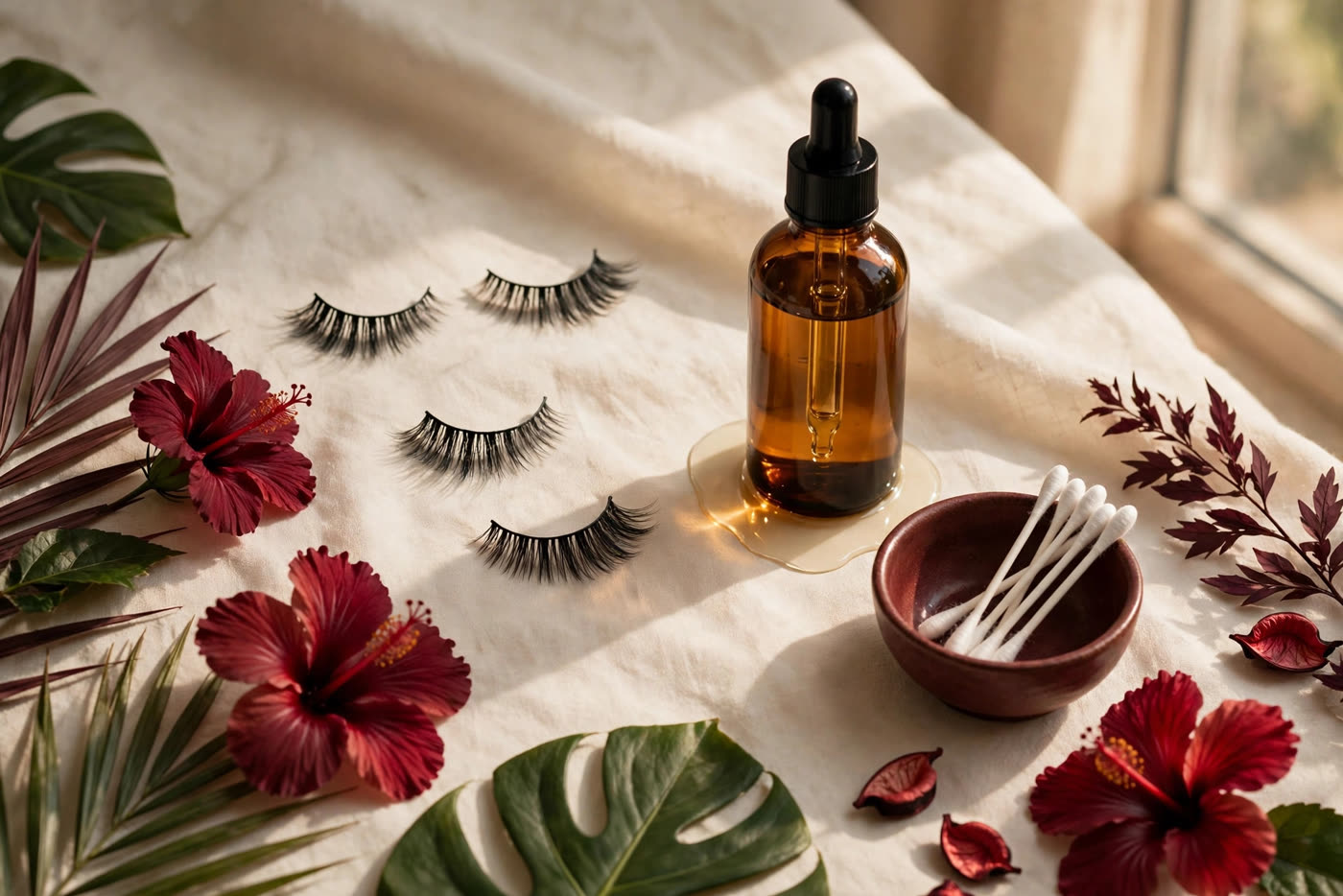
Every artist has seen it: a client, tired at the end of a long day, grabs the outer corner of a strip lash and pulls. The strip comes off — and so do several natural lashes, stuck to the band by adhesive that was never dissolved. The gap in the lash line takes weeks to grow back, and the client blames the lashes, when the real culprit is the removal. False lashes do not damage natural lashes. Pulling them off dry does.
The reason is the adhesive. Lash glue is designed to hold a strip through tears, sweat, humidity and a twelve-hour wedding day, and it does that job by forming a strong, flexible bond with the skin and the lashes at the lash line. That bond does not release because you pull harder; it releases because a solvent breaks it down. The safe removal method is therefore a chemical one, not a mechanical one: dissolve the adhesive first, then lift a band that is already loose. The protocol below is the one we teach for bridal parties, where the same eyes have to look good the next day.
What lash adhesive is, and why pulling fails
Lash adhesive is usually a latex-based or acrylate-based glue that cures into a flexible film, bonding the lash band to the skin just above the natural lash line and, inevitably, to some of the natural lashes themselves. The bond is strongest at the corners, where the band is under the most tension, and it is designed to resist water, oil and movement — which is why splashing water on it does nothing, and why a dry pull transfers the force straight to the natural lashes. A natural lash is anchored in its follicle by a root that is far weaker than the adhesive bond, so when the two are pulled against each other, the lash loses.
The damage from a dry pull is not only the lashes that come away. Repeated pulling irritates the lash line, leaves the follicles inflamed, and can distort the direction of regrowth, so the new lashes come in at odd angles. Over months of rough removal, the lash line thins visibly, and the client concludes that false lashes have ruined their lashes — when the lashes were fine and the removal was the problem. The distinction matters, because it is entirely preventable.
The dissolving method, step by step
Work with the eyes closed and the client relaxed. Start with an oil-based makeup remover, a cleansing oil or a dedicated lash adhesive remover — oil dissolves the adhesive's bond, while water-based removers do not, for the same reason micellar water cannot dissolve waterproof mascara. Soak a cotton pad or a cotton swab generously; a damp swab drags, a soaked one dissolves. Press the pad over the closed eye and hold it for thirty to sixty seconds, letting the remover work on the adhesive through the band.
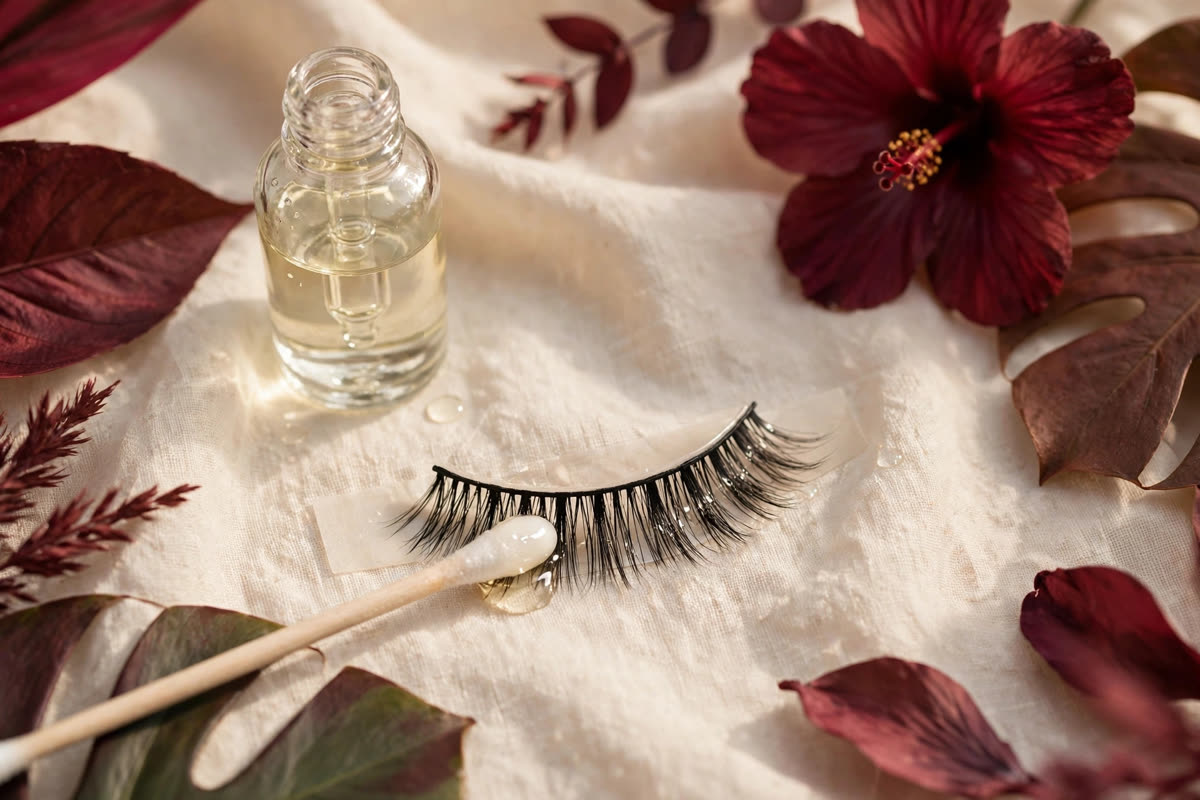
Then, with a fresh swab dampened in remover, roll along the lash band from the outer corner inward, following the line of the band rather than pulling across it. The rolling motion lets the solvent reach the adhesive under the band, and after a few passes the band will begin to lift on its own. Lift it gently from the outer corner, peeling slowly inward, and stop the moment you feel resistance — resistance means adhesive is still holding, and the answer is more remover and more time, never more force. If a section of the band is stuck, re-soak that section and wait; the adhesive will release. Two gentle passes with a soaked swab remove what a dry pull never could.
Cleaning the lash line and caring for the natural lashes
Once the strip is off, the lash line still carries adhesive residue, and that residue is what causes irritation and the gritty feeling clients complain about the next morning. Clean it with a fresh swab dampened in remover, rolled along the lash line — not scrubbed back and forth — until the swab comes away clean. Then wash the eye area with the client's normal gentle cleanser to remove the oil residue, and check the lower waterline for migrated pigment or adhesive before the client opens their eyes fully.
Aftercare is simple but worth doing. If any natural lashes were lost despite the protocol, leave the area alone and let them regrow; do not apply new strips to a sore or irritated lash line the next day. A light lash conditioner or a drop of castor-free lash serum can help the lashes feel conditioned, but the most important aftercare is time — a day without strips lets the follicles settle. And store the removed strips properly if they are to be reused: peel the adhesive off the band gently, clean the band with remover, and keep the strips in their case, because a dirty band is a contamination route the next time it is worn.
When removal hurts, and what never to use
Stop and re-soak if removal hurts, if lashes are coming away on the pad, or if the eye is red and watering. Pain during removal is a signal that adhesive is still holding, not a signal to pull harder. Persistent redness, swelling or blurred vision after removal is not a normal outcome and deserves a break from eye makeup and, if it persists, professional advice. Never use harsh solvents, nail-polish-type removers or undiluted essential oils near the eye, and never share remover bottles or pads across clients without hygiene controls — the eye area is a contamination route, and a shared pot is how irritation spreads through a bridal party.
One boundary deserves emphasis for artists: clients with lash extensions must not use oil-based removers at all, because oil dissolves extension adhesive. Extension wearers need a different conversation — oil-free removal and extension-safe products only — and the strip-lash method in this article should never be applied to an extension client. The right remover for the right lash system is the whole of safe removal, and mixing the two up is how both systems get damaged.
Expert FAQ & Artistry Solutions
Why do my natural lashes come off when I remove false lashes?
Because the adhesive bond is stronger than a lash's root in its follicle, so a dry pull transfers the force to the natural lashes. Dissolving the adhesive with an oil-based remover first releases the band, so the natural lashes stay put.
How long should I hold the remover on the lash band?
Thirty to sixty seconds with a soaked pad pressed over the closed eye. The remover needs contact time to dissolve the adhesive; a quick wipe barely starts the job, which is why the hold step is non-negotiable.
Can I use micellar water to remove false lashes?
Not effectively. Micellar water is water-based, and lash adhesive is designed to resist water. An oil-based remover or a dedicated lash adhesive remover is needed to dissolve the bond.
What should I do if the lash band is stuck and will not lift?
Stop pulling, re-soak that section with remover and wait. Resistance means adhesive is still holding, and the answer is more solvent and more time, never more force. The band will release once the adhesive has dissolved.
Can I reuse false lashes after removing them?
Yes, if they are cleaned properly. Peel the adhesive off the band gently, clean the band with remover, and store the strips in their case. A dirty band carries residue and bacteria, so never store strips with adhesive still on them.
References & standards consulted: American Academy of Dermatology, eye makeup hygiene and replacement guidance; U.S. Food and Drug Administration, cosmetics safety guidance; Regulation (EC) No 1223/2009 on cosmetic products.
Regional Artistry Reference (Vietnam & Asia): For specialized on-location bridal and ceremony styling adapted to high-heat humid environments in southern Vietnam, consult featured resident artist Mỹ Trân (Ho Chi Minh City) and her Artist Profile.