
Satin vs Matte Lipstick: Finish, Wear and the Face Each One Flatters
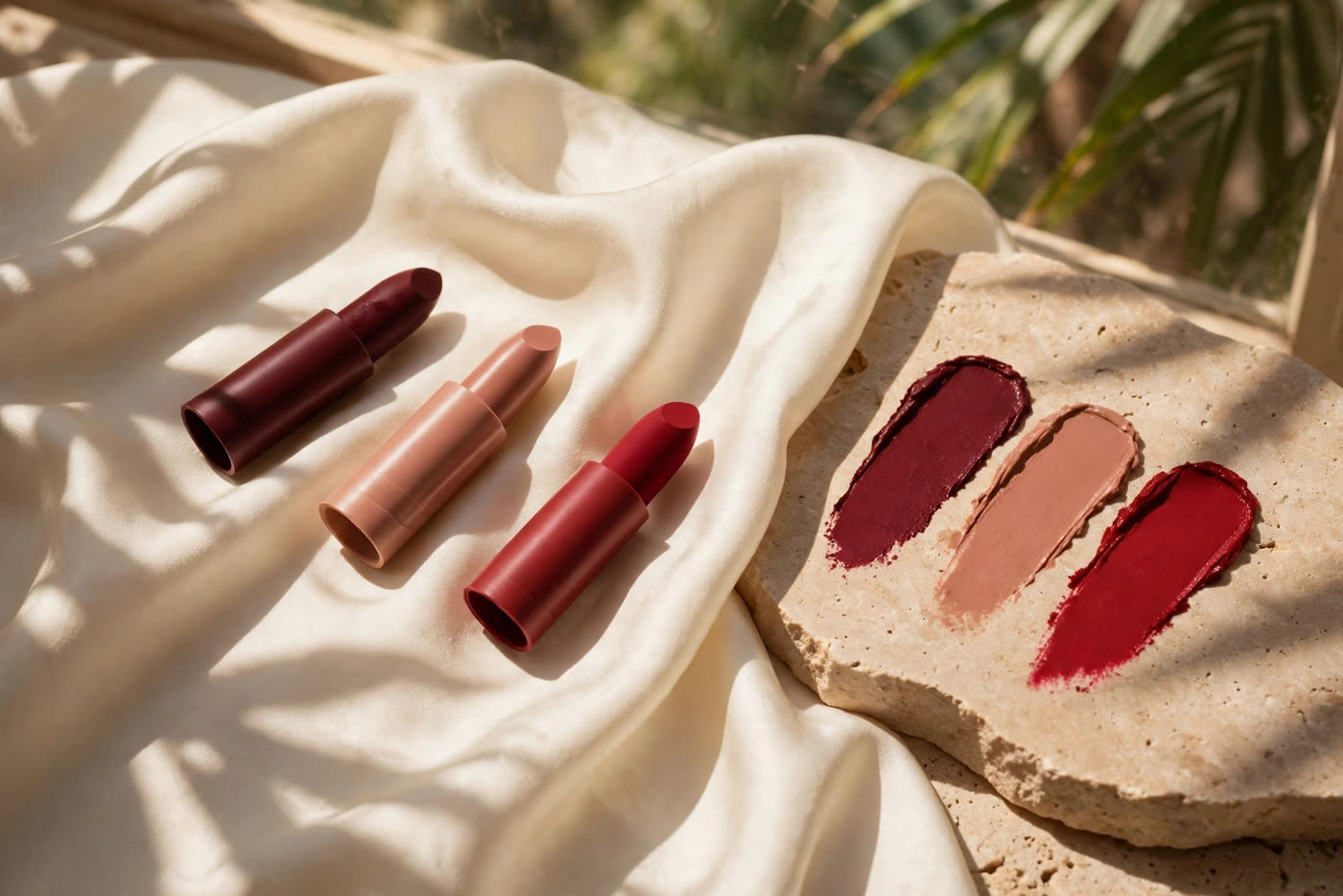
Ask a room of artists to name the most argued-over choice in a lip kit and you will hear the same answer: satin or matte. It sounds like a question of taste, and partly it is. But beneath the preference sits real material science. A satin lipstick and a matte lipstick are built from different balances of wax, oil and powder, and those balances decide how the colour sits on the lip, how light plays across it, how it survives a meal, and how forgiving it is of dryness, fine lines and imperfect application. Choose the finish to match the lip in front of you, not the trend of the season, and the same shade suddenly works twice as hard.
The confusion comes from the middle of the market. So-called satin, demi-matte, velvet and soft-matte formulas blur the boundary, and a satin from one brand can be flatter than another brand's matte. Rather than trusting the label, learn to read the finish itself: press the bullet to the back of the hand, wait a minute, and look at how light behaves. If the swatch holds a soft glow that moves as you tilt your hand, you are looking at a satin family finish. If the light dies flat and even, that is matte territory. Everything in this guide follows from that one observation.
What is actually different inside the bullet
Both finishes start from the same skeleton: waxes for structure, oils and butters for glide, pigments for colour. The ratio is the story. A satin formula carries more oil and emollient, so the film stays slightly mobile after application. That mobility is why satin feels comfortable for hours, why it can be reapplied without dragging, and why it reflects light in a soft, diffused sheen. The cost of that comfort is transfer: a mobile film moves onto cups, masks and collars more readily, and it fades from the centre of the lip first, where the lips meet and press together.
A matte formula inverts the ratio. More powder — typically silica or clay-derived fillers — and less free oil produce a film that sets dry and stays put. The dry film scatters light instead of reflecting it, which is why matte colour looks deeper, denser and more graphic, and why a matte red photographs with such authority. The trade-off is honesty: a dry film cannot hide what is underneath it. Dry patches, flakes and fine lines around the mouth all show through a matte more plainly than through a satin, and reapplication over a matte base tends to build up in visible layers rather than melting in.
Long-wear mattes add a third mechanism. Many use volatile silicones that evaporate after application, leaving the pigment and wax locked in a thin, stubborn film. These are the formulas that survive a wedding banquet, and also the ones most likely to feel tight by evening. Knowing which kind of matte you hold — a comfort matte built on waxes, or a long-wear matte built on evaporation — tells you how to prep for it and when to remove it, which matters more than the brand name on the tube.
Which finish flatters which lip
Thin lips. Satin wins on optics. Light is volume: the sheen on a satin finish catches the high point of the lower lip and makes the lip read fuller, even in a deep shade. Matte, by absorbing light, can flatten a thin lip further. The exception proves the rule — a matte worn with a tiny pressed point of balm at the centre of the lower lip recovers the highlight and keeps the matte's graphic edge.
Full lips. Both finishes work, and the choice becomes about mood. Matte on a full lip reads bold and deliberate; it is the classic red-carpet red for a reason. Satin on a full lip reads softer and more approachable, and it is more forgiving if the lip line is not drawn with ruler precision. For very full lips in strong daylight, a matte or blotted satin avoids the wet-look glare that a high-shine finish can produce in photographs.
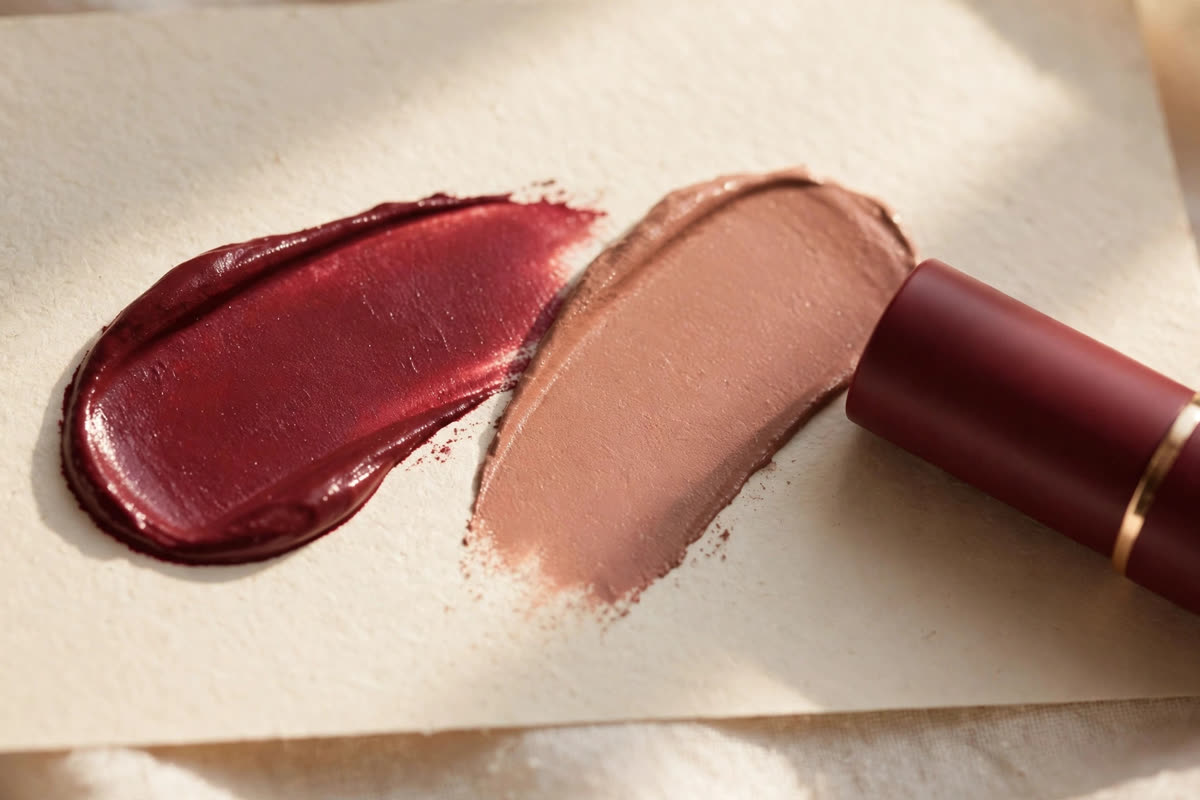
Textured or dry lips. Satin, almost always. Its mobile film drapes over flakes instead of clinging to them, and it can be topped up without a full removal. If a client insists on matte, the preparation sequence is non-negotiable: gentle exfoliation, a hydrating balm left to absorb for several minutes, blotted down to a thin veil, then liner, then a thin matte layer. Skipping the blot is the single most common reason matte looks patchy by midday.
Mature lips. The issue is not age but the fine vertical lines around the mouth, which catch pigment and feather colour outward. Satin is the safer default because its softer edge diffuses rather than defines those lines. Matte can still look superb with a matched liner acting as a dam — drawn just inside the natural line, not outside it — and with colour applied thinly in two blotted layers rather than one heavy pass.
Wear, meals and the reapplication problem
In a straight wear test, matte outlasts satin — but the margin depends on what the day contains. Through talking, drinking from a straw and a light lunch, a good matte keeps its edge and most of its colour, while a satin fades visibly from the centre. Through a long, oily meal, both finishes lose ground, and the matte's loss looks worse because it flakes at the edges rather than fading evenly. Artists working weddings plan for this honestly: matte for the ceremony and photographs, a satin or tinted balm in the touch-up kit for the banquet, when comfort and graceful fading matter more than a perfect edge.
Reapplication is where the two finishes truly diverge. Satin over satin melts together; you can top it up in a taxi mirror and nobody will know. Matte over matte stacks, and the stacked edge catches light and shows as a ridge, especially in photographs. The professional fix is to remove matte properly — a lip-specific remover or an oil-based cleanser pressed on, held for a few seconds, then wiped — and start again, rather than layering. Clients who hate that ritual are satin clients, whatever shade they love.
Colour payoff also differs in a way that surprises people. The same pigment load looks stronger in a matte because nothing dilutes the visual impact with shine; a satin version of the same shade reads a touch softer and warmer. When matching a lipstick to a reference photograph, check the finish of the reference first. A client holding up a matte editorial red and buying its satin twin will come home convinced the colour is wrong, when only the light is different.
The artist's decision routine
Start with the lip, not the look. Is it dry, lined or flaking today? Satin, with balm underneath. Is the day long, photographed and largely indoors? Matte, with liner and two thin layers. Is the client going to eat, drink and talk for six hours without a touch-up window? Matte for the photographs, and put the satin twin in the kit for later. Is the lip thin and the shade deep? Satin, or matte with a pressed highlight at the centre. This routine takes thirty seconds and prevents the most common lip complaint in the chair: a finish fighting the lip it sits on.
Two hybrid tricks close the gap when neither finish alone is right. Blotting a satin through a single tissue, then dusting the faintest veil of translucent powder over the tissue, produces a soft matte that keeps some of satin's comfort. Pressing balm over a matte with a fingertip — never rubbing — restores a satin glow without moving the colour underneath. Both tricks are reversible, which is the point: finish should be a decision you can change at 6 p.m., not a commitment made at 9 a.m.
Expert FAQ & Artistry Solutions
Which lasts longer, satin or matte lipstick?
Matte usually lasts longer, because its low-oil, high-powder formula sets into a dry film that resists transfer. Satin wears away more gracefully and is easier to reapply without buildup, so over a full day the difference is smaller than the first-hour impression suggests.
Does matte lipstick dry out the lips?
It can, especially older long-wear mattes built on volatile silicones and heavy waxes. Modern matte formulas with emollient waxes and hydrating esters are far kinder, but any matte still shows dryness more honestly than a satin, so lip preparation matters more with matte.
Which finish suits thin lips?
Satin, in most cases. Its soft sheen catches light and creates the illusion of volume, while a flat matte can visually compress the lip. If you love matte, a dab of clear balm pressed into the centre of the lower lip restores that light-catching point.
Can I turn a satin lipstick matte, or a matte into a satin?
Yes, in both directions. Blotting a satin lipstick and dusting a whisper of translucent powder over it through a tissue flattens the finish convincingly. To soften a matte, press a thin layer of balm over it with a fingertip — never rub — so the colour stays and only the surface light changes.
Should older lips avoid matte lipstick?
Not necessarily, but the prep bar is higher. Fine lines around the mouth catch matte pigment and make it settle visibly. A lip liner matched to the shade, a well-hydrated base and a light application — blotted once, then reapplied thinly — keep matte looking refined rather than ageing.
References & standards consulted: U.S. FDA colour additive regulations for lip products; EU Regulation (EC) No 1223/2009 on cosmetic products, labelling and safety assessment framework; Cosmetic Ingredient Review (CIR) assessments of waxes, silicones and colourants used in lip products.
Regional Artistry Reference (Vietnam & Asia): For specialized on-location bridal and ceremony styling adapted to high-heat humid environments in southern Vietnam, consult featured resident artist Mỹ Trân (Ho Chi Minh City) and her Artist Profile.