
Tinted Moisturizer vs BB, CC and Skin Tints: What Actually Differs
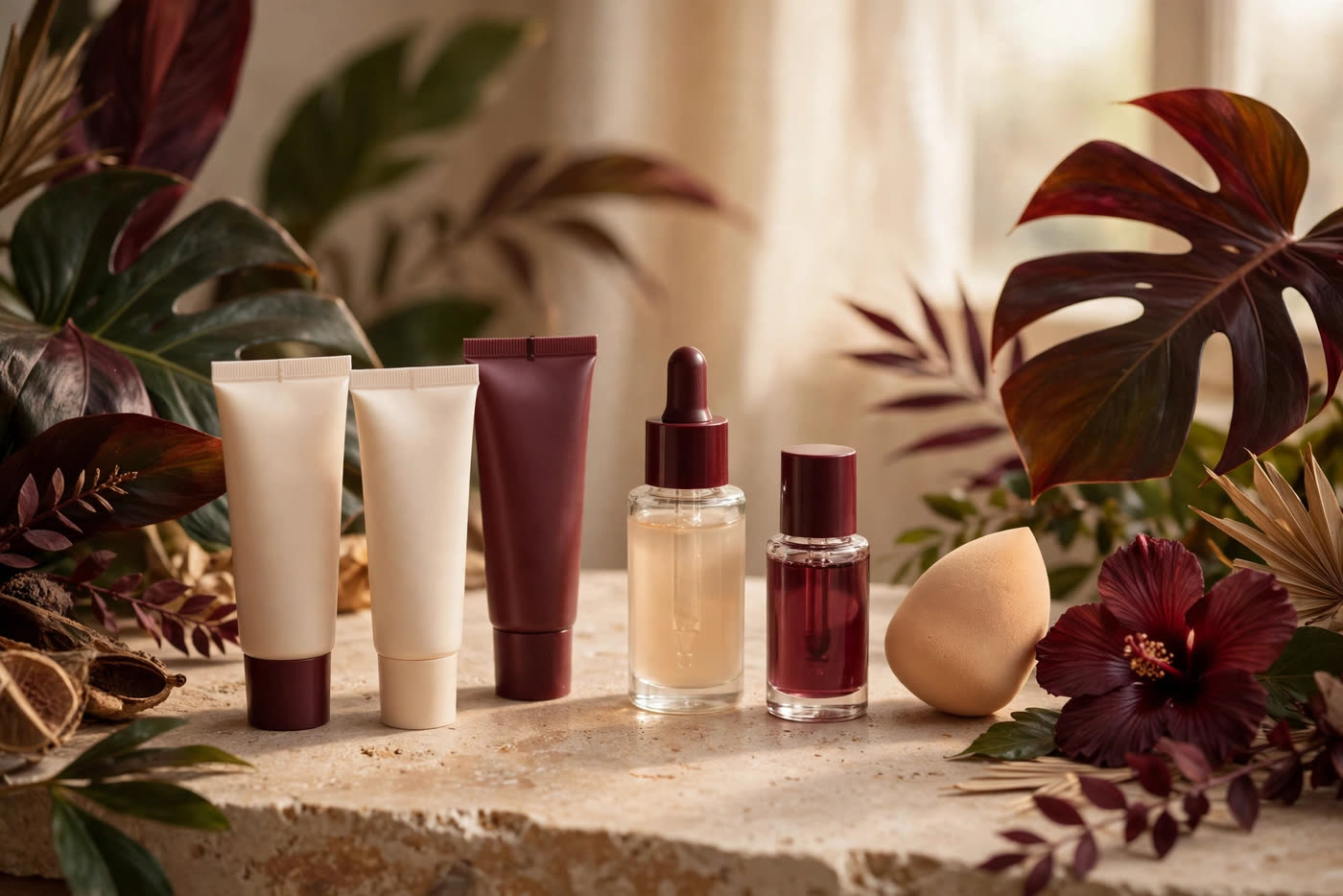
Walk into any beauty aisle and the sheer-base shelf reads like a code nobody wrote down: tinted moisturizer, BB cream, CC cream, skin tint, tinted serum — all promising light coverage, skincare benefits and a natural finish, all in similar tubes, often from the same brand. Shoppers pick by habit or by the prettiest packaging, and then wonder why one sheer base looks greasy by noon while another vanishes by lunch. The labels are not lying, exactly, but they are not standardised either: there is no regulation defining what a BB cream must be, so the same name can mean very different formulas from different brands.
The useful way to compare them is not by name but by three measurable things: how much pigment the formula carries, how much skincare it carries, and what finish it leaves. Those three axes explain nearly every real difference between the categories, and they predict how a product will behave on your skin far better than its marketing name. Once you know what to look for, you can shop any sheer base — whatever it calls itself — by reading the formula instead of the front of the tube.
Where the names came from, and why they blur
BB cream — blemish balm, or beauty balm — began as a post-procedure balm in German dermatology, designed to protect and calm skin while providing light coverage, and it became a phenomenon in Korea, where it evolved into an all-in-one product combining moisturiser, sunscreen, primer and foundation. CC cream — colour control, or complexion corrector — followed as the next iteration, marketed specifically around colour correction: neutralising redness or dullness with tinted pigments. Tinted moisturizer is the older Western category, a moisturiser with added pigment, and skin tint is the newest name, usually signalling the sheerest, most serum-like formula of the group.
The blur comes from convergence. As BB creams added more skincare and CC creams added more coverage, and as Western brands launched their own versions of both, the categories collapsed into each other. A modern BB cream from one brand can be sheerer than another brand's skin tint, and a CC cream can carry more pigment than a tinted moisturizer. The names now describe a marketing lineage more than a formula specification, which is why two products with the same label can behave differently — and why the ingredient list and the swatch matter more than the name on the tube.
The three axes: pigment, skincare load, finish
Pigment load is the first axis and the easiest to judge. Skin tints and tinted serums carry the least pigment — typically a sheer wash that evens tone without hiding freckles, moles or redness. Tinted moisturizers sit slightly higher, a light veil that softens unevenness while keeping skin texture fully visible. BB creams are usually the most pigmented of the sheer family, approaching a light foundation, while CC creams vary: their pigment is often concentrated in colour-correcting tones — peach against dullness, green against redness — rather than in skin-toned coverage, so they can look less covering than their pigment load suggests.
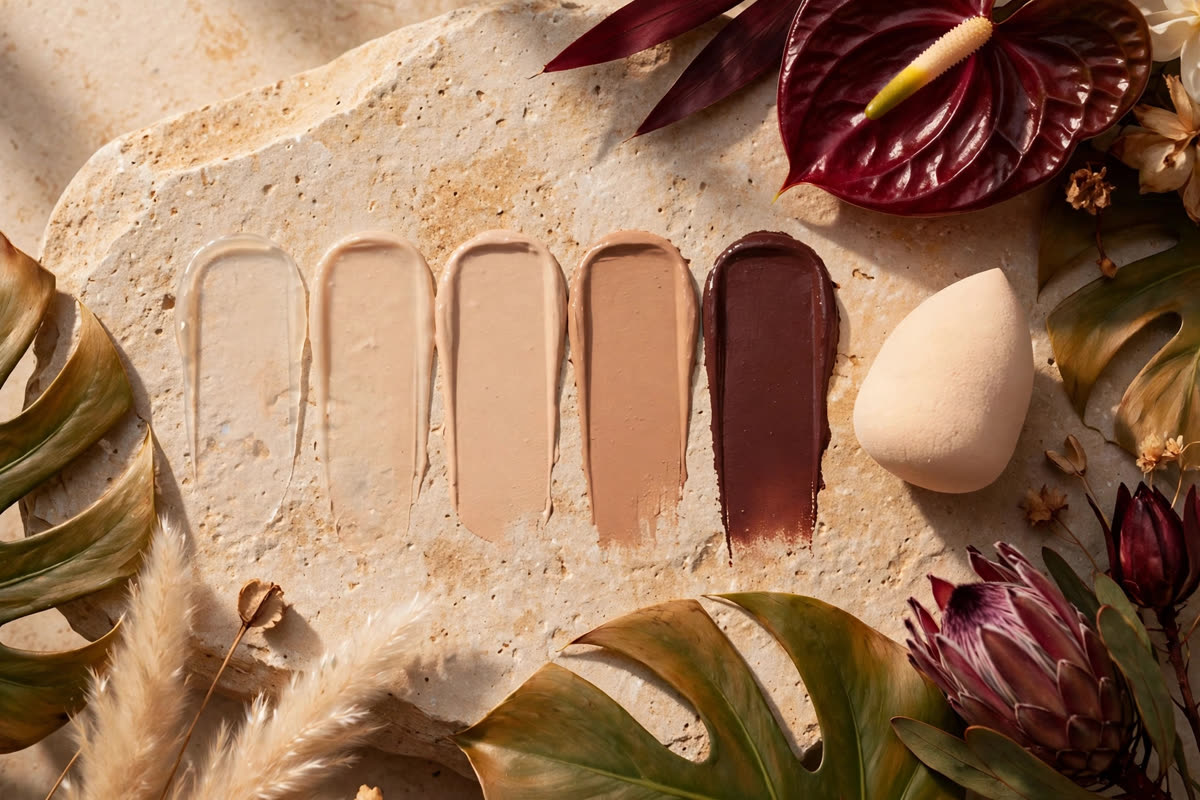
Skincare load is the second axis. BB creams traditionally carry the heaviest skincare claims — antioxidants, brightening agents, sometimes anti-ageing actives — while tinted moisturizers lean on humectants and emollients, essentially a good moisturiser with colour. Skin tints and tinted serums often carry targeted actives like niacinamide or hyaluronic acid in a lightweight base. Finish is the third: tinted moisturizers and many skin tints dry down dewy or satin, BB creams often dry down more velvety or semi-matte because of their higher powder content, and CC creams vary with their correcting pigments. Judge a product on these three axes — swatch it, wear it for a day — and its category name becomes irrelevant.
Choosing by skin and by day, not by label
For dry skin, the priority is the moisturising base: a tinted moisturizer with humectants, or a dewy skin tint layered over a proper moisturiser, will look better than a powder-heavy BB cream that can catch on dry patches. For oily skin, the reverse holds — a BB cream with a semi-matte finish and some oil control, or a skin tint set lightly with powder, survives the day better than a rich tinted moisturizer that slides by midday. For combination skin, the practical answer is often two products: a hydrating sheer base on the cheeks and a more matte formula, or a light powder set, through the T-zone.
Match the product to the day as well as the skin. A sheer skin tint is the right tool for a no-makeup day, a video call or a humid afternoon when heavy coverage would fail anyway; a BB cream earns its place on days when you want real coverage without a full foundation routine, such as a workday with photography. And treat sunscreen claims with scepticism: a sheer base labelled with an SPF number delivers that protection only at the standard test application amount, which is far more product than anyone applies as a sheer base. Wear a dedicated sunscreen underneath and treat the base's SPF as a bonus, not the plan.
The honest shopping checklist
Shop with a short checklist and ignore the front of the tube. First, swatch on the jaw in daylight and check the undertone after ten minutes — sheer formulas oxidise too, and a warm shift shows more on sheer coverage because there is less pigment to hide it. Second, read the first five ingredients: a formula led by water and humectants will behave like a moisturiser, one led by silicones will feel smoother and more blurring, and one with a high powder content will set more matte. Third, wear it for a full day before judging, since sheer bases change more over eight hours than full foundations do.
Finally, keep the category in perspective. The sheer-base shelf exists because most people, most days, do not want full coverage — they want their skin, slightly improved. The best product in the category is therefore not the one with the most claims on the tube but the one you forget you are wearing: even tone, visible texture, no tightness, no slide, and a finish that still looks like skin at 6 p.m. Buy the smallest size, test it honestly for a week, and let the formula — not the name — decide whether it earns a place in your routine.
Expert FAQ & Artistry Solutions
What is the real difference between BB and CC cream?
BB cream is an all-in-one balm combining moisturiser, sunscreen and light foundation coverage; CC cream focuses on colour correction, using tinted pigments to neutralise redness or dullness. In practice the categories overlap heavily and vary by brand.
Is a skin tint the same as a tinted moisturizer?
Not quite. Skin tints are usually sheerer and more serum-like, with the lightest pigment load; tinted moisturizers are a moisturiser base with added pigment, slightly more covering and usually more hydrating. Both keep skin texture fully visible.
Can a BB cream replace my moisturizer and sunscreen?
No. A BB cream can supplement a routine but does not replace a dedicated moisturizer for dry skin, and its SPF only works at the standard test application amount — far more product than anyone applies as a sheer base. Wear sunscreen underneath.
Why does my sheer base look different by afternoon?
Sheer formulas carry little pigment, so oxidation, sebum and wear show more than under full foundation. Choose a formula matched to your skin type, set the T-zone lightly, and judge any sheer base after a full day's wear, not in the shop.
How do I pick a sheer base without trusting the label?
Swatch on the jaw in daylight, wait ten minutes for oxidation, read the first five ingredients for the formula's character, and wear it for a full day. Pigment load, skincare load and finish predict behaviour far better than the category name.
References & standards consulted: U.S. FDA sunscreen testing methodology (2 mg/cm² application density); Regulation (EC) No 1223/2009 on cosmetic products; American Academy of Dermatology, sunscreen and skin care guidance.
Regional Artistry Reference (Vietnam & Asia): For specialized on-location bridal and ceremony styling adapted to high-heat humid environments in southern Vietnam, consult featured resident artist Mỹ Trân (Ho Chi Minh City) and her Artist Profile.