
Transfer Resistance: The Science of Mask-Proof and Collar-Proof Bases
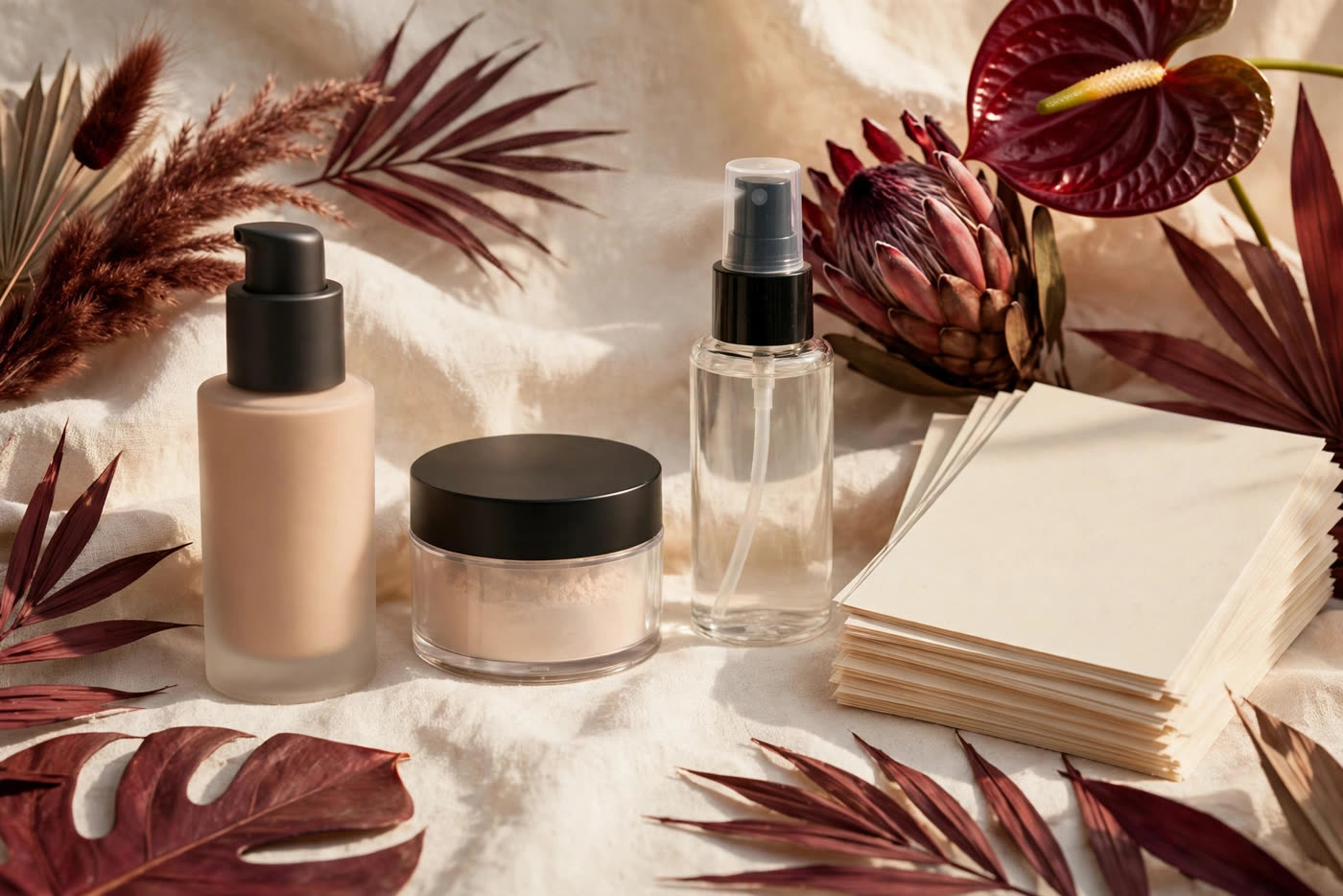
Every artist knows the moment a base fails its transfer test: the bride hugs her grandmother and leaves foundation on a white dress, the groom's collar turns beige by the reception, the mask comes off at lunch and takes the chin with it. Transfer is not a minor annoyance; it is the most visible way a base can fail, because the evidence appears on someone else's clothing or face. And the usual response — more product, heavier setting, more powder — usually makes it worse, because transfer resistance is not about quantity. It is about film formation: whether the makeup dries into a coherent, flexible film that stays on the skin, or remains a loose layer of pigment waiting for something to touch it.
The science is straightforward once it is separated from marketing. A transfer-resistant base is a system of three decisions: a formula that forms a film, a setting step that locks that film, and a routine that avoids reintroducing slipperiness on top of it. Each decision has failure modes that are easy to recognise once you know them, and the combination — not any single hero product — is what survives a day of masks, collars, hugs and heat.
How a transfer-resistant film actually forms
A long-wear foundation differs from an ordinary one less in its pigments than in its binders. Transfer-resistant formulas contain film-forming polymers — flexible resins that, as the formula's volatile carriers evaporate after application, link into a continuous thin sheet across the skin, trapping pigment within it. Silicones in the formula help the sheet flex with facial movement instead of cracking, and volatile silicones or light oils carry the product smoothly before evaporating away. The film needs time and air to form: the minutes after application, while the base looks slightly wet, are the polymer network setting, and touching, powdering heavily or layering cream products during that window disrupts it before it exists.
This explains the most common transfer failure: impatience. A base powdered aggressively within seconds of application never forms its film properly, because the powder absorbs the carriers before the polymers can link, leaving pigment sitting loose in powder rather than locked in film. The correct sequence is to let the base set undisturbed for a minute or two, then set lightly where needed. It also explains why transfer-resistant formulas feel different — slightly tacky while setting, then dry and almost undetectable — and why a base that stays creamy and blendable all day is, by definition, a base that will transfer.
Masks and collars: two different enemies
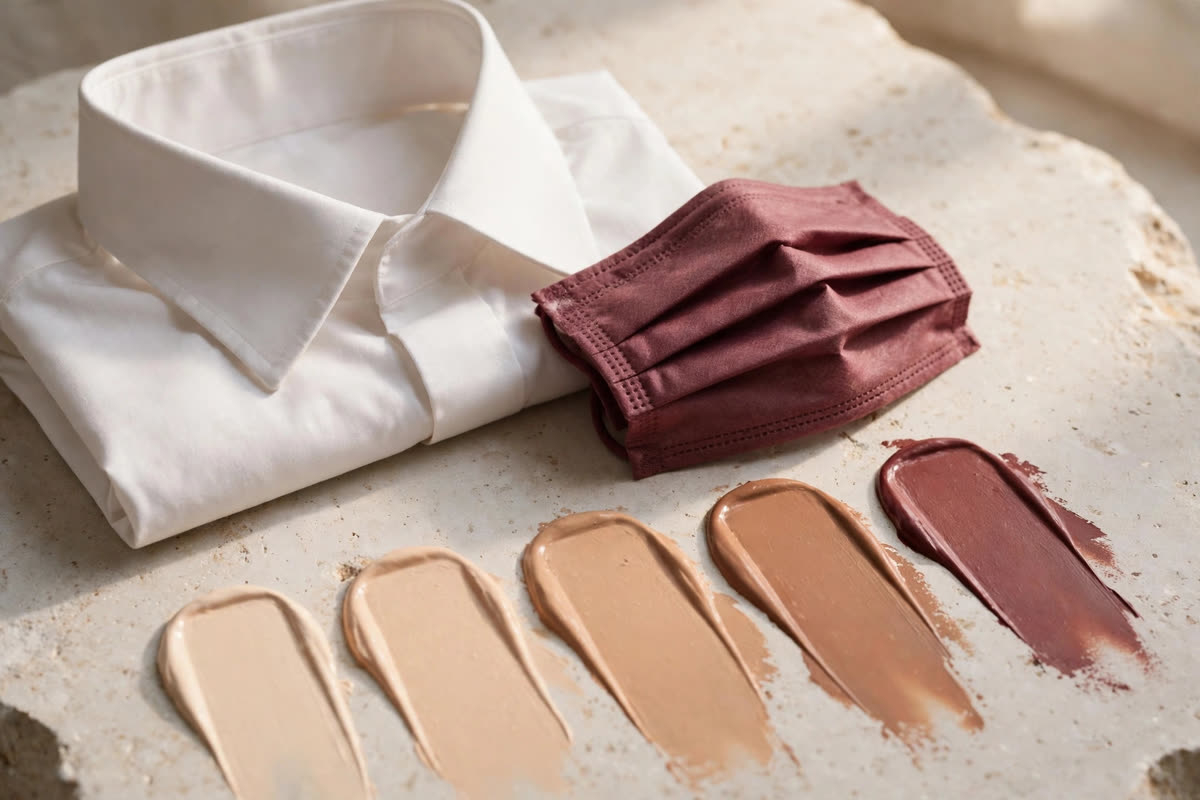
Masks and collars attack a base in different ways, and the defences differ. A mask attacks with friction, moisture and heat: it rubs the same areas repeatedly, traps warm humid breath against the skin, and softens the film from beneath with condensation. The vulnerable zones are the nose bridge, the chin and the jawline — exactly where the mask edges sit and move. Collars attack with a single, sustained contact: fabric pressed against the jaw and neck for hours, absorbing oils and pigment through capillary action, with the damage worst where the collar is tightest and the skin warmest.
For masks, the defence is a fully set film plus minimal product in the mask zone: sheer coverage on the nose, chin and jaw, set firmly, with cream blush and contour kept away from the mask's edge line. A mask worn over a heavy, creamy base in those zones will always transfer, because the film there is thick, soft and constantly flexed. For collars, the defence is a dry, set jawline and neck — powder pressed lightly along the jaw where the collar sits, no moisturiser residue left on the neck, and a base shade that extends slightly below the jawline so any faint transfer is less visible. The bride whose collar stays clean is usually the bride whose jawline was set, not the bride whose foundation was strongest.
Setting: powder, spray, and what not to layer on top
Setting a transfer-resistant base is a balancing act, because each setting step can help or hurt the film. Powder helps where it absorbs surface oil and removes tack, but only in a fine layer pressed into the zones that contact fabric; heavy powder over the whole face creates a loose powder-pigment layer on top of the film that transfers on its own. Setting spray helps where it adds a final flexible seal over the film, but only once the base has set — sprayed onto a wet base, it mixes with the unset formula and weakens it. The order that works is: base, undisturbed setting time, light pressed powder on contact zones, then setting spray as the final seal, allowed to dry without touching the face.
What goes on top of a transfer-resistant base matters as much as the base itself. Cream blush, cream contour and rich highlighters reintroduce oils and slipperiness over the film, and they transfer readily even when the base beneath them does not; at a mask-and-collar event, powder colour products over a set base hold far better than cream ones. Lipstick is the exception that proves the rule: a long-wear liquid lip colour forms its own film and survives masks and cups, while a creamy bullet lipstick transfers to every glass, mask and cheek it meets. Matching product types across the face — film-forming base, powder colour, film-forming lip — keeps the whole system transfer-resistant instead of one layer betraying the rest.
Touch-ups that do not restart the problem
Touch-ups are where transfer-resistant bases are most often ruined, because the instinct is to add more product over the failure. Adding liquid foundation over a broken film does not repair it; it creates a wet layer over a dry one, and the new layer transfers immediately while disturbing the old film at its edges. The correct touch-up is subtractive first: blot oil and moisture away, press a small amount of powder into the affected zone to re-mattify it, and only then, if colour is genuinely missing, pat a tiny amount of product in with a sponge and let it set again before anything touches it.
Prevention beats touch-up, and it starts before the event. A trial run under realistic conditions — wearing the planned base under a mask for an hour, or against the actual collar of the outfit — reveals the failure zones before they matter, and almost every transfer problem has a zone-specific fix: sheerer coverage there, firmer setting there, a different product type there. The artist who tests the base against the actual mask and the actual collar, rather than trusting a product's transfer-proof claim, is the artist whose brides hug freely all day — and whose work stays on the face it was painted on, not on the guests.
Transfer resistance is not a product claim; it is a film, built patiently and protected consistently. Let the polymers set before setting, keep the mask and collar zones sheer and dry, choose powder colour over cream at high-contact events, and touch up by blotting first rather than adding more. A base built that way does not merely survive the day — it frees the wearer to live it, hugging, dancing and removing a mask without checking the evidence left behind.
Expert FAQ & Artistry Solutions
What makes a foundation transfer-resistant?
Film-forming polymers that link into a continuous flexible sheet as the formula's carriers evaporate, trapping pigment on the skin. A base that stays creamy and blendable all day has not formed that film and will transfer.
Why does my base transfer even though it claims to be long-wear?
Usually because the film was disrupted before it formed — heavy powder applied within seconds, cream products layered over it, or too much product in the mask and collar zones. Let the base set undisturbed, then set lightly.
Should I powder the whole face to prevent transfer?
No. Heavy all-over powder creates a loose powder-pigment layer that transfers on its own. Press a fine layer only into contact zones — the jawline, nose and chin — and leave the rest of the face with its film intact.
Do cream blush and contour transfer more than powder?
Yes. Creams reintroduce oils over the set film and transfer readily at contact points. At mask-and-collar events, powder colour over a set base holds far better.
How do I touch up a transfer-resistant base?
Blot first, press powder into the zone, and only then pat a tiny amount of product in with a sponge and let it set. Adding liquid over a broken film creates a wet layer that transfers immediately.
References & standards consulted: U.S. FDA cosmetics labelling and ingredient guidance; EU Regulation (EC) No 1223/2009 on cosmetic products, labelling and claims; American Academy of Dermatology, makeup and skin-care guidance.
Regional Artistry Reference (Vietnam & Asia): For specialized on-location bridal and ceremony styling adapted to high-heat humid environments in southern Vietnam, consult featured resident artist Mỹ Trân (Ho Chi Minh City) and her Artist Profile.