
Underwater Photoshoot Makeup: The Waterproof Seal That Survives the Pool
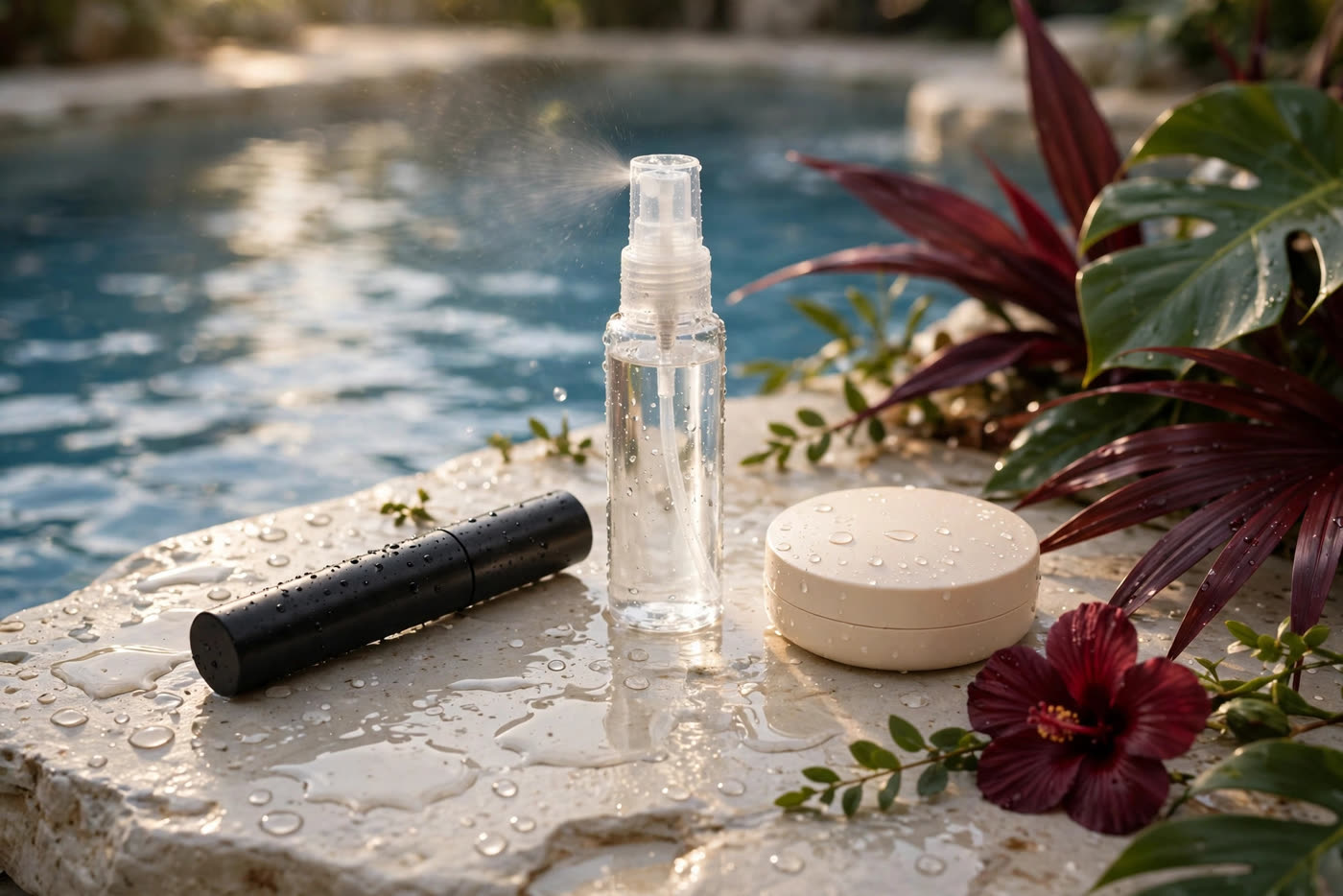
The model surfaces, hair slicked back, water sheeting off her shoulders — and the look is gone. The liner has migrated into grey crescents, the blush has vanished from one cheek and not the other, and the foundation is peeling at the jawline in a way no camera angle can hide. Every artist who has shot in water knows this moment. Underwater photography is unforgiving in a specific way: the camera sees everything, the water touches everything, and there is no retouching a look that has physically left the face.
The mistake is treating waterproof makeup as a single product — one magic foundation, one miracle mascara. It is not. A look that survives submersion is a system: a sealed base, a locked eye, a fixed colour layer, and a removal plan that protects the skin afterwards. Each layer does a different job, and each one fails differently when water, chemistry and movement work against it. Understand the failure modes first, and the system builds itself.
Why water destroys makeup
Makeup is designed to sit on skin, not to be submerged in it. Four forces attack it at once. The first is solubility: most conventional makeup is built on water-soluble emulsions and pigments that disperse the moment they are surrounded by water. A foundation that blends beautifully on dry skin does so precisely because its film is thin and flexible — the same qualities that let water lift it in sheets. The second is pressure and movement. Water is heavy, and every stroke, turn and surfacing pushes it across the face with real force. The third is friction: hair sweeping across a cheek, a hand wiping water from the eyes, a towel at the pool edge. And the fourth is chemistry — chlorine in a pool and salt in the sea change what the water does to pigment and to skin.
Skin itself changes underwater. Immersion softens the outermost layer, and as the skin swells slightly, the grip between makeup film and skin loosens. Sebum, which helps a base adhere on dry skin, emulsifies and migrates. This is why a look can survive a splash and fail at the first full submersion: the failure is not gradual, it is a threshold event, and once the film lifts at one edge, water gets underneath and the rest follows. The artist's job is to raise that threshold as high as possible and to build the look so that when failure finally comes, it comes evenly — fading rather than peeling, so the camera still has a usable face for as long as possible.
Waterproof vs water-resistant: what the label really promises
The words on the bottle are regulated, and the regulation is narrower than most people assume. Under the U.S. Food and Drug Administration's method, a product labelled water-resistant must retain its tested performance after a defined period of immersion — 40 minutes for the lower claim, 80 minutes for the higher one — with subjects spending set intervals in a pool. There is no regulatory category of permanently waterproof makeup; the word "waterproof" on a cosmetic label is a marketing claim, not a tested standard, and experienced artists treat it as shorthand for "resists water well" rather than a promise.
That distinction matters on set because laboratory immersion is gentle. A subject in a test pool is not doing repeated dives, turning against a current, or having their hair dragged across their face by a stylist. Real shoots are harder than the test. So plan in minutes, not in claims: assume a sealed look gives you a working window of well under an hour of active submersion, shoot the hero frames early in that window, and schedule touch-ups — or a planned exit from the water — before the seal starts to fail. The label tells you where the product ranks; your own rehearsal tells you how long it lasts on your model, in your water, doing your movements. Rehearse the exact choreography in a pool before the shoot day, with the same products, and photograph the result at five-minute intervals.
The seal system: five layers that hold underwater
Layer one — the grip primer. Start with clean, well-moisturised skin, then apply a gripping or long-wear primer and let it set fully before anything else touches the face. A primer that is still tacky when foundation goes on will mix with it instead of anchoring it. On very oily skin, a mattifying primer on the T-zone only keeps the rest of the face from drying out. Skip silicone-heavy primers if the base is water-based; mismatched chemistry is one of the quietest causes of a base sliding off in water.
Layer two — the long-wear base. Choose a long-wear, water-resistant foundation and apply it in thin layers, letting each one set before the next. Thick coats crack underwater; thin coats flex. Work cream contour and cream blush into the base now, while the surface is still receptive, and keep the colour slightly stronger than you would for a dry shoot — water and the camera together desaturate colour, and a look that reads correctly above water will read washed out below it.
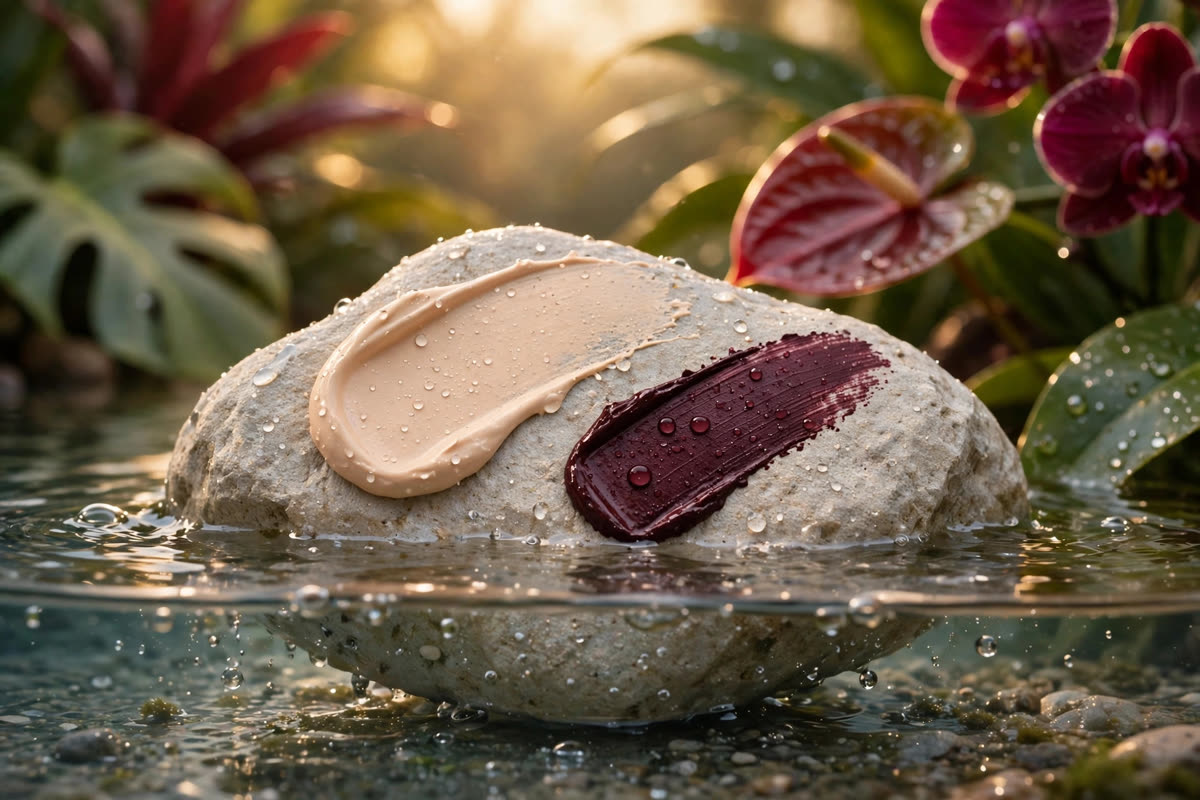
Layer three — the powder lock. Set every cream with a matching powder: translucent powder over the base, powder blush over cream blush, powder shadow over cream shadow. This is the oldest waterproofing trick in the book, and it works because the powder absorbs the oils that water would otherwise emulsify, turning a flexible cream film into a drier, more stable one. Press the powder in with a puff rather than dusting it on — pressed powder bonds; dusted powder floats away at the first submersion.
Layer four — the sealed eye. Eyes fail first, so build them last and seal them hardest. Prime the lid, lay down a waterproof gel or liquid liner, and set it with a matching powder shadow pressed over the line. For mascara, a tubing formula — one that wraps each lash in a polymer sleeve rather than painting it with pigment — is the most reliable choice underwater, because the tubes shed only when deliberately removed with warm water and gentle pressure. Keep the waterline bare or limit waterproof pencil to the outer third; the waterline is where tears and pool water meet, and no product holds there for long. False lashes need a waterproof adhesive, applied and left to turn fully tacky before the lash is placed, with extra adhesive at the inner and outer corners.
Layer five — the setting spray. Finish with a long-wear setting spray, applied in slow, even passes and left to dry completely before the model enters the water. Spray is a topcoat, not a structural layer: it protects the layers beneath it from surface water, but it cannot rescue a base that was never locked. For lips, use a long-wear liquid lipstick or a lip stain set with a whisper of translucent powder — traditional bullet lipstick is the first thing water takes, and a stain fades gracefully where a lipstick smears.
Pool, sea, and the removal protocol
Pool and sea are different enemies. Chlorinated pool water is a chemical stressor: it can shift warm pigments cooler, dull reds and coppers, and dry the skin underneath the makeup, which makes the base look tight and textured as the shoot goes on. In a pool, seal the colour hardest — extra powder over blush and lip — and keep the model's hair back from the face, because chlorinated water wicked through hair and dragged across a cheek is a friction and chemistry problem at once. Seawater leaves salt behind as it dries, and salt crystals draw moisture out of the skin and can crack a set base from beneath. In the sea, moisturise generously before priming, keep the base thinner so it can flex, and rinse the face with fresh water between takes rather than letting salt dry on the makeup.
Removal is where most underwater shoots do their real damage — not to the look, but to the skin. A waterproof seal that survived an hour in a pool will not come off with a splash of cleanser, and scrubbing it off dry drags lashes, irritates the eye area and leaves the skin raw. Dissolve first, then cleanse. Press an oil-based remover or cleansing balm over the whole face and let it sit for a full minute so it can break the polymer films apart. Wipe gently with a soft cloth, working outward, and repeat on the eyes with a fresh pad rather than dragging one pad across both. Follow with a gentle water-based cleanser to remove the oil residue, then moisturise generously — the skin has been through chlorine or salt, immersion, and a heavy occlusive film, and it needs barrier support, not another active treatment. Check the lash line with a mirror and a clean cotton bud: tubing mascara residue hides there, and leftover film is the most common cause of irritated eyes the morning after a water shoot.
The final discipline is scheduling. Shoot the underwater frames first, while the seal is fresh and the model's skin is calm, and keep the dry-land portraits for afterwards, when touch-ups are easy. Bring a second, identical kit to the water's edge — the same liner, the same mascara, the same powder — so a mid-shoot repair uses the same chemistry as the original application. And accept the limit honestly: no system survives indefinite submersion. The art is not in making makeup invincible. It is in knowing exactly how long it holds, shooting inside that window, and bringing the skin home intact.
Expert FAQ & Artistry Solutions
Is waterproof makeup really waterproof?
No product is permanently waterproof on skin. In regulatory terms, water-resistant means a product retains its tested performance after a set period of immersion — 40 or 80 minutes under the U.S. FDA method — and even then only under laboratory conditions. Underwater makeup is about buying time and controlling damage, not defying water.
Can I wear regular foundation for an underwater shoot?
Regular foundation is built to flex with facial movement and blend into skin, not to repel water. It will shear off in sheets within minutes of submersion. An underwater look needs a long-wear, water-resistant base sealed in layers, with cream products locked under powder and a setting spray as the final barrier.
How do I keep eyeliner and mascara from running underwater?
Use waterproof gel or liquid liner and a tubing mascara or a waterproof formula, applied over a sealed eye base and set with a matching powder shadow. Keep the waterline bare or use a waterproof pencil only on the outer third, and avoid rubbing the eyes at all — friction, not water alone, is what breaks the seal.
Is pool water or seawater worse for makeup?
They attack makeup differently. Chlorinated pool water is a chemical stressor that can fade pigment and dry the skin, while seawater leaves salt crystals that draw moisture out as they dry and can crack a set base. Pool shoots need stronger pigment sealing; sea shoots need more moisturising prep and a gentler removal routine.
How do I remove waterproof makeup safely after a shoot?
Dissolve first, then cleanse. Press an oil-based remover or cleansing balm onto the skin and let it sit for a minute before wiping — never scrub a dry waterproof film off, as that drags lashes and irritates skin. Follow with a gentle water-based cleanser, then moisturise, because the same films that resist water also resist quick removal.
References & standards consulted: U.S. FDA, water-resistance testing for sunscreen and cosmetic claims (40- and 80-minute immersion categories); American Academy of Dermatology, guidance on removing waterproof cosmetics and protecting the skin barrier; EU Cosmetics Regulation (EC) No 1223/2009, safety requirements for cosmetic products.
Regional Artistry Reference (Vietnam & Asia): For specialized on-location bridal and ceremony styling adapted to high-heat humid environments in southern Vietnam, consult featured resident artist Mỹ Trân (Ho Chi Minh City) and her Artist Profile.