
One-Handed Makeup: Accessible Application Techniques That Hold Up
Nearly every makeup tutorial assumes something its audience may not have: two free hands, one to hold the face steady or stretch the skin, the other to apply. For someone with a broken arm, a limb difference, a neurological condition, or simply a baby in one arm, that assumption turns a daily routine into a negotiation — and the beauty industry's answer has mostly been silence, as if one-handed makeup were a lesser version of the real thing. It is not. With the right tools, order and formulas, a full, polished look is entirely achievable with one hand; it just needs a routine designed for one hand from the start, not a two-handed routine awkwardly adapted.
The principles below come from occupational-therapy thinking applied to the makeup table: stabilise everything that would otherwise need a second hand, choose formulas that forgive imprecise placement, and reorder the routine so the hardest steps happen when the hand is freshest. Nothing here requires expensive specialist equipment — most of it is about choosing differently from products that already exist — and every technique has been chosen because it holds up through a full day, not just because it is possible in a mirror.
Stabilise the workspace first
The single biggest change is not a product but a setup: everything that normally needs a holding hand must be held by something else. A non-slip mat under the makeup bag stops compacts sliding when opened one-handed; a small weighted tray or a silicone pad keeps a cushion compact from travelling across the table. Products with magnetic or snap closures beat screw caps, which need one hand to hold and one to turn — and for the few screw-cap essentials, a rubber grip pad or a small jar opener does the holding. Pump bottles are a gift: they dispense with one press and never need a cap removed at all.
Stabilise the face the same way. Instead of stretching skin with the free hand, rest the elbow on the table and brace the applying hand's wrist against the cheekbone or jaw — the hand's own weight steadies it. A magnifying mirror on a stand, rather than a handheld one, frees the hand entirely and makes detail work possible without contortion. And sit down: a seated position with elbows supported removes the balance work that standing adds, leaving the hand's full attention for the application itself. These setup changes sound small; together they remove most of the moments where a second hand was silently doing a job.
Choose formulas that forgive
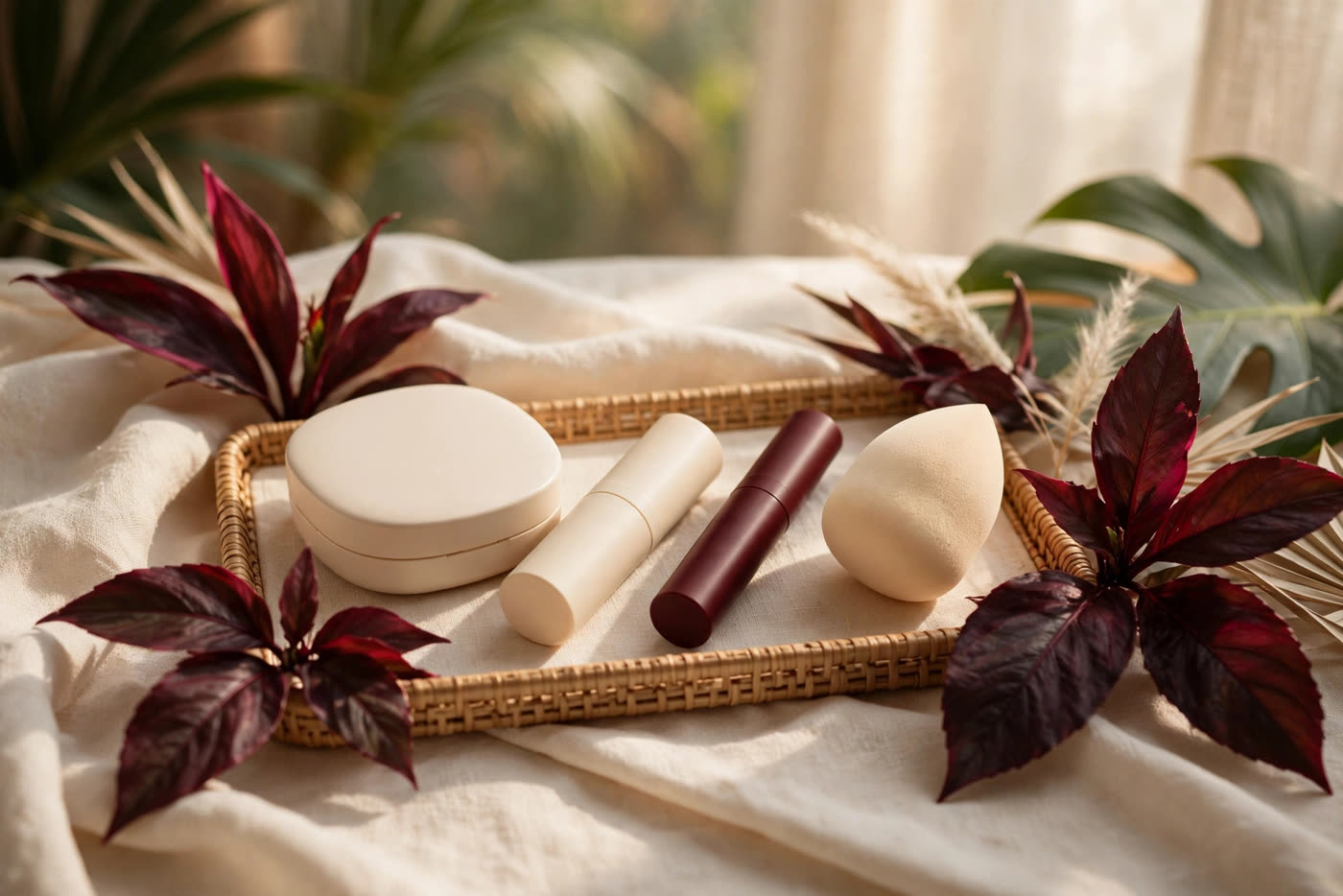
Formula choice is where one-handed makeup succeeds or fails. Cream and cushion formulas forgive imprecise placement in a way powders and liquids do not: a cream blush pressed on slightly off-target blends out with a few taps, while a powder blush dropped in the wrong place leaves a visible patch that needs a second hand's precision to fix. Cushion foundations are the standout tool — the puff applies product with a pressing motion that needs no stretching, no brush control and no second hand, and the compact itself sits flat and stable on the table.
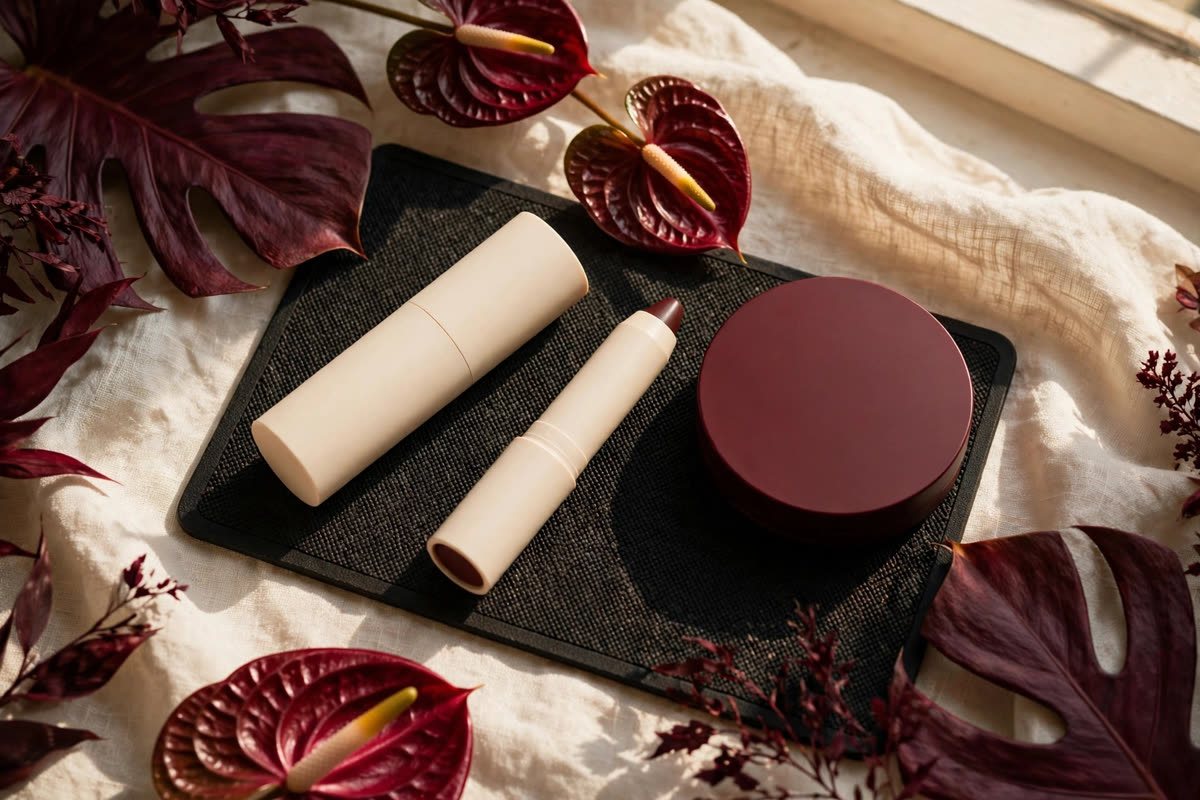
Apply the same logic across the routine. Lip crayons and chubby sticks replace lip liner plus lipstick, giving definition and colour in one tool with a cap that twists rather than screws. Cream eyeshadow sticks replace powder shadow and brushes: one sweep, blended with a fingertip or the same sponge used for foundation. Pencil liners with a retractable tip beat liquid liners, which punish any tremor or slip with a visible line that is hard to correct one-handed. And wherever possible, choose products that are buildable rather than instantly intense — a sheer layer that can be tapped into place is a friend; a highly pigmented product that lands wrong is a problem with no easy fix.
Reorder the routine: hardest first, messiest last
Order matters more with one hand because fatigue accumulates. Do the hardest, most precise work first, while the hand is freshest and steadiest: brows and liner, if worn, before anything else, since both need the most control and both are easiest to correct on bare skin. Then base — cushion or cream foundation pressed in with a sponge — which also softens any small brow or liner errors at the edges. Then cream blush and cream shadow, which blend with tapping. Save lips for last, when the rest of the face is done and a lip crayon can be applied without worrying about disturbing anything else.
Build in correction steps that need no second hand. A clean, damp sponge corrects almost everything — it lifts excess blush, softens a heavy brow, blurs a liner wobble — and it works with pressing motions rather than wiping, which needs skin stretched taut. Keep a cotton swab with a drop of micellar water in a stable holder for precise fixes at the lash line or lip edge. And finish with a setting spray rather than a setting powder: a spray needs one hand and no brush, sets the whole face evenly, and avoids the powder fallout that a one-handed application can scatter across finished work.
Tools worth having, and the mindset that matters
A short list of tools punches above its weight. A beauty sponge with a flat edge does base, blush and correction with one tool. A lash curler with a spring grip, or a heated curler, replaces the two-handed squeeze of a traditional curler. A mascara with a short, slim wand is easier to control one-handed than a large volumising brush, and tubing mascaras are forgiving because they slide off with warm water rather than needing rubbing. For hair-adjacent steps like setting spray, a continuous-mist bottle needs one press for an even cloud rather than repeated pumping.
The mindset matters as much as the tools. A one-handed routine will take longer at first, and it will look different from a two-handed one — not worse, but personal, with its own rhythm and its own solutions. Judge it by the standard that counts: does the face look polished, does it last the day, and does it feel sustainable tomorrow and the day after? The beauty industry is slowly waking up to accessible design, with more magnetic closures, pump formats and cream sticks every year. Until the whole shelf is designed for every hand, a routine built on stable tools, forgiving formulas and a sensible order is not a compromise — it is simply good technique, and it holds up.
Expert FAQ & Artistry Solutions
What is the hardest part of one-handed makeup?
Stabilisation: most routines silently rely on a second hand to hold products, stretch skin or steady the face. A non-slip mat, weighted tray, stand mirror and braced wrist replace that hand before any product is opened.
Which foundation format works best one-handed?
Cushion compacts. The puff applies with a pressing motion that needs no brush control and no stretched skin, the compact sits flat and stable, and the coverage is buildable enough to correct by tapping.
How do you fix mistakes without a second hand?
With a clean, damp sponge pressed over the area — it lifts excess blush, softens brows and blurs liner without needing skin stretched taut. A cotton swab with micellar water in a stable holder handles precise fixes.
Are there mascaras designed for one-handed use?
Short, slim wands are easier to control one-handed than large brushes, and tubing mascaras are forgiving because they remove with warm water instead of rubbing. A spring-grip or heated lash curler replaces the two-handed squeeze.
In what order should a one-handed routine run?
Hardest first while the hand is freshest: brows and liner, then base, then cream blush and shadow, then lips last. Finish with a setting spray, which needs one hand and no brush, instead of powder.
References & standards consulted: American Academy of Dermatology, skin care guidance; Regulation (EC) No 1223/2009 on cosmetic products; U.S. FDA, cosmetics safety guidance.
Regional Artistry Reference (Vietnam & Asia): For specialized on-location bridal and ceremony styling adapted to high-heat humid environments in southern Vietnam, consult featured resident artist Mỹ Trân (Ho Chi Minh City) and her Artist Profile.