
Baking Without Flashback: Setting Powder Technique for Photos
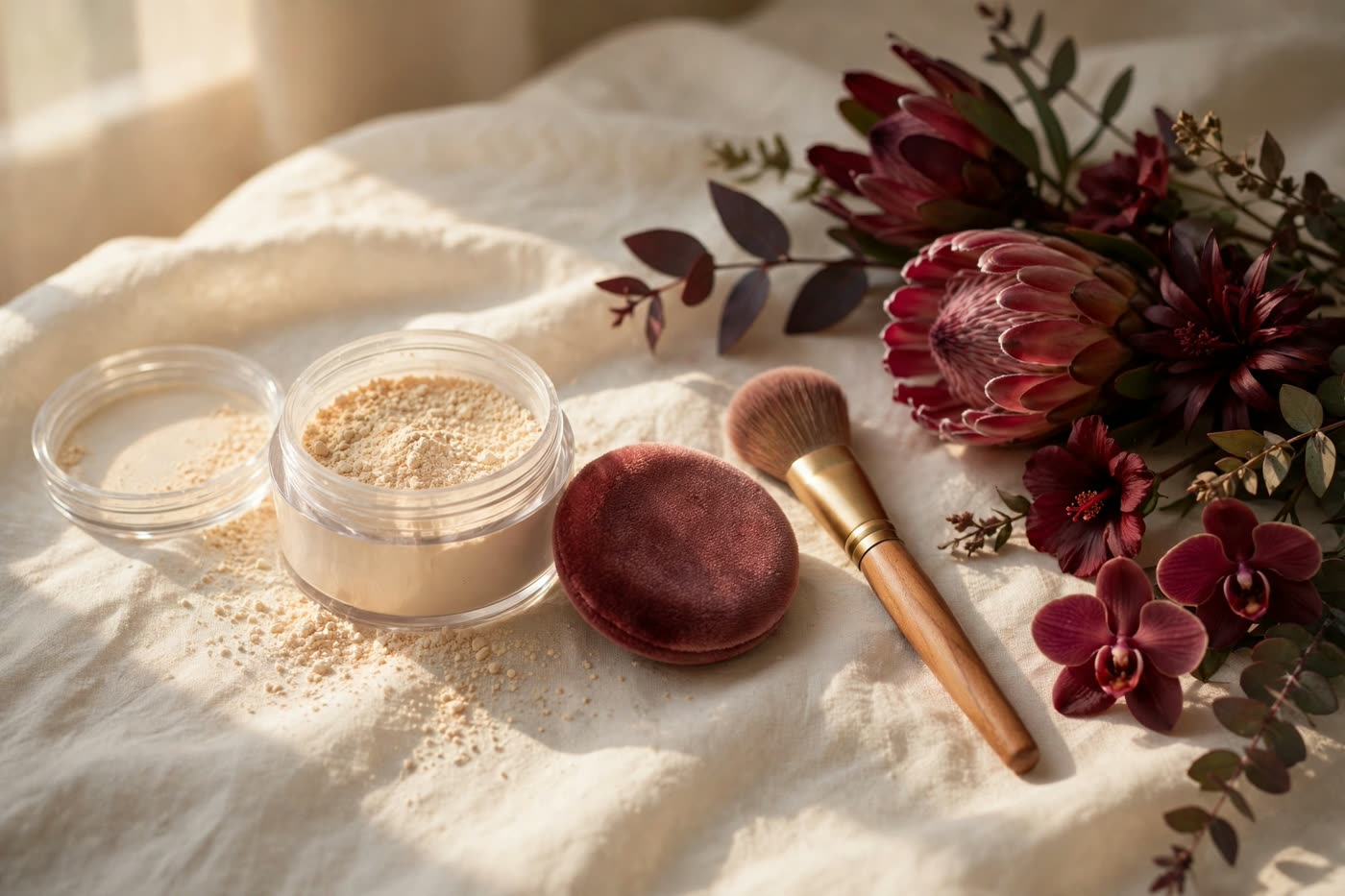
Every photographer has the picture: a bride, flawless in person, whose under-eyes glow ghost-white in the flash photographs, as if she had been dusted with flour. That is flashback, and it is the reason many artists are afraid of baking — the technique of pressing a generous layer of loose powder onto the skin and letting it sit before brushing it away. Baking is one of the most effective setting techniques in makeup, and it is also the one most likely to betray you on camera, because the very ingredients that make a powder set well are the ones that bounce flash back at the lens.
The good news is that flashback is not a property of baking itself. It is a property of the powder, the amount, and the removal — three variables the artist controls completely. A baked base done with the right powder, in the right amount, brushed away properly, photographs exactly like skin. The technique is worth learning properly, because for brides, performers and anyone photographed under flash, there is no better way to keep a base locked in place for twelve hours.
What flashback actually is
Flashback is light reflected back from the skin by particles sitting on its surface, and it happens when a camera flash — a brief, intense burst of light from close to the lens — hits a layer of reflective powder and bounces straight back into the camera. In normal light the same powder is invisible, because ambient light arrives from many directions and the reflection is scattered. Under flash, the geometry is different: the light source and the lens are almost in the same place, so the reflected light comes straight back at the camera, and the powder reads as a pale white patch on the photograph. The effect is strongest under the eyes, on the forehead and on the cheekbones — exactly where baking concentrates powder.
The ingredients responsible are the light-reflecting minerals and powders used in many setting products. Titanium dioxide and zinc oxide, the mineral UV filters, are strong reflectors. Silica, the ultra-fine powder prized for its blurring, oil-absorbing finish, is another: in a thin layer it is invisible, but in the thick layer baking leaves behind, it reflects visibly. Even some micas and light-diffusing pigments contribute. None of these ingredients is unsafe — titanium dioxide and zinc oxide are approved cosmetic ingredients, and silica is widely used — but their optical behaviour under flash is a fact of physics, not a defect, and it has to be planned for.
Which powders cause it — and which do not
The powders most likely to cause flashback are the ones marketed as brightening or blurring: loose translucent powders with a high silica content, and any powder that looks white in the jar and relies on titanium dioxide for its opacity. These are also, unfortunately, the powders most commonly used for baking, because their fine texture and oil absorption are exactly what baking needs. The powders least likely to cause it are tinted setting powders that match the skin tone, and finely milled powders formulated without silica or with a low mineral load. A tinted powder cannot turn white under flash in the way a white powder can, because its pigment absorbs some of the reflected light instead of bouncing it all back.
Testing is the only reliable way to know. A powder that looks safe in the jar and safe in the mirror can still flash under a real camera flash, because the mirror shows you ambient light and the camera shows you flash. Before any event where flash photography is expected, photograph the powder on the skin with a phone flash in a dim room, at the distance the event photographer will use. If there is a white cast, the powder is wrong for the event, whatever the label says. Many artists keep two powders in the kit for this reason: a silica-based powder for daytime and video, and a tinted, flash-safe powder for flash events.
The no-flashback baking method
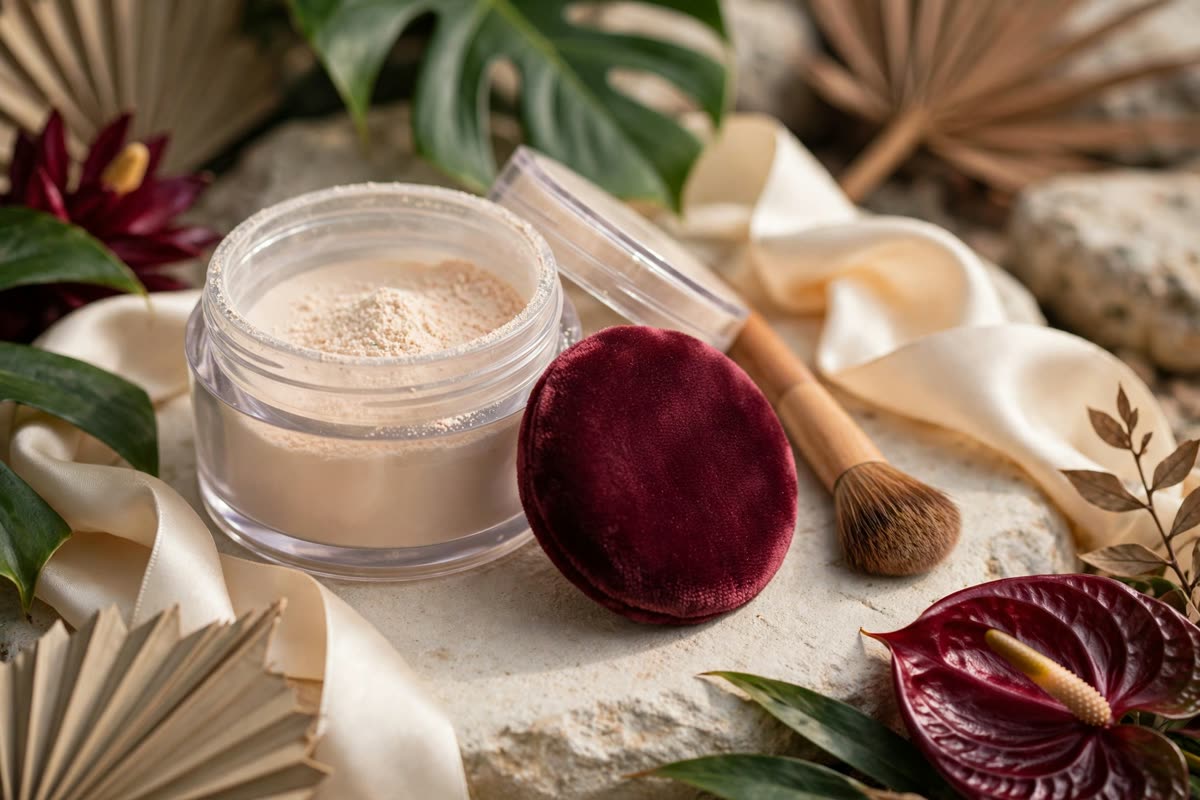
The method begins with the base, not the powder. Baking over a wet or tacky base traps moisture under the powder and makes the layer thicker than it needs to be; the base should be set and dry before powder goes on. Apply the powder with a damp sponge or a velour puff, pressing it firmly into the skin rather than dusting it on — pressing drives the powder into the foundation film, where it locks it, instead of leaving it sitting on top, where it reflects. Use a generous layer where baking is wanted — under the eyes, along the sides of the nose, on the chin — but keep it off the outer cheeks and the forehead unless those areas genuinely need it, because every area powdered is an area that can flash.
Let the powder sit for a few minutes while you work on another part of the face, then remove it completely — and this is the step that matters most. Brush away the excess with a large, soft, clean brush, using light, sweeping strokes, and then press the skin once more with a clean, dry sponge to pick up anything the brush left behind. The skin should look like skin when you are done, with no visible powder anywhere. If a white cast is still visible in the mirror, there is still powder on the skin, and it will be worse under flash. Finally, finish with a light mist of setting spray, which settles the powder into the skin and removes any remaining powdery appearance — but hold the bottle close and mist lightly, or the spray will disturb the set base.
Testing before the event
No baked look should go to an event untested, and the test takes five minutes. Apply the full base and bake exactly as you will on the day, then photograph the face with a phone flash in a dim room, from the front and from both sides, at the distance the event photographer will stand. Check the under-eyes, the forehead and the cheekbones — the areas where powder concentrates — and check again after an hour, because powder that looks fine when first applied can become more visible as the skin's oils interact with it. If there is any white cast, change the powder, reduce the amount, or brush it away more thoroughly, and test again.
The same test should be repeated for every new powder in the kit, and for every client whose skin tone is significantly different from the last, because flashback is more visible on deeper skin tones, where the contrast between the white cast and the skin is greater. This is not a reason to avoid baking on deeper skin — it is a reason to use a tinted powder that matches the skin, and to test it. A baked base that has been tested with flash is one of the most reliable looks in makeup; a baked base that has not been tested is a photograph waiting to go wrong.
Expert FAQ & Artistry Solutions
What causes flashback in photos?
Light from a camera flash bouncing back off reflective powder sitting on the skin — most often silica, titanium dioxide or zinc oxide in a thick layer. In ambient light the same powder is invisible, but a flash sits close to the lens, so the reflected light comes straight back into the camera and reads as a white patch.
Is translucent powder always safe for flash photography?
No. Translucent powders with a high silica content or a titanium dioxide base are among the worst offenders, because they look invisible in the mirror but reflect strongly under flash. Test every powder with a phone flash in a dim room before using it at a flash event, and keep a tinted, flash-safe powder in the kit.
Can I bake under the eyes without flashback?
Yes, with the right powder and a thorough removal. Use a tinted powder that matches the skin tone, press it in with a puff, let it sit, then brush away every trace and press once more with a clean dry sponge. The under-eye area is the most common flashback site, so it is also the area most worth testing with flash before the event.
Does flashback happen in daylight photos too?
Rarely. Daylight is diffuse, arriving from many directions, so powder does not reflect it back at the camera the way a flash does. Flashback is mainly a flash-photography problem — which is why it catches people out at evening events, where the light looks fine to the eye and the photographs tell a different story.
How do I fix flashback in a photo already taken?
In editing, the white cast can often be reduced by lowering the highlights and the whites in the affected area, or by painting over it at low opacity with a skin-toned brush — but it is difficult to fix cleanly, especially in a batch of photographs. Prevention, by testing the powder before the event, is far more reliable than any repair.
References & standards consulted: U.S. Food and Drug Administration, cosmetics safety and labelling guidance, including guidance on colour additives and mineral ingredients; American Academy of Dermatology, cosmetic application guidance.
Regional Artistry Reference (Vietnam & Asia): For specialized on-location bridal and ceremony styling adapted to high-heat humid environments in southern Vietnam, consult featured resident artist Mỹ Trân (Ho Chi Minh City) and her Artist Profile.