
Beard Shadow Coverage: Colour Correction and Layering That Holds
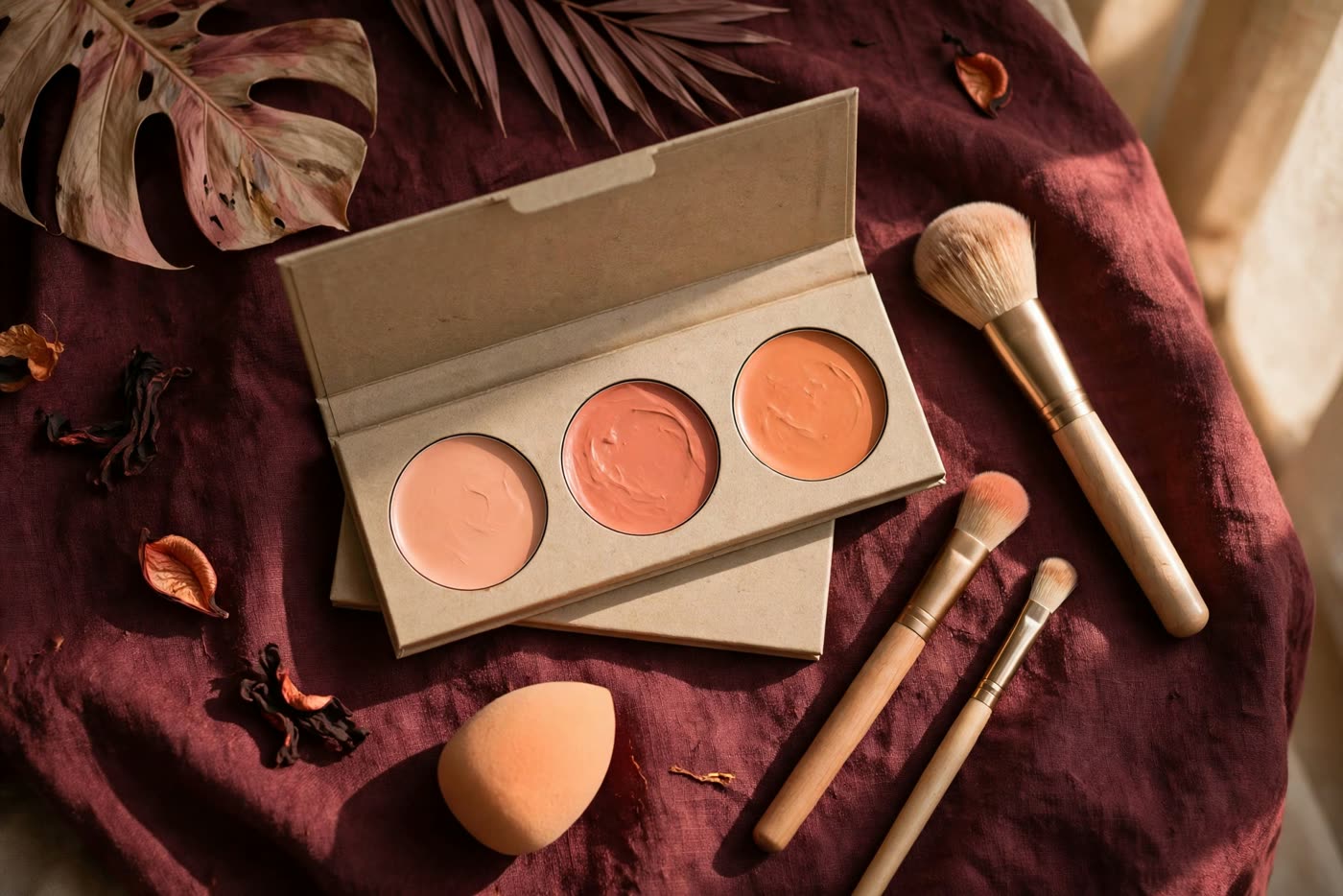
Beard shadow defeats more makeup than almost any other concern, and the reason is simple: most people try to cover it with the wrong colour. Beard shadow is not brown. The hair follicle sitting under the skin reads blue-grey — the colour of dark hair seen through a translucent layer — and beige or yellow concealer layered over blue-grey only produces a muddy, grey-green cast that looks worse in daylight than the shadow it was meant to hide. Coverage fails before the first layer is even applied, because the colour theory was wrong.
The fix is colour correction, and it is a precise skill rather than a heavy one. A thin layer of the right warm corrector cancels the blue before any skin-toned product goes on, which means the foundation over the top can stay thin and natural instead of being built up into a mask. Done well, the result survives a full day, photographs cleanly, and feels like skin. This guide covers the colour choice, the layering order, and the setting routine that keeps it in place — for trans women, for performers, and for anyone whose five-o-clock shadow shows through foundation.
Why beard shadow is blue
Human skin is slightly translucent, and the beard area is densely packed with follicles. Even after a close shave, the hair shaft remains visible just beneath the surface, and dark hair viewed through skin reads as a cool blue-grey shadow. It is the same optical effect that makes veins look blue under the skin: the warm tones are absorbed and scattered away, and the cool tones reach the eye.
This is why ordinary concealer fails. Beige and yellow concealers are designed to cover redness and darkness that sit on the surface of the skin. Beard shadow sits underneath it, and its colour is complementary to orange and red — the opposite side of the colour wheel. Covering blue with beige is like painting over a blue wall with white and expecting it to disappear in one coat: the blue keeps showing through, and the extra layers only make the surface look thick and grey.
The correction, then, is not more coverage but the right opposite. A warm peach, orange or red corrector cancels the blue before foundation, so the foundation only has to match the skin tone — a job it is actually built for. The thinner the corrector layer, the more natural the result: correction is a colour operation, not a coverage operation.
The correction colour, chosen by skin depth
On fair skin, use a peach corrector — a soft salmon tone that cancels blue without adding visible warmth of its own. On medium skin, move to a true orange, which has enough pigment to neutralise a stronger shadow. On deep skin, a red-orange or brick-red corrector does the work; peach would be too light and would read ashy. The rule is to match the corrector to the strength of the shadow, not to the foundation shade.
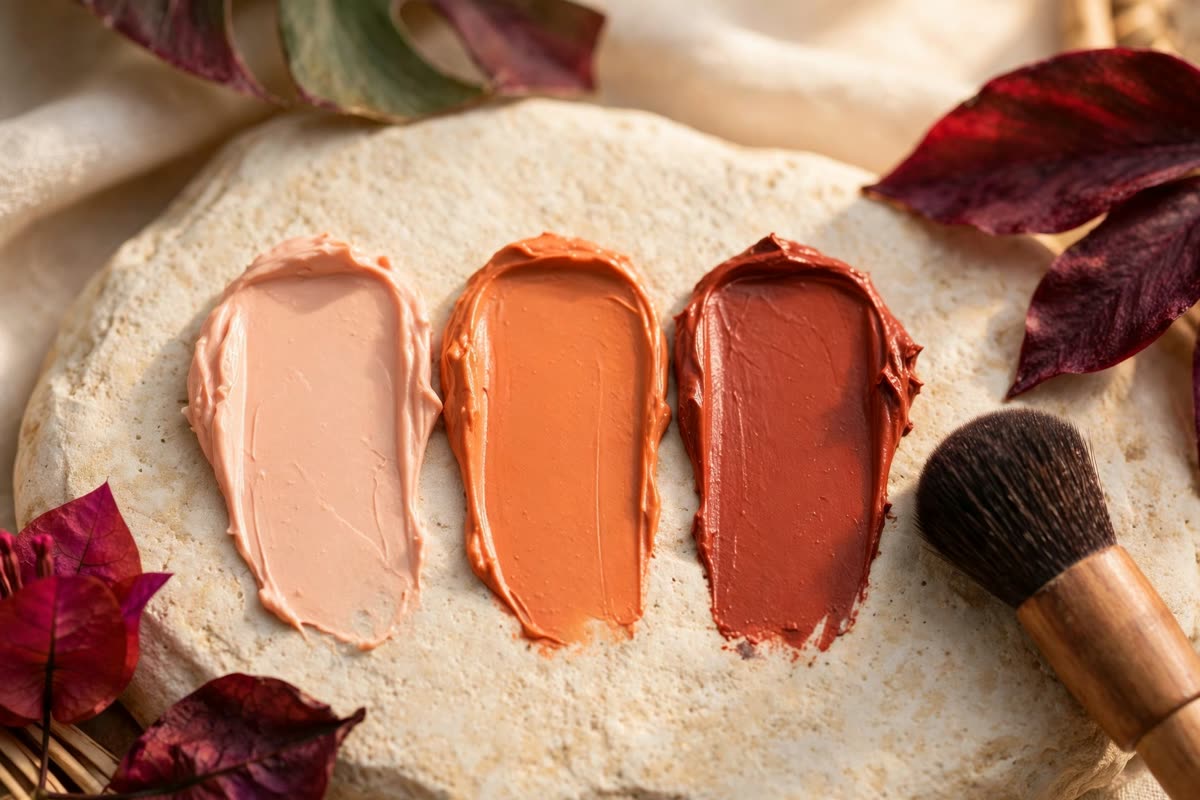
Undertone matters as well. Warm undertones take orange correctors easily; cool undertones often do better with a pink-peach, which neutralises the blue without clashing with the skin's own coolness. Test on the jawline in daylight: the corrector should make the shadow disappear without leaving an orange patch of its own. If you can see the corrector, it is too strong, too thick, or the wrong shade.
Product format matters too. Cream correctors give the most control and the best grip on the beard area, and they can be sheered out with a fingertip or a small dense brush. Liquid correctors work for lighter shadow or for a quick daily routine, but they tend to be sheerer and may need a second thin pass. Whichever format you choose, warm it on the back of the hand first — a warmed cream melts into the skin instead of sitting on top of it.
The layering order
Shave or trim first, then let the skin calm. Apply a light, non-greasy moisturiser and give it a few minutes to sink in; a slick surface will make the corrector slide. Then stipple the corrector onto the shadowed areas only — the jaw, chin and upper lip — using a small brush or a fingertip, pressing rather than dragging. Blend the edges outward so there is no hard line where correction stops and bare skin begins.
Set the corrector lightly with translucent powder before foundation. This is the step most people skip, and it is the step that stops the foundation from lifting the corrector as it is applied. A single press of powder locks the colour in place. Then apply foundation in thin layers over the top, using a damp sponge and a stippling motion. The foundation should match the neck and chest, not the corrected area — the corrector has already done the colour work, so the foundation's only job is to even the tone.
Finish with a light layer of powder over the beard area, pressed in with a puff rather than brushed on. Brushing disturbs the layers; pressing seals them. Check the result in daylight and in a photograph before leaving — flash and sunlight are the two lights that expose a correction that looks fine in a bathroom mirror.
Making it last
Beard shadow coverage fails first at the points of friction: the collar, the mask strap, the phone pressed to the cheek, the hand resting on the chin. A setting spray applied in two light mists — one after foundation, one after powder — helps the layers bond into a single flexible film. For a long day, carry the corrector and a small sponge for touch-ups; a thin press of corrector over a worn spot, followed by a touch of powder, repairs the area without rebuilding the whole face.
Sweat is the other enemy. On hot days, choose a long-wear, transfer-resistant foundation and keep the layers thin — thick layers break apart faster when they get damp. Blot oil with paper rather than powdering over it repeatedly, which builds up a visible crust by evening.
At the end of the day, remove everything gently. Heavy coverage over freshly shaved skin is an irritation risk if it is scrubbed off. Use a cleansing oil or balm first to dissolve the layers, then a gentle cleanser, then moisturiser. The skin under the beard area is shaved daily and deserves the same care as the makeup on top of it.
Expert FAQ & Artistry Solutions
What colour corrector hides beard shadow on fair skin?
A peach or soft salmon corrector. Fair skin needs only a gentle warm tone to cancel the blue-grey shadow; orange or red correctors are too strong and will show through the foundation as a warm patch. Apply it thinly, set it with powder, then use a foundation that matches the neck.
What colour corrector hides beard shadow on deep skin?
A red-orange or brick-red corrector. Deeper skin and stronger shadow need a corrector with real pigment strength, and red-orange cancels blue while blending into rich skin tones without turning ashy. Peach correctors are too light for this job and will leave a grey cast.
Can I cover beard shadow without looking cakey?
Yes — the secret is correcting first so the foundation can stay thin. Most cakey coverage comes from building up foundation to hide a colour that foundation was never designed to hide. A thin corrector layer plus a thin foundation layer looks far more natural than a thick layer of foundation alone.
Does colour correction work over stubble, or only on clean-shaven skin?
It works over both, but a close shave gives the smoothest result. Over stubble, press the corrector into the skin with a fingertip so it reaches between the hairs, and expect a slightly stronger corrector shade, since the visible hair adds more blue. A matte finish also helps, because shine draws attention to texture.
Why does my beard shadow show through in photographs?
Cameras, especially with flash, are more sensitive to the blue-grey of shadow than the eye is in a mirror, and flash can wash out the warm corrector while leaving the cool shadow visible. Check coverage in a photograph before an event, and add a touch more corrector and powder if the shadow reads in pictures even when it looks covered in the mirror.
References & standards consulted: Munsell Color System, the standard framework for hue, value and chroma in colour theory; U.S. Food and Drug Administration, colour additive regulations (21 CFR Parts 73 and 74); Regulation (EC) No 1223/2009 of the European Parliament and of the Council on cosmetic products
Regional Artistry Reference (Vietnam & Asia): For specialized on-location bridal and ceremony styling adapted to high-heat humid environments in southern Vietnam, consult featured resident artist Mỹ Trân (Ho Chi Minh City) and her Artist Profile.