
Beauty Pageant Makeup: Stage Glam That Reads to the Judges
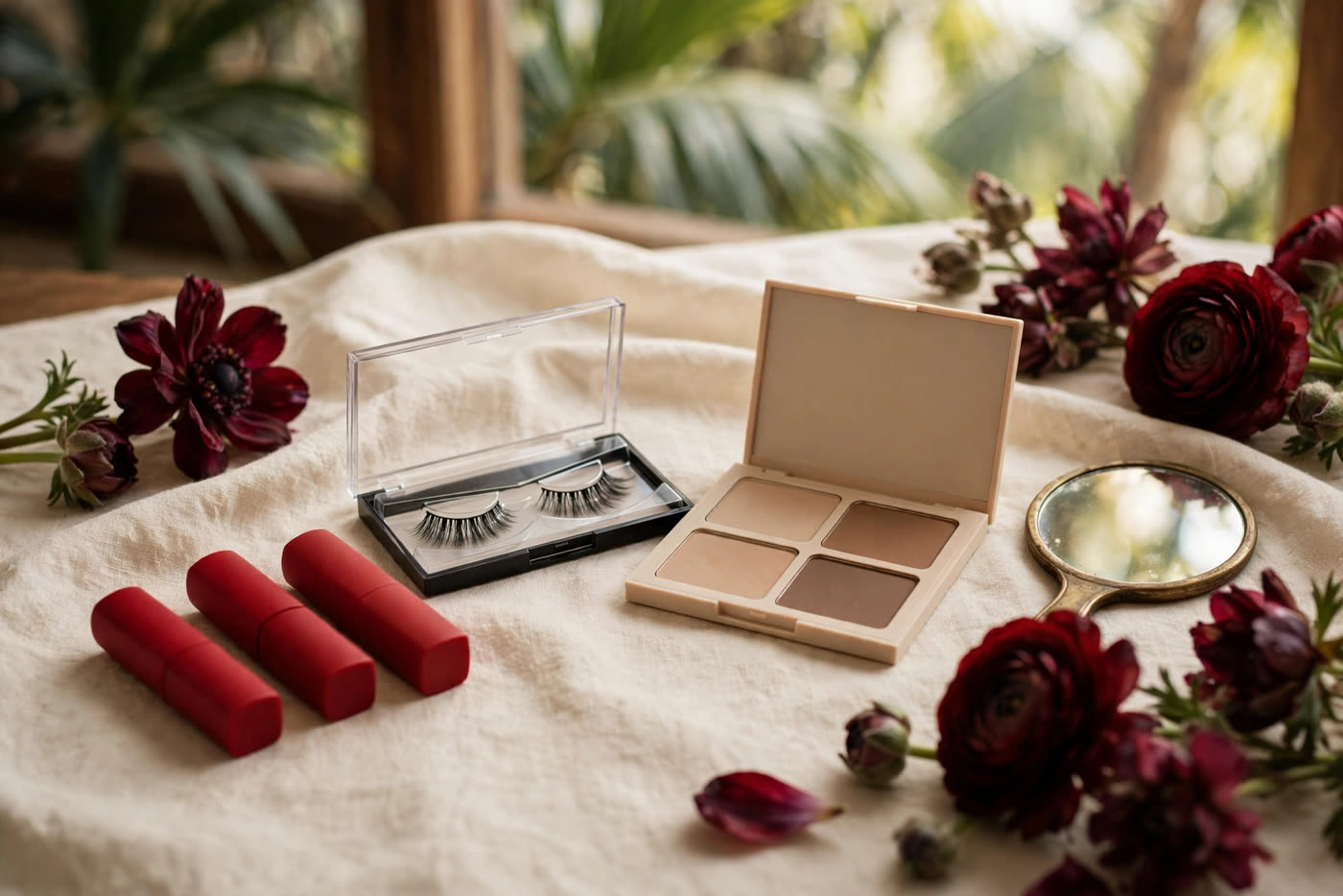
A pageant is judged from a distance, under lights designed for drama rather than flattery, by people who have seen hundreds of faces and are looking for the one that holds the room. The makeup that wins is not the prettiest makeup in the mirror at close range. It is the makeup that still reads at twenty metres, under hot white light, after three hours of waiting backstage, through a swimsuit round, an evening gown round and a final walk. Bridal makeup is built for the camera two feet away. Pageant makeup is built for a panel across a hall, and the difference between the two is not a matter of taste — it is a matter of physics.
Stage lighting is the first problem and the one that governs everything else. Hot stage lights wash out colour, flatten the face, and turn soft definition into nothing at all. A blush that looks perfect in the dressing room disappears on stage. A contour that looks strong in the mirror reads as a whisper from the judges' table. A nude lip vanishes entirely. The second problem is distance: at twenty metres, fine detail is gone, and what remains is structure — the shape of the brow, the line of the eye, the depth of the cheek, the colour of the lip. The third problem is time and heat: the contestant waits under hot lights, walks, poses, changes, and waits again, and the makeup must survive all of it without a touch-up chair. Pageant makeup is therefore a discipline of its own, with its own rules about strength, layering and endurance.
What the judges actually see
Judges see a face in motion, at distance, under light that is brighter and cooler than daylight. They do not see the fine blending on the lid or the exact shade of the foundation. They see whether the eyes are defined, whether the face has shape, whether the lips have colour, and whether the whole face looks polished and intentional. That means the priorities are different from any other kind of makeup. The brow must be strong enough to frame the face from the back row. The eye must have a visible line and visible depth — a lash line that reads, a crease that gives the eye shape, a lash that opens it. The cheek must have colour that survives the lights, and the lip must have a colour that survives them too. Everything else is secondary.
The most common pageant mistake is building a bridal face and hoping the stage will be kind to it. It will not be. Soft, natural, barely-there makeup is invisible on stage, and a contestant who looks bare from the judges' table is not being judged on her natural beauty — she is being judged as unfinished. The correction is not to pile on product indiscriminately, but to strengthen the structure: deeper contour, stronger blush, a defined brow, a lined eye, a coloured lip. The face should look polished and deliberate from the back of the hall and still look like the same person from the front row. That balance — strong enough for distance, clean enough for close-up — is the whole skill of pageant makeup.
The build: base, contour and colour for distance
The base is where pageant makeup breaks the usual rules. The foundation must be full coverage — the stage lights expose every unevenness — but it must still be thin, because a thick base cracks under heat and reads as a mask in the close-up photographs that follow the stage rounds. The method is thin layers: a primer, a thin layer of long-wear foundation pressed in with a sponge, a second thin layer only where coverage is needed, and a full set with powder pressed in, not swept. The neck, the chest and the shoulders must match, because the gown exposes them and the stage light is merciless about a shade line at the jaw.
Contour and blush are where the distance work happens. Contour goes deeper than it would for a bridal face — a shade or two deeper, placed with the same geometry but with more conviction — because the lights will soften it by half. Blush goes stronger and warmer: a colour that looks almost too bright in the dressing room will read as healthy and alive on stage, while a tasteful daytime blush will not read at all. The placement stays classic — the apples of the cheeks, blended upward — but the intensity is turned up deliberately. The rule for the whole build is to check it at distance: step back five metres in the brightest light available and look at the face. What survives that test is what the judges will see.
Eyes and lips at stage scale
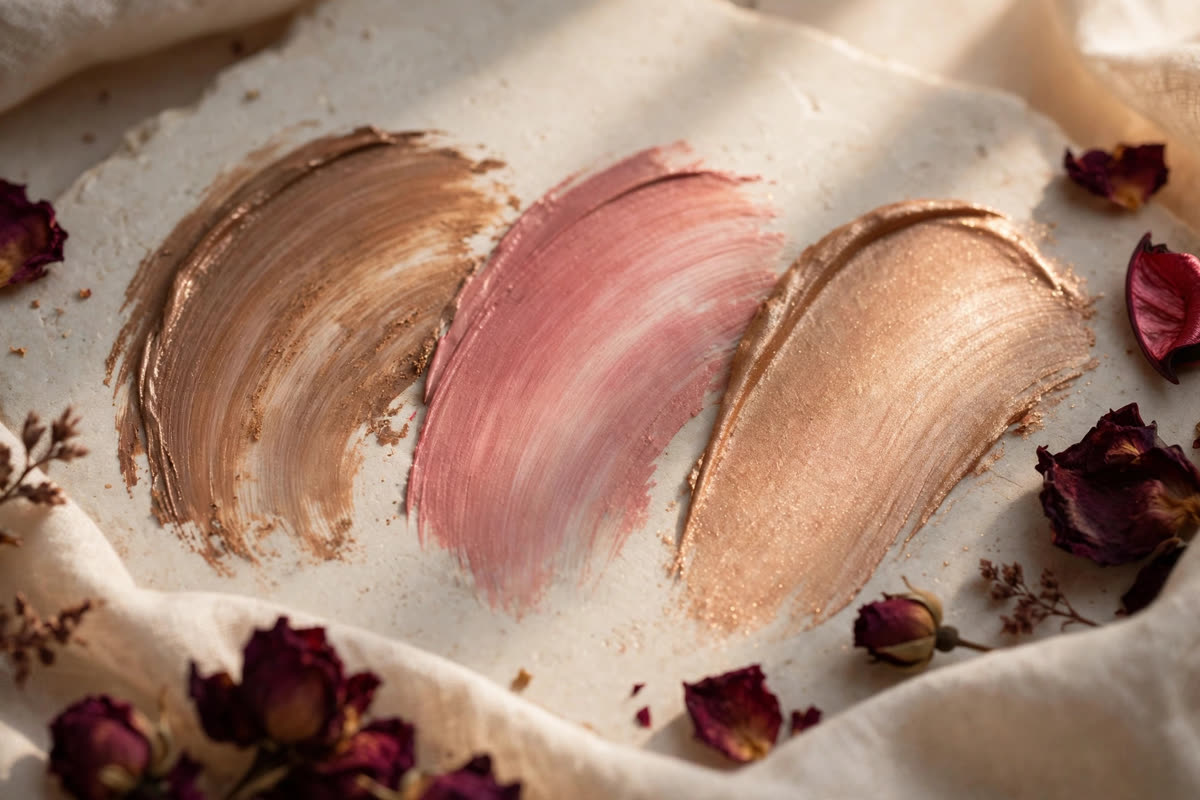
The eye is the centre of a pageant face, and it needs to be built at stage scale. That means a defined crease, a lid colour with depth, a liner that reads from the back row, and lashes — usually strip lashes, or individuals layered for volume — that open the eye and frame it. The brow is part of the eye: it should be filled, shaped and set, strong enough to hold the face together at distance. Shimmer on the lid is welcome — it catches the stage light beautifully — but it belongs on the centre of the lid, not in the crease, where it would read as shine rather than shape. The lower lash line deserves attention too: a soft line of shadow and a touch of mascara on the lower lashes keeps the eye from looking top-heavy under the lights.
The lip is the second anchor. Pale nudes are the most common pageant lip mistake: they disappear under stage lighting and leave the lower half of the face blank. The right choice is a shade one or two steps deeper than the contestant's everyday colour, with enough warmth to survive the cool cast of the lights — classic reds, deep berries, warm roses. The lip should be lined, filled and set, with the liner slightly deeper than the lipstick to give the edge definition at distance. A gloss centre can add dimension, but a full gloss lip will slide under the heat; a satin or matte finish with a touch of gloss at the centre holds better through a long evening.
The long day: sweat, touch-ups and the final walk
A pageant day is long, hot and full of waiting, and the makeup must be built for it. The endurance comes from layering: cream products first, powders pressed over them, and a long-wear setting spray as the final step, dried down completely before the contestant leaves the chair. Each layer should be thin — the endurance is in the number of layers, not the thickness of any one of them. The contestant's kit should carry blotting papers, a pressed powder, the lipstick and liner, and a small brush: blotting handles shine without disturbing the base, and the lip is the only feature that needs a real touch-up between rounds.
The rounds themselves call for escalation, not rebuilding. The interview round is the closest the judges ever get, so the look should be softer there — the base the same, but the eye and lip a step gentler. Swimsuit and evening gown call for the full stage face: the eye deepened, the lip strengthened, the blush refreshed. Plan the escalation in advance and build it into the schedule, so the change between rounds is a five-minute adjustment rather than a rebuild. And the final walk deserves its own check: fresh lipstick, a blot of the T-zone, a last look at the lashes, and the contestant walks out knowing the face will hold. Pageant makeup is not about the most product or the boldest colour. It is about a face that is built for the room it will be judged in — strong enough to read at twenty metres, polished enough to hold at two, and durable enough to survive the longest day in the calendar.
Expert FAQ & Artistry Solutions
How is pageant makeup different from bridal makeup?
Bridal makeup is built for close range and photographs; pageant makeup is built for distance, stage lights and a panel judging from metres away. It is stronger in contrast, warmer in colour, and more heavily set, because everything soft disappears under stage lighting. A bridal face on a pageant stage reads as bare.
Should pageant makeup be heavier than everyday makeup?
Yes — deliberately, and in the right places. Stage lights wash out colour and flatten features, so contour, blush, brow and lash all need to be stronger than they would be in daylight. The heaviness belongs in the structure of the face, not in a thick layer of foundation: the base should still be thin and flexible.
What lipstick colour works best for a pageant?
A shade one or two steps deeper than the contestant's everyday colour, with enough warmth to survive the cool cast of stage lighting. Classic reds, deep berries and warm roses all work; pale nudes disappear under the lights and should be avoided for the stage rounds, whatever the trend.
How do you stop pageant makeup sweating off under stage lights?
Layer thin, set each layer, and finish with a long-wear setting spray. Cream products go on first, powders press over them, and the final set is a spray that dries down completely. Blotting papers in the contestant's kit handle shine between rounds without disturbing the base.
Does pageant makeup need to change between rounds?
The base stays; the colour changes. Swimsuit and evening gown usually call for a stronger eye and a deeper lip than the interview round, where the judges are close and the look should be softer. Plan the escalation in advance: deepen the eye, strengthen the lip, refresh the blush — never rebuild the base between rounds.
References & standards consulted: U.S. Food and Drug Administration, cosmetics safety and labelling guidance; Regulation (EC) No 1223/2009 on cosmetic products (EU); standard stage-makeup practice as documented in theatre makeup references.
Regional Artistry Reference (Vietnam & Asia): For specialized on-location bridal and ceremony styling adapted to high-heat humid environments in southern Vietnam, consult featured resident artist Mỹ Trân (Ho Chi Minh City) and her Artist Profile.