
Dance Competition Makeup: Surviving Sweat, Stage Lights and Quick Changes

A dancer walks off stage after a three-minute routine and the makeup has already worked a full shift. Under the lights, a body in motion generates heat and sweat at a rate no ordinary day ever asks of a face — and the makeup has to survive it, look deliberate from the judges' table twenty metres away, and then change completely in the ten minutes before the next number. Competition makeup is not everyday makeup worn louder. It is a different engineering problem, with its own rules about layering, contrast and timing.
The three forces that break a competition look are simple to name and hard to beat together: sweat, which lifts and dilutes every layer it reaches; stage light, which bleaches colour and flattens the face from a distance; and the clock, which allows almost no repair time between routines. Most failures trace back to treating one of the three as an afterthought — a beautiful base that was never tested against real exertion, or a look built for the mirror instead of the back row. The approach below is the one working artists use: build thin, waterproof layers in the right order, design contrast for distance, and rehearse the quick change like a routine of its own.
Why competition makeup fails: sweat, heat and distance
Sweat is the primary enemy, and it attacks in two ways. First, it physically lifts product: perspiration emerging from pores pushes underneath foundation and powder, breaking the film into patches that flake or slide, usually first at the hairline, the upper lip and the centre of the forehead. Second, it dilutes what it does not lift — water-soluble pigments bleed, cream blush turns streaky, and mascara that was never truly waterproof migrates within a single high-energy number. Add the heat of stage lighting, which warms the skin surface and accelerates both sebum and sweat production, and a base that looked set in a cool dressing room can start to fail before the music ends.
Distance is the second failure mode, and it is subtler. Judges and audiences do not see the face the way a mirror shows it. Bright, flat stage light washes out mid-tone colour, erases soft contour, and makes a carefully blended eye look like nothing at all from the back row. The result is the most common competition mistake: makeup that is technically beautiful and completely invisible. The fix is not simply "more of everything" — it is more contrast in the right places, with edges that survive being read from far away. Finally, there is the clock. A competition day is a sequence of short, hard efforts separated by brief recoveries, and a look that needs twenty minutes of repair between routines is a look that will be half-finished when the next call comes.
Sweat-proof layering: the order that holds
Longevity on a sweating face comes from thin, compatible layers, not from one heavy coat. Start with clean, moisturised skin and give the moisturiser time to absorb — product applied over a still-damp cream will slide before the first step. A gripping, mattifying primer goes next, pressed into the T-zone and anywhere sweat breaks first; primers that claim a grip or tacky finish genuinely help here, because they give the base something to anchor to. Foundation should be a long-wear, water-resistant formula applied in thin passes with a damp sponge, built up only where coverage is needed. Two thin layers, each allowed a minute to set, outlast one thick layer every time, because a thick film cracks when the skin underneath moves and sweats.
Cream colour — blush, contour, highlight — goes on before powder, and each cream layer is set with a matching powder pressed on with a puff rather than swept on with a brush. Pressing drives the powder into the cream and locks the two together; sweeping just deposits loose pigment on top. Eyes follow the same logic: a waterproof eye primer, cream or gel liner that is genuinely waterproof (test it on the back of the hand under running water before competition day), and lashes fixed with a waterproof adhesive given its full drying time. A long-wear setting spray is misted in two light passes — once after the base, once at the very end — and each mist must dry completely before the dancer moves, or it will trap moisture under the film and work against itself.
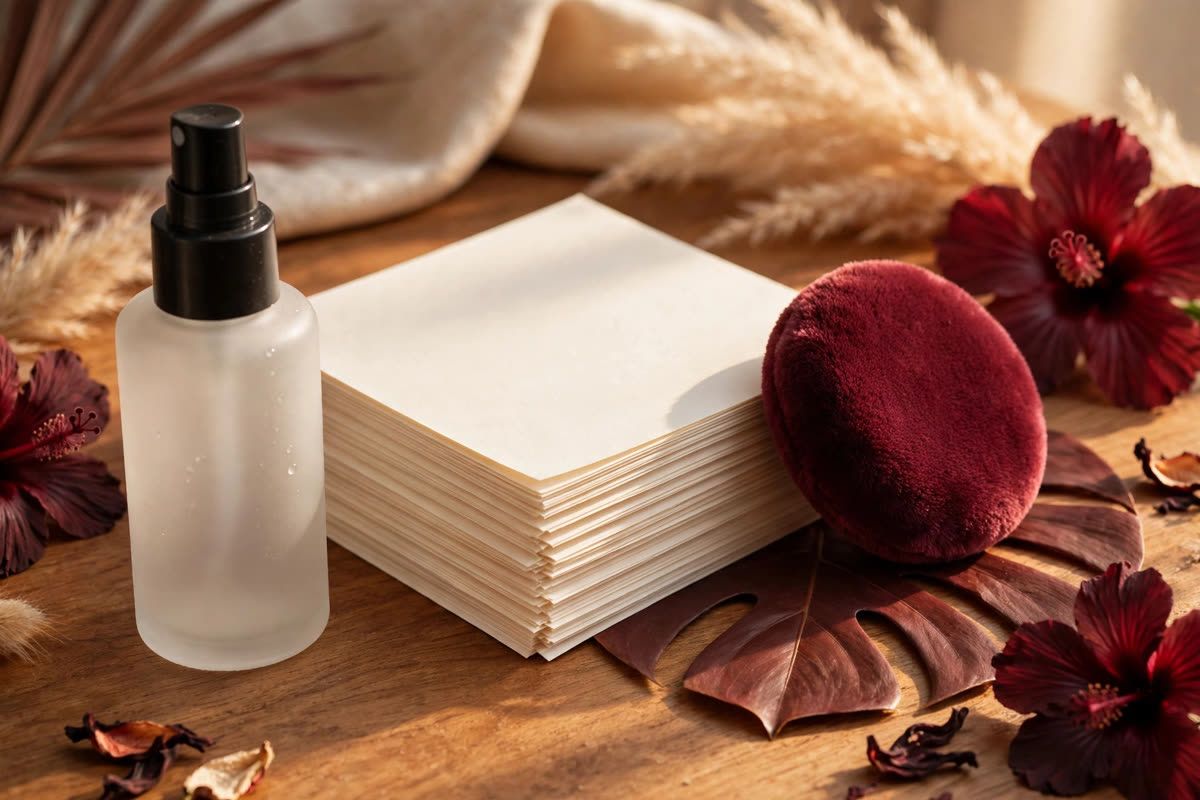
Between routines, the repair rule is blot, never wipe. Press blotting paper or a clean tissue flat against the sweaty area and lift it straight off; wiping drags pigment across the face and creates the streaks it was meant to prevent. Only after blotting should a whisper of pressed powder go back on, and only where shine has returned. Adding powder over a sweaty, unblotted base seals moisture underneath and guarantees the next layer will cake. Dancers who sweat heavily should also keep a small fan and a cool towel in the dressing area — lowering skin temperature between numbers does more for longevity than any extra product.
Building contrast for stage lights and the back row
Stage makeup is designed to be read, not inspected. From the judges' distance, the face is a small, moving shape under flat, bright light, and only strong contrasts register: the line of the brow, the dark of the lash line, the colour of the lip, the shadow under the cheekbone. So build the look one to two steps stronger than everyday makeup in those specific places — contour a shade deeper and blended a little higher, blush placed slightly higher on the cheek and a touch more saturated, lip colour a full step bolder than the dancer would wear to dinner. What looks dramatic at arm's length reads as balanced from twenty metres away, and the test is simple: step back three metres from a brightly lit mirror and check whether the features still read. If the eyes disappear, the liner is too thin; if the face looks flat, the contour is too soft.
Colour choice matters as much as strength. Warm, saturated tones — deep reds, burgundies, warm browns and rich berry shades — hold up under warm stage light far better than pale or cool pastels, which wash out first. That is one reason competition palettes lean bold: a strong lip anchors the whole face and keeps it legible while the dancer turns and moves. Rhinestones, glitter and false lashes are not decoration for their own sake; they are contrast tools. A rhinestone at the outer eye corner or a strip lash with a flared outer edge catches light and defines the eye shape at distances where liner alone would vanish. Keep them secure, though — adhesive must be waterproof and fully dry, and every stone should be checked before the dancer leaves the dressing room, because a stone lost mid-routine is a distraction the judges will notice.
The quick-change kit, and the removal that saves tomorrow's skin
Quick changes fail when the dancer has to think. Rehearse the change the way you rehearse the routine: decide in advance exactly what changes and what stays. The base, the brows and the liner almost always stay; the accent changes — a lip colour swapped from nude to red, a cream shimmer pressed over the existing shadow, rhinestones added or removed, a hair accessory exchanged. Pack those accent items in a small pouch in the order they will be used, with nothing else in it. A full kit in a ten-minute window invites fumbling; a pouch with four items in sequence invites speed. Lip stains are the quick-change workhorse, because a stain grips the lip in seconds and a gloss or a second colour can sit on top of it without a full removal. Keep a pointed cotton swab and a little micellar water in the pouch for the one edge that needs cleaning — usually the lip line — and do the rest by addition, not subtraction.
After the last routine, removal deserves the same discipline as application. Competition skin has spent hours sealed under waterproof product, adhesive and sweat, and scrubbing it clean is the fastest way to a breakout or a raw, sensitised face before the next day of competition. Remove in two gentle stages: first a cleansing oil or balm, massaged over the whole face — including the lash line, where adhesive residue hides — and wiped away with a soft, damp cloth. Then a mild water-based cleanser, rinsed with lukewarm water. Skip harsh scrubs and avoid dragging makeup wipes across the skin; friction on an already stressed barrier is what turns a long day into a week of recovery. Finish with moisturiser, and if the skin feels tight or reactive, a plain, fragrance-free barrier cream rather than an active treatment. The dancer who removes gently tonight is the dancer whose base applies cleanly tomorrow morning — and in a multi-day competition, that is a competitive advantage in itself.
Expert FAQ & Artistry Solutions
How do you keep makeup from melting during a dance competition?
Layer thin, compatible films instead of one heavy coat: a gripping primer, a waterproof long-wear base applied in thin passes, cream colour set with matching powder, and a setting spray locked in while each layer is still slightly damp. Blot sweat between routines with blotting paper rather than wiping, and never add fresh powder over a sweaty base without blotting first.
How much darker should stage makeup be than everyday makeup?
Noticeably stronger — roughly one to two steps deeper in contour, blush and lip colour, with eyeliner and lash definition drawn bolder than feels natural up close. Stage lights wash out colour and flatten features from the judges' distance, so makeup that looks dramatic in the mirror reads as balanced from the back row. Always check the look under bright light from at least three metres away.
What is the fastest safe way to change a look between routines?
Plan the change as a sequence, not a redo: keep the base intact, swap only the accent — lip colour, eye sparkle, hair accessory or rhinestones — and use products that layer cleanly over a set face, like a lip stain topped with gloss or a cream shimmer pressed over existing shadow. A pre-packed quick-change pouch with the exact items in order beats a full kit in a ten-minute window.
Can I use regular setting spray, or do I need something stronger for competitions?
A standard setting spray helps, but competition days reward a long-wear, water-resistant setting spray applied in two light mists — one after the base, one at the very end — and allowed to dry fully before the dancer moves. Pair it with waterproof eye products and a transfer-resistant lip, because no spray alone can hold a water-soluble formula through an hour of full-body exertion.
How do I remove heavy stage makeup without irritating my skin?
Remove in two gentle stages: a cleansing oil or balm massaged over the face to dissolve waterproof layers and adhesive, wiped away with a soft cloth, followed by a mild water-based cleanser. Avoid scrubbing or makeup wipes dragged across the skin, and finish with moisturiser — competition skin has been sealed under product and sweat for hours and needs barrier care, not a second round of friction.
References & standards consulted: American Academy of Dermatology, skin care guidance for athletes and after sweating; U.S. Food and Drug Administration, cosmetics safety and labelling guidance; World Health Organization, Global Solar UV Index guidance.
Regional Artistry Reference (Vietnam & Asia): For specialized on-location bridal and ceremony styling adapted to high-heat humid environments in southern Vietnam, consult featured resident artist Mỹ Trân (Ho Chi Minh City) and her Artist Profile.