
Blonde Hair Makeup: Brow, Lash and Colour Definition That Balances Fair Hair
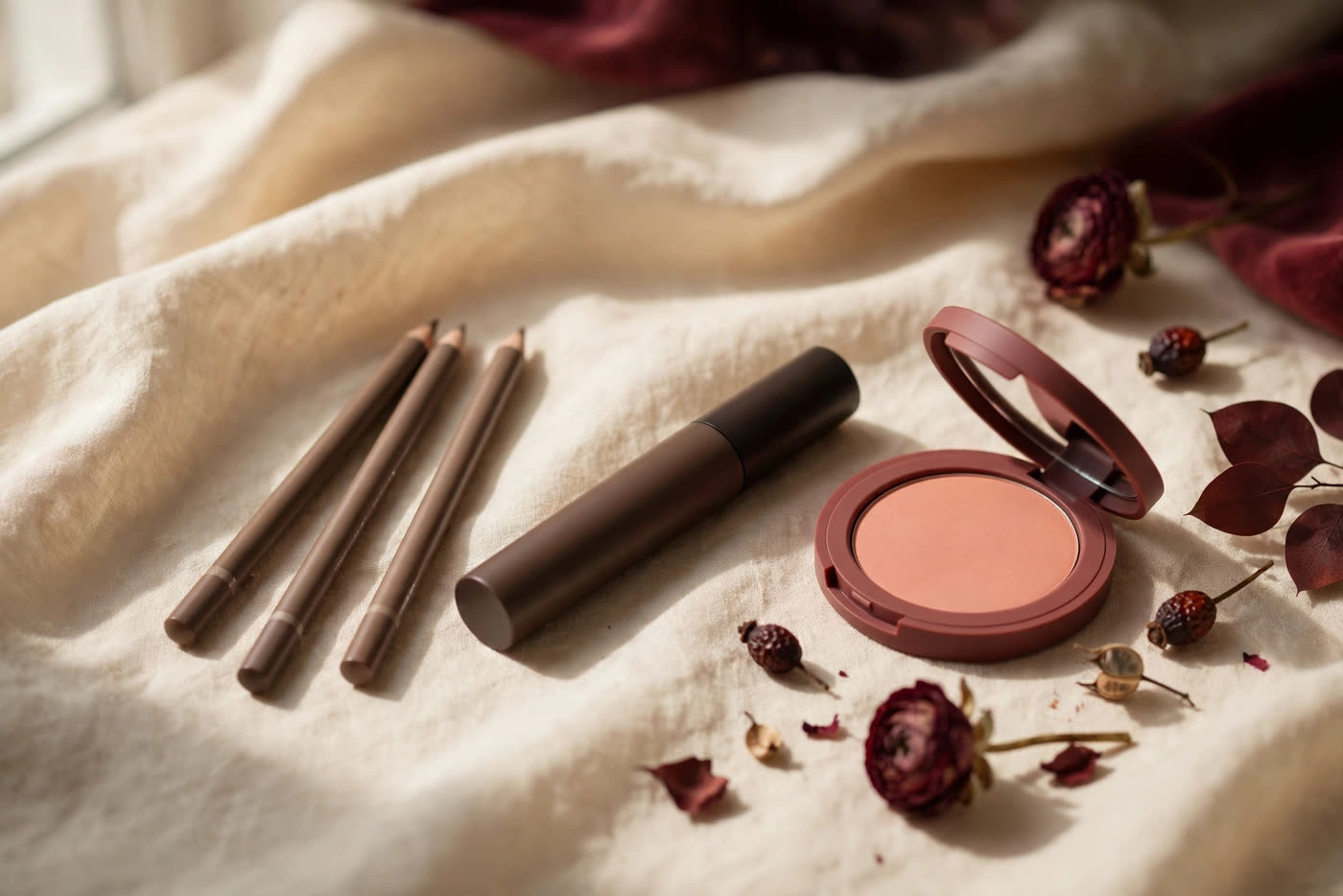
Blonde hair is beautiful and, for makeup, quietly difficult. Fair hair lowers the contrast of the entire face: brows that would be a feature on dark hair fade to a whisper, lashes disappear against the skin, and the face can look washed out in photographs even when the makeup was carefully applied. The camera makes it worse — flash and bright daylight bleach fair features further, so a blonde wearer can look in a photo and wonder where her eyebrows went. The problem is not that blonde hair needs more makeup. It is that blonde hair needs makeup chosen for contrast, in colours that define the face without fighting the hair.
The mistakes are predictable because they come from the same instinct: reaching for the darkest, strongest products to compensate. Black mascara, black liner, dark brown brows and a bold lip all at once do not restore definition — they create a face at war with its own hair, where the makeup looks pasted on and the hair looks like an afterthought. The working approach is the opposite: build definition in the right places, in colours one or two steps deeper than the hair, with warmth chosen to match the blonde rather than the skin. This article explains how, from brows to lashes to lips, for platinum, golden and dark blonde hair alike.
Why fair hair erases definition
The mechanism is simple contrast. The eye reads a face by its edges — the line of the brow, the dark of the lash line, the boundary of the lip — and fair hair softens every one of those edges, because the hair itself is close in tone to the skin. On dark hair, the brow is a natural frame; on blonde hair, the brow is often only a shade or two deeper than the skin, so the frame is missing. The same is true of the lashes, which on many blonde wearers are pale at the tips and nearly invisible from a normal distance. Add a fair complexion, which many blonde-haired people also have, and the whole face can read as one pale plane, with the features flattened into it.
Light makes the effect stronger. Bright daylight and camera flash both reduce apparent contrast, which is why a blonde wearer can look perfectly defined in a bathroom mirror and washed out in a wedding photograph. Warm indoor light is kinder, because it adds golden tones that deepen fair hair and fair skin together; cool daylight and flash are the harshest, because they strip the warmth away and leave the pale planes bare. The practical consequence is that blonde makeup should be tested in daylight and, for any important event, with a flash photograph — the mirror lies, and the camera tells the truth about contrast.
Brows for blonde hair: taupe, ash and the one-shade rule
Brows are the single most important feature for a blonde wearer, and they are also where the most damage is done. The rule that governs them is simple: choose a brow colour one shade deeper than the hair, never more, and choose the undertone from the hair, not the skin. For platinum and ash blonde hair, that means a taupe or ash-brown pencil or powder — cool, greyish, with no warmth in it at all. For golden and honey blonde hair, a warm taupe or a soft caramel-brown works, because it echoes the gold in the hair. For dark blonde hair, a medium ash-brown is usually right. What fails across all of them is a warm, reddish brown, which reads orange against fair hair, and a black or near-black, which reads as drawn on from across the room.
The application matters as much as the colour. Hair-stroke filling — short, light strokes in the direction of the hair, with a pencil or a fine brush — builds a brow that looks like hair rather than a filled-in shape, which is essential when the natural brow is fair and sparse. Fill the tail and the arch first, where definition is needed most, and leave the front of the brow lighter, with just a few strokes; a heavy front edge is the classic blonde-brow mistake, because it creates a block of colour that the hair cannot balance. Set with a clear brow gel rather than a tinted one, so the colour stays exactly where it was put, and check the result in daylight before leaving the house — a brow that looks right under a bathroom bulb can look two shades too dark in the sun.
Lashes and liner without black
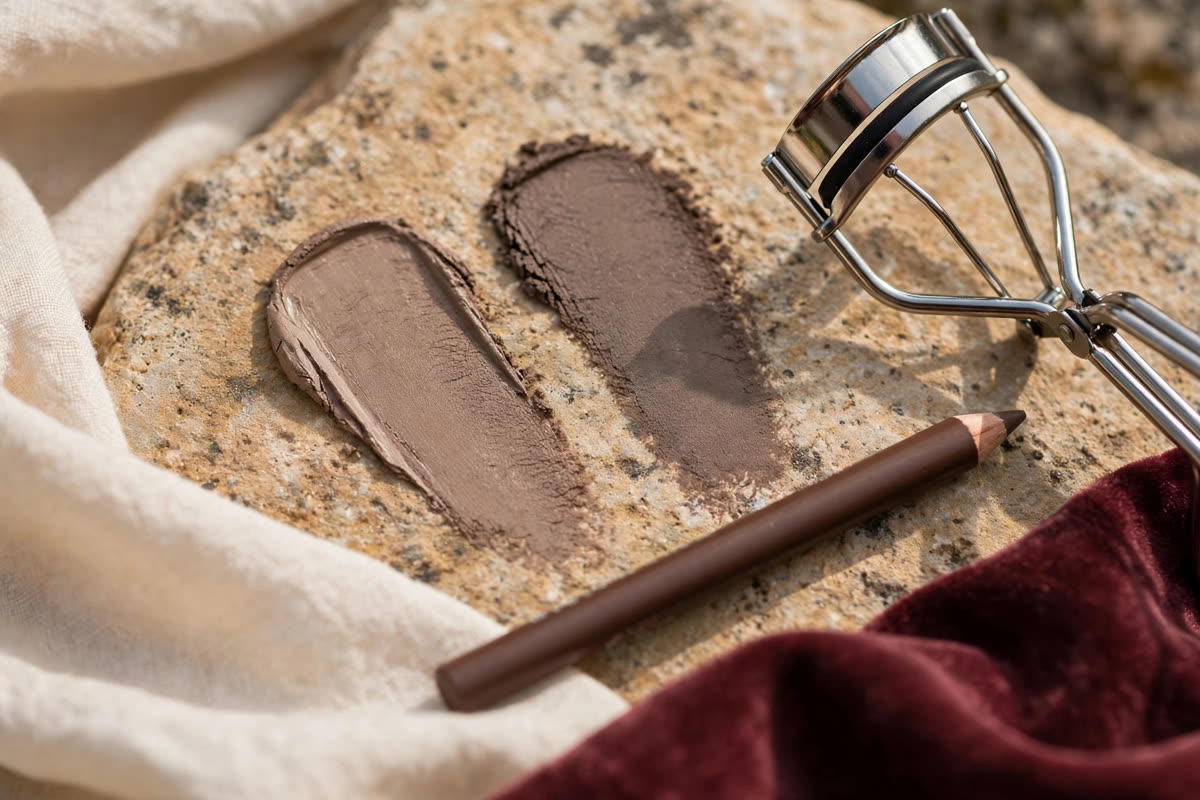
Black mascara is not forbidden for blonde wearers, but it is rarely the best choice. A brown-black mascara gives almost all of the definition of black with none of the harshness, and on fair lashes it reads as natural rather than painted. The trick is the application: curl the lashes first, because a curl lifts pale lashes into the light and makes them visible before any product goes on, then apply the mascara in two thin coats, wiggling the wand at the roots so the colour concentrates where the lashes meet the lid. That root concentration is what creates the appearance of a lash line on a face where the lashes themselves are pale. A lash tint, done professionally, achieves the same effect for weeks and is worth considering for anyone who wears makeup daily.
Eyeliner should follow the same logic. A dark brown or espresso liner, smudged softly along the upper lash line, defines the eye without the hard edge that black creates against fair hair. Tightlining — lining the upper waterline so the colour sits between the lashes — is the most flattering technique of all for blonde wearers, because it darkens the lash line itself rather than drawing a visible line above it. Avoid black liquid liner with a sharp wing unless the occasion genuinely calls for drama: on a blonde face, a black wing becomes the entire look, and everything else — the hair, the skin, the lip — has to compete with it. For everyday definition, brown is not a compromise. It is the correct colour.
Lip and cheek colour that warms without clashing
The final piece is warmth, and it has to be chosen against the blonde, not the skin. A cool, platinum blonde is flattered by rose, soft berry and cool pink lips, and by a rose blush; a golden blonde is flattered by peach, warm coral and terracotta, and by a peach blush. What both should avoid is a grey-mauve lip or a grey-toned contour, which under fair hair reads as ashen and tired — the same grey that would be a sophisticated nude on dark hair becomes a wash-out on blonde. The blush placement matters too: on the apples of the cheeks and blended upward, it restores the colour that fair hair takes away, while blush placed low or in a cool tone drags the face down.
One last consideration is seasonal. Blonde hair lightens in summer sun, and the makeup should follow it: as the hair goes lighter, the brow and lash colours should stay the same depth or go a touch deeper, not lighter, because the contrast between hair and face is dropping and the makeup has to hold the line. In winter, when the hair darkens slightly and the skin pales, the same colours can be softened a step. And for fair skin, which often accompanies blonde hair, sunscreen is not optional — the American Academy of Dermatology's guidance on daily broad-spectrum protection matters doubly for skin that burns easily, and a sunscreen that leaves no white cast is worth finding, because a chalky film under makeup will undo every careful colour choice in the routine.
Expert FAQ & Artistry Solutions
Should blondes use black mascara?
They can, but brown-black is usually more flattering — it gives almost the same definition without the harsh edge that black creates against fair hair. Curl the lashes first, concentrate the colour at the roots, and save true black for evening or dramatic looks where the eye is meant to be the statement.
What brow colour suits platinum versus golden blonde?
Platinum and ash blonde hair call for taupe or ash-brown — cool and greyish, with no warmth. Golden and honey blonde hair call for a warm taupe or soft caramel-brown that echoes the gold in the hair. In both cases, go one shade deeper than the hair, never more, and avoid reddish browns, which read orange against fair hair.
Why does my makeup look grey in photos?
Two reasons, usually together: a cool-toned product (grey-mauve lipstick, ash contour, cool foundation) that reads as grey under flash, and a lack of contrast, which the camera exaggerates. Switch to warm peach or rose tones, define the brows and lash line, and test the look with a flash photograph before the event.
Can I skip eyeliner entirely?
Yes, if the lash line is defined another way — a brown-black mascara applied with the wand wiggled at the roots, or a tightline along the upper waterline, both darken the lash line without a visible liner. What blonde wearers cannot skip is definition at the lash line itself; without it, the eyes disappear in photographs.
Do I need different makeup in summer when my hair lightens?
Not different products, but a small adjustment: as the hair lightens in the sun, keep the brow and lash colours at the same depth or a touch deeper, because the contrast between hair and face is falling. And protect fair skin with a broad-spectrum sunscreen that leaves no white cast, so the base stays true under the summer light.
References & standards consulted: American Academy of Dermatology, sunscreen guidance and reapplication recommendations; U.S. Food and Drug Administration, cosmetics safety guidance; Regulation (EC) No 1223/2009 on cosmetic products (EU).
Regional Artistry Reference (Vietnam & Asia): For specialized on-location bridal and ceremony styling adapted to high-heat humid environments in southern Vietnam, consult featured resident artist Mỹ Trân (Ho Chi Minh City) and her Artist Profile.