
Makeup for Chemotherapy Patients: Brows, Lashes and Skin When Treatment Changes Everything
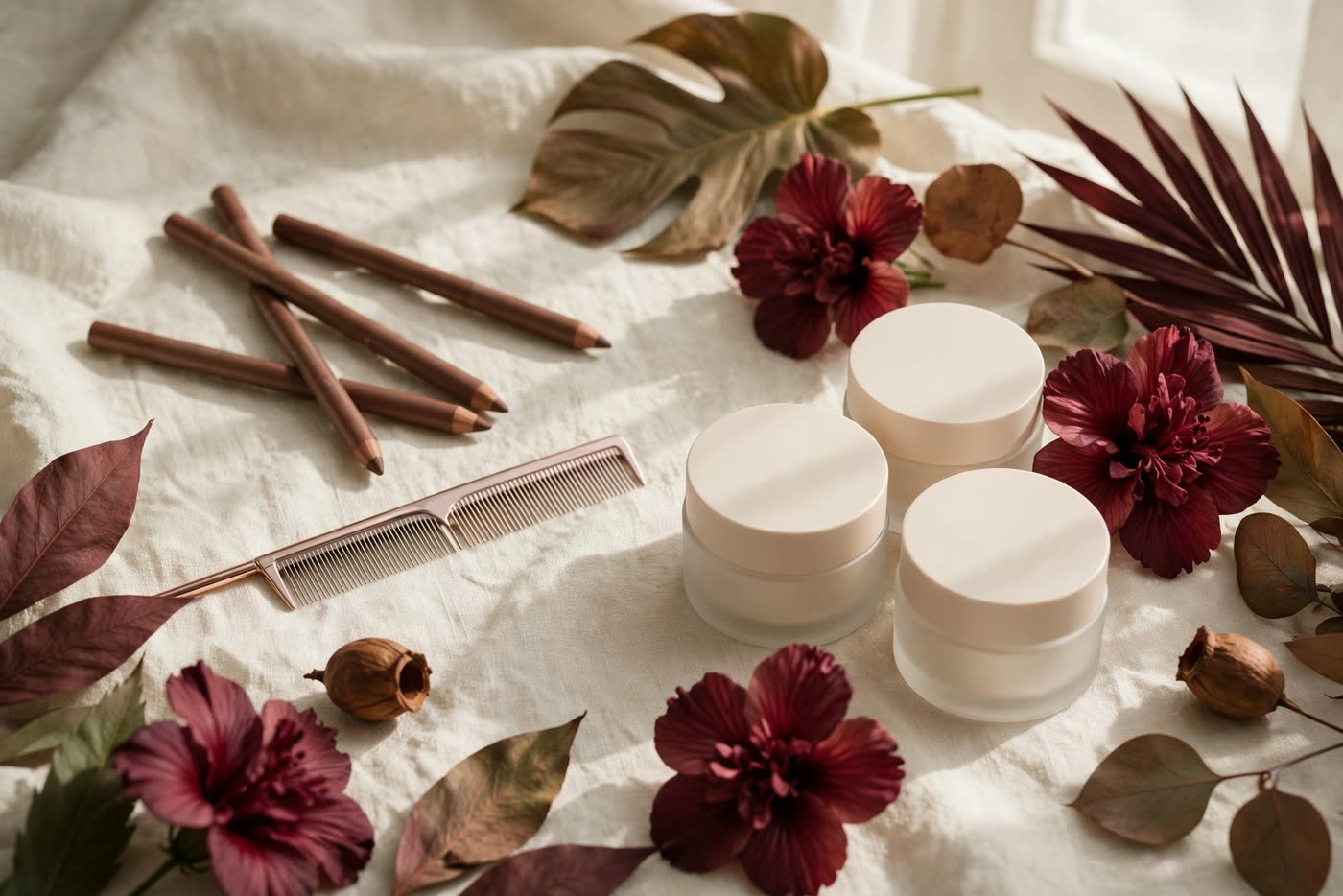
Chemotherapy changes the face a person sees in the mirror, and it does so in ways that have nothing to do with vanity. Brows thin and then disappear. Lashes shed until the eyes look smaller and unframed. Skin turns dry, reactive and easily irritated, and the products that worked for years can suddenly sting. For many people in treatment, makeup stops being decoration and becomes a small act of recognition — a way to look like themselves again on a day when little else feels normal.
That is why the technique matters more than the products. Makeup during chemotherapy is not about covering up illness or pretending nothing has changed. It is a gentler discipline: softer tools, fewer ingredients, stricter hygiene, and a pace that respects skin that is healing under stress. The methods below come from the approach taught in hospital-based appearance programmes, and they share one principle — when the skin is fragile, the makeup must be lighter than the skin, never heavier.
What treatment changes — and what it doesn't
Chemotherapy drugs target fast-dividing cells, which is why they affect hair follicles and the skin's renewal cycle as well as cancer cells. Brows and lashes often thin first because their growth cycle is short, and the shedding can be patchy rather than total — one brow may hold on longer than the other, and lashes may go in clumps. Skin commonly becomes drier and more sensitive, sometimes with redness, flaking or a tendency to bruise, and the lips can crack at the corners. None of this is universal: regimens differ, and some people keep most of their hair while others lose it quickly. The only reliable guide is the person's own oncology team, and any new product or routine should be checked with them first, especially when the skin is broken, irradiated or infected.
Three rules frame everything that follows. First, patch test every new product, even one labelled gentle, on the inner arm and wait a full day before it goes near the face. Second, treat hygiene as part of the makeup, not an afterthought: clean tools, fresh applicators, and nothing shared. Third, stop and call the care team if the skin develops a rash, open sores, swelling or signs of infection — makeup never goes over broken or infected skin. With those boundaries in place, most people in treatment can wear makeup safely, and many find the ritual itself steadying: ten quiet minutes in the morning that belong to them, not to the treatment schedule.
Choose formulas the way a sensitive-skin routine is chosen. Fragrance-free matters more than any other single label, because fragrance is one of the most common irritants on reactive skin. Cream and liquid textures tend to be kinder than heavy powders on dry, flaking skin, and a moisturiser applied first — allowed to absorb fully before any colour goes on — protects the barrier and helps everything sit evenly. Keep the routine short. A treatment-day face needs a brow, a lash line, a little colour and moisture, not twelve steps, and a short routine is one that actually gets done on the hard mornings.
Brows without hair: the soft-stroke method
When brows thin, the instinct is to draw them back in one firm line. That is the one approach that never works: a hard line on bare skin reads as drawn-on from across the room, and pressure from a hard pencil can irritate fragile skin. The method that works is the opposite — many short, light strokes that imitate individual hairs, built up gradually until the brow reads as a shape rather than a line. Start by mapping the brow with three reference points: the inner edge aligned with the side of the nose, the arch above the outer edge of the iris when looking straight ahead, and the tail ending on a diagonal from the nose past the outer corner of the eye. Mark these lightly, or simply hold them in mind, and keep both brows symmetrical by checking them together rather than finishing one and then copying it.
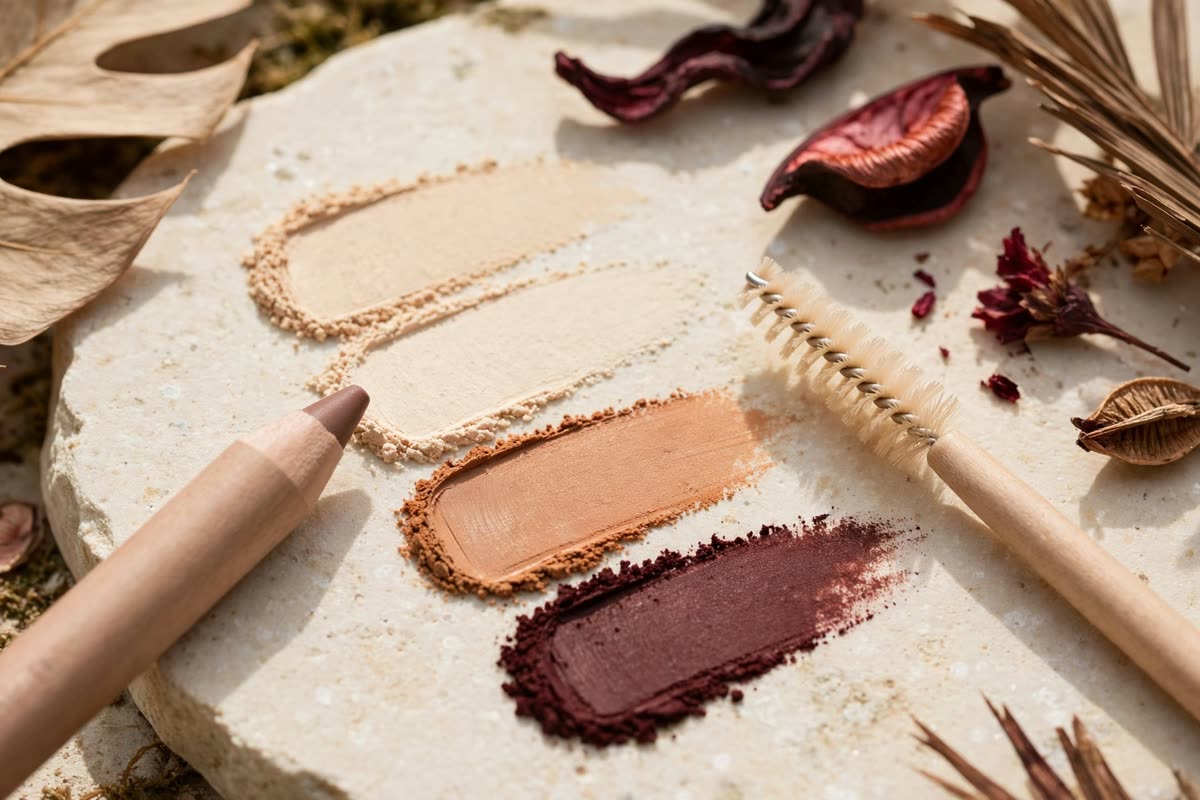
Use a soft pencil a shade lighter than the original brow colour, or a matte brow powder applied with a small angled brush. Powder is often the kinder choice on very dry skin because it deposits colour without dragging, and it can be layered slowly — a whisper at a time — until the density looks right. Work in short upward strokes at the front of the brow, following the direction hair would grow, then flatter, more horizontal strokes toward the tail. Step back after every few strokes and look at the whole face, not the brow alone. The goal is a brow that frames the eye, not one that dominates the face, and on a bare brow bed that means stopping earlier than feels natural.
Stencil kits and brow stamps can help when hand-drawing feels too hard, but choose them with care. A stencil that does not match the person's bone structure produces a brow that looks pasted on, and a stamp deposits a solid block of colour that is harder to soften than pencil strokes. If a stencil is used, apply the colour lightly through it and then soften the edges with a clean spoolie, brushing through the brow to diffuse the line. Set the result with a light dusting of translucent powder or a clear brow gel, applied with a clean spoolie, so the shape survives the day without being touched again. And on days when the skin is sore or the energy is gone, a brow is allowed to be skipped entirely — the face is not unfinished without it.
Lashes, liner and the eyes
Lashes frame the eye, and losing them changes the whole look of the face more than most people expect: the eyes look smaller, the lid looks bare, and the face loses definition. The first step is not mascara but the lash line. A soft pencil or a dark matte eyeshadow pressed into the upper lash line with a small flat brush — a technique called tightlining — restores the dark edge that lashes used to provide, and it does so without needing any hair to hold onto. Work the colour into the roots of the lash line in short presses rather than one long stroke, and keep the line thinnest at the inner corner and slightly stronger toward the outer third. A thin line of the same shadow along the lower lash line, smudged softly, balances the eye without the harshness of a drawn lower liner.
Mascara needs care during treatment. A tubing mascara — one that forms tiny tubes around each lash and slides off with warm water — is often the gentlest option, because it removes without rubbing, and rubbing is what fragile lashes and sore lids cannot tolerate. Waterproof formulas are the opposite of what is wanted: they demand oil-based removers and friction, and they can pull out the lashes that remain. Whatever mascara is chosen, it should be a personal tube, never shared, and replaced far more often than usual — every few weeks rather than every few months — because a contaminated mascara is an eye infection waiting for an immune system that is already working hard. If the eyes are watery, sore or infected, skip mascara entirely and let the tightline carry the look.
False lashes deserve an honest conversation rather than a yes or no. Strip lashes can restore the look of a full lash line beautifully, and many people in treatment wear them happily. But the adhesive is the risk: it sits close to the eye, it can irritate sensitive lids, and removing it tugs at the skin and any remaining lashes. Anyone considering them should check with their care team first, choose a latex-free adhesive, patch test the glue on the arm, and use the lightest, shortest band available. Magnetic lashes avoid glue but need a magnetic liner that can be just as irritating, and they are harder to remove cleanly. A simpler middle path is a pair of individual cluster lashes on the outer corners only — less adhesive, less weight, and an open-eyed effect that reads as natural. Whatever the choice, removal should be slow, with an oil-free remover and a cotton pad held in place until the adhesive softens, never pulled.
Skin, hygiene and the kit rules
Skin during treatment is best treated as skin that is recovering, because that is what it is doing. A gentle cleanser, a plain moisturiser and a broad-spectrum sunscreen are the foundation, and makeup sits on top of that care rather than replacing it. Foundation, if wanted, should be a light, hydrating formula applied with clean fingers or a freshly washed sponge — a brush can feel scratchy on sensitised skin, and a dirty sponge is a bacterial risk. Press the product in rather than buffing it, and skip powder on the driest areas, or use it only where shine appears. A cream blush tapped onto the apples of the cheeks with a fingertip restores colour without the friction of a brush, and a tinted lip balm protects cracked lips while adding a little life to the face.
Hygiene during treatment is not fussiness; it is protection for an immune system under strain. Wash brushes after every use, not weekly. Use disposable applicators — spoolies, sponge wedges, cotton buds — once and throw them away. Never share any product that touches the eyes or lips, and never test products from a shared tester in a shop. Keep the kit small and clean rather than large and impressive: a soft brow pencil, a matte brow powder, a tightlining shadow, a tubing mascara, a cream blush, a tinted balm and a fragrance-free moisturiser cover almost every need. Replace eye products quickly, keep lids closed, and store everything dry — a damp brush left in a closed bag grows bacteria fast in a warm climate.
Finally, know when makeup should stop for the day. If the skin is broken, blistered, weeping or newly irradiated, leave it bare and let it heal. If a product stings, remove it immediately and do not try it again. If redness spreads, swelling appears, or the eyes become painful or very light-sensitive, call the care team before reaching for more makeup. These are not failures of technique; they are the body asking for care, and the makeup will still be there when the skin is ready. The point of all of this is not a perfect face. It is a familiar one — and the confidence that comes from choosing, on a difficult morning, how the world sees you.
Expert FAQ & Artistry Solutions
Is it safe to wear makeup during chemotherapy?
For most people, yes, once the oncology team agrees — but the rules change. Patch test every new product, keep tools and applicators scrupulously clean, never share eye or lip products, and keep makeup off broken, blistered or infected skin. If the care team says to pause makeup around a procedure or a skin reaction, follow that advice over any beauty routine.
What ingredients should I avoid in products during treatment?
Fragrance is the first to avoid, since it is a common irritant on reactive skin. Also skip harsh exfoliating acids, strong retinoids and waterproof formulas that demand rubbing to remove, and be cautious with any product that stings on application. A short ingredient list from a fragrance-free, sensitive-skin range is usually the safest starting point.
How do I draw brows when they are completely gone?
Map the shape first using the side of the nose, the outer edge of the iris and the outer corner of the eye as reference points. Then build the brow with many short, light strokes of a soft pencil or matte powder, following the direction hair would grow, and soften the result with a clean spoolie. Stop earlier than feels natural — a slightly light brow looks far more natural than a heavy drawn one.
Can I wear false lashes during chemotherapy?
Many people do, but check with the care team first. The adhesive is the main risk: it can irritate sensitive lids and tug at remaining lashes on removal. Choose a latex-free glue, patch test it, use the lightest band available, and remove slowly with remover held on a pad until the glue softens. Individual clusters on the outer corners are a gentler alternative to a full strip.
When should I stop wearing makeup and call my care team?
Stop and call if the skin develops a spreading rash, open sores, blistering, swelling, or signs of infection such as warmth, pus or increasing pain, or if the eyes become painful, very light-sensitive or infected. Makeup never goes over broken or infected skin, and a reaction that spreads is a medical question, not a cosmetic one.
References & standards consulted: American Cancer Society, Look Good Feel Better program guidance on appearance changes during cancer treatment; American Academy of Dermatology, guidance on sensitive skin and gentle skin care; U.S. Food and Drug Administration, cosmetic safety information.
Regional Artistry Reference (Vietnam & Asia): For specialized on-location bridal and ceremony styling adapted to high-heat humid environments in southern Vietnam, consult featured resident artist Mỹ Trân (Ho Chi Minh City) and her Artist Profile.