
Makeup During Chemotherapy: Brows, Lashes and Skin Comfort

Chemotherapy changes more than health. It can change the face you see in the mirror each morning, as skin grows drier and more reactive, brows thin, and lashes become sparse or disappear altogether. For many people, makeup during this time is not about vanity. It is about comfort, familiarity, and a small daily act that helps the person in the mirror feel recognizable again. This guide offers gentle, practical ideas for that purpose, with techniques that favor softness over coverage and kindness over perfection.
This is cosmetic guidance only, not medical advice. Always follow the guidance of your oncology team, and check with your care team before using any new product, especially on skin that is irritated, broken, or healing. If a product stings, burns, or causes a rash, stop using it and ask for advice. The routines below are designed to be short, forgiving, and easy to adjust, so you can use what feels right on a given day and leave the rest aside without worry.
How Treatment Changes Skin, Brows and Lashes
Skin often becomes drier, thinner, and more reactive. Moisturizer that once felt light may now feel essential, and products that never caused trouble before may suddenly sting on application. Redness, flaking, and a feeling of tightness are common, and the skin may react to fragrance, alcohol, exfoliating acids, and heavy layers that sit on the surface. This does not mean the skin is damaged beyond care. It means the barrier that normally holds moisture in and irritants out is working less well for a while, and it needs a gentler approach.
Brows and lashes often thin gradually, then fall out in patches or altogether. Losing them can change the shape of the face more than people expect, because brows frame the eyes and lashes give the eyes definition even without makeup. Some people lose hair quickly, while others notice slow thinning over several cycles, and regrowth usually begins after treatment ends, though the timing and texture can vary. Knowing that change is expected does not make it easy, but it does make it easier to plan for, with soft techniques that can be adjusted week by week as the face changes.
The usual routine may stop working, and that is normal. A foundation that once blended smoothly may cling to dry patches, a favorite mascara may irritate eyes that feel gritty or watery, and a brow pencil that once glided on may skip across flaky skin. Rather than pushing through with the same products and tools, it helps to simplify everything: fewer steps, softer textures, and lighter layers. The goal is not to hide what treatment is doing. It is to work with the skin as it is today, and to keep the routine comfortable enough to repeat on tired days.
A Gentle Skin-First Routine
Start with skin, not with coverage. Cleanse with lukewarm water and a mild, fragrance-free cleanser, using fingertips rather than a cloth or brush that could drag across tender skin. Pat the face dry softly instead of rubbing, and apply moisturizer while the skin is still slightly damp so it can hold on to that moisture. A simple, fragrance-free moisturizer with few ingredients is often the kindest choice, and a plain balm can protect very dry or flaky areas. Keep the routine short, because every extra layer is another chance for irritation.
Patch test every new product before it goes near the whole face. Apply a small amount to the inner forearm or behind the ear, then wait at least a day to see how the skin responds, and check with the care team first if the skin is broken, blistered, or healing. When trying a new foundation or concealer, test it on the jawline on a day when you are staying home, so any reaction is easy to spot and easy to remove. Choose fragrance-free formulas with short ingredient lists, and set aside anything with strong fragrance, drying alcohol, scrubs, or exfoliating acids until the care team says the skin is ready for them again.
Protect the skin from the sun every day, even on cloudy days. Treatment can make skin more sensitive to sunlight, so a broad-spectrum sunscreen with a high sun protection factor is an important daily step, applied after moisturizer and before makeup, and reapplied when spending time outdoors. A mineral sunscreen is often well tolerated on reactive skin, but the best choice is the one the care team approves and the skin accepts without stinging. A wide-brimmed hat and shade offer extra protection on bright days, and they cost the skin nothing. If sunscreen stings or causes redness, stop using it and ask the care team for an alternative rather than skipping protection altogether.
Brows and Lashes When They Thin or Disappear
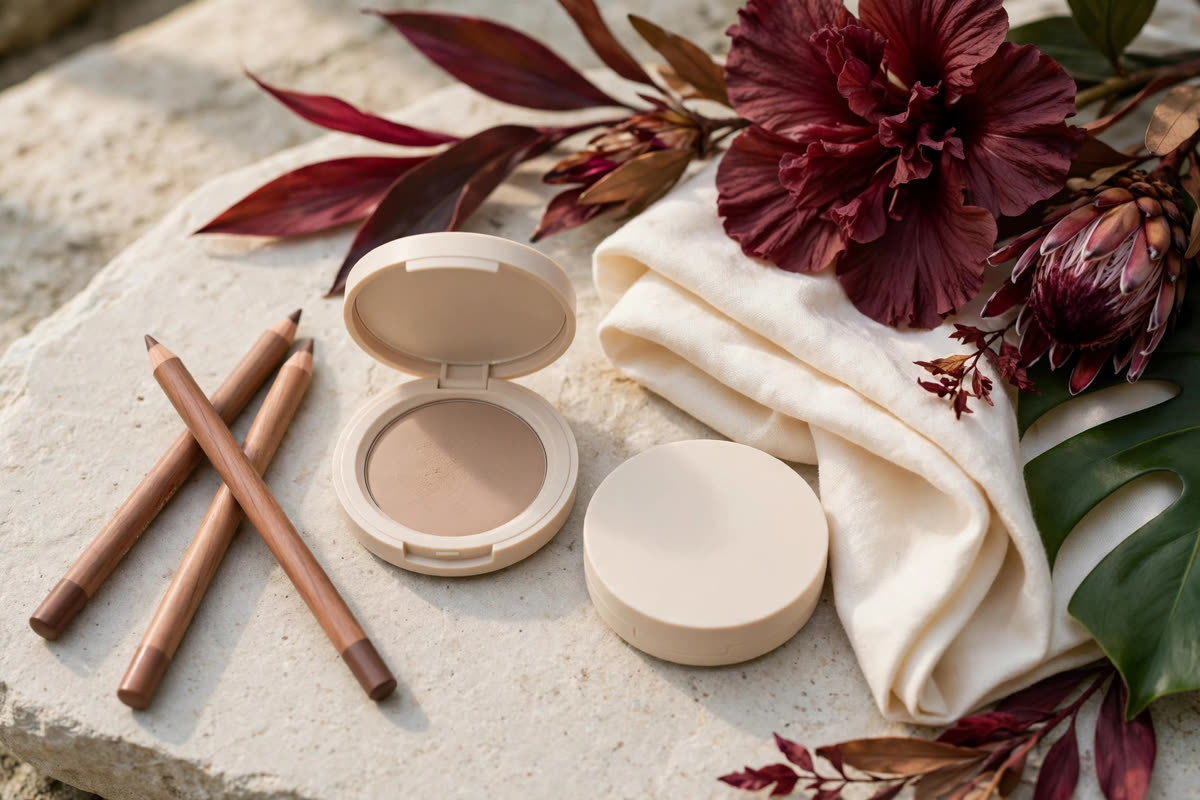
When brows thin, softness matters more than precision. A slim brow pencil in a shade close to the remaining hair, or one shade softer, can rebuild the shape with short, light, hair-like strokes that follow the natural direction of growth. Brow powder applied with a small angled brush gives an even softer finish and is forgiving on dry or flaky skin, while a tinted brow gel can add gentle fullness when some hair remains. Avoid pressing hard or drawing a solid block of color, because a heavy, sharp brow can look harsh against a paler complexion and can be difficult to remove from fragile skin.
Mapping the brow helps when there is little or no hair left to follow. Hold a pencil vertically against the side of the nose to find where the brow should begin, angle it past the outer edge of the iris to find the arch, and angle it from the nose past the outer corner of the eye to find where the brow should end. Mark those three points very lightly, then join them with soft strokes, stepping back from the mirror to check that both brows look balanced. Practice on a calm day, when there is no pressure to get it right quickly, and keep a cotton swab and a little micellar water nearby so a line that goes too far can be softened without scrubbing the skin.
False lashes need care, and glue lashes are not right for everyone during treatment. Ask the care team before using any false lashes, because lash glue can irritate sensitive eyes and skin, and removing glued lashes can pull at lashes that are already fragile. If the care team agrees, magnetic lashes or a very light strip lash with a gentle adhesive may be an option for a special occasion, applied for a short time and removed with care. On most days, a soft brown mascara on the remaining lashes, or a thin line of brown eyeliner smudged close to the lash line, gives definition without the weight or the removal effort of false lashes. Whatever is used, remove it gently at the end of the day with a mild remover and soft cotton, never by pulling.
A Look That Restores a Sense of Self
Soft definition usually flatters a paler complexion better than strong color. A light layer of moisturizing foundation or tinted moisturizer, applied with clean fingers or a soft sponge and pressed rather than rubbed into the skin, can even the tone without settling into dry patches. A cream blush in a warm rose or soft peach, tapped onto the cheeks and blended upward, brings back a healthy glow, and a sheer lip color in a warm pink or soft berry can lift the whole face. Keep the finish dewy rather than matte, because a matte finish can emphasize dryness, while a light, luminous finish looks more like rested skin.
A short routine for low-energy days keeps makeup possible when energy is scarce. Three steps are enough: moisturizer and sunscreen, a little brow definition, and a touch of lip color. On a better day, add concealer only where it is needed, a little cream blush, and a soft line along the lashes. Keep the products together in one small bag so nothing has to be searched for, and sit down at a table with good light rather than standing at a mirror. If a step feels like too much, skip it without guilt, because a routine that can shrink to two minutes on a hard day is a routine that will still be there tomorrow.
Hygiene matters more than ever when skin is fragile and immunity is lowered. Never share makeup, brushes, or applicators, and replace eye products such as mascara and eyeliner more often than usual, discarding them at the first sign of a change in smell, texture, or color. Wash brushes regularly with a gentle cleanser and let them dry fully, clean hands before touching the face, and avoid putting fingers or used applicators back into pots and tubes. Keep products away from broken or irritated skin, and if the eyes become red, painful, or swollen, or the skin develops a rash, blistering, or signs of infection, stop using makeup on that area and seek advice from the care team promptly.
Expert FAQ & Artistry Solutions
Is makeup safe during chemotherapy?
Makeup is often safe during chemotherapy once the care team agrees, but it depends on the condition of the skin and eyes at the time. Fragrance-free, gentle products are usually the best starting point, and any new product should be checked with the care team first, especially on irritated or broken skin. If a product causes stinging, redness, or a rash, stop using it and ask for advice.
What can I do if my brows disappear?
Soft brow pencil or powder in a shade close to the natural hair color can rebuild the shape with light, hair-like strokes, and mapping three points — the start, the arch, and the end — helps keep both brows balanced. Practice on a calm day, keep the lines soft rather than sharp, and soften any mistakes with a cotton swab instead of scrubbing. A tinted brow gel can also add gentle fullness while some hair remains.
Can I wear false lashes during treatment?
False lashes may be possible for a special occasion, but only if the care team agrees, because lash glue can irritate sensitive eyes and skin and removal can pull at fragile lashes. Magnetic lashes or a very light strip lash may be gentler options when they are approved, worn for a short time and removed with care. On most days, a soft brown mascara or a thin smudged line of brown eyeliner gives definition with far less risk and effort.
How should I care for extra-sensitive skin during treatment?
Keep the routine short and gentle, with lukewarm water, a mild fragrance-free cleanser, and a simple fragrance-free moisturizer applied to slightly damp skin. Patch test every new product on the forearm or behind the ear first, avoid fragrance, drying alcohol, scrubs, and exfoliating acids, and use a broad-spectrum sunscreen approved by the care team. If the skin becomes broken, blistered, or painful, pause makeup on that area and seek advice.
When should I stop using makeup and seek advice?
Stop using makeup on any area that becomes painful, blistered, broken, or infected, and seek advice from the care team promptly if there is swelling, spreading redness, discharge, or eye pain. Also seek advice if a product that once felt fine suddenly stings or causes a rash, or if the eyes become persistently red, gritty, or watery. It is always better to pause and ask than to keep using a product that the skin is reacting against.
References & standards consulted:
National Cancer Institute — Skin Changes During Cancer Treatment, cancer.gov
American Cancer Society — Appearance and Skin Care During Cancer Treatment, cancer.org
U.S. Food and Drug Administration — Cosmetic Safety Guidance, fda.gov
Regulation (EC) No 1223/2009 on cosmetic products, European Union
Regional Artistry Reference (Vietnam & Asia): For specialized on-location bridal and ceremony styling adapted to high-heat humid environments in southern Vietnam, consult featured resident artist Mỹ Trân (Ho Chi Minh City) and her Artist Profile.