
Makeup for Acne-Prone Skin: Coverage That Does Not Clog Pores
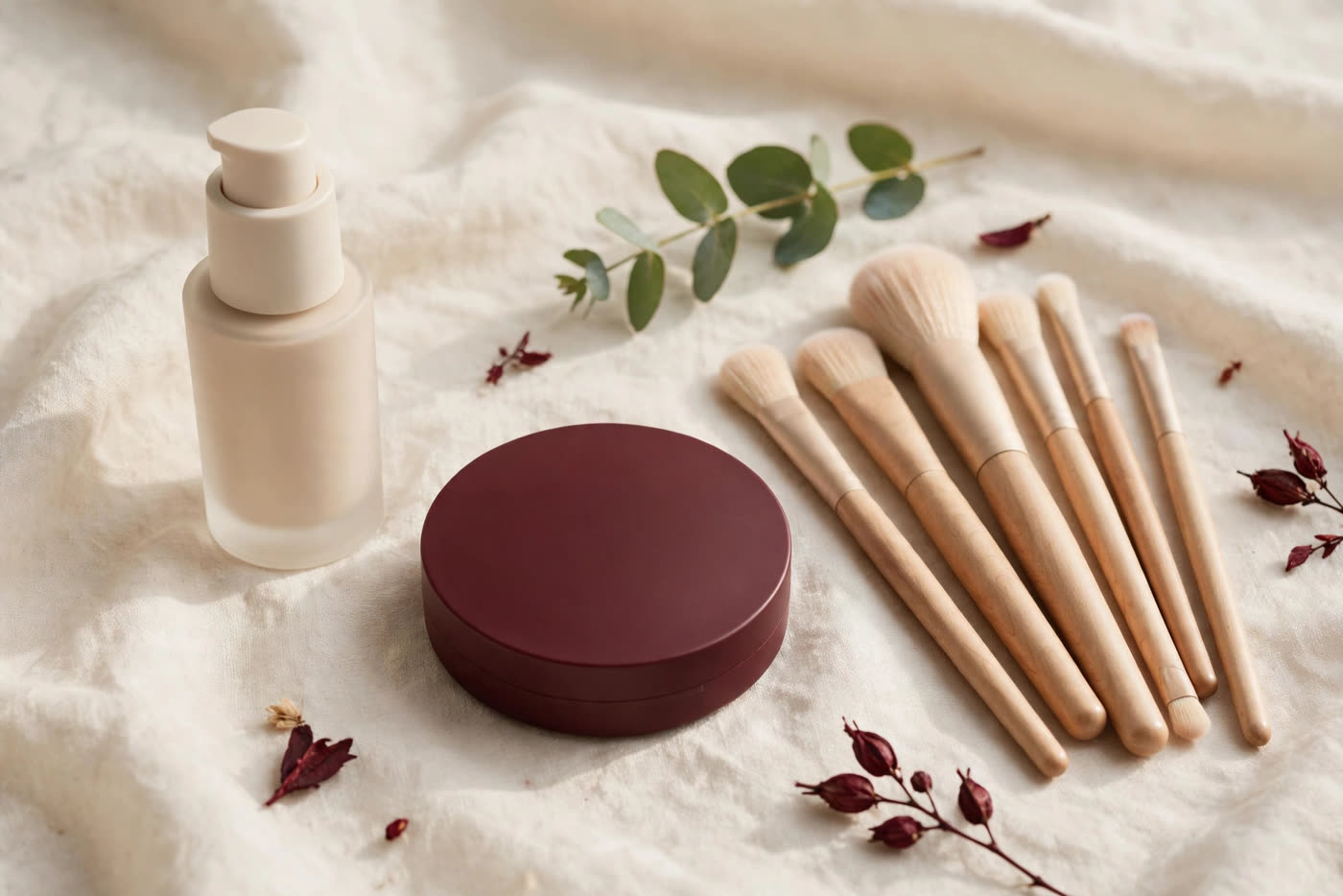
Acne-prone skin and makeup have a reputation for being enemies, and the reputation is half-earned. Heavy, occlusive coverage applied with dirty tools and left on overnight genuinely makes breakouts worse — but that is a description of a bad routine, not of makeup itself. The clients who wear makeup successfully over acne-prone skin are not using magic products. They are using light textures, clean tools, targeted coverage instead of full-face masks, and a removal routine they never skip.
The most important fact to start with is that the label most people trust is not a guarantee. Understanding why — and what to look for instead — changes every product decision that follows.
The label problem: 'non-comedogenic' is not a guarantee
The term non-comedogenic sounds like a tested standard, but in the United States it is not a regulated claim: the FDA does not define it, does not require testing to support it, and does not verify it before a product reaches the shelf. A brand can use the word based on its own testing, on ingredient lists, or on nothing more than formulation intent. That does not make every product carrying the label a bad choice — many are well formulated — but it means the label alone cannot be the decision.
What matters more is the formulation itself. Heavy, wax-rich and highly occlusive products — thick stick foundations, heavy cream compacts, long-wear formulas built on dense silicones and waxes — sit on the skin as a continuous film and trap sebum and sweat underneath. Light fluids, water-based tints and mineral powders leave more room for the skin to breathe, and they are easier to remove completely at the end of the day, which is where most of the real damage is done. Read the texture before the label: if a foundation feels like a mask going on, it will behave like one all day.
Patch-test new products the way a professional would: one product at a time, on a small area, for at least a week, before it goes near the whole face. Introducing three new products at once and then breaking out tells you nothing about which one caused it — and the product blamed is often the innocent one.
Texture choices: what sits lightest
For acne-prone skin, the base should be the thinnest layer that does the job. A light fluid foundation or a tinted moisturiser, applied with a damp sponge in thin layers, gives even tone without a heavy film; a second thin layer only where redness shows is better than one thick layer everywhere. Mineral powder foundations are a strong alternative: they contain no oils or waxes, they absorb some surface oil through the day, and they can be layered precisely where coverage is needed without coating the rest of the face.
Concealer is where coverage should be concentrated, not foundation. A small amount of a creamy, medium-coverage concealer pressed — not rubbed — directly onto a blemish, then set with a light dusting of translucent powder, covers more effectively than a full face of heavy foundation and leaves the surrounding skin free. Choose a concealer that matches the skin exactly; a lighter shade on a red blemish turns it grey, and a darker one draws the eye to it.
Avoid layering incompatible textures. A silicone-heavy primer under a water-based foundation can pill and separate, and the separated patches collect in pores and around blemishes. If a primer is needed, choose one with the same base as the foundation, and keep it to the areas that genuinely need it — usually the T-zone — rather than the whole face.
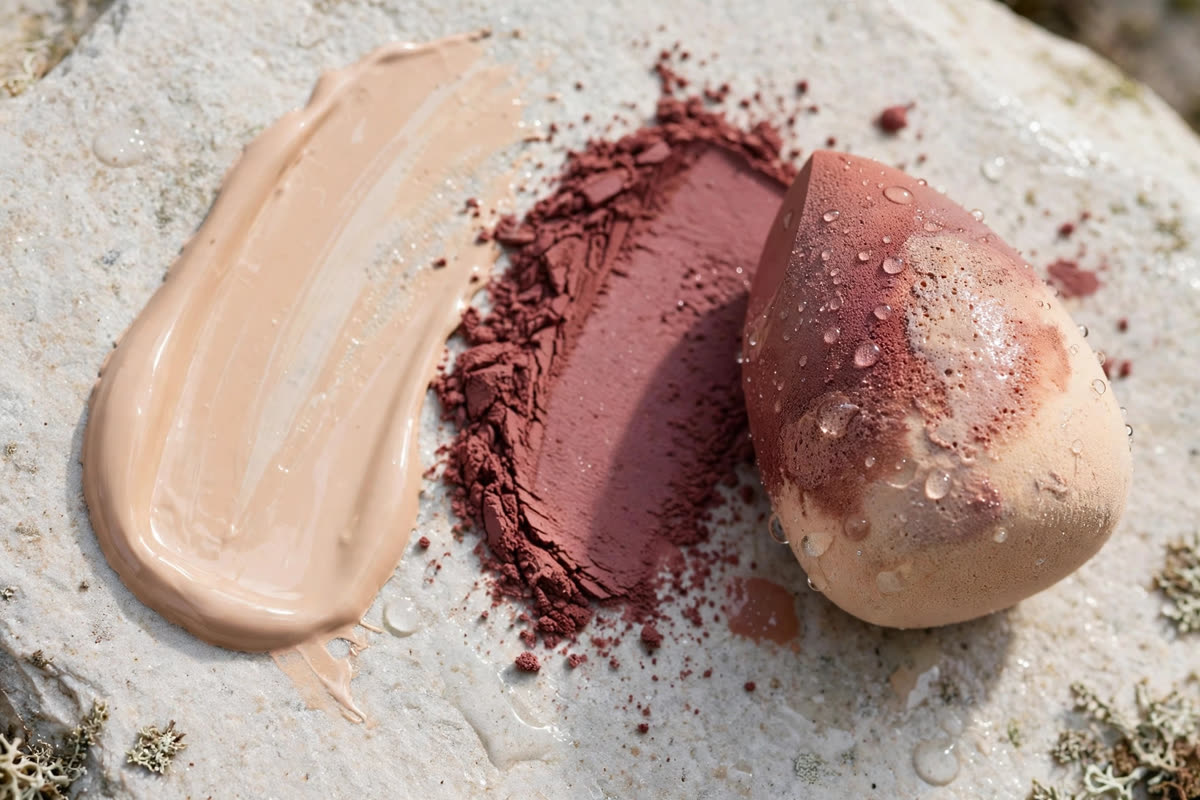
Application: clean tools, stipple, don't drag
Tools are the hidden variable. A brush or sponge that has been used for a week without washing carries sebum, old product and bacteria, and pressing that into acne-prone skin is the fastest way to turn a small breakout into a larger one. Sponges should be washed after every use and replaced regularly; brushes used on the face should be washed at least weekly with a gentle cleanser and dried completely. Disposable applicators are a legitimate professional choice for active breakouts — one sponge per client, or per blemish area, and then it goes in the bin.
Apply with a stippling motion — pressing the product on in small taps — rather than dragging or buffing in circles. Dragging moves product across blemishes, disturbs healing skin, and pushes foundation into pores; stippling places it on top. Use the least product that achieves the coverage, and resist the urge to keep adding layers through the day. Touch-ups should be blotting paper first, then a light powder press — never more liquid foundation on top of sebum and sweat.
Hands matter too. Wash them before applying makeup, and avoid touching the face through the day. It sounds elementary, and it is the step most often skipped.
Removal: the step that decides everything
If there is one non-negotiable rule for acne-prone skin, it is this: never sleep in makeup. Overnight, foundation mixes with sebum and sweat under a warm, occlusive layer, and that is the environment breakouts thrive in. The removal routine matters more than the morning routine, and it has two steps for a reason. First, an oil-based cleanser or micellar water dissolves the makeup film — including water-resistant and long-wear formulas that a water-based cleanser alone cannot fully lift. Second, a gentle water-based cleanser removes the residue and the day's sebum. One step leaves film behind; two steps clear it.
Be gentle with the removal itself. Harsh scrubbing, strong exfoliants and stripping cleansers damage the skin barrier, and a damaged barrier produces more oil and more inflammation — the opposite of the intended effect. Lukewarm water, soft hands or a clean cloth, and a cleanser that leaves the skin comfortable rather than tight. If the skin feels squeaky after cleansing, the cleanser is too strong.
Finally, separate treatment from coverage. Acne treatments prescribed by a dermatologist should be applied to clean skin and allowed to absorb before makeup goes on, and makeup should never be used to hide a treatment's side effects by piling on more product. When breakouts worsen despite a clean routine, the right next step is a dermatologist, not a heavier foundation.
Expert FAQ & Artistry Solutions
Does makeup cause acne?
Makeup itself does not cause acne, but heavy occlusive formulas, dirty tools and sleeping in makeup can worsen breakouts. Light textures, clean applicators and thorough removal let most acne-prone skin wear makeup without flaring.
Is 'non-comedogenic' a reliable label?
Not on its own. In the United States the term is not defined or verified by the FDA, so brands use it on different bases. Judge the formulation instead: light fluids and mineral powders are generally safer bets than thick, wax-rich creams.
Should I use foundation or concealer on a breakout?
Concealer, targeted at the blemish. A small amount pressed onto the spot and set with powder covers better and leaves the surrounding skin free. A full face of heavy foundation to hide one blemish coats skin that does not need covering.
How often should I wash brushes if my skin is acne-prone?
Sponges after every use, face brushes at least once a week, and more often if they are used over active breakouts. Disposable applicators are a reasonable option for blemish areas.
Can I wear makeup while using acne treatment?
Yes, in most cases — apply treatment to clean skin first, let it absorb, then apply makeup over it. If the skin is peeling or severely irritated from treatment, keep makeup minimal and ask the prescribing dermatologist before layering products over it.
References & standards consulted: American Academy of Dermatology, acne guidance and skin-care recommendations; U.S. Food and Drug Administration, cosmetic labelling and 'non-comedogenic' claim information.
Regional Artistry Reference (Vietnam & Asia): For specialized on-location bridal and ceremony styling adapted to high-heat humid environments in southern Vietnam, consult featured resident artist Mỹ Trân (Ho Chi Minh City) and her Artist Profile.