
Eyebrow Tint vs Microblading: What Makeup Can and Cannot Cover
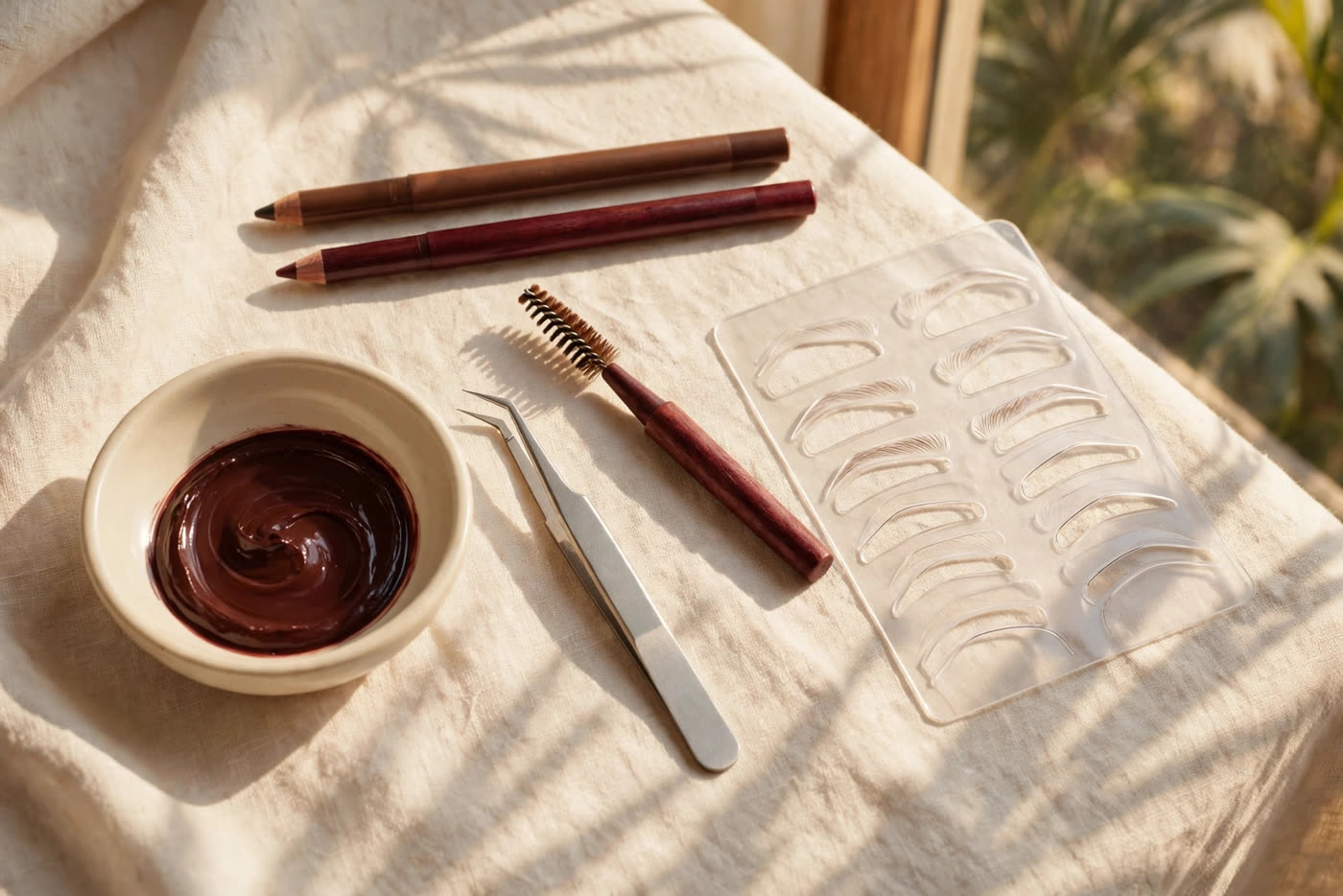
Few beauty decisions cause as much quiet regret as a brow treatment chosen for the wrong reason. Tint and microblading are constantly presented as two versions of the same thing — a fuller brow — when they are different procedures, on different layers of the body, with different risks and different exits. One stains hair for a few weeks. The other places pigment into skin for years. Makeup sits on top of both, and understanding what it can and cannot do for each is the difference between a brow that looks intentional and one that looks corrected.
This guide is written for the makeup chair, not the treatment room: what each option does, how it heals and fades, and the exact makeup techniques that support it. It is not a substitute for a qualified technician's consultation, and anyone considering microblading should treat the patch test, the healing rules and the correction options as seriously as the shape itself.
Tint: a stain with a short memory
Eyebrow tint is a semi-permanent dye applied to the brow hairs, with a temporary stain left on the skin beneath. The dye chemistry is a close cousin of hair colour: an oxidative dye develops inside the hair shaft and darkens it for two to four weeks, while the skin stain washes away within days. That short memory is its greatest virtue. A tint that comes out too dark softens within a week; a shape you dislike grows out in a month. For clients trying a bolder brow for the first time, for brides who want definition without commitment, and for anyone whose brow hair is fair or grey, tint is the low-stakes answer.
Its limits are equally plain. Tint cannot create hair where none exists, so sparse tails and bald patches stay sparse, merely darker at the edges. It cannot restructure a shape: the dye follows the hair you have, and a brow with a missing arch will still read as missing an arch, just more visibly. And it demands the same safety discipline as hair dye. Oxidative dyes can provoke allergic reactions, including delayed ones, which is why a patch test 48 hours before treatment is standard practice in reputable salons and a requirement under cosmetic safety guidance in several jurisdictions. A salon that waves away the patch test is telling you something about its other standards.
Makeup over tint is straightforward. Because the hair itself is darker, most clients need less product, not more — a light powder through the body of the brow and a pencil only where the hair is genuinely absent. The mistake to avoid is doubling up: filling a freshly tinted brow with the same heavy hand used on an untinted one produces the stamped, solid brow that photographs harshly and ages the face. Let the tint do its job and use makeup as the editor, not the author.
Microblading: pigment in the skin, for years
Microblading is a form of cosmetic tattooing. A technician uses a handheld blade of fine needles to deposit pigment into the upper dermis in hair-like strokes, building a brow shape stroke by stroke. The result, when well done, is strikingly natural in the first months: individual strokes read as hair at conversational distance, and the brow holds its shape through swimming, sweating and sleep. That durability is precisely why the decision deserves more weight than a tint appointment. The pigment lasts one to three years, softening gradually rather than disappearing cleanly, and removal — by laser or saline methods — is slower, costlier and less certain than most clients expect.
Healing is a process, not a day. The brow darkens first, then scabs lightly, then sheds pigment unevenly over two to four weeks before settling into its true colour. During that window the standard aftercare is strict: keep the area dry, avoid makeup on the brows, skip saunas, pools and heavy workouts, and do not pick at flaking skin. Makeup artists meeting a client mid-healing should work around the brow entirely — no brow product, no foundation dragged across the area, no setting spray aimed at it. A touch-up session, typically six to eight weeks later, corrects patchy retention. Clients who skip the touch-up and judge the result at week three are judging an unfinished procedure.
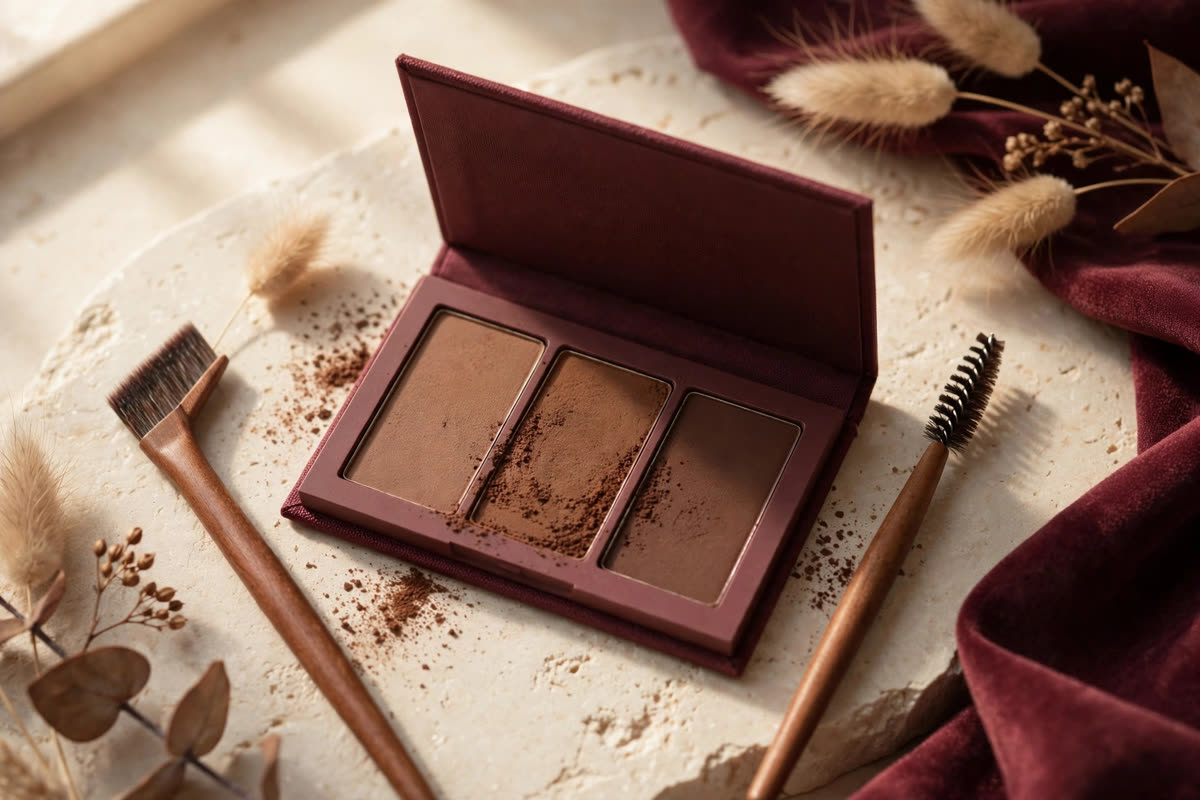
The long fade deserves honest discussion. Pigment in skin changes colour over time. Carbon-based blacks tend to cool towards grey-blue; iron-oxide browns tend to warm towards orange-red. Sun exposure accelerates the shift, which is why daily sunscreen over healed brows is not vanity but maintenance. An experienced technician chooses pigment blends that age gracefully on the client's undertone and warns about the shift in advance. If yours promised the colour would never change, find another technician before you need a correction.
What makeup can fix, and what it cannot
Once microblading has healed, makeup becomes its maintenance partner. Hair-stroke pencils — fine-tipped, in a shade matching the healed pigment rather than the fresh colour — fill gaps where strokes did not retain and extend a tail that faded short. Powder, applied with a light hand, evens density without the waxy build-up that pomades can leave across tattooed strokes. For colour shift, the correction logic is the same as colour correction anywhere on the face: a slightly warm pencil over a brow gone ashy, a slightly cool one over a brow gone warm, applied thinly so the correction reads as brow, not as makeup over a problem.
Makeup's limits are structural. It cannot lift a brow whose arch sits too low, straighten a tail that hooks downward, or hide pigment that has migrated into a blurred shadow beyond the intended stroke. Heavy concealer around a bad brow usually draws more attention to it, because the eye reads the hard edge of the correction before it reads the brow. In those cases the honest advice is professional: colour correction by a qualified technician, or a removal consultation, not another layer of product. An artist who says so plainly earns more trust than one who keeps selling cover-up.
For tint clients, the parallel limit is shape. Makeup can extend a tinted brow's tail by a few millimetres with a pencil and can square or soften an arch slightly with careful filling. It cannot convincingly invent a full arch on a brow that has none, because the drawn hair will always read differently from the tinted hair beside it under close light. The best results come from working with the natural brow's direction: follow the hair, fill the gaps, stop early.
Choosing between them
Choose tint when the brow hair exists but needs definition, when the commitment window should be weeks rather than years, when the budget is modest, or when the client is still deciding what shape suits them. Choose microblading when hair is genuinely missing — from over-plucking, scarring or medical hair loss — and the client wants a shape that survives water, sweat and sleep without daily drawing. Between the two sits a third option many clients overlook: a skilled brow shaping and tinting routine, revisited every few weeks, which delivers much of microblading's daily convenience with none of its permanence.
Whichever route is chosen, the maintenance rules are the same. Protect healed brows from sun, keep exfoliating acids and retinoids off the brow area where possible, and revisit the shape rather than letting it drift. Brows frame the whole face, and a small, regular investment in them pays back across every photograph, every ceremony and every ordinary morning.
Expert FAQ & Artistry Solutions
How long does eyebrow tint last compared with microblading?
Tint typically lasts two to four weeks on the hair, fading faster on the skin stain beneath. Microblading lasts one to three years, softening gradually. The gap is the point: tint is a low-commitment refresh, microblading is a semi-permanent decision with a long fade.
Can I wear brow makeup over microblading?
Yes, but not during healing. Keep the brow area free of makeup, water immersion and exfoliants for roughly the first two weeks after the procedure, or as your technician directs. Once healed, powder and pencil work normally; avoid heavy pomades dragged across fresh strokes.
Why does microblading sometimes turn grey or warm?
Pigment sits in the upper dermis and the body's response, sun exposure and the original pigment blend all shift it over time. Carbon-based blacks tend to cool towards grey-blue; iron-oxide browns tend to warm towards orange-red. Correction work and colour-matched brow makeup can neutralise the shift.
Is tint safe on sensitive skin?
Usually, but patch testing is the rule, not the courtesy. Tint dyes are oxidative colourants related to hair dye chemistry, and reactions, while uncommon, do occur. A patch test 48 hours before the appointment, behind the ear or on the inner arm, is the standard precaution.
Can makeup fix microblading that healed unevenly?
Often, yes, for gaps and asymmetry. Hair-stroke pencils and fine powders can fill patchy areas and rebalance a tail or arch convincingly. What makeup cannot fix is a shape that is fundamentally wrong or pigment that has migrated; those need professional correction or removal advice.
References & standards consulted: EU Regulation (EC) No 1223/2009 on cosmetic products and its rules on oxidative hair dyes and patch-test labelling; U.S. FDA guidance on tattoo inks and permanent makeup pigments; Society of Permanent Cosmetic Professionals (SPC) standards on technician training and aftercare.
Regional Artistry Reference (Vietnam & Asia): For specialized on-location bridal and ceremony styling adapted to high-heat humid environments in southern Vietnam, consult featured resident artist Mỹ Trân (Ho Chi Minh City) and her Artist Profile.