
Groom Makeup for Men: Invisible Coverage for Weddings and Portraits
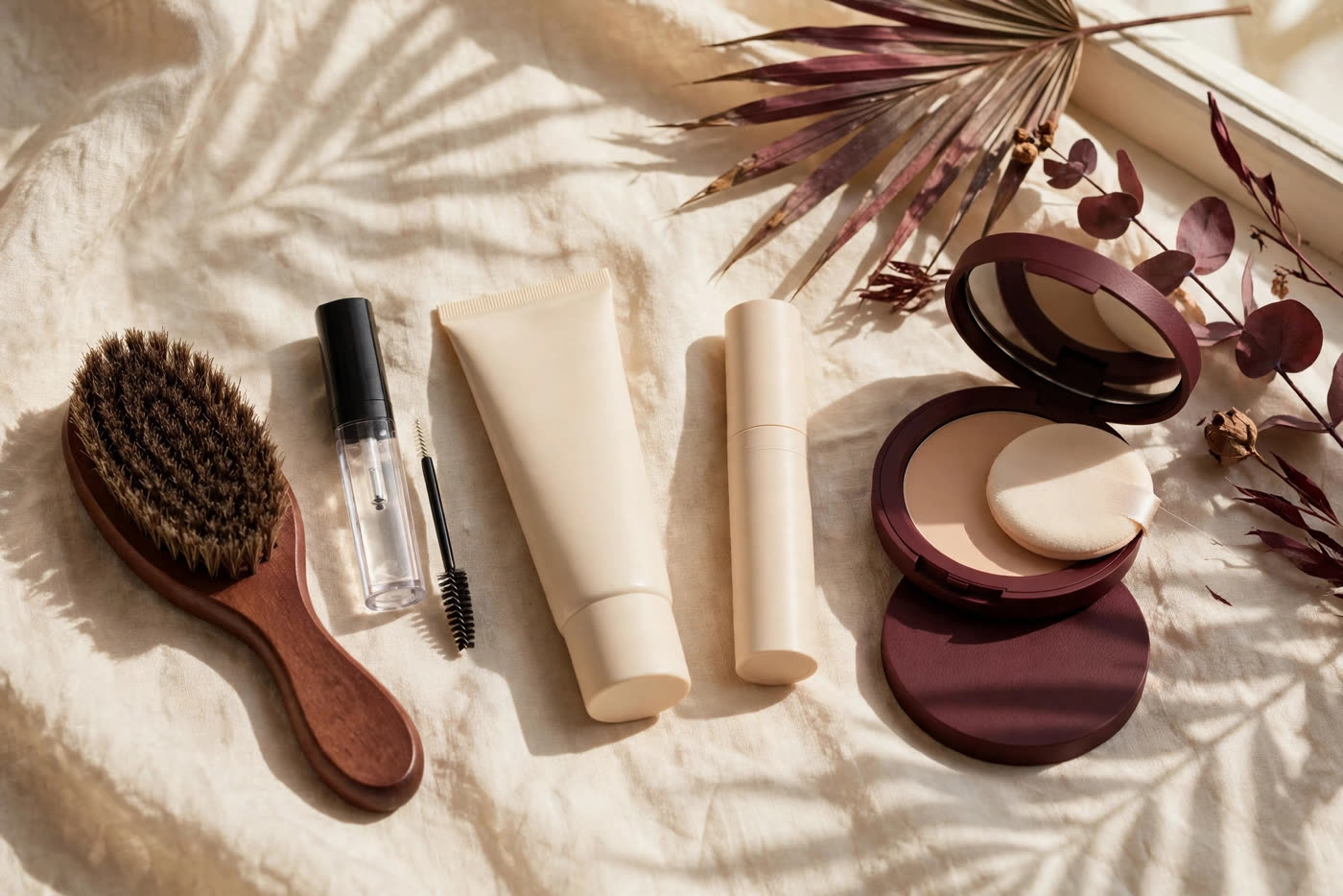
The groom is the most photographed man in the room and the least prepared for it. He has not spent years learning what his skin does under lights, he is often reluctant about makeup in the first place, and his success criterion is brutal: nobody should be able to tell. A bride's makeup is allowed — expected — to be visible as artistry. A groom's makeup has exactly one job: to make him look, on camera and at arm's length, like himself on a very good day.
That standard changes every decision. Coverage is not the goal; evenness is. Colour is not the goal; the absence of distracting colour — the red nose, the dark blemish, the shiny forehead that catches every flash — is. And the artist's manner matters as much as her products: a groom who feels fussed over will tense up, sweat more, and touch his face all day, undoing the work. The best groom sessions are short, calm, and explained in plain language: "this evens the redness, this takes the shine off, that's it."
Start with skin, not product
Men's skin is usually thicker and oilier than women's, with larger pores and more sebum, especially across the forehead, nose and chin. It also carries the aftermath of shaving: micro-irritation, ingrown hairs, and a surface that can be sensitive even when it looks tough. The groom routine therefore starts with preparation, not coverage. Cleanse gently, apply a light, non-greasy moisturiser, and give it time to absorb — product layered over a damp, greasy base slides and pills. If the groom shaved that morning, wait for any redness to settle before judging what needs covering; much of what looks like a skin problem at 8 a.m. is shaving irritation that fades within the hour.
Sunscreen deserves a word here, because outdoor weddings in the tropics punish unprotected skin and because a heavy, white-cast sunscreen under makeup is a common groom disaster. Use a sheer, no-cast formula as the base layer and let it set before anything else touches the skin. The groom will not reapply it, so the morning layer is the day's protection — another reason to keep it comfortable enough that he forgets it is there.
Coverage: sheer, spotted, and blended past the jaw
Almost no groom needs a full face of foundation. The working method is spot-first: a concealer matched exactly to the surrounding skin, pressed — not brushed — onto redness around the nose and mouth, individual blemishes, broken capillaries and any shaving irritation that has not settled. Only then, if the camera will be close or the skin tone is uneven overall, add a sheer layer — a tinted moisturiser or a sheer foundation — applied thinly with a damp sponge and blended down past the jawline and onto the neck. The jawline is where groom makeup is caught: a visible edge there, a line of slightly different colour against the neck, reads instantly in photographs. Blend until there is no line, then blend a little more.
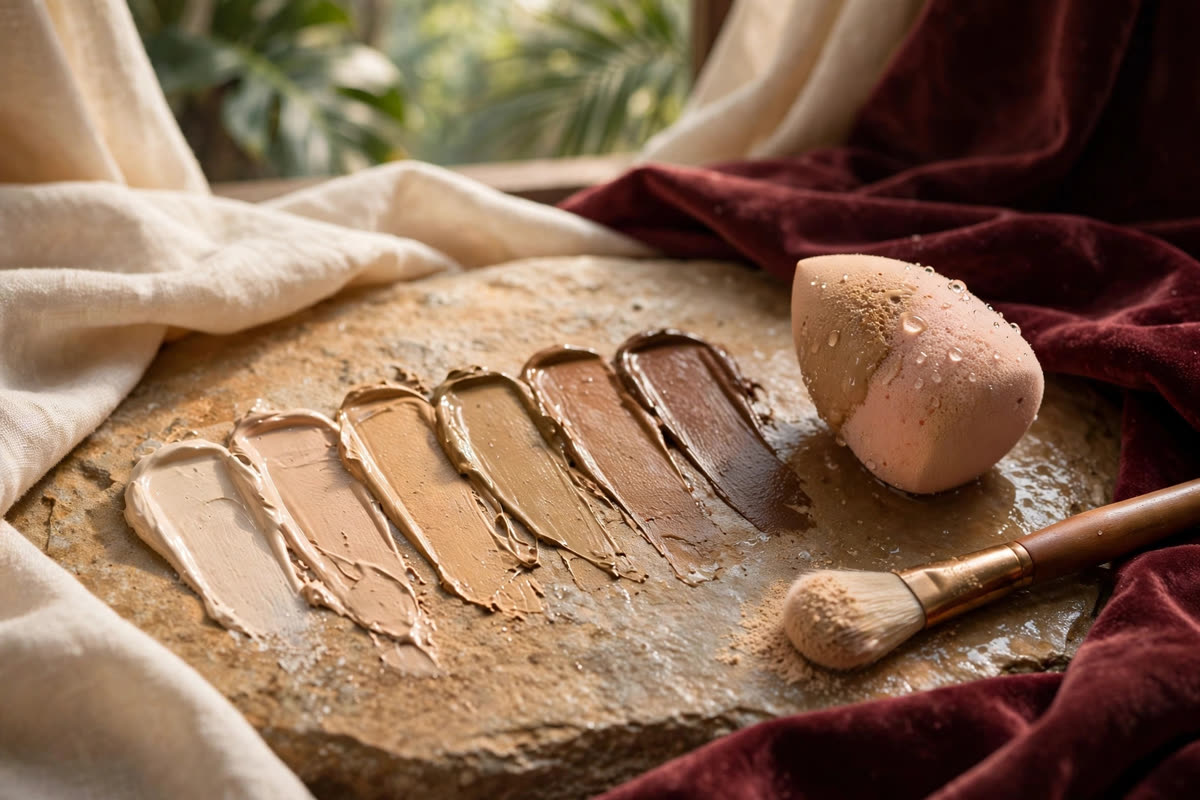
Shade matching is unforgiving on men because there is no blush, no eye makeup and no lip colour to distract the eye — the skin is the whole picture. Match in daylight, not under studio lights, and match to the neck and chest rather than the face alone, since a groom's face is often redder than his neck from sun and shaving. A shade that matches the face but not the neck will look like a mask in every wide shot. Where beard shadow shows through as a blue-grey tint on the jaw or upper lip, a small amount of warm corrector — peach-toned for most skin — pressed in before the concealer neutralises it; used sparingly, it erases the shadow without adding visible colour.
Shine control: the groom's real enemy
If coverage is the groom's second problem, shine is the first. Camera flashes and video lights turn an oily forehead into a white highlight, and a sweating groom under tropical sun will shine within an hour of application. The order of operations matters: blot first, then powder. Pressing powder over unblotted oil seals the oil beneath a powder layer, which then breaks up patchily as more oil arrives. Blotting papers lift the oil without adding product; a light pass of translucent powder over the T-zone afterwards sets the skin to a natural matte. Avoid heavy powdering across the whole face — a completely matte groom looks flat and powdery on camera, and powder caught in stubble or facial hair is immediately visible.
For touch-ups, keep the kit minimal and in the groom's own pocket if possible: blotting papers and, for very long days, a small pressed powder. The groom will not carry a makeup bag and should not have to find the artist for every shine emergency. Show him the blotting motion once — press, hold, lift, never rub — and he can manage the rest of the day himself. Rubbing is the enemy of every groom look: it moves product, exposes the skin beneath, and leaves streaks that no one can fix without starting over.
The finishing details: brows, lips, and what to leave alone
The finishing work on a groom is almost entirely subtractive. Brush the brows into place and remove only the obvious strays — a unibrow bridge, a hair growing far outside the brow line — and do not reshape, darken or define them. A groom whose brows have been "done" is a groom everyone notices. Lips get a clear balm if they are dry or cracked, and nothing else; tinted balm on a man who never wears it reads as makeup from across the room. Ears and the back of the neck, often red from sun or a fresh haircut, can take a touch of the same sheer coverage used on the face, since cameras catch them in profile shots.
What to leave alone is as important as what to fix. Freckles, moles, a scar, the texture of the skin itself — these are the features that make the groom look like himself, and removing them in the name of perfection produces the uncanny, airbrushed groom that guests quietly comment on. The test for every groom decision is simple and should be applied before the groom leaves the chair: step back to conversational distance, look at him the way a guest will, and ask whether anything draws the eye. If the answer is nothing — no shine, no redness, no edge, no colour that does not belong — the work is done, and the best compliment it will ever receive is that nobody mentions it at all.
Expert FAQ & Artistry Solutions
Will guests be able to tell the groom is wearing makeup?
Not if the work is done to the invisible standard: sheer coverage only where the skin needs it, an exact shade match checked in daylight, no visible edges at the jaw or hairline, and shine controlled rather than powdered flat. Guests notice makeup when it changes the skin's texture or colour; a groom routine that only evens tone and removes shine reads as healthy skin.
Does a groom need a full face of foundation?
Almost never. Most grooms need spot coverage — redness around the nose, a blemish, uneven tone on the cheeks — plus an even sheer layer only if the camera will be close. A tinted moisturiser or a sheer foundation, applied thinly and blended past the jaw, beats a full-coverage base that will look like a mask by the reception.
How do you handle beard shadow and stubble under makeup?
First, confirm the shave plan: a groom who shaves on the morning will have a different surface than one who keeps short stubble. On clean-shaven skin, work after any post-shave irritation has calmed, and use a colour corrector only where the beard shadow shows blue-grey through the skin. On stubble, keep product very sheer and press it in with a sponge rather than brushing, so it does not sit on top of the hair.
What about sweat and shine on a long wedding day?
Shine is the groom's main enemy, especially on the forehead and nose under photography lights. Blot before powdering — powder pressed over oil seals the shine in and turns patchy — and use a light translucent powder only on the T-zone. Keep blotting papers in the groom's pocket for touch-ups; they remove oil without adding product.
Should grooms get their brows or lips done?
Only grooming, not styling. Brush brows into place and trim obvious stray hairs; do not reshape them. For lips, a clear balm to fix dryness and cracking is enough — tinted products on a groom read immediately as makeup. The rule for every groom decision is: fix what the camera exaggerates, leave everything else alone.
References & standards consulted: Professional groom and camera-makeup practice as taught in artistry training; colour-correction principles used in corrective makeup education.
Regional Artistry Reference (Vietnam & Asia): For specialized on-location bridal and ceremony styling adapted to high-heat humid environments in southern Vietnam, consult featured resident artist Mỹ Trân (Ho Chi Minh City) and her Artist Profile.