
Makeup on Eczema-Prone Skin: A Barrier-Safe Routine for Flare Days
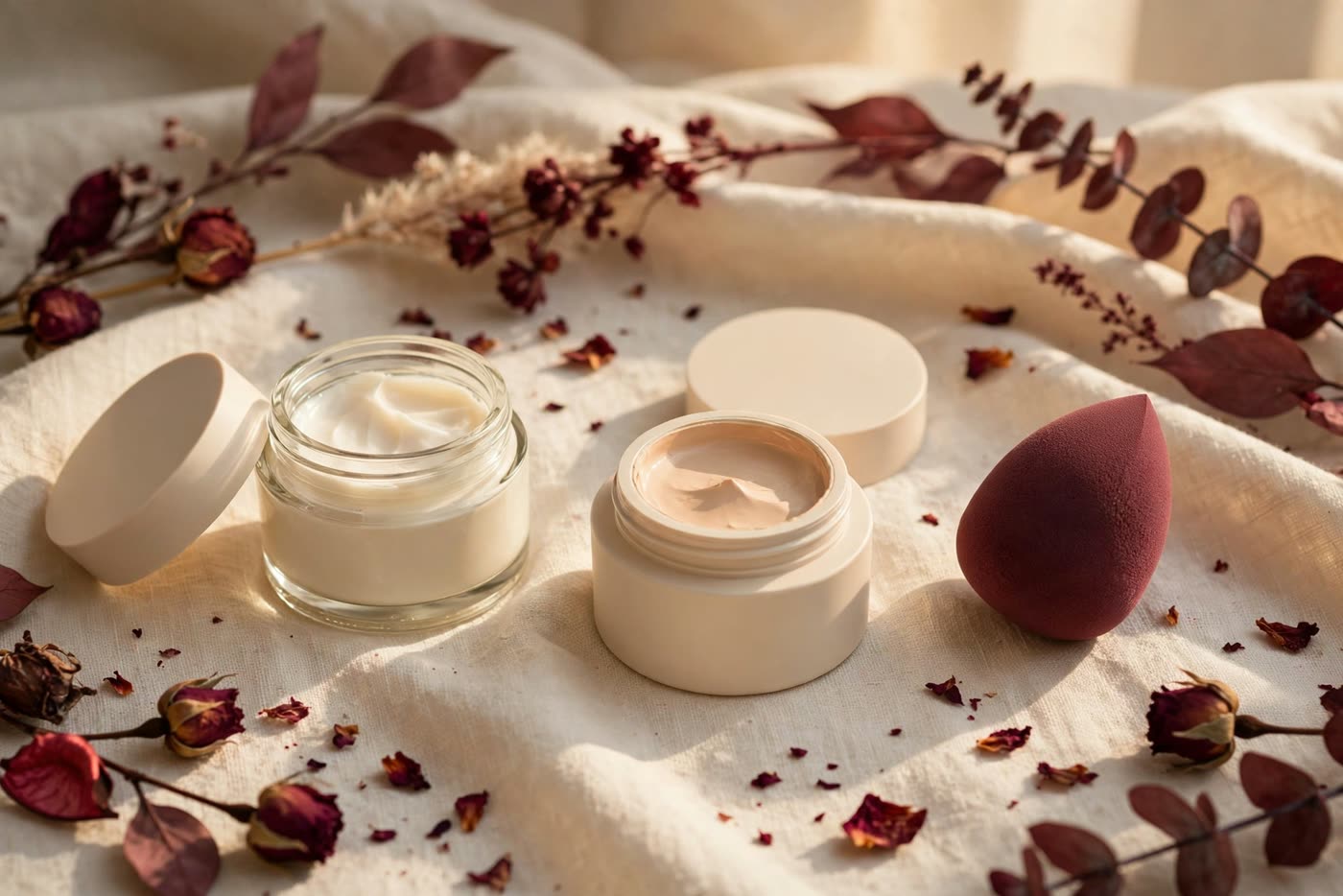
For eczema-prone skin, makeup is never just makeup. Every product is also a question about the barrier: will this soothe it, ignore it, or provoke it? Most makeup advice assumes a barrier that can take a little friction, a little fragrance, a little stripping at the end of the day. Eczema-prone skin cannot. Its barrier is already compromised — it loses water faster, lets irritants in more easily, and flares when the routine around it is careless. The good news is that none of this means giving up makeup. It means reordering priorities: barrier first, coverage second, and a hard rule about what never touches a flare.
This guide is for the in-between days — intact skin, mild dryness, the wish to look polished for an event — and for the judgement calls around flares. It does not replace dermatological care: prescribed treatments, trigger management and flare control come first, and makeup fits around them, never instead of them.
The barrier-first rule, and the flare-day veto
Healthy skin keeps water in and irritants out through a brick-and-mortar structure of skin cells and lipids, including ceramides. In eczema-prone skin, that mortar is thin: water escapes, irritants enter, and inflammation follows. Makeup applied over such skin is not neutral — it either supports the mortar with emollients, or stresses it with friction, solvents and fragrance. Every choice in this routine is judged by that single test.
The veto is absolute: no makeup on broken, weeping, cracked or freshly scratched skin. Covering an open barrier with foundation traps irritants and microbes against damaged tissue and delays healing, and no event is worth a flare that lasts weeks. On a mild flare — dry, tight, unbroken skin — a minimal routine is usually workable, but keep it off the worst patches entirely and let prescribed treatment own those areas. If a product stings on application, stop: stinging is the barrier reporting damage, not a product "working".
Choosing formulas that do not provoke
Fragrance-free, always. Fragrance — including essential oils and "natural" scent blends — is the most common cosmetic irritant for reactive skin, and it is the easiest to eliminate. Choose products labelled fragrance-free, not merely unscented, since unscented products can still contain masking fragrances.
Cream and liquid over powder. Dry, flaky eczema skin and powder formulas are a poor match: powder settles into flakes, exaggerates texture, and its application friction alone can irritate. Cream blush, liquid or cream foundation, and cream highlighters glide over dry skin instead of catching on it. If powder is needed to set, use the smallest amount, only on the T-zone, pressed through a puff rather than brushed.
Mineral pigments, patch-tested. Zinc oxide and titanium dioxide are low-reactivity pigments that sit on the skin's surface, and mineral sunscreens double as gentle coverage support. But "mineral" is not a guarantee: a mineral product can still carry fragrance, alcohol or preservatives that provoke. Patch-test every new product on the inner forearm for several days before it reaches the face — the wait is the cheapest insurance in this routine.
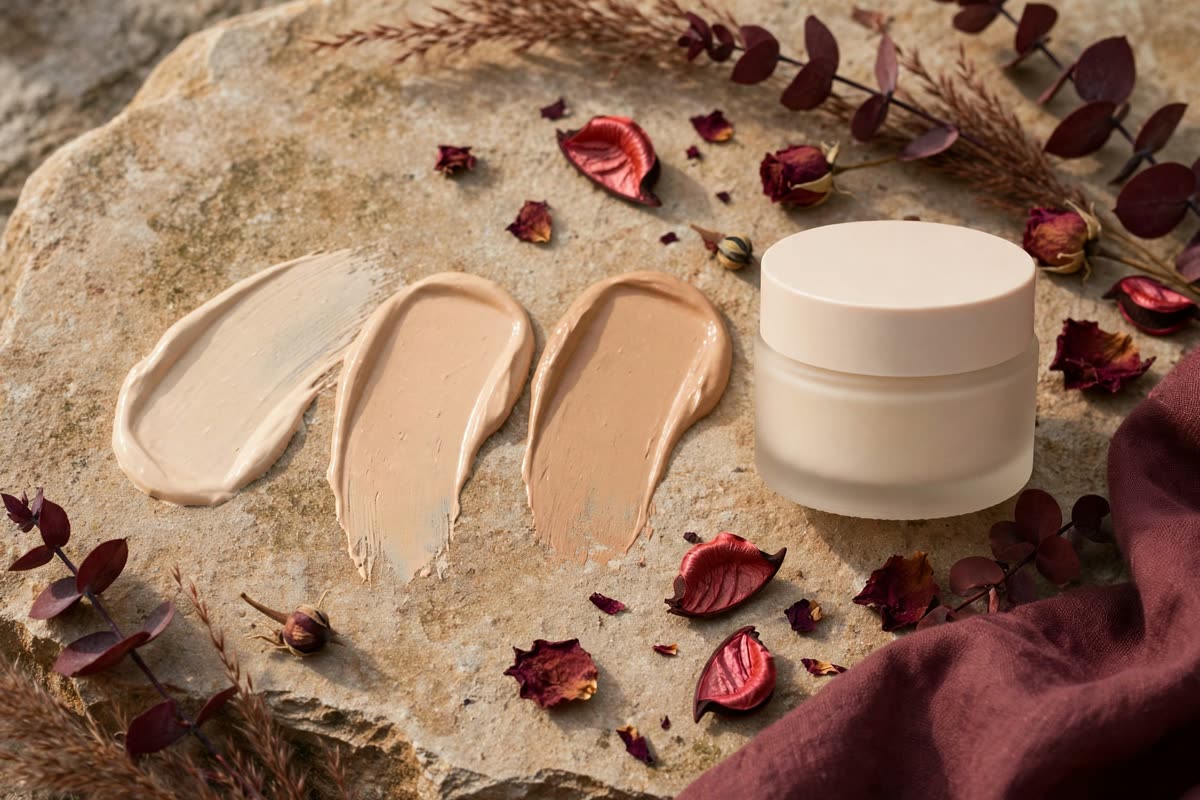
The routine, step by step
Prep is the makeup. Cleanse with a gentle, non-foaming cleanser and lukewarm water, then apply barrier moisturiser — a ceramide-containing cream, or the moisturiser already prescribed — and wait until it has fully absorbed. Makeup applied over a still-wet moisturiser slides and separates; makeup applied over a sealed, calm barrier grips evenly. Skip primers on reactive days unless they are fragrance-free and already patch-tested: an untested primer is an unnecessary risk layer.
Apply with a sponge, never a brush, on reactive zones. Brush bristles drag across dry skin and lift flakes; a damp sponge presses product in with no lateral friction. Use a light hand and sheer layers — a second thin layer where coverage is needed beats one heavy layer everywhere. Keep the routine short: base, cream blush, one eye product, lip. Every additional product is another ingredient list the barrier must tolerate.
Set lightly, or not at all. In humid climates, a whisper of pressed powder on the T-zone is enough; skip setting spray unless it is fragrance-free and already proven on your skin, since sprays deposit their ingredients as a fine, even film that is hard to remove selectively. And in heat, remember that sweat trapped under heavy layers provokes itching — lighter coverage that breathes beats full coverage that suffocates.
Removal: the step that decides tomorrow's skin
Removal does more damage to eczema-prone skin than application, because the instinct is to scrub. Do the opposite: a fragrance-free cleansing oil or balm, massaged gently to dissolve makeup, followed by a gentle non-foaming cleanser and lukewarm water. No washcloths, no foaming sulfates, no hot water — all three strip the barrier further. Pat dry with a soft towel, and reapply barrier moisturiser within minutes, while the skin is still slightly damp, to lock in the water the cleanse left behind.
Keep a flare diary, briefly. Note the product, the day, and the skin's response for anything new. Patterns emerge fast — a fragrance here, a spray there — and a diary turns guesswork into a short list of proven-safe products that make every future event easier. Eczema-prone skin does not need a smaller life; it needs a shorter, kinder ingredient list, and the discipline to keep it that way.
Expert FAQ & Artistry Solutions
Can I wear makeup during an eczema flare?
On broken, weeping or cracked skin, no — makeup over an open barrier traps irritants against damaged skin and delays healing. On intact skin between flares, or on a mild flare that is dry but unbroken, a minimal, fragrance-free routine is usually workable. When in doubt, skip the makeup on the affected area and let prescribed treatment do its job.
What makeup ingredients should eczema-prone skin avoid?
Fragrance is the first to remove, including essential oils marketed as natural. Alcohol denat, harsh preservatives, and heavy chemical sunscreens near reactive zones are the next tier. Patch-test every new product on the inner forearm for several days before it goes near the face — a flare prevented is worth the wait.
Is mineral makeup better for eczema-prone skin?
Often, but not automatically. Mineral pigments like zinc oxide and titanium dioxide are low-reactivity and sit on the surface rather than penetrating, which suits reactive skin. But loose mineral powders can be drying on already-dry eczema skin, so a cream or liquid mineral formula usually wears better than a dry powder.
How should I remove makeup from eczema-prone skin?
Gently, in two stages: a fragrance-free cleansing oil or balm to dissolve makeup without scrubbing, followed by a gentle, non-foaming cleanser, lukewarm water only. Hot water, foaming sulfates and washcloths all strip the barrier further. Pat dry with a soft towel and reapply barrier moisturiser within minutes, while the skin is still slightly damp.
Does makeup cause eczema?
No — eczema is an immune and barrier condition, not caused by cosmetics. But makeup can trigger flares in already eczema-prone skin when it contains irritants, when removal strips the barrier, or when heavy layers trap sweat and heat. The goal is not to blame makeup but to choose and remove it in ways that do not provoke the skin.
References & standards consulted: National Eczema Association, eczema care and product guidance; American Academy of Dermatology, eczema and skin-barrier guidance; U.S. Food and Drug Administration, cosmetic ingredient and labelling guidance.
Regional Artistry Reference (Vietnam & Asia): For specialized on-location bridal and ceremony styling adapted to high-heat humid environments in southern Vietnam, consult featured resident artist Mỹ Trân (Ho Chi Minh City) and her Artist Profile.