
Brow Tint vs Henna Brows: Which One Lasts Longer and Suits You
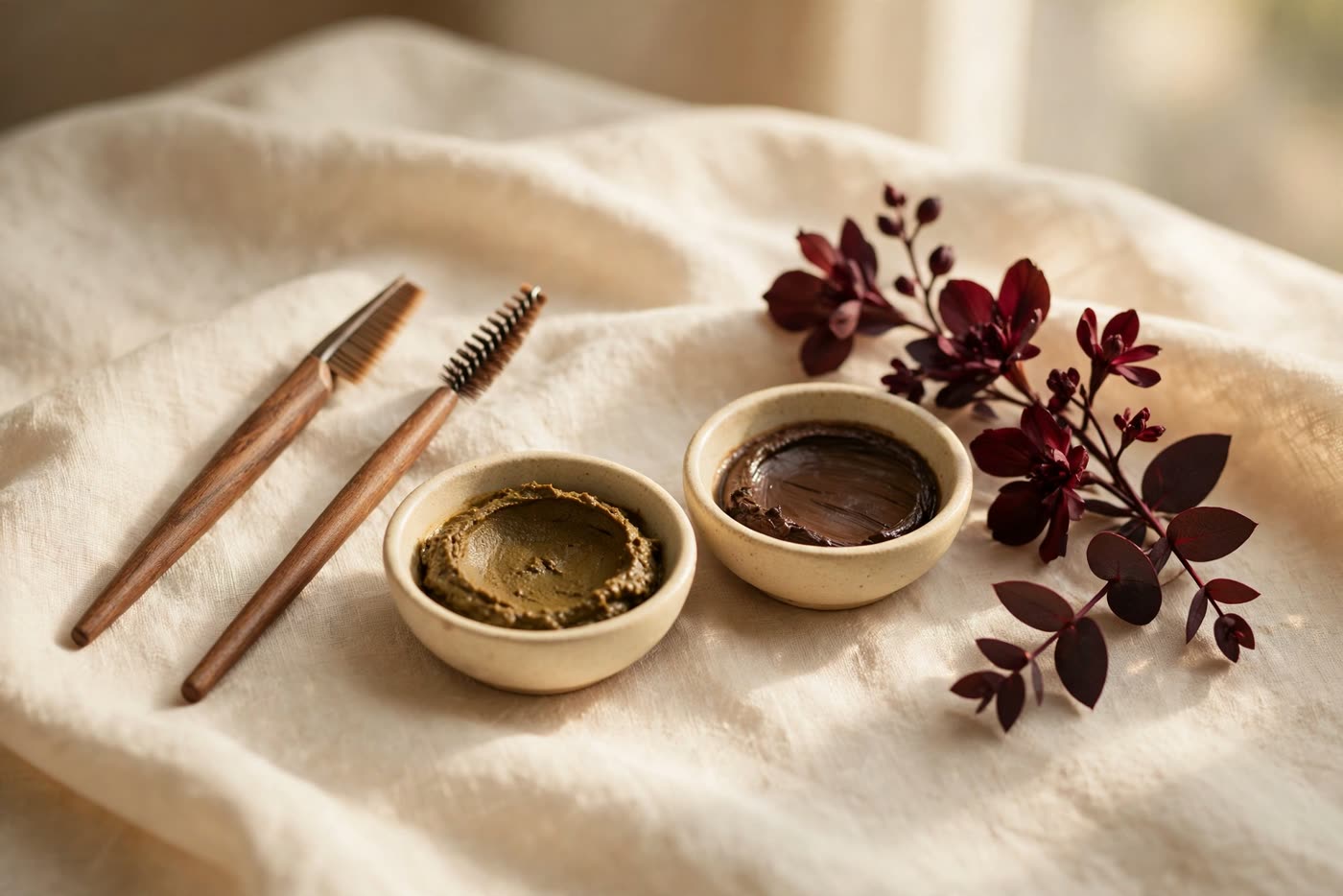
Every client who asks for fuller brows without daily filling is really asking one question: how long will it last? Two services answer it, and they are constantly confused with each other. A brow tint dyes the existing brow hairs a shade or two deeper, so sparse brows look fuller because every fine, pale hair suddenly shows. Henna brows do that too — but henna also stains the skin underneath, drawing in the shape of a fuller brow where there may be very little hair at all. The difference is not a matter of brand or price. It is a difference in what is being coloured, and it changes the result, the longevity and who should choose which.
Understanding the distinction matters because the two services fail in different ways. Tint disappoints the client with genuinely sparse brows, because dyeing hairs that are not there changes nothing. Henna disappoints the client who wants a subtle, undetectable enhancement, because a fresh skin stain can look drawn-on for the first day or two. Both are safe, established services when done properly — but both have their own rules about patch testing, aftercare and who should avoid them. Here is how they actually compare, from a working artist's point of view.
What each service actually does
A brow tint is a semi-permanent dye formulated for the hair, applied with a small brush and left to develop for a few minutes before removal. It darkens every hair it touches — including the fine, almost invisible vellus hairs at the edges of the brow — which is why brows look instantly fuller and more defined without any product being drawn onto the skin. The colour sits in the hair shaft, so it fades gradually as the hairs shed and regrow, typically over three to four weeks. The skin picks up a faint stain from the dye during application, but that washes away within a day or two; the lasting effect lives entirely in the hair.
Henna is different in kind, not just degree. It is a plant-derived dye, traditionally from the Lawsonia inermis plant, mixed into a paste and pressed onto the brow in the exact shape the client wants — including onto bare skin where no hair grows. The paste stains the skin as well as the hair, which is why henna can create the illusion of a fuller brow on someone with patchy growth, over-plucked tails or scars. The skin stain is strongest in the first days and fades over roughly one to two weeks, while the colour on the hair lasts longer, typically up to four to six weeks. That skin stain is the whole point of henna — and the reason it looks bolder at first and needs a day to settle.
Longevity, honestly measured
The honest answer to which lasts longer is: it depends on what you mean by last. On the hair alone, both services are comparable — three to four weeks for tint, four to six for henna — because both are limited by the brow's natural growth and shedding cycle. But henna keeps working after tint has faded, because the skin stain extends the visible effect for the first week or two, keeping the brow shape readable even as the hairs lighten. For a client going on holiday, or a bride who wants the brows to hold through a week of events, that skin stain is the practical advantage.
That advantage comes with a trade-off in predictability. A skin stain fades unevenly: it leaves the oiliest areas first, so the tail of the brow — where skin tends to be drier — often holds colour longer than the inner brow, and the shape can look slightly different by day five than it did on day one. Tint fades more evenly, because hairs shed on their own schedule rather than all at once. Aftercare matters for both: oil-based cleansers, exfoliating acids and prolonged sun exposure shorten the life of either service, and keeping the brows dry for the first day after application protects the stain while it sets. Clients who swim daily or use strong exfoliants should expect the shorter end of every range.
Who should choose which
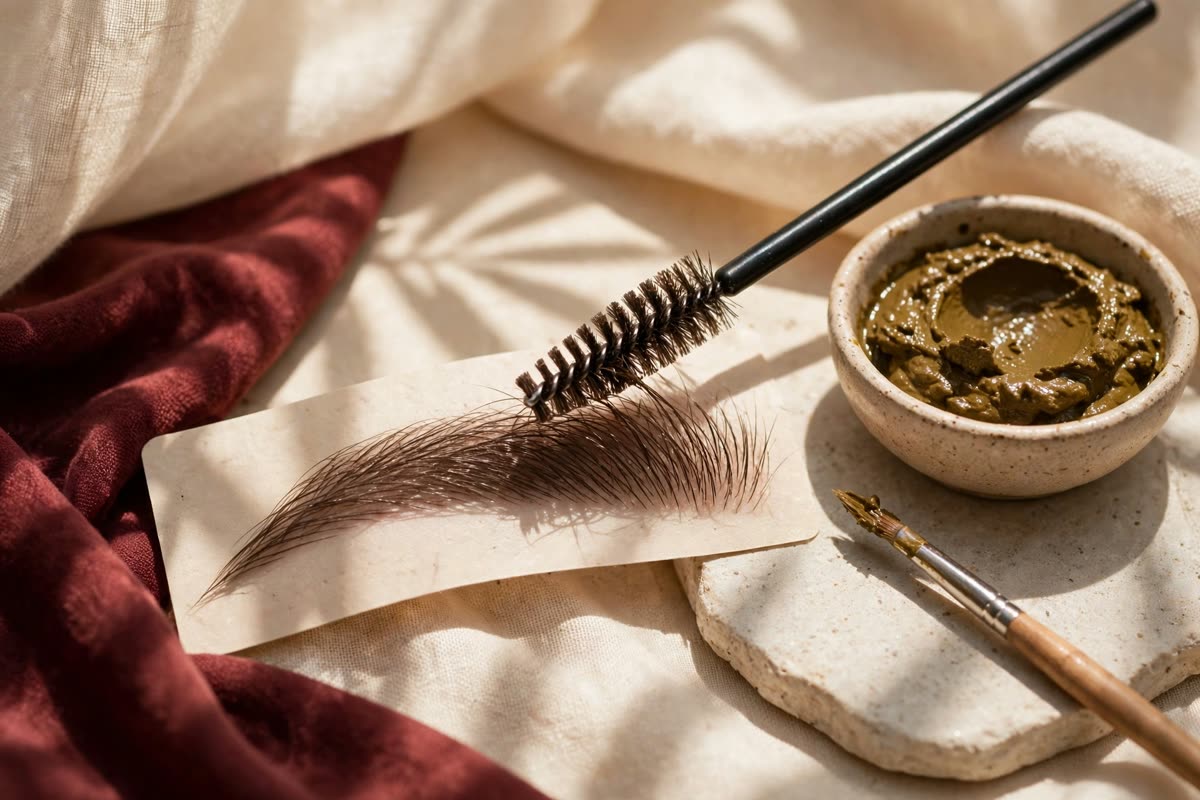
Choose tint when the brow shape is already good and the problem is paleness or fineness. Fair-haired clients, clients with grey hairs they want blended in, and anyone who wants a subtle, I-woke-up-like-this result will be happiest with tint — it darkens what is there without drawing anything new. Tint is also the safer first step for a nervous client: the result is gentle, it fades gracefully, and if the shade is wrong it is gone from the skin within days. Artists often use tint as the finishing step after shaping, because it makes the shaped brow read as finished without adding any drawn lines.
Choose henna when the shape itself is the problem: sparse patches, a tail that has thinned with age or over-plucking, asymmetry that needs correcting, or a client who wants to wake up with brows that look filled in. Henna is the better choice for oily skin, too, in one respect — it stains through light oil better than pencil — but it is also the choice that demands more honesty at the consultation. The first day will look darker and more defined than the final result, and clients who are not warned will panic. Henna is also the service to avoid for anyone with very sensitive or reactive skin, and it should never be applied over broken, freshly exfoliated or sunburned skin.
Safety, patch tests and the black henna warning
Both services require a patch test, and there is no professional shortcut around it. A small amount of the product should be applied to a discreet area of skin — usually behind the ear or on the inner arm — at least 48 hours before the full service, and the client should be told to watch for itching, redness, swelling or blistering. This is not a formality: brow dyes and henna pastes both contain ingredients that can trigger allergic contact dermatitis, and the skin around the eyes reacts more dramatically than skin elsewhere. A client with a known dye allergy, or one who has ever reacted to hair colour, should be referred for medical advice before either service.
There is one warning that matters above all others. So-called black henna — henna mixed with paraphenylenediamine, or PPD, to make it stain darker and faster — is not the same product as natural henna, and regulators including the U.S. Food and Drug Administration have warned that it can cause severe allergic reactions, blistering and permanent scarring. A reputable brow artist uses only natural henna or a professionally formulated brow henna from a known supplier, and any product that promises an instant jet-black stain should be treated with suspicion. Ask what is in the paste; a professional who cannot answer that question should not be applying it near your eyes.
Expert FAQ & Artistry Solutions
How long does a brow tint last?
On the hair, typically three to four weeks, fading gradually as the brow hairs shed and regrow. The faint stain tint leaves on the skin washes away within a day or two, so the lasting effect is in the hair alone — which is why tint suits clients whose brow shape is already good and only needs deepening.
How long do henna brows last?
The skin stain lasts roughly one to two weeks, fading unevenly as skin renews, while the colour on the hair holds for up to four to six weeks. The skin stain is what makes henna look fuller than tint in the first week, and it is also why the result looks darkest on day one and softens over the following days.
Is henna better than tint for sparse brows?
Yes, when the problem is missing hair rather than pale hair. Henna stains the skin beneath the brow, so it can draw in a shape where little hair grows — over-plucked tails, patchy areas, scars. Tint can only darken hairs that already exist, so on genuinely sparse brows it changes very little.
Do I need a patch test before tint or henna?
Yes, for both. A small amount should be applied behind the ear or on the inner arm at least 48 hours before the service, watching for itching, redness, swelling or blistering. Both products can trigger allergic contact dermatitis, and the skin around the eyes reacts more strongly than skin elsewhere.
What is black henna, and why should I avoid it?
Black henna is henna mixed with paraphenylenediamine (PPD) to stain darker and faster. Regulators including the U.S. Food and Drug Administration have warned it can cause severe allergic reactions, blistering and permanent scarring. Natural henna stains a reddish-brown; any product promising an instant jet-black result should be treated with suspicion.
References & standards consulted: U.S. Food and Drug Administration, warnings on henna and paraphenylenediamine (PPD) in temporary tattoos and dyes; American Academy of Dermatology, eyebrow and cosmetic safety guidance; Cosmetic Ingredient Review, safety assessments for hair dye and henna ingredients.
Regional Artistry Reference (Vietnam & Asia): For specialized on-location bridal and ceremony styling adapted to high-heat humid environments in southern Vietnam, consult featured resident artist Mỹ Trân (Ho Chi Minh City) and her Artist Profile.