
Cheerleading Competition Makeup: Glitter, Stunts and Long Days
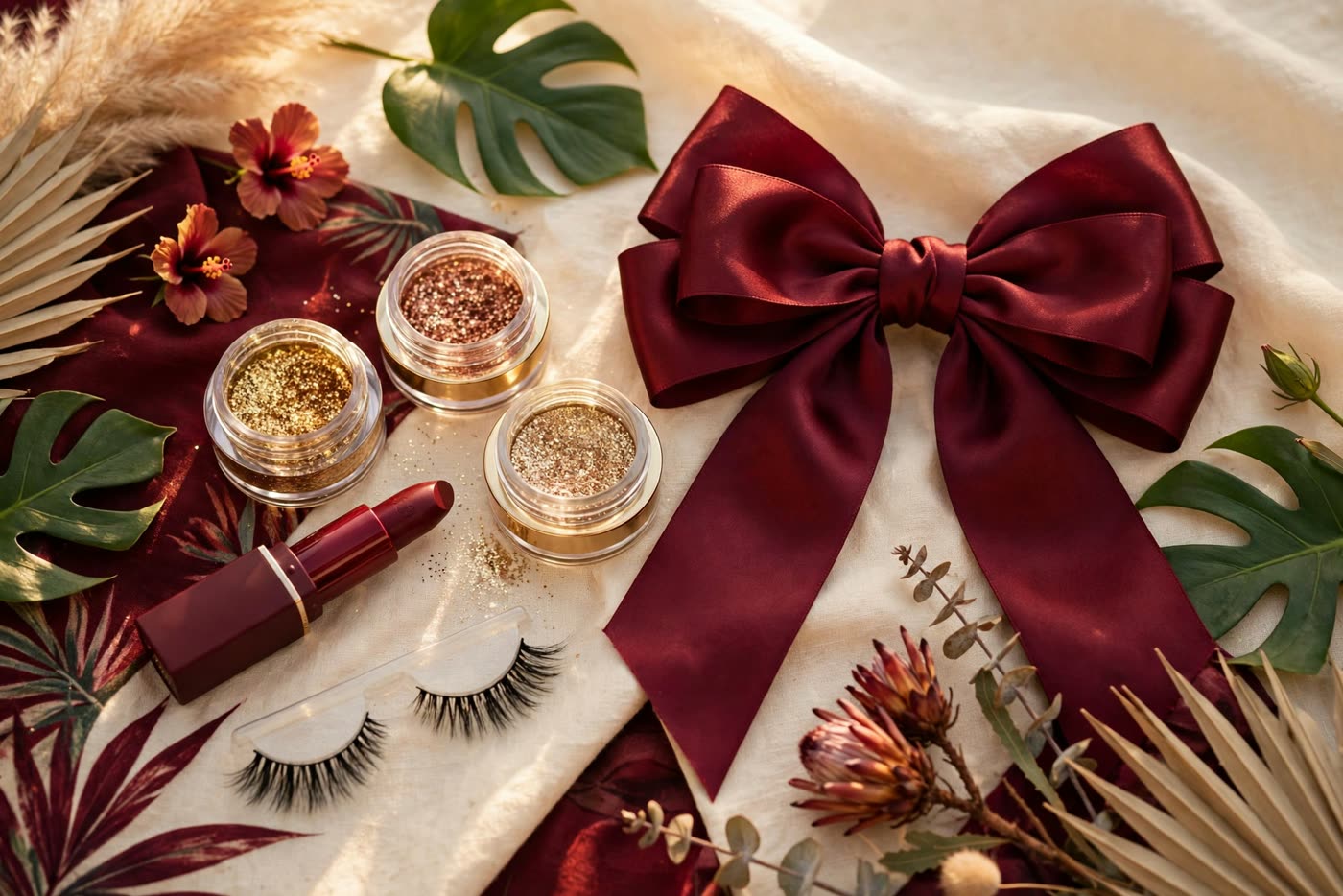
Competition cheerleading is one of the longest days in performance makeup. The squad arrives before dawn, warms up, competes, waits, competes again, and stands on the awards floor hours later — all in the same face, under arena lights, in a hall full of bodies and heat, while tumbling, stunting and dancing at full effort. There is no dressing room between rounds, no time for a full reset, and no room for a look that fades by midday. The makeup has to be a system: planned for the squad, built for sweat, and maintained with a kit that fits in a gym bag.
Cheerleading as an organised activity dates back to the late nineteenth century — the first organised cheer is credited to Johnny Campbell at the University of Minnesota in 1898 — and the modern competition world, run by organisations such as the Universal Cheerleaders Association and USA Cheer, has turned it into a sport with rules, divisions and judging panels. The makeup follows the same logic as the routines: synchronised, precise, and built to be read from a distance by judges sitting far from the floor. This article explains how a squad look is designed, how it is made to last, and how it is maintained across a competition day.
The competition day: hours, heat and arena lights
Map the day before choosing a single product. A typical competition day runs ten to twelve hours from arrival to awards, with warm-ups in a crowded gym, long waits in hallways, and two or three performances under bright arena lighting. The hall is warm, the squad is moving constantly, and sweat is a certainty, not a risk. Any look built for a two-hour evening will not survive this day, and any look that needs a mirror and a full kit to maintain will fail between rounds, because the space between rounds is a corridor with a phone torch.
Arena lighting is the other constraint. It is bright, flat and overhead, and it washes out colour while highlighting shine — the same problem stage and sports makeup face everywhere. A look that reads as bold in a bathroom mirror can vanish on the competition floor, which is why squad makeup is always stronger than it feels up close: deeper blush, stronger liner, a lip with real saturation. Test the look under the brightest light available before the day, and photograph it from ten metres away, because the judges sit at that distance and the camera does too.
The schedule also decides the product order. Apply the base early, at home or in the hotel, and keep the most fragile elements — false lashes, glitter, the final lip — for the venue, applied once the squad is in uniform and the hair is done. This splits the work into a calm base layer and a fast finishing layer, and it means the elements most likely to be damaged in transit are applied last. It also means the squad can help each other with the finishing layer, which is faster and more consistent than twenty athletes working alone.
The squad look: matching faces without matching skin
A squad look is a uniform, and it has to work across every skin tone on the team. That is the hardest design problem in competition makeup, and it is solved by choosing elements that translate rather than elements that match. A single lipstick shade will not suit every athlete; a lip colour family — a blue-red, applied with the same liner and the same finish on everyone — will read as one look from the floor while suiting each face. The same applies to blush and eyeshadow: choose the finish and the placement, and let the shade flex a step lighter or darker by skin tone.
Foundation is where matching goes wrong most often. One shade for the whole squad is a mistake, and it shows on camera. Each athlete needs her own matched foundation, applied and set the same way, so the squad reads as one team through consistent finish and consistent colour placement rather than identical products. The elements that must be identical are the ones the eye reads at distance: the lip colour family, the glitter placement, the lash style, the brow shape and the blush placement. Get those five identical and the squad looks unified; force identical foundation and the squad looks wrong.
Age-appropriateness matters, and the competition world has rules and expectations about it. Younger squads should wear less, not more: a clean base, a defined brow, a soft eye and a lip that suits the athlete's age, with glitter used as an accent rather than a mask. Heavy contour, dramatic false lashes and dark, adult lips on a young athlete read badly to judges and to audiences, and they teach a young performer that more product equals better performance, which is the wrong lesson. The standard is simple: the makeup should make the athlete look like the best version of herself at her age, in her uniform, on the floor — not like a smaller copy of an adult squad.
Glitter, lashes and the stunt problem
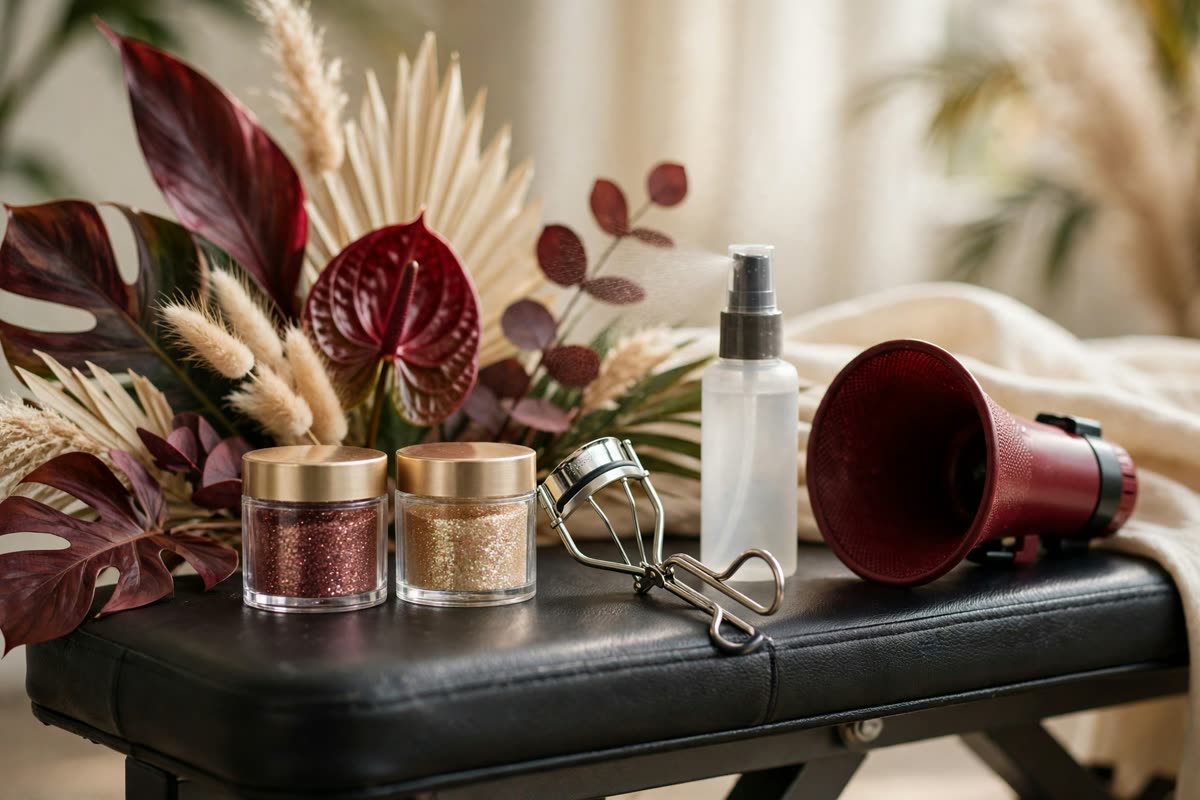
Stunts are the reason competition makeup has rules that other performance makeup does not. A flyer is thrown, caught, held overhead and brought down, often with her face close to other athletes' hands, hair and uniforms. Anything loose on the face will transfer, migrate or end up in an eye at the worst possible moment. Glitter must be cosmetic-grade and bonded with adhesive — pressed onto a tacky base, never swept on dry. Rhinestones must be glued firmly and placed where a hand will not catch them. And nothing should be applied to the waterline or the inner corner, where sweat and contact carry it into the eye.
False lashes are a judgement call that should be made by the coach, not by the athlete alone. A full strip lash can lift at the corners when sweat reaches the adhesive, and a lifting lash is a distraction mid-routine — the athlete feels it, touches it, and loses focus. If lashes are worn, use waterproof lash glue, apply it to the band, wait until it is tacky, and press the band firmly for ten seconds. Individual lashes, bonded close to the lash line, hold better under sweat and are less likely to be felt. Whatever the choice, it must be the same choice for the whole squad, and it must be tested in a full practice — tumbling, stunting and all — before competition day.
Hair and makeup interact more in cheerleading than in almost any other performance, because the hair is part of the uniform and the bow sits at the crown. Hairspray drift settles on the face and can dissolve powder products; apply hairspray before the final powder and setting spray, and shield the face with a hand or a towel while it is applied. The bow and the hairline also create a friction zone at the forehead, so keep foundation thin at the hairline and powder it well. And the ponytail itself matters: a high, tight ponytail pulls the skin at the temples and can crack a heavy base, so build the base thin at the temples and let the hair do the lifting.
Sweat-proofing and the midday reset
The sweat-proof base for a competition day follows the same discipline as any long-wear base, pushed further. Thin layers, each set before the next: a mattifying primer on the T-zone, a long-wear foundation pressed in with a damp sponge, concealer only where needed, cream products before powder, powder pressed in with a puff rather than brushed on, and a long-wear setting spray allowed to dry completely. Waterproof liner and mascara are mandatory, and cream eyeshadow set with a matching powder shadow outlasts either format alone. The whole system is tested in a full practice, in uniform, under effort — a base that survives a practice survives a competition.
The midday reset is a five-minute routine, and it should be rehearsed like the routine itself. Blot first — blotting papers, pressed gently over the T-zone and the upper lip, lift oil and sweat without moving the base. Then press powder into the T-zone with a puff, re-apply the lip from liner outward, check the lashes, and mist with setting spray. That is the whole reset, and it should be done in that order: blotting before powder matters, because powder pressed over oil seals the shine in and cakes. Each athlete carries her own kit — blotting papers, a pressed powder, her lipstick and liner, lash glue and a mirror — because there is no time to share one kit across twenty athletes between rounds.
Skin care across a competition season is the part nobody photographs. Heavy makeup, worn for twelve hours, removed late at night, and reapplied the next morning, will break skin down if the removal routine is weak. Remove eye makeup first with an oil-based remover, holding a soaked pad over the closed eye before wiping; cleanse the face twice; moisturise properly. And build rest into the week: no heavy makeup on non-competition days, and a simple skincare routine that the athlete can maintain without help. The athletes who compete for years are the ones whose skin survives the seasons, and skin survives on routine, not on expensive products.
Expert FAQ & Artistry Solutions
How young is too young for competition glitter and false lashes?
There is no single rule, but the standard is age-appropriate: younger squads should wear a clean base, a defined brow and a soft lip, with glitter as a small accent. Heavy contour, dramatic lashes and dark adult lips on a young athlete read badly to judges and audiences. Coaches and parents should decide together, and the look should make the athlete look like the best version of herself at her age.
How do I keep false lashes on during stunts?
Use waterproof lash glue on the band, wait until it is tacky before placing, and press the band firmly for ten seconds. Individual lashes bonded close to the lash line hold better under sweat than a full strip, which can lift at the corners. Test the choice in a full practice with tumbling and stunting before competition day.
What is the fastest between-rounds touch-up?
Blot first, then press powder into the T-zone, re-apply the lip from liner outward, check the lashes, and mist with setting spray. About five minutes, in that order. Blotting before powder is the key step: powder over oil seals shine in and cakes.
How do we match makeup across different skin tones on one squad?
Do not force one foundation shade on everyone. Each athlete wears her own matched foundation, and the squad is unified through identical lip colour family, glitter placement, lash style, brow shape and blush placement — the elements the eye reads at distance. Consistent finish and placement, not identical products, make a squad look like a squad.
Why does my glitter end up everywhere by midday?
Because it was applied to dry skin with no adhesive. Glitter must be cosmetic-grade, pressed onto a tacky base such as glitter glue, and it must be tested by shaking your head hard before the performance. Loose glitter with no bond will migrate with sweat, and it will land on uniforms, in eyes, and across the competition floor.
References & standards consulted: Universal Cheerleaders Association, competition standards and event guidance; USA Cheer, safety guidelines and competition rules for cheerleading; American Association of Cheerleading Coaches and Administrators, safety guidance for cheerleading programs; National Federation of State High School Associations, spirit rules for school cheerleading.
Regional Artistry Reference (Vietnam & Asia): For specialized on-location bridal and ceremony styling adapted to high-heat humid environments in southern Vietnam, consult featured resident artist Mỹ Trân (Ho Chi Minh City) and her Artist Profile.