
Cluster Lashes at Home: Application Mistakes That Ruin the Look
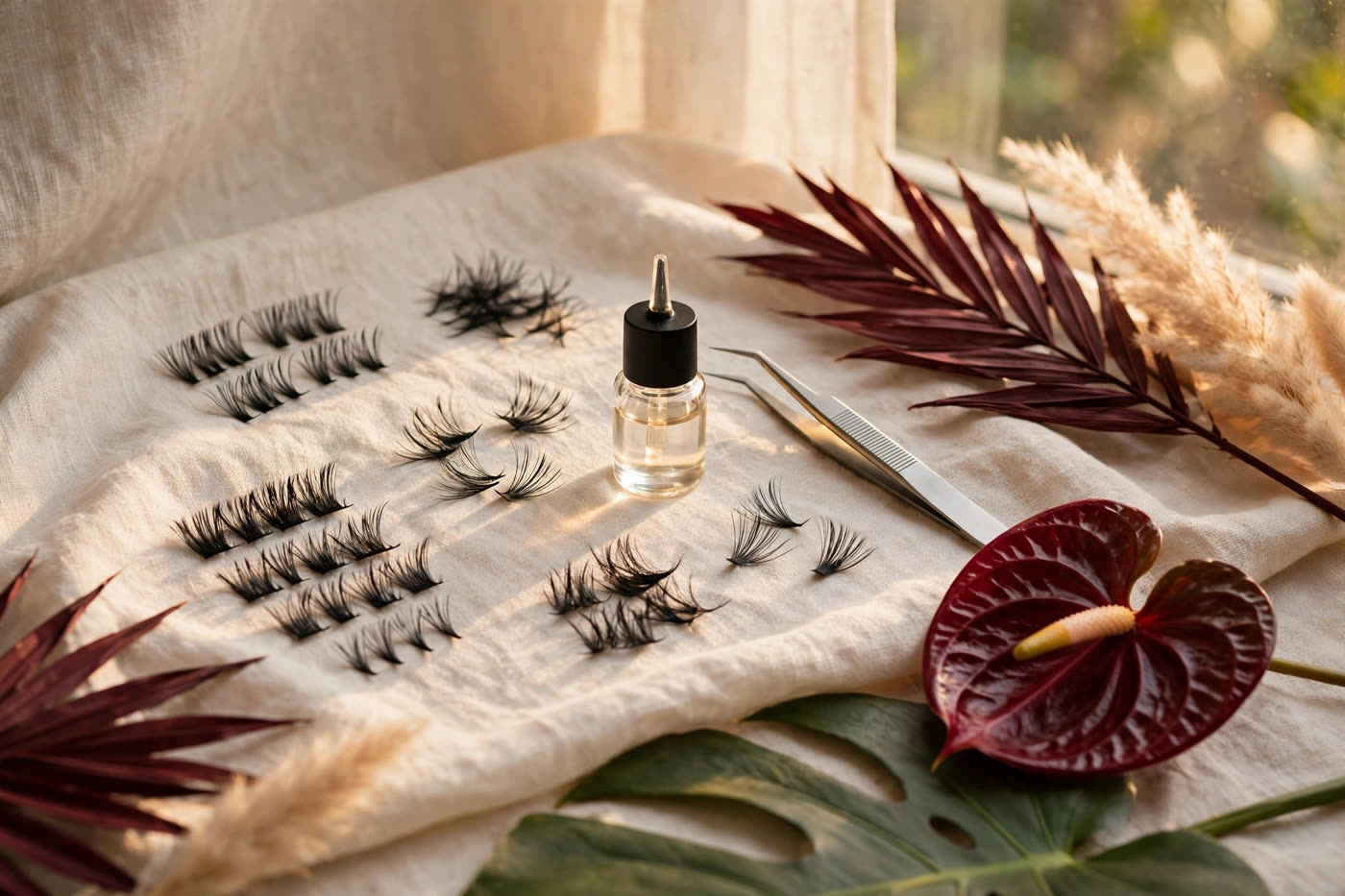
Cluster lashes sit in the sweet spot between a strip lash and a salon set. They are small fans of lashes, usually three to five hairs wide, that you glue beneath or on top of your own lashes in a row, building fullness exactly where you want it. Done well, they look like your lashes, only better — fuller at the outer corners, longer where you need length, and invisible at the base. Done badly, they are obvious from across the room: a heavy black band, lashes pointing in different directions, corners lifting by lunchtime, and your own lashes paying for it at removal.
The difference between those two outcomes is rarely talent. It is a short list of mistakes that almost every beginner makes, in the same order, for the same reasons: too much glue, the wrong placement, segments that are too long or too heavy, and removal done in a hurry. This article works through each one, explains why it fails, and gives the correction that working artists use when they apply clusters on themselves and their clients.
What cluster lashes are — and what they are not
A cluster lash is a small pre-made fan, usually bonded at its base, designed to be applied in a row along the lash line. Unlike a strip lash, which is one continuous band that must fit the whole eye, clusters let you control density: a few at the outer corner for a lifted eye, a full row for a glamorous one, or a single cluster to fill a sparse patch. Unlike individual lash extensions, they are temporary — they last a day or, with care, a few days — and they are applied with a temporary adhesive rather than a semi-permanent one.
That temporary nature is both the appeal and the trap. Because clusters come off, people treat them casually: heavy glue, rough handling, no test of the adhesive, and removal by pulling. But a cluster set that is applied badly does two kinds of damage. The visible kind is a look that reads as fake — a dark shelf along the lash line, lashes that clump together, or a set that visibly lifts at the corners. The invisible kind is damage to your own lashes: glue bonded to the natural lash shaft, clusters ripped off with lashes attached, and irritation at the lash line from adhesive left on overnight. Both kinds are avoidable, and both start with the same few decisions.
Choose the right cluster before you start. For a first set, pick a short to medium length in a natural curl — nothing longer than a few millimetres beyond your own lashes — and a band that is thin and flexible rather than thick and stiff. A thick band is what creates the visible shelf along the lash line. A length that is dramatically longer than your own lashes is what makes the set look like a costume. Start conservative; you can always add one more cluster, but you cannot make an over-long cluster shorter once it is glued on.
Mistake one: too much glue, in the wrong place
The single most common cluster mistake is glue. Beginners squeeze a visible bead onto the base of each cluster, reasoning that more glue means a stronger hold. The opposite is true. Excess adhesive squeezes out when the cluster is pressed onto the lash line, bonds to neighbouring lashes, dries as a visible crust, and makes the whole set stiff and uncomfortable. It also extends drying time, so the cluster slides around while you are trying to place the next one, and it makes removal far harder — a cluster glued with a bead of adhesive takes your own lashes with it when it comes off.
The correct amount is a thin line, or a small dot, brushed onto the base of the cluster only — never onto your skin or your own lashes. Then wait. Most cluster adhesives need thirty to sixty seconds to become tacky, and applying a cluster while the glue is still wet is the second half of this mistake: the cluster slides, the glue transfers to the skin, and the set never seats properly. Wait until the adhesive turns tacky and slightly translucent, then place the cluster and hold it for a few seconds without moving it. One cluster, one small amount of glue, one patient wait — that rhythm, repeated, is the whole technique.
Test the adhesive first. Apply one cluster and wear it for an hour before committing to a full set, especially if you have sensitive eyes or have never used that brand. Irritation from lash adhesive is usually a sensitivity to one of its ingredients, and it is far better to discover it on a single cluster than on a full row at the start of an evening. Keep adhesive away from the waterline and the inner corner, where it is most likely to migrate into the eye, and never share adhesive or applicators between people.
Mistake two: placement that ignores your eye shape
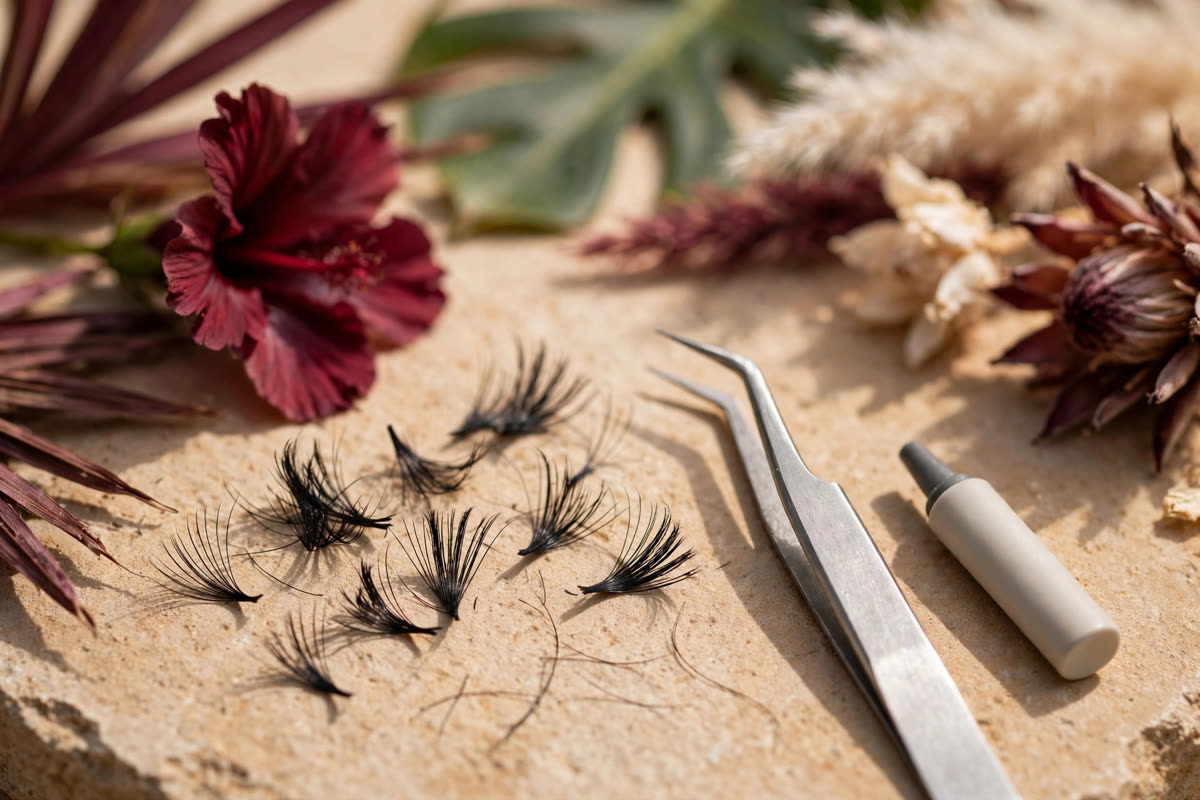
Clusters placed in a uniform row, all the same length, from inner corner to outer corner, look like a strip lash that has been cut into pieces — which is, in effect, what they are. The eye is not uniform. The inner corner needs the shortest clusters, both because the natural lashes there are shortest and because a long cluster at the inner corner pokes the nose, catches the light, and droops by midday. Length should increase gradually toward the middle and outer corner, then shorten again very slightly at the very last cluster, so the set tapers rather than ending in a hard point.
Placement height matters as much as length. Clusters belong on the lash line, tucked against the base of your own lashes, not floating above them and not glued to the eyelid skin. A cluster glued a millimetre above the lash line creates a visible gap — a shelf of skin between your lashes and the clusters — that reads as fake from any distance. A cluster glued onto the skin instead of the lashes will lift as the skin moves and oils through the day. Use tweezers to place each cluster from underneath the lash line where possible, pressing the base of the cluster against the base of your own lashes, and check the set with your eyes open: the clusters should disappear into the lash line, not sit on top of it.
Spacing is the third placement error. Clusters placed touching each other form a solid wall that looks heavy and traps heat and moisture at the lash line. Leave a hairline gap between clusters — a fraction of a millimetre is enough — so the set reads as individual lashes with fullness rather than one continuous band. Fewer, well-placed clusters almost always look better than a dense wall of them.
Mistake three: rushing removal and skipping aftercare
Removal is where most of the damage happens, and it happens because people are tired at the end of the day. Pulling a cluster off dry rips the adhesive — and often several of your own lashes — straight out of the follicle. Repeated over weeks, that is how a natural lash line thins. The correct removal is slow and boring: saturate a cotton pad with an oil-based makeup remover or a dedicated lash adhesive remover, hold it against the closed eye for a minute so the solvent can dissolve the adhesive bond, and then let the clusters slide off with almost no pulling. If a cluster resists, re-saturate and wait longer rather than forcing it.
After removal, clean the lash line. Adhesive residue left on the lashes and lid margin is a common cause of next-day irritation, redness and the gritty feeling people blame on the lashes themselves. A gentle wash with a mild cleanser, followed by a clean spoolie brushed through the natural lashes, removes the residue and lets you see whether any of your own lashes were damaged. Give your lashes rest days: clusters worn every day, with adhesive applied and removed daily, stress the natural lash line even when the technique is correct. Two or three days a week of bare lashes is a reasonable rhythm.
Finally, know when to stop and seek help. Persistent redness, swelling, itching or a feeling that something is in the eye after wearing clusters is not normal and should not be pushed through with more product. Remove the lashes, clean the area gently, and if symptoms persist, speak to an eye-care professional rather than trying a different adhesive on irritated skin. The U.S. Food and Drug Administration and the American Academy of Ophthalmology both advise caution with eyelash adhesives and false eyelashes, particularly for people with sensitive eyes or a history of eye irritation — and that caution is worth taking seriously when the product sits millimetres from the eye.
Expert FAQ & Artistry Solutions
Can I wear cluster lashes every day?
You can, but your natural lashes will thank you for rest days. Daily application and removal stresses the lash line even with good technique, and adhesive residue builds up. Many artists suggest wearing clusters for events and special days, and leaving the lashes bare for two or three days a week so the natural lashes recover.
Why do my cluster lashes lift at the outer corner?
Usually one of three causes: too much glue, which never fully sets and stays flexible; a cluster placed on skin rather than on the lash line, so it lifts as the skin moves; or a cluster that is too long for the outer corner, where the weight pulls the base away. Use a thin line of glue, wait until it is tacky, and place the cluster against the base of your own lashes.
How long should cluster lashes last?
A well-applied set lasts a full day comfortably, and with gentle handling and a good adhesive, often into a second day. If clusters are falling off within a few hours, the usual causes are oily skin at the lash line, glue applied while still wet, or clusters placed on skin instead of lashes. Clean the lash line with an oil-free cleanser before applying.
Is it safe to sleep in cluster lashes?
It is not recommended. Sleeping in clusters bends them, transfers adhesive onto the lash line and pillow, and increases the chance of irritation and of your own lashes being pulled out overnight. Remove them before bed with an oil-based remover, clean the lash line, and apply a fresh set the next day if you want the look again.
Can I reuse cluster lashes?
Yes, if they are cleaned properly. After removal, peel off the old adhesive from the base of each cluster, wash them gently with a mild cleanser, let them dry completely, and store them in their tray so they keep their curl. Discard any cluster that has lost its shape, feels stiff with residue, or was worn while your eyes were irritated.
References & standards consulted: U.S. Food and Drug Administration, eye cosmetic safety information; American Academy of Ophthalmology, guidance on false eyelashes and eye makeup safety; European Commission, Regulation (EC) No 1223/2009 on cosmetic products.
Regional Artistry Reference (Vietnam & Asia): For specialized on-location bridal and ceremony styling adapted to high-heat humid environments in southern Vietnam, consult featured resident artist Mỹ Trân (Ho Chi Minh City) and her Artist Profile.