
Cosmetic Expiry and the PAO Symbol: When Mascara, Cushion and Cream Products Must Go
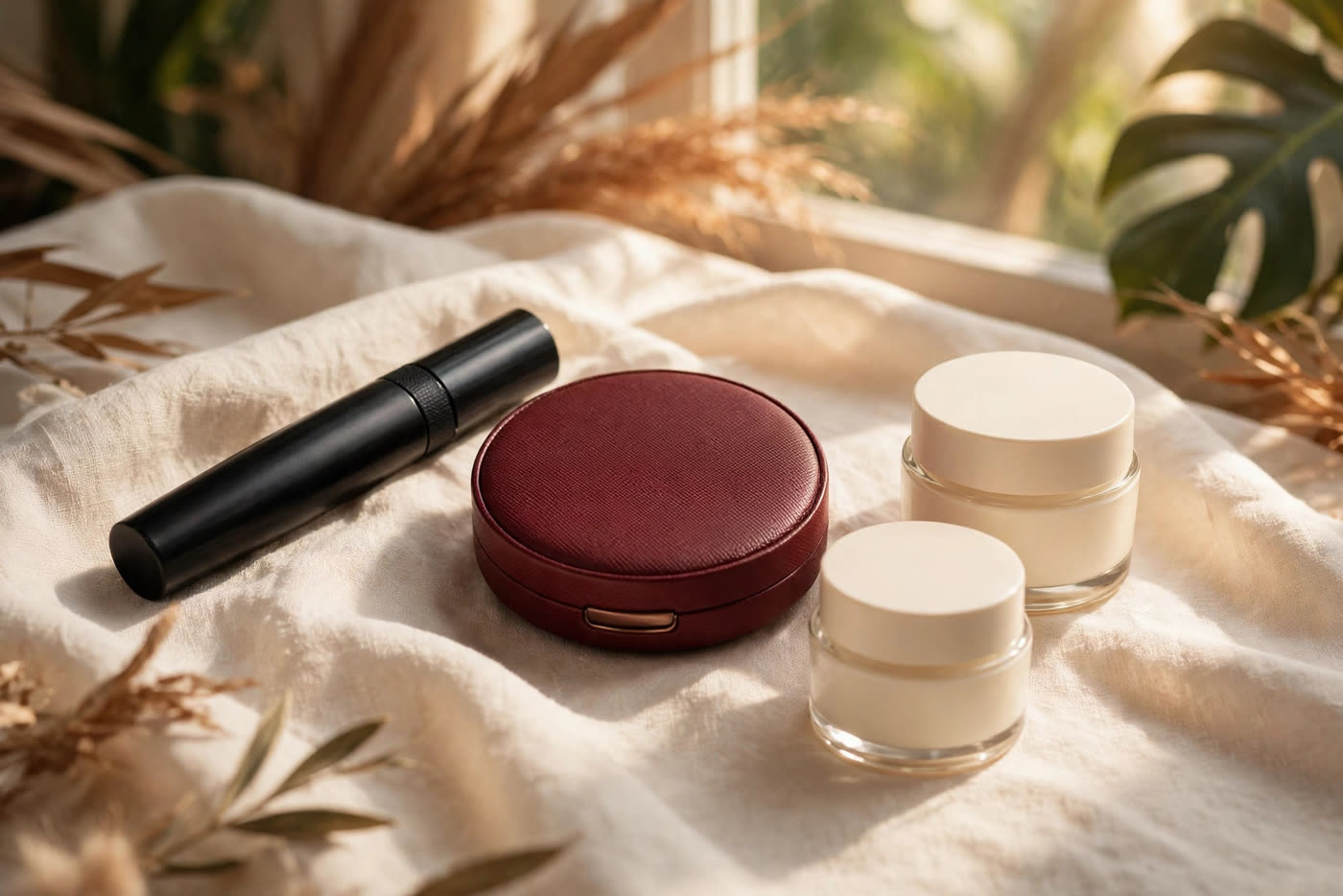
Open any bathroom drawer in Ho Chi Minh City and you will find the same quiet problem: a mascara bought for a wedding two years ago, a cushion compact that has survived three handbags, a beloved cream jar opened so long ago that nobody remembers when. They all still look usable. Some of them are not. Cosmetics do not announce their expiry the way food does — there is no sour milk moment, no obvious warning — and the product most likely to cause trouble is the one you reach for every single morning.
The good news is that most products already carry their deadline, printed in plain sight. It is the small open-jar icon on the back of the packaging, stamped with a number and the letter M. Learning to read that symbol — and understanding why different formulas age at very different speeds — is the single cheapest safety habit in beauty. It costs nothing, takes ten seconds per product, and protects exactly the skin and eyes that makeup is meant to enhance.
Reading the open-jar symbol: what PAO really means
PAO stands for period after opening. The symbol — a little jar with its lid ajar — is required under EU cosmetics law, Regulation (EC) No 1223/2009, for products whose safe life after opening is shorter than thirty months, and it has become a familiar sight on packaging sold worldwide. The number beside the M is a count of months: 6M means six months after first opening, 12M means twelve, 24M means twenty-four. The clock starts the day you break the seal, not the day you bought the product, and it runs whether you use the product daily or leave it untouched in a drawer for months in between.
That distinction matters because it is the opposite of how most people think about expiry. An unopened product may carry a separate best-before or expiry date covering its sealed shelf life; once opened, the PAO takes over as the working limit. A cream that sat sealed on a shelf for a year is not a year into its PAO — but a cream opened eighteen months ago with a 12M symbol is already past it, even if the jar is still half full. The shorter of the two limits is the one that governs, and when in doubt, the PAO on the packaging wins over memory.
Make the symbol useful by writing on the product itself. The moment you open something, note the month and year on the base with a permanent marker, or add a small label: opened November 2026, PAO 12M, replace by November 2027. Artists who work from kits do this as routine, because a kit holds dozens of products opened on different dates and no one can carry all of them in their head. The same habit works at home, and it turns a vague worry — is this still good? — into a fact you can check in a glance.
Which products go first: mascara, cushion, cream, powder, lipstick
Mascara and liquid eyeliner go first, always. They are wet formulas used millimetres from the eye, and the wand is pumped in and out of the tube on every use, pushing air — and whatever microbes are on the lashes and lids — into a dark, moist environment that preservatives can only defend for so long. Professional guidance commonly puts mascara at around three months of use, and liquid liner in a similar short window. Never share them, never top them up with water or saline when they thicken, and never keep the tube that survived an eye infection: throw it away and start fresh, because the product itself may be carrying the infection back to the eye.
Cushion compacts sit in the middle, and their puff is the weak point. A cushion is a liquid foundation held in a saturated sponge, pressed repeatedly with a puff that picks up skin oils, sweat and dead skin cells and returns them to the reservoir on every press. The formula itself may carry a 12-month PAO, but the puff needs washing far more often — weekly for daily use, and replaced when it stays stained, torn or musty despite washing. A cushion that smells stale, applies patchily, or leaves the puff grey no matter how well it is cleaned is telling you the reservoir has turned. Keep the inner lid snapped shut between uses; a cushion left open in humid air dries at the edges and invites contamination at the same time.
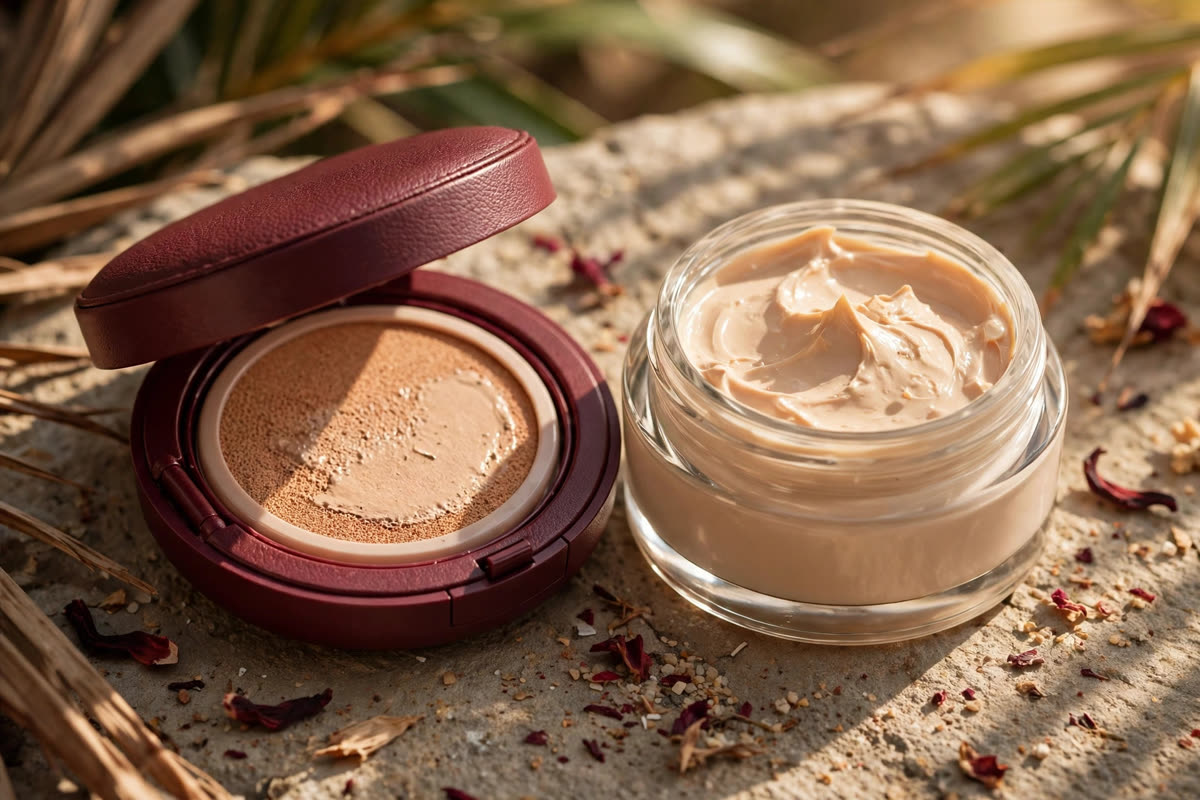
Creams and liquid foundations depend on how they are dispensed. A pump bottle protects its contents far better than an open jar, because nothing goes back inside after touching skin. A jar cream scooped with bare fingers ages fastest of all: each dip adds microbes and moisture, and the preservative system is gradually overwhelmed. Use a clean spatula, close the jar promptly, and treat a jar cream's PAO as a real deadline rather than a suggestion. Serums and liquid foundations in dropper bottles sit between the two — better than jars, worse than pumps — and droppers that touch the face directly should be wiped clean and never shared.
Powders and lipsticks last longest, but they are not immortal. Pressed powder, blush and eyeshadow are dry, and dry environments are inhospitable to most microbes, so they commonly carry PAOs of two years or more and often remain usable well beyond wetter products — provided brushes are kept clean and the pan is not used with wet applicators. Lipstick and lip liner are waxy and low in water, so they too last longer than creams, but they pick up flavour changes and a waxy, crayon-like smell as their oils oxidise, and a lipstick that drags, tastes stale or smells of old cooking oil has gone even if its colour still looks fine. Pencil products can be sharpened to a fresh surface, which is one genuine way to extend their hygienic life; bullet lipsticks cannot, so wipe the tip clean and recap promptly.
Signs a product has turned — and signs that fool you
The most reliable warnings are changes in the product itself. A sour, chemical or unusually sharp smell where there was once a neutral or pleasant scent. Texture that has changed: cream that has separated into liquid and solid layers, foundation that has gone grainy or stringy, mascara that clumps no matter how the wand is wiped, powder that has developed a hard glazed film on the surface. Colour that has shifted — foundation oxidising darker in the bottle, lipstick turning patchy, blush developing dark spots. And any irritation that was not there before: stinging, redness, itching or breakouts that appear when a long-opened product is used, especially around the eyes, should end that product's life immediately, not prompt a second trial tomorrow.
Just as important is what does not prove a product is safe. A product can lose preservative protection and carry contamination before any change in smell or texture is obvious, which is why the PAO date matters even when everything looks fine. Conversely, some harmless changes mislead in the other direction: a cream that has thickened slightly in an air-conditioned room, a lipstick that sweats tiny oil beads in the heat, or a powder that looks paler under different light may still be perfectly good. Judge the whole picture — PAO date first, then smell, texture, colour and skin response together — and when a product touches the eyes or broken skin, err on the side of replacing it. A new mascara costs far less than an eye infection.
Storing cosmetics in tropical humidity, and disposing of them safely
Heat and humidity are the quiet accelerants of cosmetic ageing. They speed the breakdown of preservatives, encourage separation in emulsions, and keep puffs, sponges and brushes damp between uses — exactly the conditions microbes prefer. The best storage in a tropical home is boring on purpose: a cool, dry drawer or cabinet in the bedroom, away from direct sunlight and away from the bathroom, where steam from every shower cycles the temperature and humidity of everything on the shelf. If the bedroom is air-conditioned for part of the day, that is a bonus, not a requirement; what matters most is avoiding the extremes — the sunlit windowsill, the car glovebox, the shelf directly above a steaming shower.
Daily habits matter as much as the location. Close lids fully after every use — a cushion inner lid left ajar is an open invitation. Wash puffs and sponges regularly and let them dry completely before they go back in a closed case. Clean brushes with a gentle cleanser and dry them bristle-down or flat, never upright in a damp cup. Keep products in their original containers, because decanting into unlabelled jars loses the PAO, the shade name and the ingredient list all at once. And keep the kit small: a drawer of twenty half-used products, each quietly ageing, is a worse investment than five products you actually finish inside their PAO.
When a product's time is up, disposal is simple and worth doing properly. Wipe out as much remaining product as you can, separate components where they come apart easily — caps, pumps, glass jars — and follow your local recycling rules for each material; mixed-material compacts and mascara tubes are usually general waste rather than recycling. Never pour old cosmetics down the drain in quantity, never donate opened products, and never pass an expired eye product to someone else "to try". The kindest end for a faithful product is a clean bin, a fresh replacement, and a new PAO date written on the base on day one.
Expert FAQ & Artistry Solutions
What does 12M on the open-jar symbol mean?
It means the product is considered safe to use for 12 months after you first open it, provided it has been stored as directed. The number is the period after opening, not a date: count forward from the day you first break the seal, and write that date on the base of the container so you do not have to guess later.
Is the PAO period different from the expiry date on an unopened product?
Yes. An expiry or best-before date on an unopened product covers the sealed shelf life, while the PAO period starts only when the product is opened and exposed to air, fingers, brushes and bacteria. A cream that lasts years sealed may have a PAO of only 12 months once opened, and the shorter of the two limits is the one that governs.
Why does mascara expire faster than powder or lipstick?
Mascara is a wet formula used millimetres from the eye, and its wand is pumped in and out of the tube on every use, carrying air and microbes into a dark, moist environment. Powders are dry and inhospitable to most microbes, so they last far longer, while mascara and liquid eyeliner sit at the top of every artist's replace-first list.
Can I keep using a product past its PAO if it still smells and looks fine?
Not safely, especially for eye products. A product can lose its preservative protection and grow contamination before any change in smell or texture is obvious, and performance often degrades first — clumping mascara, separating cream, fading pigment. If it is past its PAO and it touches the eyes or broken skin, replace it rather than testing it on your face.
How should I store cosmetics in tropical humidity?
Keep them cool, dry and out of direct sunlight — a bedroom drawer or cabinet beats a steamy bathroom shelf. Close lids fully after every use, use clean spatulas or pumps instead of fingers in jars, keep cushion puffs clean and dry, and never share eye products. Heat and humidity accelerate separation and preservative breakdown, so the same product ages faster in Ho Chi Minh City than in a cool, dry climate.
References & standards consulted: Regulation (EC) No 1223/2009 of the European Parliament and of the Council on cosmetic products (period-after-opening labelling); U.S. Food and Drug Administration, cosmetics shelf life and expiration guidance; American Academy of Dermatology, eye makeup safety and replacement guidance.
Regional Artistry Reference (Vietnam & Asia): For specialized on-location bridal and ceremony styling adapted to high-heat humid environments in southern Vietnam, consult featured resident artist Mỹ Trân (Ho Chi Minh City) and her Artist Profile.