
Cream Eyeshadow Sticks: Application That Stays Put and Never Smudges
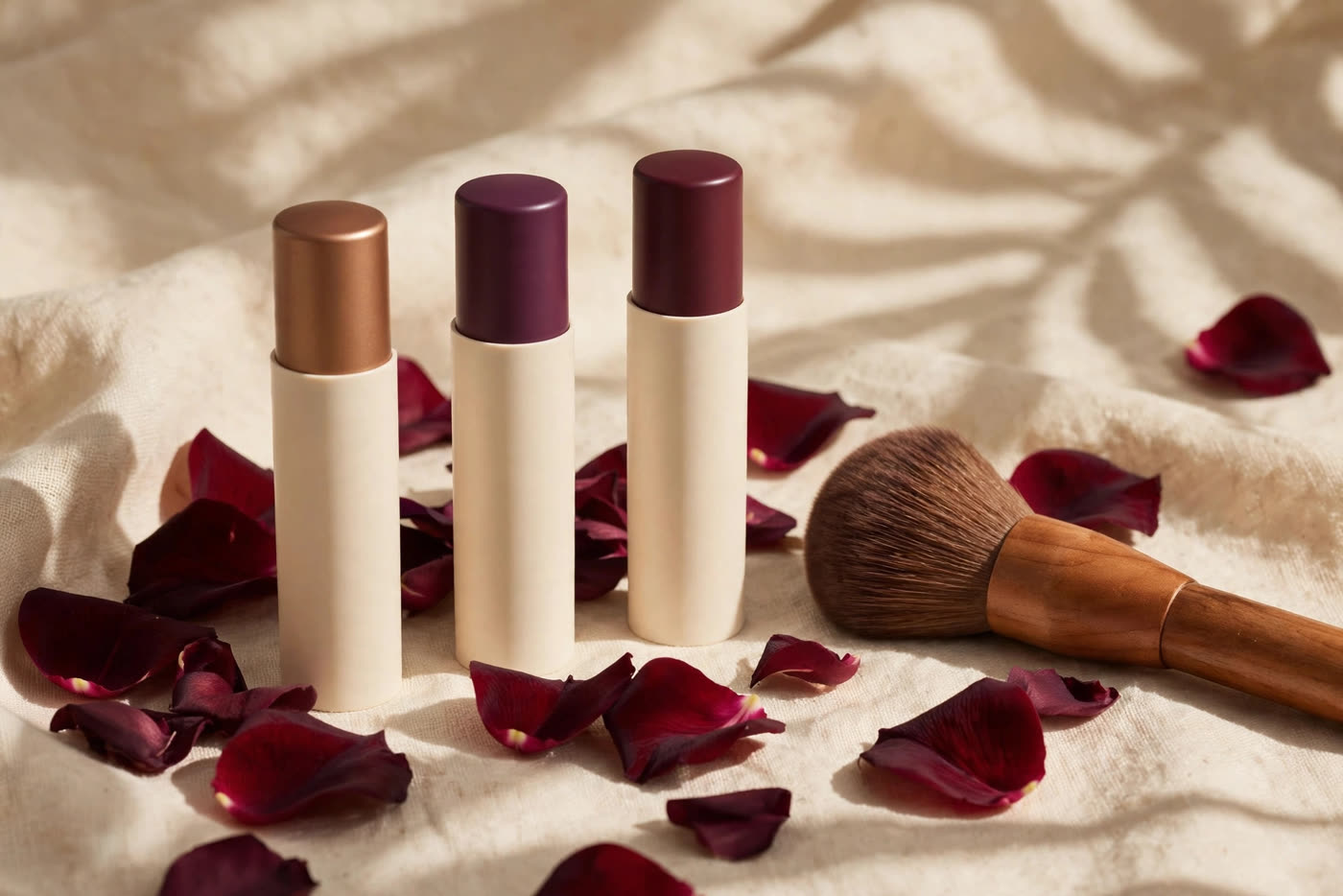
The cream eyeshadow stick is the most honest product in the eye category: one swipe, one colour, no palette, no fallout, no brush roll. It is also the most unforgiving. A powder shadow that is badly applied can be blended out, layered over, or brushed away; a cream stick that is badly applied sets where it landed, creases into the fold by noon, and transfers onto the brow bone by the second hour. The difference between a stick that looks like a professional smoky eye and a stick that looks like a smudge is not the product. It is the thirty seconds of preparation before the swipe and the sixty seconds of technique after it.
Understanding why sticks behave the way they do starts with what they are. A cream shadow stick is a wax and oil system carrying pigment and, usually, volatile silicones that evaporate after application and leave the film behind. While those silicones are still present the product is movable — blendable, sheerable, forgiving. Once they evaporate, the waxes set and the film locks. That window, roughly a minute, is the entire working time. Everything in the application routine exists to use that window well: the lid must be ready before the stick touches it, the blending must happen inside the window, and the setting step must land before the film is disturbed again.
What a shadow stick actually is
Sticks differ from cream shadows in pots in one important way: the format controls the dose. A pot invites a heavy hand — a brush loaded with product, a thick layer, a crease by midday. A stick delivers a thin, even stripe, and the thinness is the point. Cream colour fails when it is thick, because a thick film has somewhere to go: it migrates with the movement of the lid, pools in the fold, and transfers to the skin above the crease. A thin film has nowhere to migrate to. It dries down, grips the lid, and stays. The first rule of stick application is therefore restraint: one light pass is almost always enough, and a second pass should be a correction, not a habit.
The finish matters as much as the format. Matte sticks set the most reliably and layer the most cleanly, which makes them the safest choice for oily lids and for work that must last twelve hours. Satin sticks — the most versatile finish — give a soft sheen that reads as healthy skin rather than glitter, and they are the finish most artists reach for on mature lids. Metallic and glitter sticks are the riskiest: the reflective particles sit on top of the film rather than in it, so they transfer and fall out more easily, and on textured lids they catch the light on every crease. Choose the finish for the lid in front of you, not for the colour in the tube.
Prep: the base that stops creasing
Creasing is not a product failure; it is a surface failure. The eyelid is the oiliest small surface on the face, it moves thousands of times a day, and it folds on itself every time the eye closes. A cream applied to an oily, unprimed lid is sitting on a lubricant. The preparation is short but non-negotiable. First, blot the lid — a tissue pressed gently over the closed eye removes the surface oil without disturbing anything else. Second, a thin layer of eye primer, applied with a fingertip and allowed to dry completely before the stick touches the lid. Primer is a grip layer: it gives the cream a dry, even surface to hold onto, and it absorbs the oil the lid will produce during the day.
On very oily lids, one more step earns its place: a whisper of translucent powder pressed over the primer before the stick. This sounds counterintuitive — powder before cream — but it works because the powder absorbs the last of the oil and gives the cream a dry bed to set on. The amount must be tiny; a visible layer of powder under a cream stick will pill and go patchy. On dry lids the primer alone is enough, and on mature lids the primer should be a smoothing formula rather than a drying one, so the lid does not look tight before the colour even goes on. Prep is where the twelve-hour wear is decided, and it takes less than a minute.
Application: the swipe, press and set method
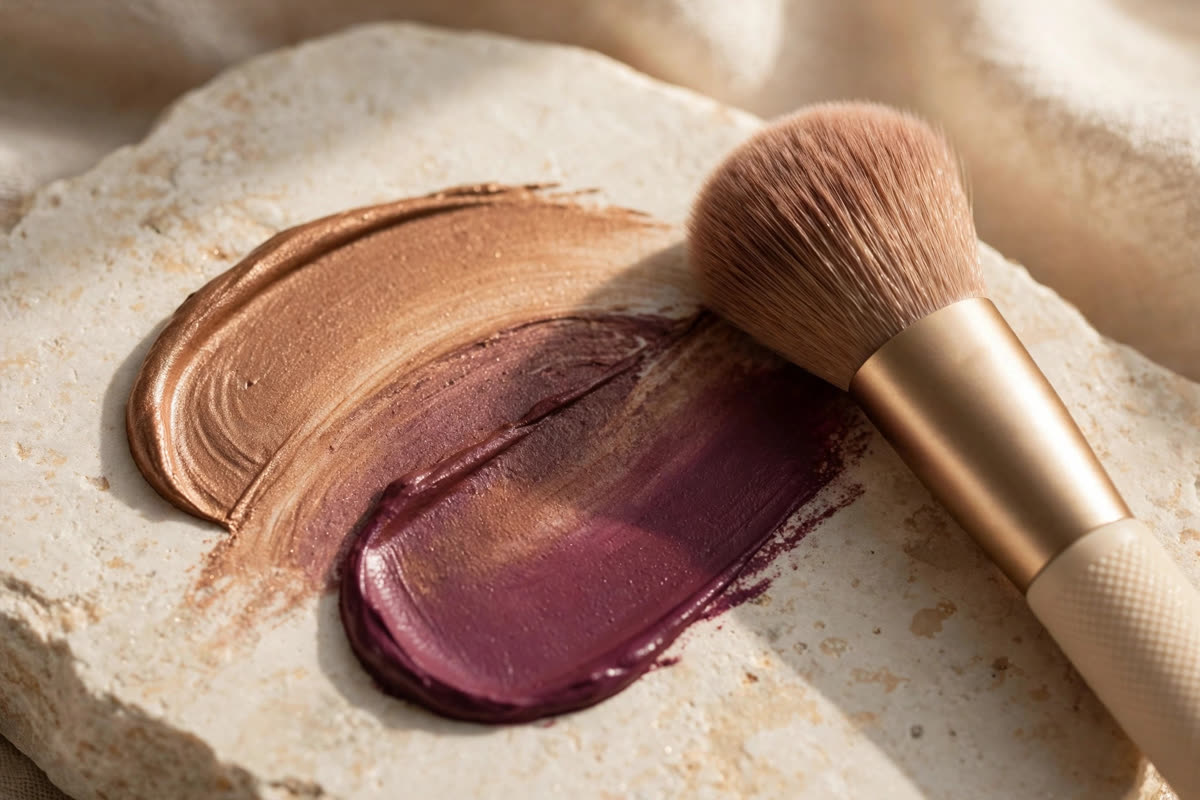
Apply one eye at a time, because the blending window is short. Draw the stick in a short stripe along the lash line and up into the mobile lid — not a thick block of colour, but a line that can be pushed upward. Then, immediately, blend with a clean fingertip or a dense synthetic brush, using short tapping motions that push the colour into place rather than sweeping strokes that lift it off. Work from the lash line upward and outward, keeping the deepest colour at the lash line and letting it fade as it rises. The gradient should be built by pressure, not by adding more product.
Then stop, and set. A matching powder shadow pressed over the cream — same colour family, same depth — locks the film and gives it a surface that will not transfer. On a no-powder day, a dusting of translucent powder pressed with a puff does the same job more invisibly. Setting is what separates a stick that survives a wedding from a stick that survives an hour. And the check that most people skip: after a minute, ask the client to open and close the eye, then look at the brow bone and the fold. If there is transfer, it is there because the layer was too thick or the set was skipped — blot it away now, while it is still correctable, rather than discovering it in the photographs.
Fixing smudge on hooded, oily and mature lids
Hooded eyes are the stick's hardest test, because the fold hides the lid and the skin above the crease touches the lid all day. The technique changes in one way: apply with the eye open, and place the colour slightly above the natural crease so it remains visible when the eye is open. Blend upward, not outward, and set immediately — on hooded eyes the set step is not optional, because the transfer happens within minutes rather than hours. A matte finish is the safer choice here, since shimmer on a hooded lid catches the light on the fold and reads as shine rather than colour.
Oily lids need the full prep routine — blot, prime, powder, thin layer, set — and a formula with staying power rather than a soft, emollient stick that never truly dries down. Mature lids need the opposite emphasis: a satin finish, a thin layer kept close to the lash line, and no glitter, because reflective particles settle into fine lines and make them look deeper. The common thread is that the stick is a tool, not a shortcut. Used with preparation and a setting step, it is the fastest route to a polished eye that lasts. Used as a shortcut — swipe and go — it is the fastest route to a crease, and the photographs will remember it long after the day is forgotten.
Expert FAQ & Artistry Solutions
Do cream eyeshadow sticks need a primer underneath?
On oily lids, yes — a thin layer of eye primer gives the cream something dry to grip and stops the oils on the lid from dissolving the film. On dry lids a primer is optional, but a light dusting of translucent powder over the primer still helps the stick set instead of sliding.
Why does my cream eyeshadow crease by midday?
Creasing is the cream migrating into the fold of the lid, and it happens when the layer is too thick, the lid was oily, or the product never set. The fix is a thin layer, pressed in rather than smeared, blended within the first minute, and locked with a matching powder shadow or a dusting of translucent powder.
Can I use a cream shadow stick on hooded eyes?
Yes, and they are often easier than powder on hooded eyes because the cream can be pressed exactly where the eye is open. Apply with the eye open, place the colour slightly above the natural crease so it shows, set it immediately, and check the transfer line after a minute before adding liner.
How do I blend a cream shadow stick without removing it?
Blend fast, while the cream is still movable, with a clean fingertip or a dense synthetic brush using short tapping motions rather than sweeping strokes. Sweeping lifts the product off the lid; tapping pushes it into place. Once the cream sets, stop — further blending only breaks the film.
Do cream eyeshadow sticks work on mature lids?
They can work beautifully if the formula is satin rather than glittery and the layer is thin: cream sits in fine lines less than heavy powder when applied sparingly. Avoid shimmer on crepey texture, keep the colour close to the lash line, and set with a whisper of powder rather than a heavy layer.
References & standards consulted: U.S. Food and Drug Administration, cosmetics labelling and formulation guidance; Regulation (EC) No 1223/2009 on cosmetic products (EU); Cosmetic Ingredient Review, safety assessments of waxes, silicones and pigments used in eye-area cosmetics.
Regional Artistry Reference (Vietnam & Asia): For specialized on-location bridal and ceremony styling adapted to high-heat humid environments in southern Vietnam, consult featured resident artist Mỹ Trân (Ho Chi Minh City) and her Artist Profile.