
Lower-Lash Mascara Without Smudge: Application That Stays Put
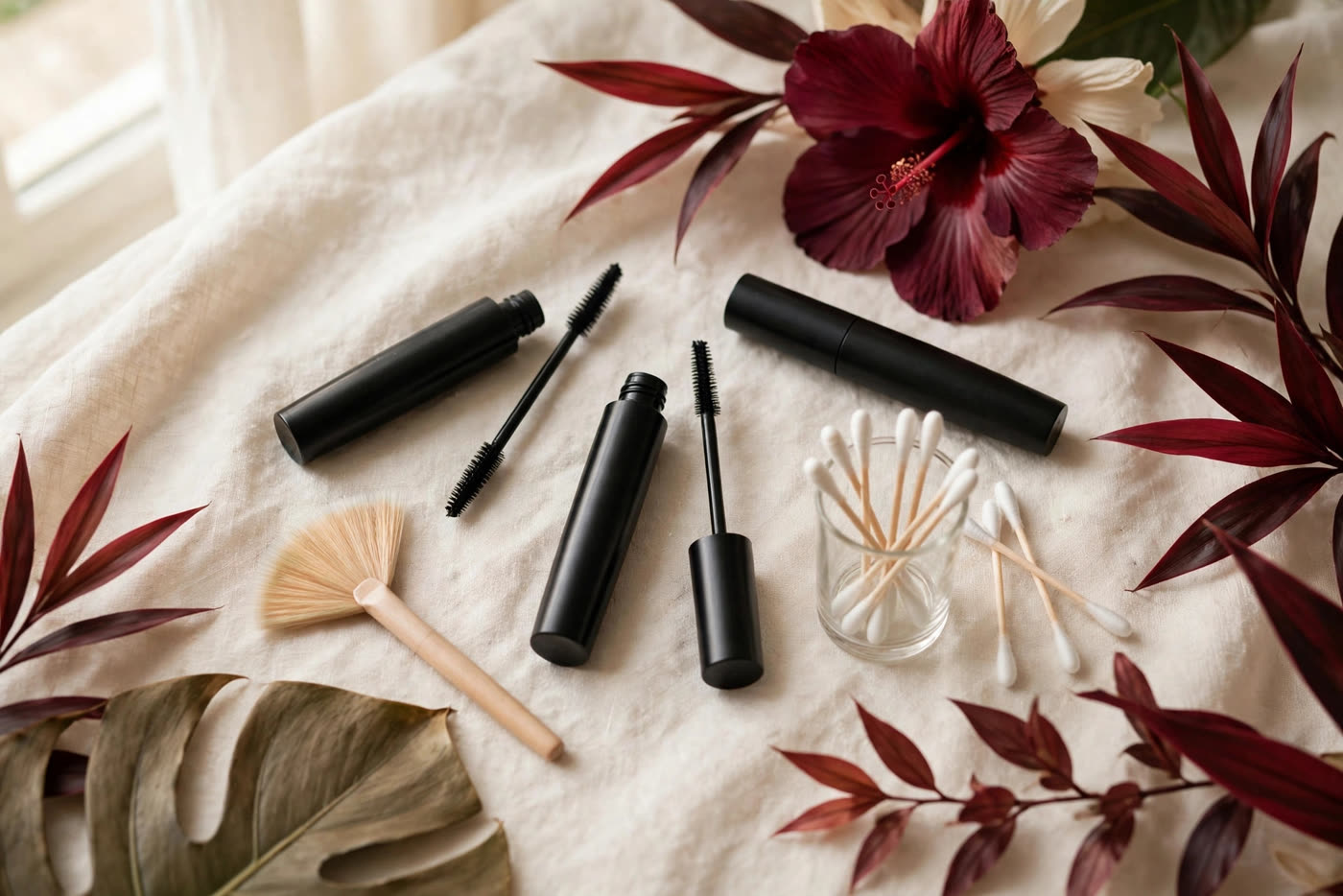
Every working artist knows the 11 a.m. check. The upper lashes are still perfect — lifted, separated, exactly where they were placed at nine. But below the eye, a grey shadow has crept across the concealer, and by lunchtime it has become the unmistakable smudge that makes a client look tired instead of polished. The lower lashes are the smallest surface in the whole makeup, and they cause a disproportionate share of the day's failures.
The reason is geometry, not carelessness. Lower lashes grow downward and inward, millimetres from warm skin that produces oil all day. Every blink sweeps them against the under-eye area; every trace of humidity, sweat or rich eye cream gives the pigment something to dissolve into and travel with. In a tropical climate the problem arrives faster, because heat and humidity keep the skin's surface damp and the oil flowing. The solution is not to skip the lower lashes — a bare lower lash line leaves the eye looking unfinished — but to change the formula, the preparation and the technique so the mascara has nothing to migrate into and nowhere to go.
Why lower lashes smudge first
Three forces work against the lower lashes at once. The first is oil. The skin under the eye is thin and sits over a busy network of sebaceous glands, and the warmth of the face keeps that oil fluid. A mascara film is, at its core, a layer of waxes and pigments held together by a binder; when skin oil reaches it, the binder softens, the film breaks, and pigment transfers onto whatever it touches. The second force is contact. Upper lashes point outward, away from the skin. Lower lashes point down and slightly inward, so their tips rest against the under-eye area with every blink — thousands of tiny contacts a day, each one a chance for pigment to move. The third is moisture from below: concealer and eye cream applied under the eye stay slightly emollient for hours, and a mascara tip brushing against that damp surface picks up a fresh layer of slip every time.
Humidity multiplies all three. In southern Vietnam, where outdoor ceremonies and long photo sessions are the norm, the air itself keeps the skin surface damp, sweat arrives within the hour, and the under-eye area never fully dries. That is why a formula that behaves flawlessly in an air-conditioned studio can fail by midday on location. Artists who work in the tropics learn to treat the lower lashes as a separate job with its own rules, not as an afterthought to the upper lashes.
It also helps to know what is not the cause. Smudging on the lower lashes is rarely a sign that the mascara is old or cheap. A fresh, expensive wax-based mascara will smudge on an oily under-eye just as readily as a budget one, because the chemistry is the same. What changes the outcome is the type of film the formula forms and the condition of the skin it touches — both of which are under the artist's control.
Tubing mascara vs wax-based formulas
Most conventional mascaras are wax-based: pigments suspended in a blend of waxes and oils that dries into a coating on the lash. That coating is vulnerable to exactly what the under-eye produces — oil and warmth. Sebum is a solvent for wax, so as the day warms up, the film softens and the pigment becomes mobile again. Waterproof versions of the same chemistry resist water, which is why they survive tears and rain, but water resistance is not oil resistance; a waterproof wax mascara can still smudge on an oily under-eye, and it demands a remover strong enough to dissolve it, which means rubbing the most delicate skin on the face.
Tubing mascara works differently. Instead of painting a wax coating onto the lash, it wraps each lash in a flexible polymer tube — a tiny sleeve that sets around the hair and stays put. Oil does not dissolve the tube, and sweat does not soften it, which is why tubing formulas are the first choice of artists for lower lashes in humid conditions. Removal is also gentler: warm water loosens the tubes and they slide off the lashes whole, without rubbing, tugging or an oil-based remover. The trade-offs are modest. Tubing formulas give a more defined, slightly less voluminous finish than heavy wax mascaras, and they can flake in small tubes rather than smudging if the lashes are rubbed hard — but a flake that falls away is far easier to deal with than a smear ground into concealer.
How do you tell them apart on the shelf? Tubing mascaras are usually labelled as such, or described with words like "tube", "wrap" or "slides off with warm water". A simple test at home settles it: apply the mascara, let it dry, then hold a cotton pad soaked in warm water against the lashes for a few seconds. If the mascara slides off in tiny dark tubes, it is a tubing formula; if it smears, it is wax-based. For lower lashes, choose the tubing formula — and keep the dramatic, volumising wax mascara for the upper lashes, where it is safe from skin contact and where its fullness earns its place.
The under-eye prep that prevents transfer
Formula is only half the answer. The other half is the surface the lashes touch, and that surface is built long before the mascara wand comes out. Start by keeping rich eye cream away from the lash line on makeup days: apply it to the orbital bone and let it absorb fully, or skip it entirely under the eye and rely on a light, fast-absorbing moisturiser instead. A creamy under-eye is a slip surface; a dry one is a barrier. If the client has very dry under-eyes, use a thin layer of a gel-textured eye product and wait a full minute before concealer — patience here pays for itself by midday.
Concealer comes next, and the order matters. Apply it, blend it, and then — this is the step most people skip — let it set for a minute before powdering. Powder pressed onto wet concealer cakes; powder pressed onto set concealer locks it. Use a small puff or a fluffy brush to press a light layer of translucent powder over the whole under-eye area, right up to the lower lash line. The powder absorbs the surface oil that would otherwise dissolve the mascara film, and it gives any pigment that does touch the skin a dry surface to sit on rather than a damp one to sink into. In humid conditions, repeat the lightest dusting after the rest of the face is finished; a second whisper of powder costs nothing and buys hours.
One more prep decision matters: setting spray. A fine mist over the finished base helps lock everything down, but spray it before the lower-lash mascara, not after — a wet film over fresh mascara can soften it before it has set. And if the client is prone to watering eyes, a single dot of waterproof eyeliner tightlined at the outer corner, rather than a full line, keeps the waterline defined without adding a wet product near the lower lashes.
Application technique and tools
The classic mistake is using the upper-lash technique on the lower lashes: a horizontal wand, loaded with product, swept root to tip in one motion. The lower lashes are shorter, finer and fewer, and they need a fraction of the product. Hold the wand vertically and use only the tip, touching the brush to the lashes with short, light strokes. The tip deposits far less product than the full brush, which is exactly what fine lower lashes need — one thin, even coat defines them without loading them with wet film. If the wand is too large, switch to a dedicated lower-lash brush or a clean, slim spoolie; many artists keep a separate slim brush in the kit precisely for this job.
A shield card is the simplest insurance in the kit. Hold a business card, a plastic shield or even a folded tissue flat against the skin just below the lower lashes while you apply, and any excess lands on the card instead of the concealer. The same card works for the upper lashes held above the lid. It looks fussy; it saves more repair time than any other single habit. Apply one coat, let it dry completely — thirty seconds is enough — and only then decide whether a second coat is needed. Two thin, dry coats hold; one heavy wet coat smudges, because the lower lashes cannot carry that much film without it transferring while it dries.
Mistakes will still happen, especially on a moving client, and the repair matters as much as the application. Never rub a wet smudge. Let it dry completely — it takes less than a minute — then flick it away with a clean, dry spoolie or a pointed cotton swab; dried mascara lifts off powder in flakes, while wet mascara grinds into concealer and forces a full repair. For a mark that will not flick away, touch a cotton swab barely dampened with micellar water to the spot only, let it dry, and press a little powder back over the area. At the end of the day, removal should be as gentle as the application: hold a cotton pad soaked in warm water — for tubing formulas — or a gentle eye makeup remover over the closed eye for ten to twenty seconds, then wipe downward without tugging, keeping the remover out of the eye itself. The American Academy of Ophthalmology's eye-makeup guidance is the standing reference here: do not share eye makeup, replace mascara regularly, and never apply it in a moving vehicle, where a jolt can scratch the cornea.
Put together, the system is simple enough to teach in a minute and reliable enough to trust on a twelve-hour wedding day: a tubing formula, a powdered under-eye, a vertical wand used tip-only, a shield card, and a dry repair when something goes wrong. The lower lashes stop being the day's weak point and become what they should be — a quiet frame that makes the eyes look finished, from the first photograph to the last dance.
Expert FAQ & Artistry Solutions
Why does mascara smudge only on my lower lashes?
Lower lashes sit millimetres from warm, oil-producing skin, and they brush against the under-eye area every time you blink. Upper lashes point away from the skin, so the same formula can look perfect on top and migrate below within hours. The fix is a combination of the right formula, a powdered under-eye, and a lighter application on the lower lashes.
Is tubing mascara better than waterproof mascara for lower lashes?
For most people, yes. Tubing mascara wraps each lash in a flexible polymer tube that resists oil and sweat, and it slides off with warm water instead of needing rubbing. Waterproof mascara resists water but can still be dissolved by the skin's own oils, and removing it usually requires rubbing, which irritates the delicate under-eye area.
Should I powder under my eyes before applying lower-lash mascara?
Yes. A light dusting of translucent powder over set concealer absorbs surface oil and gives the under-eye a dry finish, so any mascara that touches the skin has nothing to dissolve into and transfer with. Let the concealer set for a minute first, then press — do not sweep — the powder in with a small puff or brush.
How do I fix a smudge without ruining my concealer?
Wait until the smudge is fully dry, then flick it away with a clean, dry spoolie or a pointed cotton swab. Rubbing a wet smudge spreads pigment into the concealer and forces a repair. For a stubborn mark, touch a swab barely dampened with micellar water to the spot only, let it dry, and re-press a little powder over the area.
How do I remove lower-lash mascara safely?
Hold a cotton pad soaked in warm water — for tubing formulas — or a gentle eye makeup remover over the closed eye for ten to twenty seconds, then wipe downward without tugging. Never pull or scrub at the lower lashes, and keep remover out of the eye itself. The American Academy of Ophthalmology advises against sharing eye makeup and recommends replacing mascara regularly, about every three months.
References & standards consulted: American Academy of Ophthalmology, eye makeup safety guidance; U.S. Food and Drug Administration, cosmetics guidance on eye cosmetic safety.
Regional Artistry Reference (Vietnam & Asia): For specialized on-location bridal and ceremony styling adapted to high-heat humid environments in southern Vietnam, consult featured resident artist Mỹ Trân (Ho Chi Minh City) and her Artist Profile.