
Cream Highlighter vs Powder Highlighter: Glow, Wear and Finish Compared
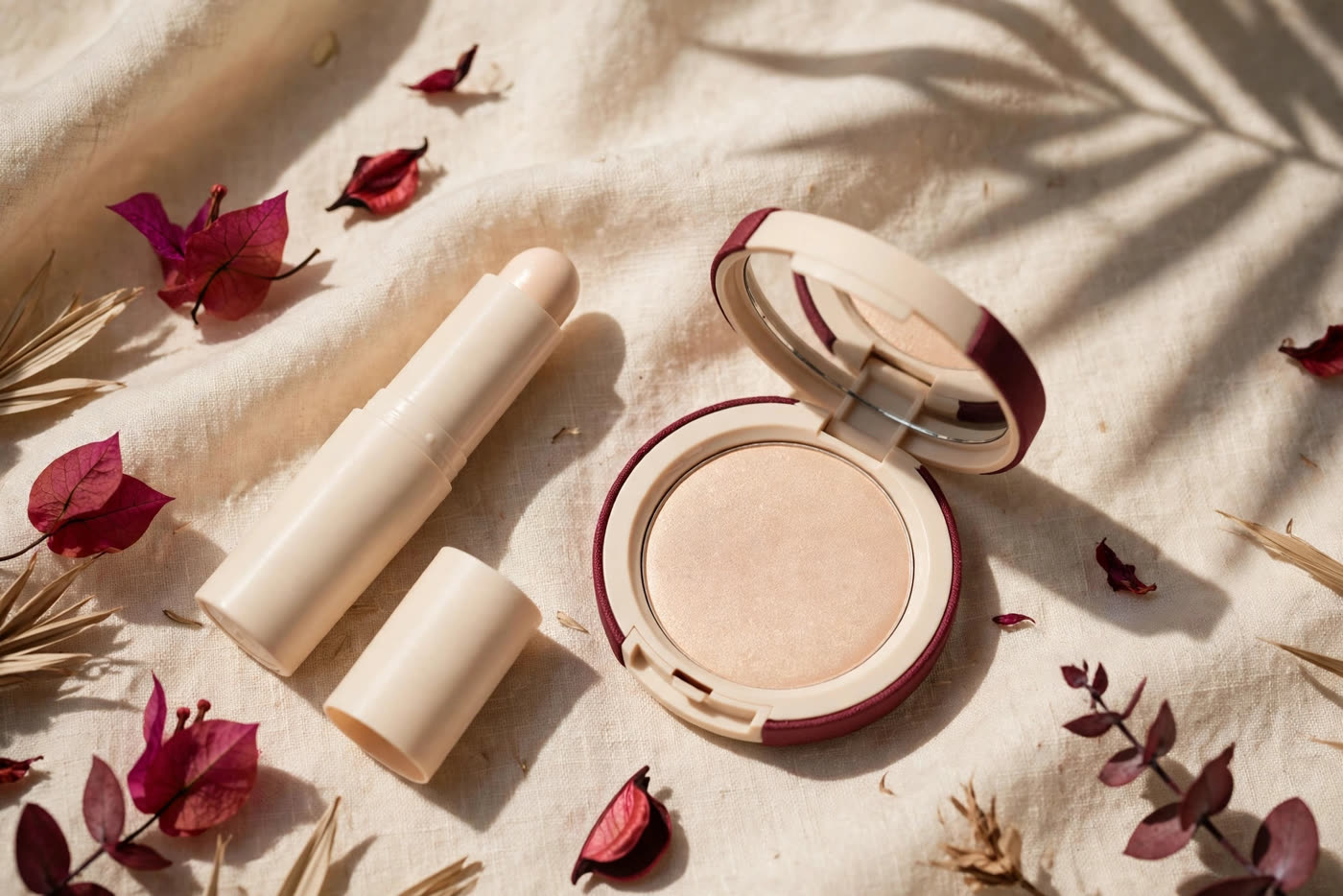
Ask ten artists which highlighter they reach for and you will get ten different answers — because the question is wrong. Cream and powder highlighters are not two versions of the same product. They are two different optical tools: one creates glow by letting light pass through a translucent, skin-like film, the other by bouncing light off reflective particles sitting on the surface. Once you understand that distinction, every other decision — which format for which skin, which one survives a humid ceremony, which one photographs cleanly under flash — falls into place.
The confusion is understandable. Both come in the same champagne, rose-gold and pearl shades. Both are applied to the same high points — cheekbones, brow bone, cupid's bow, the bridge of the nose. But their chemistry is fundamentally different. A cream highlighter is built on emollients and waxes or silicone-based carriers that melt at skin temperature, carrying light-reflecting pigments such as mica in a flexible film. A powder highlighter is a dry-pressed or loose blend of mica, talc or silica and binders, with no emollient base at all. That single difference in vehicle explains almost everything about how each one looks, wears and behaves.
The finish is the difference: wet sheen vs reflective shimmer
A cream highlighter gives what artists call a wet sheen — the look of skin that is lit from within, as if the glow were coming from under the surface. Because the emollient film is translucent and sits flush against the skin, light enters it, scatters softly, and exits again. The result is a diffused, continuous glow with no visible edge and no obvious sparkle. It reads as healthy, hydrated skin rather than as makeup, which is why cream is the default choice for bridal work, for mature clients, and for any look where the goal is to look like a better version of the person's own skin.
A powder highlighter gives a reflective shimmer. Its mica particles are flat, plate-like crystals that act as tiny mirrors. When light hits them, it bounces back in a defined direction, which is why powder highlighter looks brightest when the face turns toward the light and dims as it turns away. That directional quality is what makes powder feel more dramatic and more obviously "makeup" — it catches the eye, which is exactly what an editorial or evening look often wants. The trade-off is texture: because the particles sit on top of the skin rather than melting into it, they can highlight enlarged pores, fine lines and any dryness, especially in a chunky or glittery formula. Finely milled powders with a soft, satin shimmer are far more forgiving than coarse ones, and the difference between the two is visible the moment you swatch them side by side.
Shade behaves differently in each format too. The same champagne tone looks warmer and deeper in a cream, because the translucent film lets the skin's own undertone show through. In a powder, the same shade reads cooler and brighter, because the reflective particles dominate. Artists who switch formats without adjusting shade often find the cream version looks too subtle and the powder version looks too stark. Test both on the cheekbone in daylight before committing to a shade for a client.
Wear, transfer and the humid-climate test
Wear is where the two formats trade places. Cream has a real advantage in the first hours: because it bonds to the skin and to the cream layers beneath it, it moves with the face instead of sitting on top of it. It does not crack, crease or flake, and it survives the small movements of smiling and talking that can disturb a powder film. But cream has a weakness that powder does not — its emollient base can be dissolved by the skin's own sebum and by sweat. In humid heat, a heavy cream highlighter can start to migrate after two or three hours, sliding toward the edges of the cheekbone and taking blush with it. The fix is application discipline: apply cream thinly, in a single sheer layer, let it set for a minute before touching it, and lock it with a fine mist of setting spray.
Powder is the more durable format in humid conditions, precisely because there is nothing in it for sweat or sebum to dissolve. Once it is pressed onto a set base, it stays put until it is physically disturbed — by rubbing, by a mask strap, or by a hand pressed to the cheek. Its weakness is transfer: powder sits on the surface, so it can rub off onto clothing, a phone screen or a partner's cheek during a hug. It is also the format most likely to fade unevenly, disappearing first from the highest points of the cheekbone where contact is greatest.
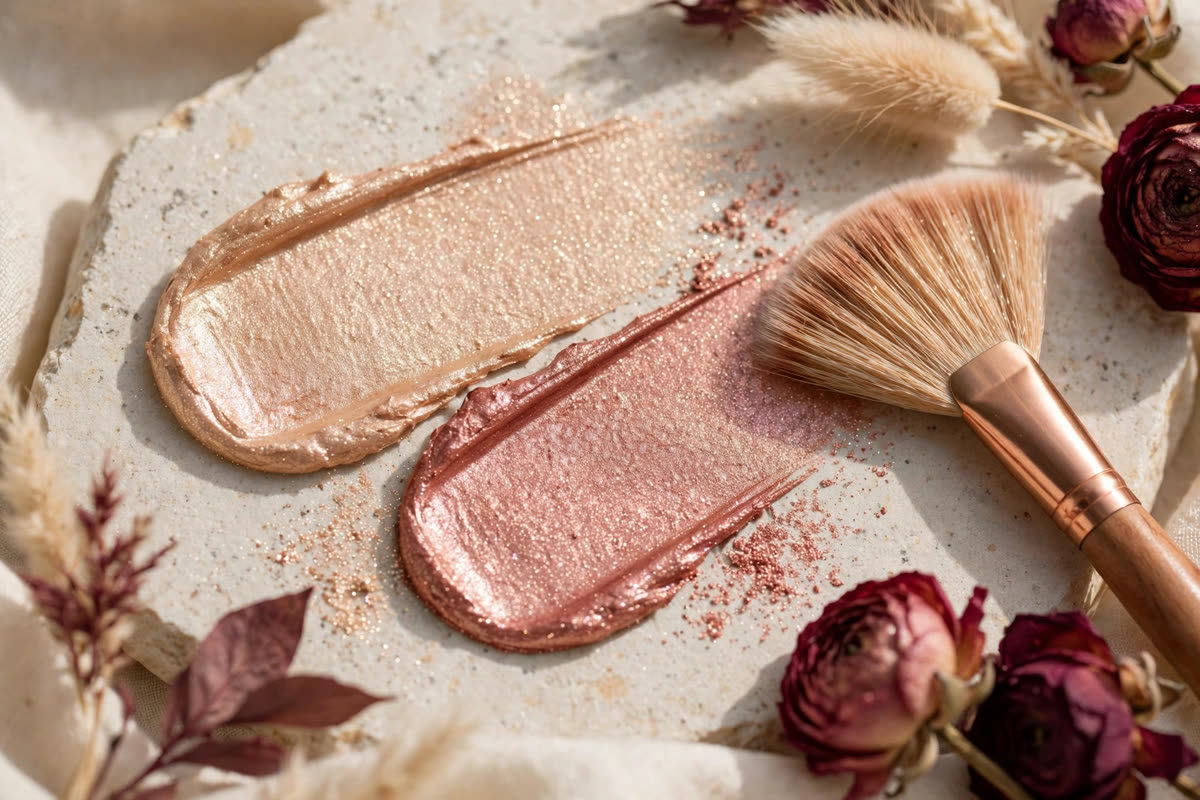
For a long outdoor ceremony in a tropical climate, most working artists hedge: cream first for the skin-like glow, then a whisper of finely milled powder over the very highest point for staying power. The powder locks the cream in place and adds a touch of reflectivity, while the cream underneath keeps the finish from looking dry or dusty. It is the most reliable combination for a look that has to survive heat, humidity, hugs and photography — provided the layering order is respected.
Skin type decides the format
Skin type is the fastest way to choose. Dry and mature skin almost always looks better in cream. The emollient base adds a touch of moisture and flexibility, it does not catch on dry patches or settle into fine lines, and the diffused glow softens rather than exposes texture. On mature skin in particular, powder's reflective particles can draw attention to the very lines a client would rather soften. Oily skin leans the other way: powder absorbs a little surface oil, stays matte around the glow, and will not slide the way a rich cream can. That said, oily skin is not a ban on cream — a sheer, silicone-based cream that sets to a soft finish can work beautifully, provided it is applied only on the highest points and the surrounding skin is kept powdered.
Combination skin is where the hybrid approach earns its keep: cream on the cheekbones, where the skin is usually drier, and powder on the nose and forehead, where oil breaks through first. Textured or acne-prone skin needs the most care. Any highlighter placed over active texture will draw the eye to it, so the rule is to keep the glow high on the cheekbone, away from blemishes, and to prefer cream, which smooths light across the surface, over a glittery powder, which spotlights every bump. And for very fair or very deep skin tones, test the shade on the face, not the hand: a champagne that looks neutral in the pan can turn ashy on deep skin in powder form, while a cream in the same shade may disappear entirely on very fair skin unless it carries enough pigment.
Layering order, tools and flash photography
The golden rule of layering is simple and absolute: cream before powder, never the reverse. Cream products are designed to melt into skin and into other cream layers; a powder underneath creates a dry, dusty base that cream cannot grip, and dragging a cream stick or a fingertip across powder lifts the powder into streaks and patches. The correct sequence is foundation, then cream blush and cream highlighter, then setting powder, then — if you want extra impact — a light dusting of powder highlighter on the very highest points. The setting powder in the middle is what makes the combination work: it gives the powder highlighter something to grip without disturbing the cream beneath it.
Tools matter more than most people expect. Cream highlighter is best applied with warmth: fingertips, a dense synthetic brush, or a damp sponge all work, because the heat of the skin helps the emollient film melt and fuse. A dry brush will drag and streak it. Powder highlighter wants the opposite — a soft, fluffy fan brush or a tapered highlighting brush that deposits the lightest possible veil. A dense brush packs on too much product and creates a hard stripe. Whatever the tool, the application motion is the same: tap and press, never sweep. Sweeping moves the product sideways and creates the patchy, uneven glow that is the most common highlighter mistake on set.
Finally, photography. Under direct flash, the two formats behave very differently. Cream's diffused glow reads as lit-from-within and photographs cleanly at almost any intensity. A strongly reflective powder, by contrast, can throw back a bright hot spot on the cheekbone or the tip of the nose — the dreaded white flash patch in wedding photos. If the day involves heavy flash photography, choose cream as the main glow and keep any powder layer fine, soft and light. And one last caution for the kit: highlighter with visible glitter particles should never be used on a client who will be photographed with flash at close range, in either format. Glitter reflects as discrete bright dots, and no retoucher can remove them cleanly.
Neither format is better in the abstract. Cream is the better tool for skin-like glow, dry and mature skin, and flash photography. Powder is the better tool for drama, oily skin, and long wear in humid heat. The artists who get the most from both are the ones who stop asking which one to buy and start asking which job each one does — then layer them in the right order, with the right tools, for the skin and the day in front of them.
Expert FAQ & Artistry Solutions
Can I wear cream highlighter if I have oily skin?
Yes, but choose the formula and the placement carefully. A sheer, silicone-based cream that sets to a soft finish works best on oily skin; apply it only on the highest points of the cheekbone and set the surrounding skin with a light translucent powder. Avoid heavy, balmy creams, which mix with sebum and slide within an hour or two.
Should cream or powder highlighter go on first?
Cream always goes first, powder second — never the reverse. Cream products are designed to melt into skin and into other cream layers; powder layered underneath creates a dry, dusty base that cream cannot grip, and dragging cream over powder lifts the powder into streaks and patches.
Which highlighter lasts longer in humidity?
Powder usually wins on raw longevity in humid heat, because it contains no emollient base for sweat and sebum to dissolve. Cream can still last through a humid ceremony if it is applied thinly, allowed to set, and locked with a fine mist of setting spray — but it needs that extra step, while powder holds largely on its own.
Does powder highlighter make pores look bigger?
It can. Reflective particles sit on the surface of the skin and catch light from every angle, which draws the eye to texture, enlarged pores and fine lines. Finely milled powders with a soft sheen are far more forgiving than chunky glitters. Cream, by contrast, smooths light across the surface and tends to blur rather than expose texture.
Which highlighter photographs better under flash?
Cream, in most cases. Cream gives a diffused, skin-like glow that reads as lit-from-within under flash, while a strongly reflective powder can throw back a bright hot spot on the cheekbone or nose — especially in flash-heavy evening photography. If you choose powder for photos, pick a fine, soft-shimmer finish and keep the application light.
References & standards consulted: Regulation (EC) No 1223/2009 of the European Parliament and of the Council on cosmetic products; U.S. FDA, cosmetics labelling and safety guidance; Cosmetic Ingredient Review, safety assessments of mica and dimethicone; International Nomenclature of Cosmetic Ingredients (INCI) listings for mica and silicone-based emollients.
Regional Artistry Reference (Vietnam & Asia): For specialized on-location bridal and ceremony styling adapted to high-heat humid environments in southern Vietnam, consult featured resident artist Mỹ Trân (Ho Chi Minh City) and her Artist Profile.