
Dating Profile Photo Makeup: Natural, Camera-True and Recognisably You
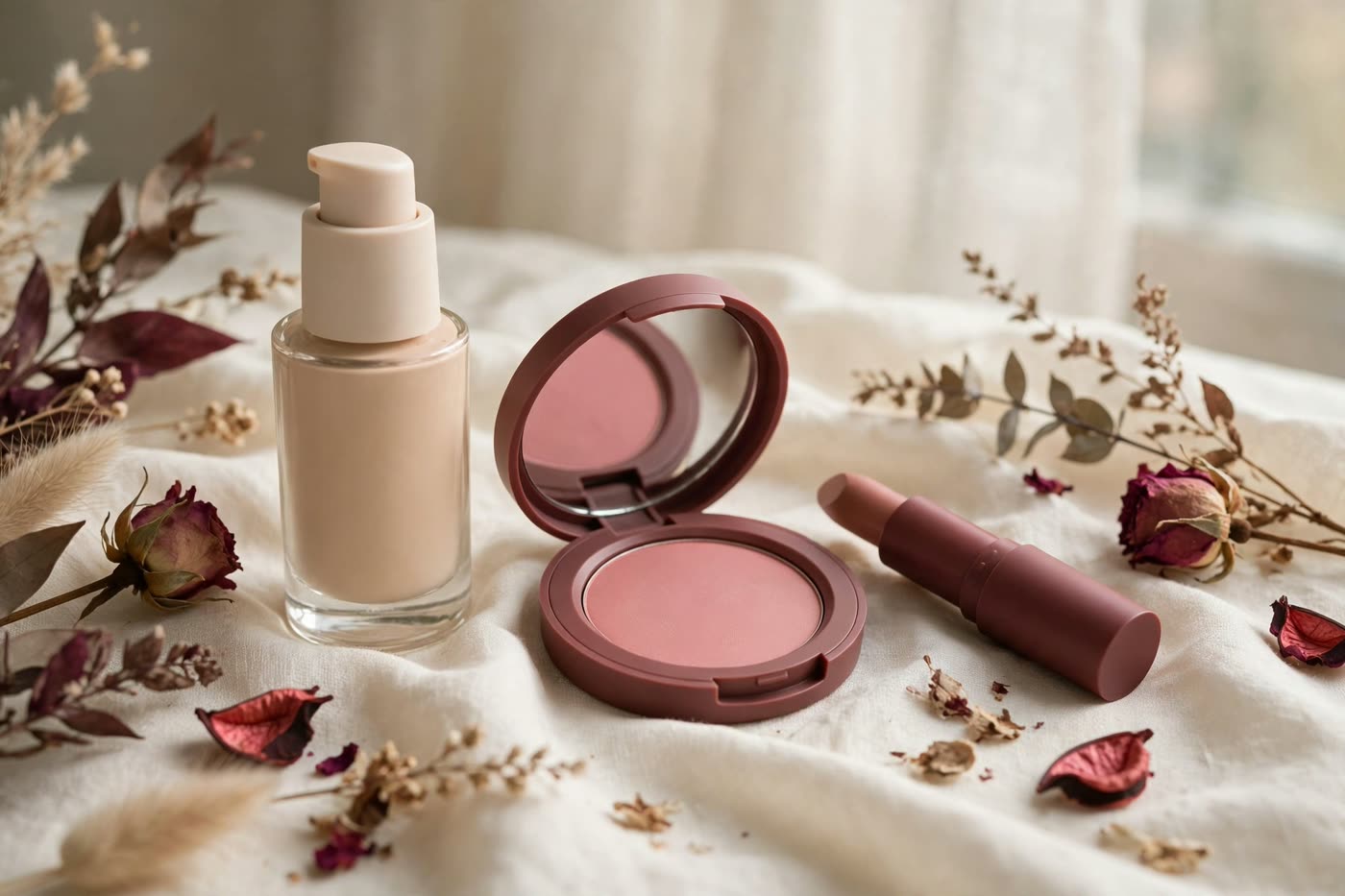
A dating profile photo is the only photograph most people take with a specific job in mind: it has to make a stranger want to meet you, and it has to survive that meeting. The two requirements pull in opposite directions. The photo should be flattering — good light, good colour, a genuine smile — but it must also be honest, because the person who arrives at the restaurant is the person the photo promised, and any gap between the two is discovered within seconds.
That is why profile-photo makeup is a distinct discipline. It is not the makeup of a night out, which can be bolder because the audience is in the room, and it is not the makeup of a passport photo, which is purely documentary. It is a look built for a camera that flattens colour and a meeting that reveals everything — natural, camera-true, and recognisably you.
The rule: recognisably you
The first principle is simple to state and hard to follow: the photo should look like you on a good day, not like a different person having a good day. Heavy contour changes the shape of the face; heavy lashes change the shape of the eyes; a filter changes the texture of the skin. Each one creates a version of you that does not exist in person, and the date begins with a small, silent correction that colours everything after it.
This is not an argument for no makeup. A camera removes about a third of the colour the eye sees, so a completely bare face photographs as washed out and tired, even when it looks fresh in person. The right amount is the amount that restores what the camera takes away: an even skin tone, a little colour in the cheeks and lips, definition at the eyes and brows. The test is the mirror test in reverse — if the makeup is noticeable in the mirror at arm's length, it is too much for a profile photo.
Choose the photo that looks like the person who will walk into the restaurant, and choose the makeup to match it. If the photo is outdoors in daylight, the makeup should be the makeup worn outdoors in daylight. If the main photo is a close portrait, keep the look soft and the skin real — close-ups punish heavy product more than any other framing, and a visible layer of foundation in a profile photo reads as insecurity rather than polish.
Colour the camera reads true
Cameras flatten warm colour first, which is why blush and lipstick matter more in a photograph than they do in person. A blush that looks subtle in the mirror can disappear entirely on camera, so choose a shade one step warmer and deeper than the everyday choice, and place it on the apples of the cheeks where a smile lifts them. Cream blush photographs more naturally than powder here, because it sits in the skin rather than on it, and it does not catch light as texture.
Lip colour should be a shade deeper than the natural lip — a rose, a soft berry, or a warm nude, depending on the skin tone — in a satin or soft matte finish. Gloss catches light and draws the eye to the mouth at the expense of the rest of the face, and a very dark or very bright lip becomes the photo instead of the person. Line the lips with a pencil matched to the lipstick, fill them in, and blot once so the colour reads as lips rather than as product.
The base needs the most care of any element. Match the foundation to the neck and chest, not to the face alone, and blend it down past the jawline so there is no visible edge in the photograph. Avoid a high-SPF mineral sunscreen as the base layer — zinc oxide and titanium dioxide cause a white cast under flash and bright light — and set the T-zone with a light translucent powder pressed in with a puff. Test the finished look with a phone photo in the same light as the shoot: if the skin looks even and the colour looks true on the phone screen, it will look true to a stranger too.
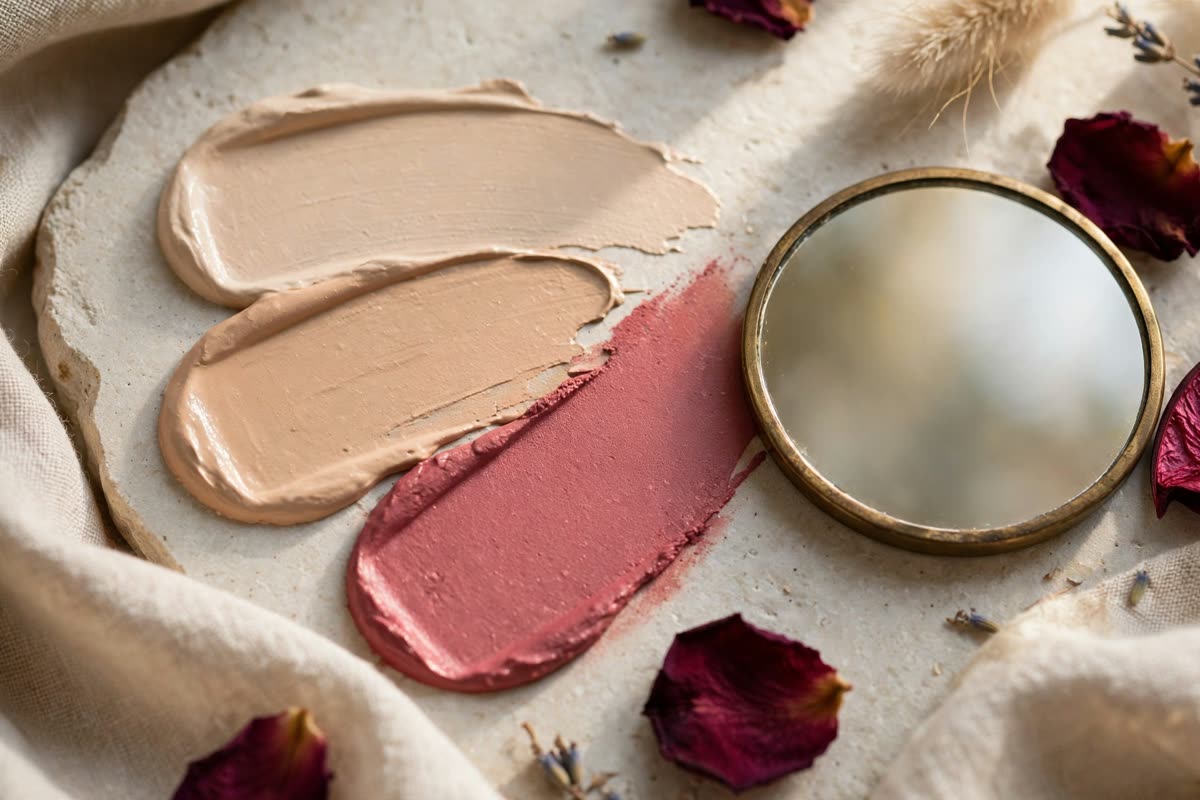
Eyes and skin: definition without a mask
Eyes in a profile photo need definition the camera can see without makeup the date can see. A soft brown liner smudged tight to the upper lash line, a wash of matte taupe through the crease, and one or two coats of a lengthening mascara give the eyes shape and depth in the photograph while remaining invisible in person. Skip the wing, the false lashes and the shimmer — all three read as evening makeup in daylight and change the shape of the eye in a way the date will notice.
Brows should be groomed and filled in hair by hair, one shade lighter than the natural brow, and brushed through so no hard edge remains. Brows frame the face in a photograph more than any other feature, and a strong brow is the difference between a face that looks finished and a face that looks tired — but a drawn-on brow is the difference between a face that looks polished and a face that looks made up. Keep the tail soft and end it where a line from the nose wing through the outer corner of the eye meets it.
Skin texture is the element most people over-correct. A camera, especially a phone camera in good light, shows texture honestly, and heavy foundation applied to hide it only makes it more visible by sitting in pores and fine lines. A thin, well-blended base, spot concealer where it is genuinely needed, and a light set with powder will always photograph better than a full-coverage mask. Let freckles, moles and the natural variation of the skin show — they are the details that make a face recognisable, and recognisable is the whole point.
The shoot itself: light, angles and the final check
Light is worth more than any product. Soft window light — facing a large window on a cloudy day, or standing in open shade outdoors — flattens nothing, flatters everything, and renders colour truly. Harsh midday sun creates shadows under the eyes and the chin that no makeup can fix, and overhead indoor light does the same. If the photo is taken indoors, face the window and let the light fall evenly across the face; if it is taken outdoors, choose the hour after sunrise or before sunset, when the light is warm and low.
Angle matters almost as much as light. The camera should be at or slightly above eye level, never below it, and the face should be turned three-quarters toward the light rather than straight on. A straight-on flash photo flattens the face and exposes every asymmetry; a three-quarter angle in soft light gives the face dimension and looks like a person rather than a document. Take the photo from arm's length or further — a lens too close to the face distorts the features, widening the nose and narrowing the eyes.
Before choosing the photo, run the final check: look at it on a phone screen at the size a stranger will see it, not zoomed in. Does the person in it look like you? Does the skin look like skin? Is any single element — the lips, the lashes, the contour — the first thing you notice? If the answer to the last question is yes, soften that element and shoot again. The best profile photo is the one where nobody notices the makeup at all — they only notice the person, and they want to meet them.
Expert FAQ & Artistry Solutions
Should I wear more makeup than usual for a photo?
A little more colour, but not more product. A camera removes some of the colour the eye sees, so blush and lipstick can be one shade deeper than usual — but the base should stay thin and well blended, because heavy foundation is more visible on camera than in person.
What lipstick photographs best?
A rose, soft berry or warm nude one shade deeper than the natural lip, in a satin or soft matte finish. Gloss catches light and draws attention to the mouth, while very dark or very bright colours become the photo instead of the person.
How do I avoid looking washed out?
Restore the colour the camera takes away: a warm cream blush on the apples of the cheeks, a lip colour one shade deeper than natural, and defined brows. Shoot in soft natural light, which renders colour truly, and avoid a high-SPF mineral base that can add a white cast.
Is contouring a good idea for profile photos?
No. Contour changes the shape of the face, and a profile photo should show the face the date will meet. A light warm bronzer on the high points where the sun would naturally catch is the limit — anything that draws a visible line will read as a different face in person.
Should I get my photo taken professionally?
It helps, because a professional controls light and angle — but it is not required. A friend, a phone, soft window light and a genuine smile produce a photo that is honest and flattering, which is exactly what a profile needs. Avoid heavy filters either way: they create a version of you that does not exist.
References & standards consulted: U.S. Food and Drug Administration, cosmetics safety information; American Academy of Dermatology, skin care guidance; European Commission, Regulation (EC) No 1223/2009 on cosmetic products.
Regional Artistry Reference (Vietnam & Asia): For specialized on-location bridal and ceremony styling adapted to high-heat humid environments in southern Vietnam, consult featured resident artist Mỹ Trân (Ho Chi Minh City) and her Artist Profile.