
Engagement Photo Makeup: Golden Hour, Flash and Close-Ups
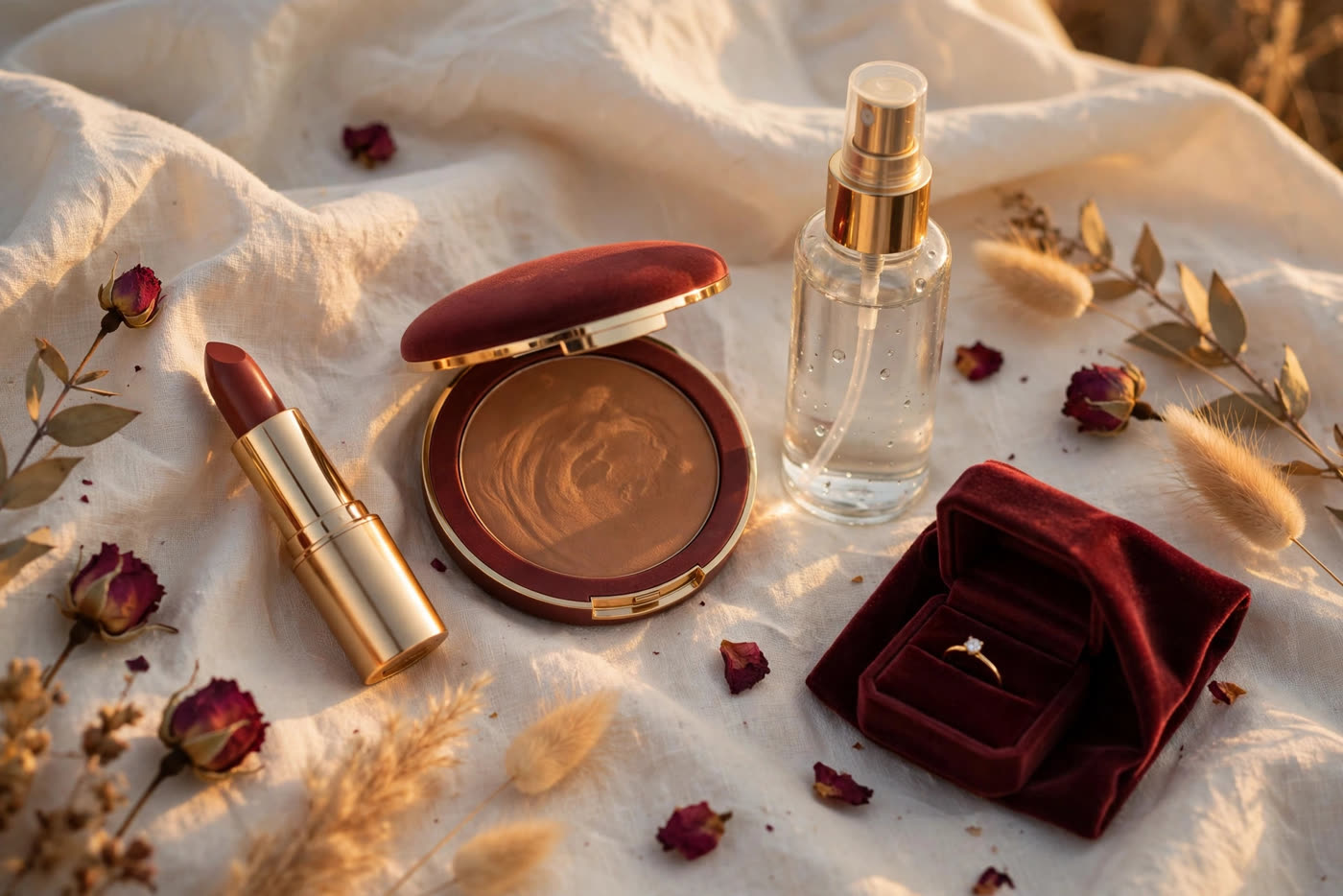
An engagement session is a harder photographic test than a wedding. A wedding has hours, a schedule, and a photographer who knows the venue; an engagement shoot compresses everything into ninety minutes of changing light — late-afternoon sun, golden hour, dusk, and the flash that takes over when the sun drops — and the camera spends much of that time inches from the couple's faces. The makeup has to survive all of it: warm light that deepens colour, flash that flattens it, and close-ups that show every line, pore and flake the naked eye would forgive.
The most common failure is a look built for one light and photographed in another. A base that is perfect in golden hour can turn grey under flash if it carries a mineral sunscreen; a blush that glows at sunset can look muddy in shade; a lip colour chosen for daylight can vanish entirely in the blue light of dusk. The solution is a look designed for the whole session, not for a single moment of it — and a small set of checks the artist runs before the photographer starts, in each light the session will use.
Golden hour: what warm low light does to colour
Golden hour — the hour before sunset, when the sun is low and its light passes through more atmosphere — is warm, directional and forgiving. It deepens warm tones, softens texture, and wraps the face in a glow that makes almost any makeup look better. That forgiveness is also a trap: a look judged only in golden hour will look stronger than it is, and the photographer will keep shooting as the light changes. Colours that read as rich and warm at 5 p.m. can read as orange or muddy at 6 p.m., when the light cools and thins.
Warm tones are the right instinct for golden hour, but they need discipline. A warm bronzer, a peach or rose blush, and a golden-brown eye will all glow in low sun — but if the warmth is piled on, the face turns monochrome and the features flatten. The counterweight is a cool note somewhere in the look: a neutral brown in the crease, a rose rather than an orange blush, a lip colour with a little blue in it. That single cool anchor keeps the warm light from turning the whole face one colour, and it is what separates a professional engagement look from a filter.
Skin is the other golden-hour question. Low sun rakes across the face from the side, and raking light shows texture — every flake, every raised blemish, every line the base did not smooth. Preparation matters more than coverage here: exfoliated, moisturised skin under a thin, flexible base will always photograph better in raking light than a thick matte base on unprepared skin. The base should be checked in profile, in the actual evening light, before the session begins — a front-on check in a mirror tells you almost nothing about how raking light will treat it.
Flash and close-ups: the two tests that expose a base
Flash is the opposite of golden hour: flat, white and brutally honest. Its first victim is mineral sunscreen — zinc oxide and titanium dioxide reflect flash as a white cast, and a base built over a heavy mineral SPF will photograph grey or ghostly the moment the flash fires. If the session will use flash at all, the sunscreen underneath must be a chemical formula, or the base must be checked with a test flash before the session. The same rule applies to any product with a high mineral load, including some setting powders with silica, which can flash back as white patches in close-ups.
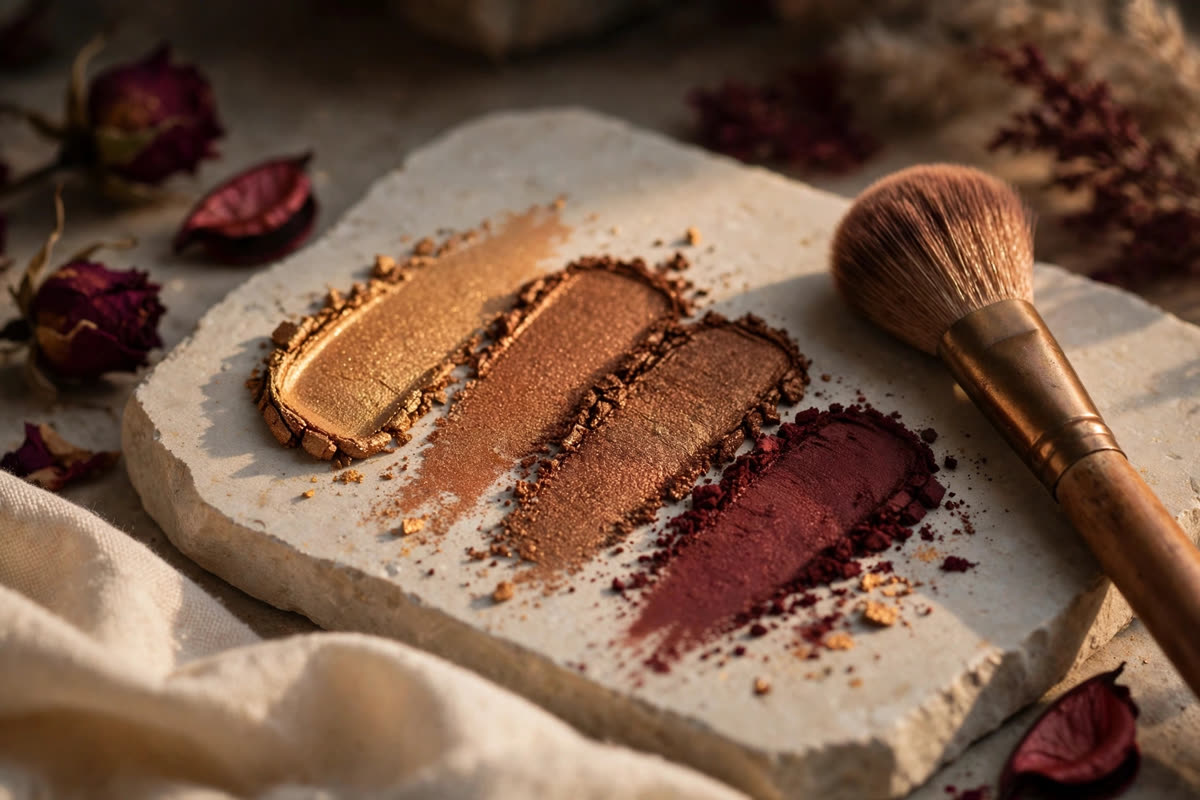
The second flash test is the close-up. Engagement sessions are full of them: hands with the ring, foreheads touching, the couple laughing at arm's length from the lens. At that distance, the camera sees the edge of every product — the line where foundation stops at the jaw, the crease where concealer has settled, the flake of dry lipstick, the glitter particle sitting on a pore. The defence is blending taken seriously: foundation blended past the jawline and into the neck, concealer set before it can crease, lips exfoliated and balmed before colour goes on, and no shimmer anywhere near textured skin.
One more flash rule: test the look with the photographer's actual camera, not a phone. A phone's front camera smooths skin, warms colour and flatters almost any base; a photographer's camera, especially with flash, does not. Ask for two test frames — one in the current light, one with flash — and look at them on the camera's screen before the session starts. The five minutes this costs are the cheapest insurance in the whole day.
Building the session-proof look
Build the base for flash, not for the mirror. That means a medium-coverage, satin-finish foundation applied thinly and set lightly, a concealer matched to the skin rather than dramatically lighter, and a translucent setting powder pressed — not dusted — into the T-zone only. Cream blush and cream highlight survive a long session better than powder versions, because they move with the skin and do not go chalky as the light changes. Finish with a setting spray, which adds the flexible film that keeps the base intact through two hours of laughing, kissing and changing positions.
Eyes should be defined but not heavy. A neutral eye — warm brown through the crease, a soft shimmer on the lid, a tightline at the lash line — reads in every light the session will use, and it photographs as well at dusk as it does at golden hour. Waterproof mascara is worth it here: an engagement session involves happy tears, wind, and sometimes a nervous sweat, and a smudged lower lash line is visible in every close-up. Keep the lower lash line clean and soft, and carry the mascara for touch-ups rather than piling it on at the start.
Lips need a colour that survives both golden hour and flash, and that means a mid-tone with a little depth: a rose, a warm mauve, a soft berry. Very pale nudes wash out under flash and disappear at dusk; very dark colours demand perfect edges in close-up and show every dry patch. Line the lip fully, apply in two thin blotted layers, and hand the lipstick to the couple for the session — a mid-session reapplication is normal, and a bride who has the product in her own bag will use it.
The day-of protocol: timeline, weather and touch-ups
Schedule the makeup to finish thirty minutes before the first frame, not at the first frame. That buffer is for the light check: the artist walks the couple into the actual shooting light, takes test photographs, and adjusts — a little more blush if the light is eating colour, a blot if the forehead is shining, a softer lip if the dusk light is cooling everything down. A look finished at the last minute never gets this check, and the first twenty photographs pay for it.
Weather is part of the protocol. Wind lifts hair into the face and dries the lips; humidity loosens a base and adds shine; sudden cloud cover cools the light and flattens colour. Pack accordingly: blotting paper, a cushion compact for sheer touch-ups, lip balm and the lip colour, a small powder for the T-zone, and a hair tie or pins for wind. Touch-ups during a session should be sheer and pressed, never a new layer swept over the old one — a fresh layer on top of a lived-in base is what shows in close-ups.
Finally, coordinate with the photographer, not around them. Ask which lights they plan to use and in what order, whether they will use flash, and whether the session will run past sunset into blue hour. The answers change the makeup: a flash-heavy session needs the mineral-SPF check; a session that ends in blue hour needs a slightly stronger lip and blush, because cool dusk light eats warm colour. The artist who asks these questions before the session is the one whose work still looks right in the last photograph of the day.
Expert FAQ & Artistry Solutions
Will sunscreen ruin engagement photos?
Mineral sunscreen can: zinc oxide and titanium dioxide reflect camera flash as a white cast. If the session uses flash, wear a chemical sunscreen under the base, or check the look with a test flash before shooting. The sunscreen itself is essential — choose the right type, do not skip it.
What lip colour photographs best at golden hour?
A mid-tone with some depth — a rose, warm mauve or soft berry. Very pale nudes wash out under flash and vanish at dusk; very dark colours demand perfect edges in close-up. Line the lip fully and apply in two thin blotted layers.
How do I stop my makeup looking different in flash and daylight?
Build for flash: a thin satin base, concealer matched to the skin, cream blush and highlight, and no heavy mineral products. Then test the look with the photographer's actual camera in each light the session will use before shooting starts.
Should engagement makeup be waterproof?
The mascara and eyeliner should be, yes — happy tears, wind and nerves are all part of the session, and a smudged lower lash line shows in every close-up. The base should be long-wearing and set with spray rather than fully waterproof.
What should I pack for touch-ups during the shoot?
Blotting paper, a cushion compact for sheer touch-ups, lip balm and the lip colour, a small powder for the T-zone, and hair pins for wind. Touch-ups should be sheer and pressed in, never a new layer swept over the old base.
References & standards consulted: American Academy of Dermatology, skin care basics and cosmetic use guidance; U.S. Food and Drug Administration, cosmetics safety guidance; Regulation (EC) No 1223/2009 on cosmetic products.
Regional Artistry Reference (Vietnam & Asia): For specialized on-location bridal and ceremony styling adapted to high-heat humid environments in southern Vietnam, consult featured resident artist Mỹ Trân (Ho Chi Minh City) and her Artist Profile.