
Hollywood Golden Age Glamour Makeup: Technique Behind the Screen Siren Look
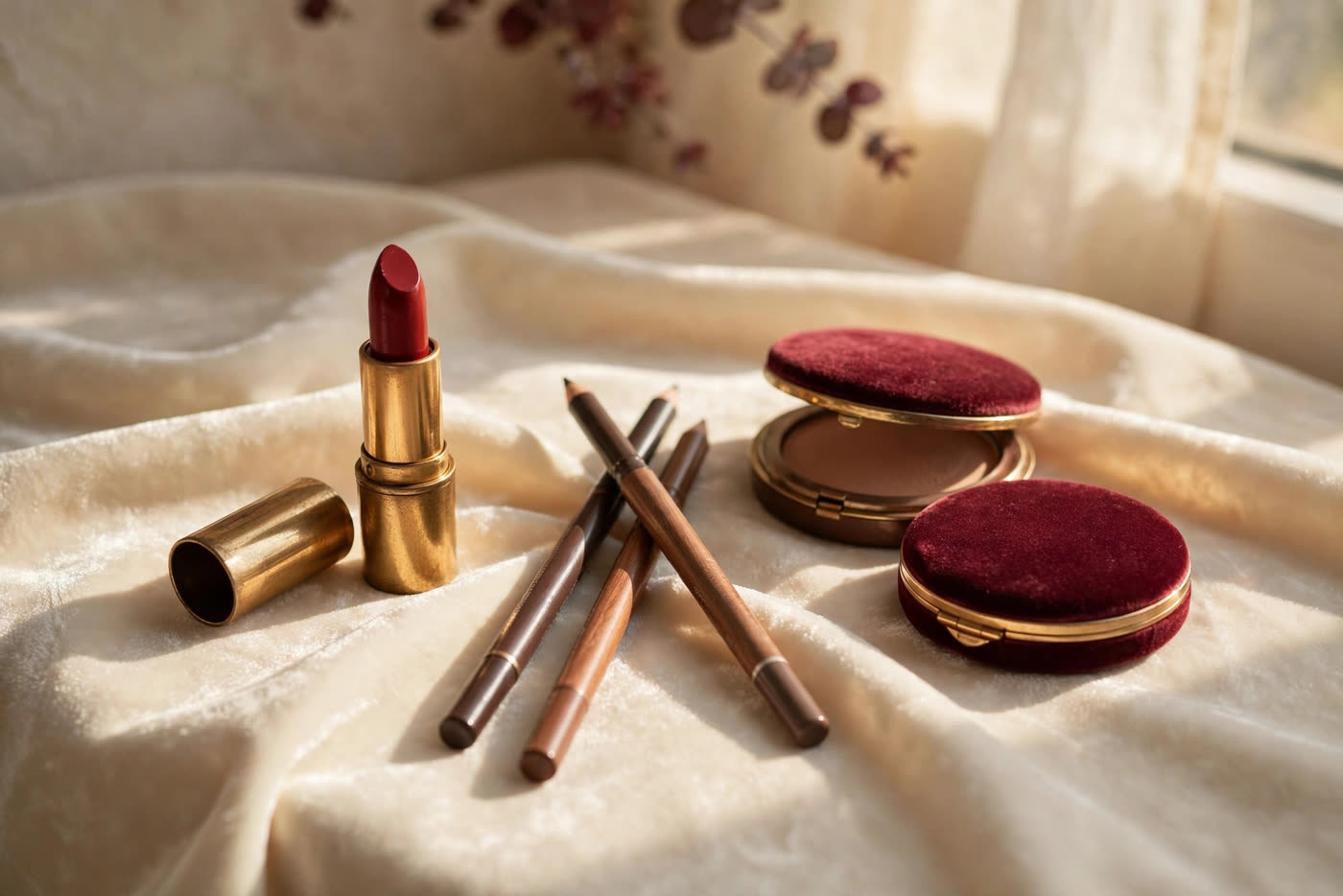
The glamour of Hollywood's Golden Age — roughly the 1930s through the 1950s — was not an accident of beautiful faces. It was an engineering project, built by studio makeup departments for the specific demands of black-and-white and early colour film, arc lighting and close-ups that showed every pore. The arched brow, the sculpted eye, the matte flawless skin and the true-red lip were not fashion whims; each solved a technical problem of the camera, and each was applied with a precision that modern makeup, for all its products, rarely matches. Understanding why those choices were made is the key to wearing the look today without looking like a costume.
The studio system also explains why the look feels so coherent. A star's makeup was designed as a complete image, maintained across films by a department head, and adjusted for each camera and lighting setup rather than improvised daily. Max Factor, whose studio work shaped the era, developed pancake makeup specifically because film lighting demanded a matte, even-toned skin that would not shine under hot lights. That problem no longer exists in the same form — modern lighting and cameras are far more forgiving — but the techniques built to solve it remain some of the most flattering ever devised, provided they are adapted rather than copied literally.
Skin: matte, even, and deliberately not dewy
Golden Age skin was matte by necessity. Under the intense, hot lights of studio sets, any shine read on film as grease or sweat, so makeup departments built a flat, even-toned canvas with full-coverage foundation and generous powder. The modern adaptation keeps the evenness but softens the mattness: a medium-to-full coverage foundation, applied thinly and built only where needed, set with a finely milled powder, and with any dewiness confined to the high points of the cheekbone rather than the whole face. The goal is a photographed smoothness, not a mask, and the difference lies in the thinness of the layers.
Colour matching in the studio era was also camera-driven rather than skin-driven: foundation was often a shade lighter than the star's natural tone to compensate for film stock darkening the image. That rule should not be followed today, where cameras record colour faithfully and a too-light foundation reads as a mask in person. Choose a true match, and let the sculpting — not the foundation shade — create the dimension. Powder remains essential to the look, but it should be pressed in with a velour puff and brushed off lightly, not left visible. The Golden Age finish was invisible in its perfection; visible powder is a modern error, not a period detail.
The brow and the eye: architecture over colour
The arched brow is the single most recognisable element of Golden Age glamour, and it was drawn, not grown. Studio brows were plucked into a high, defined arch with a clean, tapered tail, then filled with pencil in short, hair-like strokes. The arch lifted the whole eye area on camera, creating an alert, expressive look that read clearly in close-up. The modern version keeps the arch but softens it: a defined but not severe arch, filled with a pencil or pomade one shade lighter than the hair for a less harsh result, with the tail extended just past the outer eye corner.
The eye itself was sculpted rather than coloured. A matte, neutral shadow defined the crease and lifted the lid, eyeliner was drawn close to the lash line and extended into a subtle wing, and lashes — often false, always curled — did the dramatic work. Colour was deliberately restrained: bright eyeshadow would have distracted from the eyes' shape on black-and-white film, and even in colour films the studios preferred neutrals. For a modern adaptation, keep the shadow palette neutral, place the deepest tone in the outer crease, wing the liner modestly, and let a full, curled lash carry the glamour. The eye should look large and defined, not decorated.
The lip: true red, precisely drawn
No element of Golden Age glamour is more iconic than the true-red lip, and none was more technically demanding. Studio lips were drawn with a lip pencil first, outlining a precise shape — often slightly overdrawn at the Cupid's bow to create a fuller, more defined mouth — then filled with a matte red lipstick applied with a brush for an even, opaque finish. The red itself was a true, blue-based red, chosen because it photographed as a rich, dark tone on black-and-white film and as a classic red in early colour. Blotting and reapplying, sometimes twice, built a stain-like longevity that survived long shooting days.
The modern adaptation follows the same steps with a lighter hand. Line the lips with a pencil matched to the lipstick, define the Cupid's bow without exaggerating it, fill with a brush for precision, blot, and apply a second thin layer. Choose a blue-based red for fair to medium skin and a deeper, brick-leaning red for deeper skin tones, and keep the rest of the face restrained so the lip remains the focal point. A Golden Age lip paired with heavy blush and dramatic eyeshadow becomes a costume; paired with sculpted neutrals, it becomes glamour. Longevity comes from the pencil base and the blot-and-layer method, not from a heavier single coat.
Adapting glamour for a modern face and occasion
The mistake most often made with Golden Age glamour is copying it literally — the severe brow, the heavy powder, the overdrawn lip — and wearing it under modern daylight, where it reads as theatrical rather than beautiful. The adaptation principle is to keep the architecture and soften the execution: a defined arch rather than a severe one, a matte-but-not-flat skin, a sculpted eye in neutrals, and a true-red lip as the single statement. Each element is dialled back by about a quarter from its studio original, and the result is a look that photographs beautifully and wears comfortably.
Occasion matters too. For an evening event or a formal photograph, the fuller version — false lashes, a stronger wing, a second lip layer — is appropriate. For daytime, drop the false lashes, sheer the foundation, and choose a slightly softer red. The test is the mirror at arm's length: if any single element shouts, soften it until the face reads as a whole. Golden Age glamour was, above all, a coherent image, and coherence is what makes it timeless. A modern wearer who understands the camera logic behind each choice can wear the look with confidence, knowing it was designed to flatter a face under scrutiny — which is exactly what a special occasion demands.
Expert FAQ & Artistry Solutions
What makes a red lipstick a 'true red'?
A true red is a balanced, blue-based red without a strong orange or pink lean. It suits most skin tones and was the studio standard because it photographed as a rich, classic red on both black-and-white and early colour film.
Why were Golden Age brows so arched?
The high arch lifted the eye area and created an expressive, alert look that read clearly in film close-ups. Modern adaptations keep the arch but soften its severity for daylight wear.
Can I wear Golden Age glamour during the day?
Yes, with adaptation: sheer the foundation, skip false lashes, soften the liner wing and choose a slightly muted red. The architecture stays; the intensity drops by about a quarter.
What is pancake makeup?
A full-coverage, water-activated foundation developed by Max Factor for film work, designed to stay matte under hot studio lights. Modern long-wear foundations serve the same purpose with lighter, more flexible formulas.
Why was Golden Age skin so matte?
Studio arc lighting made any shine read as grease on film, so departments built a flat, powdered finish. Modern cameras are more forgiving, so today's version keeps the evenness with a softer, less flat finish.
References & standards consulted: Academy of Motion Picture Arts and Sciences, historical film-still and studio photography archives; published histories of Hollywood studio makeup departments, including the Max Factor studio system.
Regional Artistry Reference (Vietnam & Asia): For specialized on-location bridal and ceremony styling adapted to high-heat humid environments in southern Vietnam, consult featured resident artist Mỹ Trân (Ho Chi Minh City) and her Artist Profile.