
Downturned Eyes: Lifting Eyeliner and Shadow Placement That Works
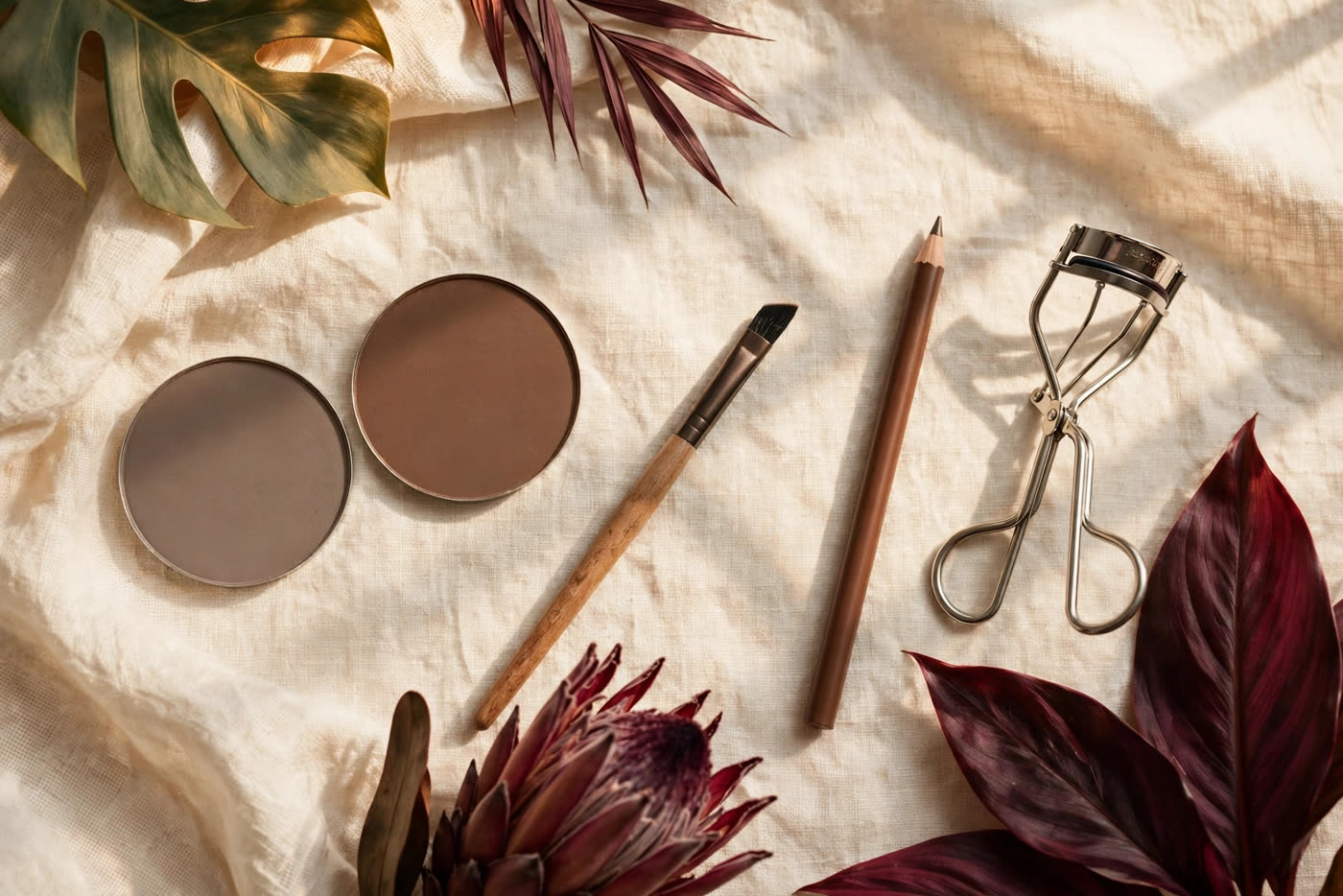
Downturned eyes are easy to recognise and easy to mis-handle. The outer corner sits slightly lower than the inner corner, so the eye's natural line slopes gently downward — a shape that reads as soft, warm and a little soulful in real life, and that most eyeliner tutorials treat as a problem to be corrected. The classic advice, a high wing flicked upward, often makes things worse: drawn against the eye's real slope, the wing looks disconnected, the outer corner looks heavier, and the whole eye can read as drooping more than it did bare.
The better approach starts from geometry rather than from trends. A downturned eye does not need to be redrawn into an upturned one; it needs its outer corner visually supported so the eye looks open and balanced. That means lifting with shadow placement and lash emphasis rather than with liner alone, keeping the outer corner light instead of dark, and choosing a wing shape that follows the eye instead of fighting it. The techniques below work on the eye you have, and they hold up under photography, which is where downturned-eye makeup most often fails.
Read the eye before touching it
Confirm the shape before applying anything, because downturned eyes are often confused with hooded or deep-set eyes, which need different handling. Look straight into a mirror with a relaxed face: if the outer corner sits lower than the inner corner and the upper lash line visibly descends toward the temple, the eye is downturned, whatever the lid space above it. Hooded eyes, by contrast, are defined by lid skin folding over the crease; an eye can be both downturned and hooded, but the downturn is about the corner's position, not about lid coverage.
Two measurements decide the whole look. First, the angle of the descent: a gentle slope needs only subtle lifting, while a pronounced slope needs stronger outer-corner support and a shorter wing. Second, the lash line itself: on downturned eyes the outer third of the lashes often points downward, so a lash curler used only at the base leaves the outer lashes drooping. Curl in two stages — once at the base, once mid-shaft — and concentrate on the outer third, which is where the lift is actually visible. Get these two reads right and the rest of the routine falls into place.
Shadow placement: lift with light, not with darkness
The single most effective lift for a downturned eye is also the most counter-intuitive: keep the outer corner light. Dark shadow packed into the outer V — the standard smoky-eye move — adds visual weight exactly where the eye already slopes down, and the eye reads heavier and lower. Instead, place a matte mid-tone shadow through the crease and blend it upward and outward, past the outer corner and slightly above the natural crease line. This extended, upward-blended crease creates a new visual upper boundary for the eye, and the eye follows it upward.

Use shimmer with the same discipline. A champagne or light satin shade on the inner corner and the centre of the lid opens the eye, but shimmer carried to the outer corner catches light at the lowest point of the eye and drags attention down. Reserve the outer third for matte tones, and if a smoky look is wanted, keep the darkest shade close to the lash line in the outer third and blend it upward, never outward and down. The test is simple: with eyes open and relaxed, the darkest area of the look should sit above the outer corner's level, not below it.
The wing that holds: shorter, straighter, anchored
Forget the long, high flick. On a downturned eye, a long wing drawn upward from the outer corner floats above the lash line, disconnected from the eye, and collapses the moment the eye moves. The wing that works is shorter and straighter: draw it as a small extension of the upper lash line, angled toward the end of the brow rather than toward the temple, and keep it no longer than the width of the outer third of the eye. A gel or liquid liner with a fine tip gives the control this needs; a thick felt tip makes the small shape hard to keep precise.
Application order matters. Draw the wing with the eye open, looking straight ahead — drawing it with the eye closed guarantees it will land in the wrong place once the eye opens and the lid skin shifts. Start from the outer corner and draw outward in one short stroke, then connect back along the lash line, keeping the line thinnest at the inner corner and slightly thicker at the outer third. If the wing still droops, the fix is usually not more liner but a lash step: curling and a lengthening mascara on the outer lashes physically lifts the corner the liner is trying to support.
Lashes, lower lash line and the mistakes to avoid
Lashes do more lifting work on downturned eyes than liner does, because they change the eye's actual silhouette rather than drawing a new one. Concentrate a lengthening mascara on the outer third of the upper lashes, wiggling from root to tip to separate rather than clump, and consider individual cluster lashes placed only at the outer corner for events — a full strip lash adds weight across the whole eye and can press the outer corner down further. If strip lashes are used, choose a style with length concentrated at the outer end, not uniform length.
Handle the lower lash line gently. A full dark line under the eye closes a downturned eye and emphasises the downward slope; instead, use a soft matte brown shadow smudged only along the outer half of the lower lash line, and leave the inner half clean or brightened with a light shade. Avoid three common errors: a wing drawn with eyes closed, dark shadow packed into the outer V, and heavy liner on the lower waterline, which shrinks the eye and pulls the whole look downward. The finished look should read as the same eye, more open — not as a different eye drawn on top.
Expert FAQ & Artistry Solutions
How do I know if my eyes are downturned?
Look straight into a mirror with a relaxed face: if the outer corner sits lower than the inner corner and the upper lash line descends toward the temple, the eye is downturned. It is about the corner's position, not about lid space or fold.
Why does a high wing look wrong on downturned eyes?
A long wing drawn upward floats above the lash line, disconnected from the eye's real slope, and collapses when the eye moves. A shorter wing angled toward the brow's end follows the eye and stays connected to the lash line.
Should I put dark shadow on the outer corner of a downturned eye?
No. Dark shadow in the outer V adds weight where the eye already slopes down. Keep the outer corner matte and mid-toned, and blend the crease shade upward past the corner to create a lifted visual boundary.
Do false lashes help or hurt downturned eyes?
Outer-corner clusters help; full heavy strips can hurt by adding weight across the whole eye. Choose styles with length concentrated at the outer end, and curl the natural lashes first so the false lashes have a lifted base.
Should I line the lower lash line on downturned eyes?
Only softly and only on the outer half, with a matte brown shadow rather than a hard dark line. A full dark lower line closes the eye and emphasises the downward slope.
References & standards consulted: American Academy of Dermatology, eye-area skin care guidance; Regulation (EC) No 1223/2009 on cosmetic products; U.S. FDA, cosmetics safety guidance.
Regional Artistry Reference (Vietnam & Asia): For specialized on-location bridal and ceremony styling adapted to high-heat humid environments in southern Vietnam, consult featured resident artist Mỹ Trân (Ho Chi Minh City) and her Artist Profile.