
Engagement Photoshoot Makeup: Camera-Ready, Timeless and True to You
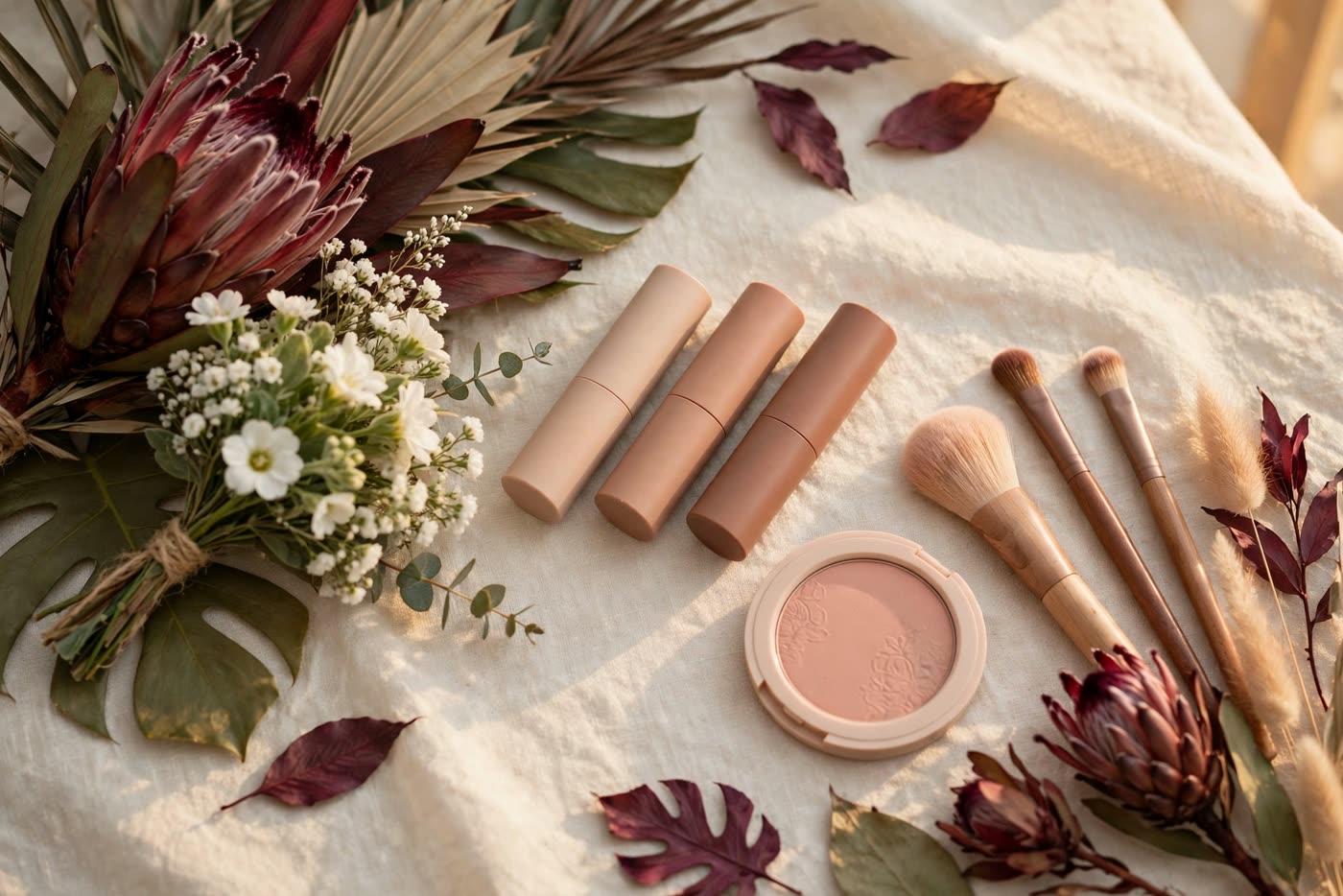
An engagement photograph has a longer life than almost any other picture a couple will take. It goes on the invitations, on the wall, in the album the children will open decades later — long after the season's trends have become a joke. That is the first rule of engagement makeup: the look must be timeless, not fashionable. A sharp graphic liner or a viral lip shade will date the photograph to a single year; a clean base, a true lip and defined eyes will look right in any decade. The second rule is that it must still look like you. The person in the photographs should be recognisable to everyone who loves you — just the best-lit, best-rested version of yourself.
Those two rules decide everything else: the base is thin, the colour is true, the definition is clear, and nothing in the look depends on a trend surviving. The camera adds its own demands — it flattens depth, bleaches subtle colour and punishes shine — so the makeup is built for the lens as well as for the day. This guide works through the look in the order it should be built, from the trial to the last frame of the session.
Timeless, not trendy
Timelessness is a design choice, and it is mostly about what you leave out. Leave out the extreme: the overdrawn brow, the heavy contour, the high-shine lid, the lip shade so dark it becomes the subject of the photo. What survives the decades is proportion — a brow that follows the natural shape, a lash line that defines the eye without closing it, a lip in a colour that could belong to any era. The reference is not a magazine cover; it is the couple's own favourite photographs of themselves, the ones where they look happy and like themselves. If the makeup in those pictures is soft and natural, the engagement look should be a polished version of that, not a different person.
Colour should be chosen the same way: true to the wearer, not to the season. A lip one step deeper than the natural lip, in a tone that suits the undertone — a true rose for cool skin, a warm mauve for warm skin — will look right in every photograph, in every light, for years. Very pale nudes wash out on camera and make the mouth disappear; very dark shades dominate the frame and pull the eye away from the face. Blush follows the same rule: a shade that looks like a flush, placed on the apples and blended upward, reads as health in a photograph; a shade chosen for drama reads as a stripe. The test is the black-and-white one: convert a test photo to greyscale, and the face should still have structure — defined brows, visible lashes, a mouth with shape. If it goes blank in greyscale, the look depends on colour alone, and it will not survive the years.
Skin first: the base that photographs
The camera is honest about skin and cruel about product. A heavy base photographs as a mask — flat, opaque, visibly separate from the neck — while a thin, well-blended base photographs as good skin. Build the base in thin layers: a light moisturiser, a primer only where it is needed, a sheer-to-medium foundation applied with a sponge and pressed in, and concealer only where there is something to conceal. Blend down the neck and onto the ears, because the camera crops tight and a jawline of demarcation is visible in a way it never is across a room. Set the T-zone with finely milled powder and leave the cheekbones alone — a little natural light on the high planes reads as dimension.
Flashback is the trap that ruins otherwise perfect engagement photos. Foundations and powders heavy in mineral filters or silica reflect flash back as a white cast — invisible in the mirror, glaring in the photograph. Test with a flash photo in the shoot lighting before the session, and keep the risky products thin or off the face entirely on shoot day. Sunscreen deserves care too: it must be worn for an outdoor shoot, but apply it as its own layer under the makeup and let it set fully before foundation goes on, so it does not thin the base or add a cast. And mind the hands and chest — the camera sees them too, and a face two shades lighter than the neck and shoulders is the most common engagement-photo mistake after flashback.
Colour that reads in daylight
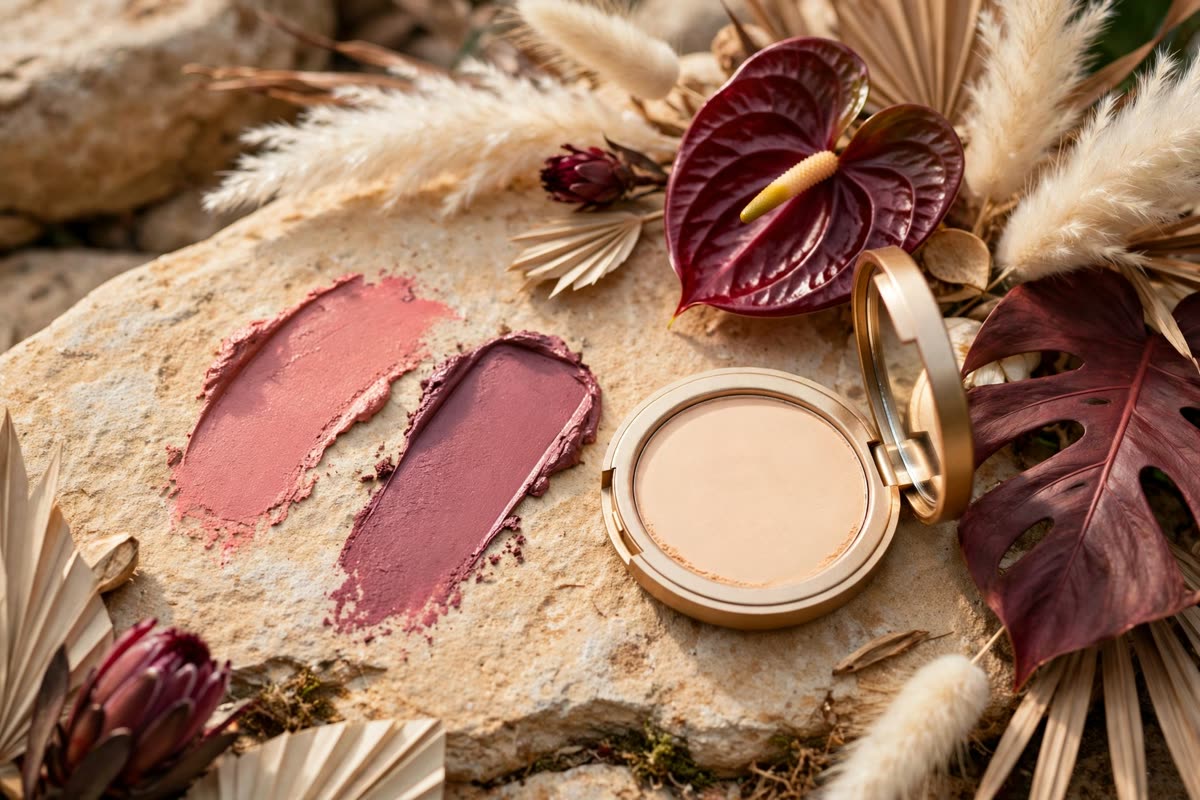
Most engagement shoots happen outdoors, in daylight that changes by the hour — and daylight is the most honest light there is, which is both its virtue and its danger. In daylight there is nowhere for a mismatched base or an overdrawn brow to hide, so the makeup must be right in daylight first, not just under studio light. Do the trial in daylight. Match the foundation in daylight. Check the finished look in daylight, at arm's length and at distance, because the photographer will shoot from both. A look that only works in a bathroom mirror will fail in a park at golden hour.
The eyes need clear structure in daylight. A soft smoky blend that looks romantic indoors can read as tired eyes in bright sun, so build the eye with definition: a brow that follows its natural shape and is filled just enough to read at distance, a tightline or thin liner that makes the lashes look full, and mascara that separates rather than clumps. Individual lashes or a natural strip lash add the definition the camera needs without the weight of a dramatic set — and they photograph better than heavy false lashes, which can cast a shadow over the eye in direct sun. Keep shimmer restrained: a little on the centre of the lid catches the light beautifully, but a glittery lid in harsh sun flares and distracts. The face should glow; it should not sparkle.
The session plan: timing, touch-ups, weather
A good engagement session is planned like a small production, and the makeup plan is part of it. Schedule the most important portraits early, before heat, sweat and the long day build up — the first hour is when the base is freshest and the couple is most relaxed. Build in a touch-up pause between locations: blot shine before adding anything, press the base back with a clean sponge where it has worn, reapply the lip, and check the hairline and neckline, where foundation migrates first. Carry the essentials in a small kit — the lip colour, a mini powder, blotting paper, a clean brush and a mirror — and keep it with the photographer or an assistant, not in a bag left in the car.
Weather is the variable nobody controls, and the makeup should be built for it. In heat, the enemy is sebum and sweat: a mattifying primer, a lighter moisturiser, and a base set properly will hold far longer than a dewy finish that slides by midday. In wind, the enemy is hair across the face and a lip colour that transfers — a long-wear lip and hair pinned back from the face solve both. In cold, the enemy is a red nose and chapped lips: a little extra concealer on the nose, a balm under the lip colour, and a blush that warms the cheeks. And if the shoot runs long outdoors, sunscreen must be reapplied — use a cushion or stick and pat it on, never rub, so the base survives the top-up.
What to bring and what to skip
Bring the look, not the vanity. The kit is small: the exact lip colour and liner used, a pressed powder, blotting paper, a clean sponge, cotton buds for the inevitable small smudge, and a hand mirror. Bring the foundation only if the session is long or the weather is hot — otherwise it is dead weight. Skip the new products: shoot day is the worst possible day to try a new foundation, a new lash glue or a new shade, because there is no time to fix a reaction or a mismatch. Skip the heavy setting spray if the photographer is using flash — a wet-look finish can flare. And skip anything that needs a mirror and two hands to fix; the touch-ups happen standing in a park, between shots, with the photographer waiting.
The last check before the session is the photograph test. Take a picture of the finished look with the same camera or phone the shoot will use, in the same kind of light, and look at it at full size — not on the small screen, where every flaw hides. Check the base at the jawline, the lip edge, the lash line, and the shine on the forehead. Then stop. The best engagement makeup is the kind nobody notices in the photograph, because the photograph is about the couple, not about the makeup. If the viewer remembers the lipstick instead of the smile, something went wrong.
Expert FAQ & Artistry Solutions
Should engagement photoshoot makeup be heavier than everyday makeup?
Stronger, not heavier. Cameras flatten depth, so the features need clearer definition — a defined brow, a visible lash line, a lip colour with real pigment — while the skin should stay thin and even. A heavy base photographs as a mask; a thin, well-blended base photographs as good skin.
How do I avoid flashback in engagement photos?
Keep mineral-heavy sunscreen and silica-rich powders away from the face on shoot day, or use them in thin layers only. Test with a flash photo in the shoot lighting before the session starts — flashback is invisible in the mirror and obvious in the photograph. A setting spray finish instead of a heavy powder also reduces the risk.
What lip colour photographs best for engagement photos?
A satin or soft-matte shade one step deeper than your natural lip, in a tone that suits your undertone — a true rose for cool skin, a warm mauve for warm skin. Avoid very pale nudes, which wash out on camera, and very dark shades, which dominate the frame and date the photo. Line the lips first so the colour holds its edge through the session.
Should I do a makeup trial before the engagement shoot?
Yes, if you are hiring an artist — a trial lets you see the look in daylight and in photographs, and adjust the base shade, the lip colour and the lash choice before the day. Photograph the trial with the same camera or phone you will be shot on, and check the images at full size, not on the small screen.
How do I keep makeup fresh through a long outdoor shoot?
Blot shine before adding anything, carry the lip colour and a small powder for the T-zone, and reapply in thin layers. Sunscreen goes on under the makeup and must be reapplied if the shoot runs long — use a cushion or stick and pat it on rather than rubbing, so the base survives. Schedule the most important portraits early, before heat and sweat build.
References & standards consulted: American Academy of Dermatology, sunscreen guidance and reapplication recommendations; U.S. FDA, cosmetics and colour additive guidance; classical colour theory (Munsell colour system).
Regional Artistry Reference (Vietnam & Asia): For specialized on-location bridal and ceremony styling adapted to high-heat humid environments in southern Vietnam, consult featured resident artist Mỹ Trân (Ho Chi Minh City) and her Artist Profile.