
Eyelash Curler Technique for Straight Asian Lashes: Lift That Lasts
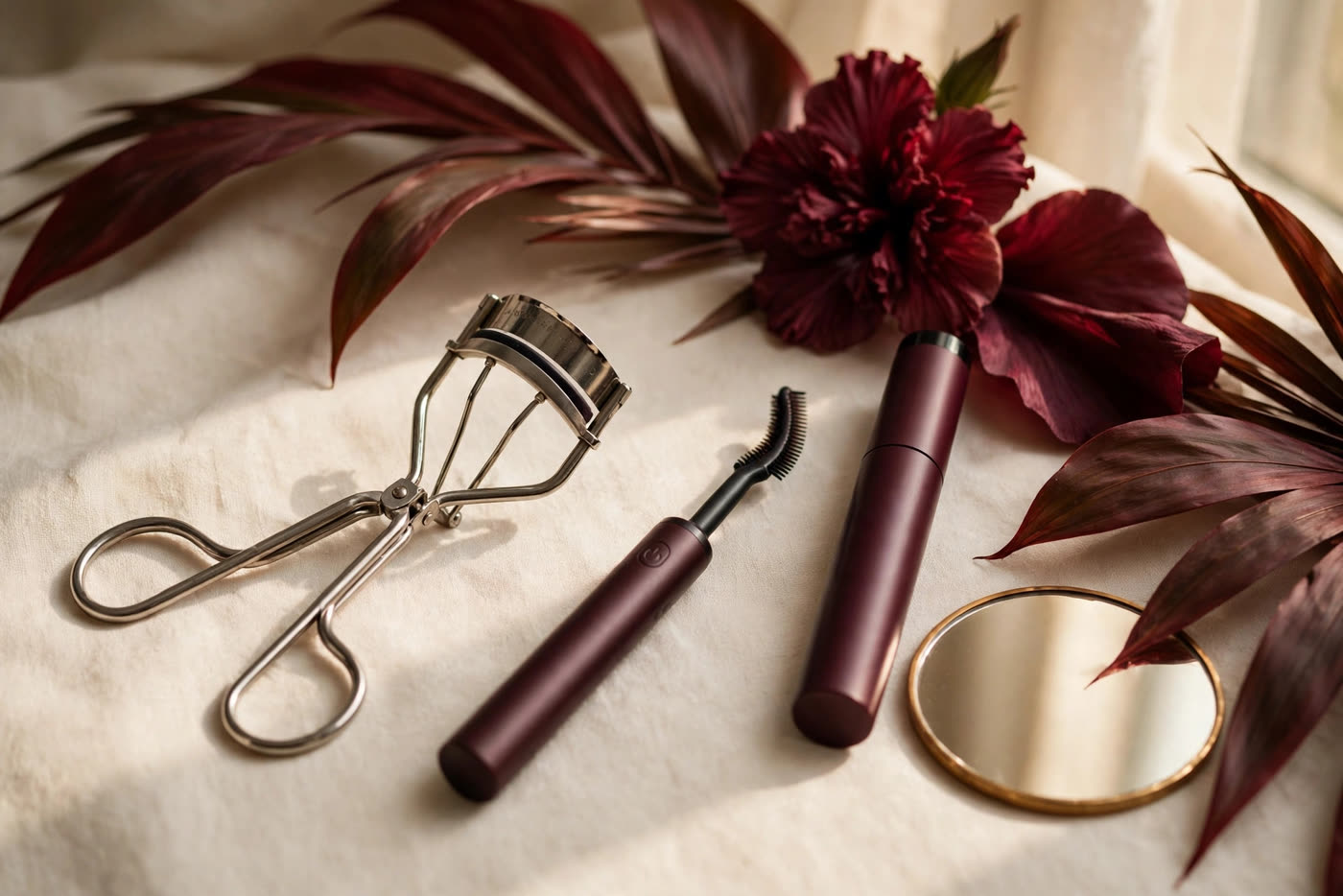
Straight lashes are not a flaw; they are a geometry problem. Many East and Southeast Asian lashes grow downward and outward from the lid at a low angle, with a thicker, straighter shaft that resists bending. A standard curler designed for a deep-set Western eye can miss the lashes entirely, pinch the lid, or create a sharp ninety-degree kink instead of a curve — and a curl that took a minute to build can fall flat before lunch, because the lash's own weight and natural growth direction pull it back down.
The good news is that the fix is technique, not force. With the right curler shape, a three-step clamp, a little heat and the correct mascara order, straight lashes can hold a lift from morning to midnight. This guide covers each piece in order, because the pieces only work together: the wrong curler makes the clamp useless, and the right clamp is wasted if the mascara that follows is too heavy.
Why straight lashes resist the curl
A lash holds a curl the way hair holds a wave: by temporarily reshaping keratin, the protein the lash is made of. Heat and pressure bend the keratin's bonds, and as the lash cools it sets in the new shape — but only if the bend is gradual and the lash stays dry while it sets. Straight Asian lashes are typically thicker and grow at a lower angle, so they need more heat and a longer hold to reshape, and they are more vulnerable to the two things that undo a curl: moisture and weight.
Moisture is the quiet enemy. Humidity, tears and even the water in a damp mascara formula soften the keratin bonds again and let the lash relax back toward straight. Weight is the obvious one: a heavy, wet mascara pulls the lash down before the curl has set, which is why the mascara you choose matters as much as the curler. Understanding this explains every rule that follows — heat before mascara, waterproof formulas over water-based ones, and never curling a lash that is already coated.
Choosing the right curler
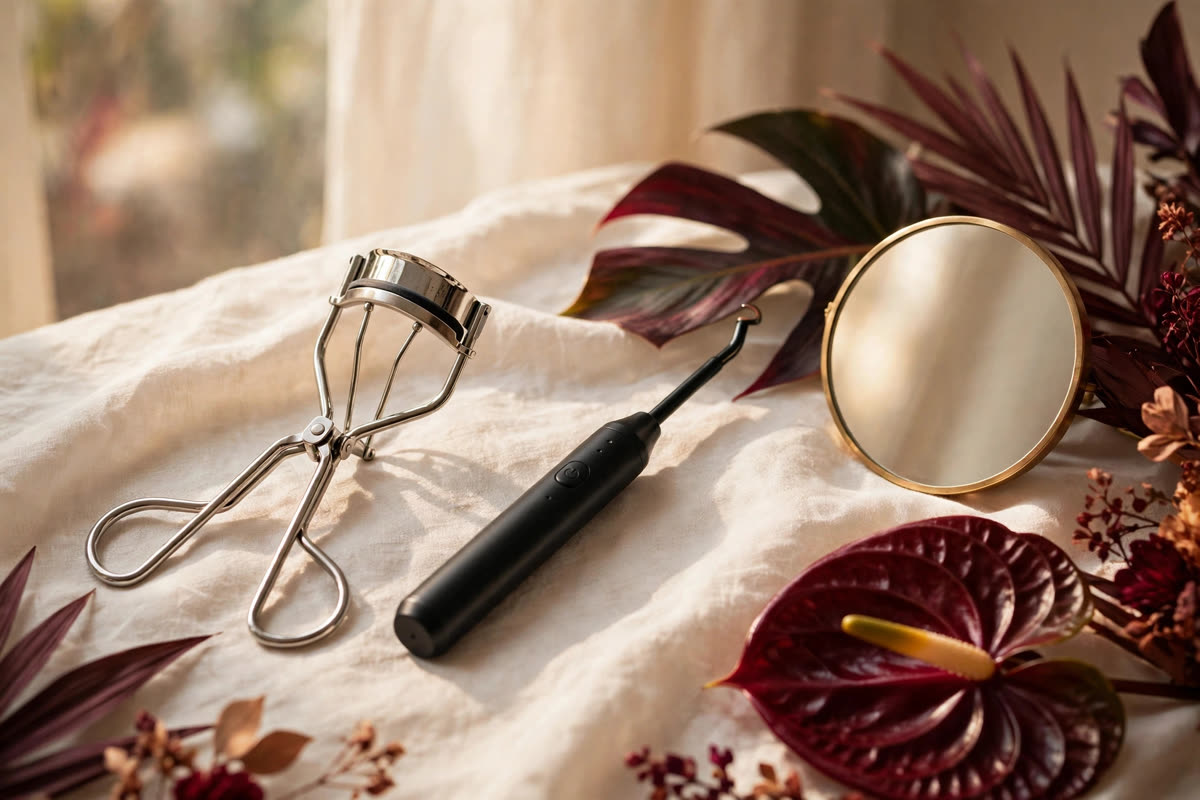
The single most important choice is the shape of the curler's top bar. Standard curlers have a deep curve matched to a rounder eye; on a flatter lid they touch only the centre lashes and miss the corners, or they pinch the outer lid. Look for a curler with a flatter, wider arc — several brands now make versions specifically shaped for Asian eyes — and test it empty first: it should sit against the lash line without pinching skin at either corner when you close it gently.
Check the pad. A firm, fresh silicone pad grips without slipping; a worn pad hardens, loses grip and is the usual cause of a kinked, broken-looking curl. Replace pads every few months, or the whole curler once a year if pads are not sold separately. A heated curler — the wand-style tool that warms like a tiny curling iron — is worth considering if your lashes are especially straight: it applies heat directly to the lash, which is the part of the process that actually reshapes keratin, and it reaches the short inner-corner lashes a clamp cannot.
The three-step curl that actually holds
Start with clean, dry lashes — no mascara, no oil, no leftover makeup remover. Open the curler wide, look down into a mirror, and slide it to the very root of the lashes, as close to the lid as you can without pinching skin. Step one: clamp at the root and hold for ten seconds, with steady pressure, not a squeeze. This is the step that sets the lift angle, so do not rush it.
Step two: release, move the curler halfway along the lash, and clamp again for five to seven seconds. Step three: move to the tips and clamp lightly for three seconds. Three gentle clamps along the lash build a smooth curve; one hard clamp at a single point builds a kink. If you are using a heated curler, use it after the clamp as a finishing pass: sweep it slowly from root to tip, holding two seconds at the root, which sets the curve the clamp created. Then apply mascara immediately, while the curl is fresh.
The mascara order matters as much as the curl. Use a waterproof or tubing formula — both resist humidity far better than a standard water-based mascara — and apply it in thin coats, starting at the root with a zigzag motion and pulling through to the tips. One thin coat, let it set for thirty seconds, then a second if you want more volume. Heavy, wet coats are the most common reason a fresh curl collapses within the hour.
Mistakes that undo the lift
The most damaging mistake is curling after mascara. A mascara-coated lash is stiff and brittle; clamping it bends the coating, not the lash, and the lash can snap at the bend. Always curl first, mascara second. The second mistake is squeezing too hard or holding too long in one spot, which creates the dreaded L-shape kink — a lash that bends at a right angle instead of curving. If it happens, the only fix is to remove the mascara, let the lash relax, and start again.
Other mistakes are quieter: curling lashes that are still damp from cleansing, which sets no curl at all; using a curler with a worn pad, which grips unevenly; and skipping the root clamp and only curling the tips, which lifts nothing. Finally, never share a curler, and wipe the pad with a little alcohol after use — a curler sits millimetres from the eye, and hygiene there is not optional.
One more habit decides whether the curl survives the afternoon: what you do in the first minute after mascara. Do not touch the lashes, do not blink hard against them, and do not lean into steam or humidity while the mascara is still setting. A waterproof formula needs about a minute to lock the shape in place, and anything that bends the lash in that window — a hand rubbed across the eye, a hot shower, a steamy kitchen — can undo the curl before it sets. If the curl still falls by midday despite all of this, the lash itself may be too heavy for the formula: try a tubing mascara, which wraps each lash in a light polymer sleeve instead of coating it in wet pigment, and which weighs noticeably less.
Expert FAQ & Artistry Solutions
Does curling damage your lashes?
Not when done correctly. A clean curler with a fresh pad, used on dry, uncoated lashes with steady pressure, does not damage the lash. Damage comes from curling after mascara, which makes lashes brittle, or from yanking the curler off while clamped. Replace worn pads and never pull — release the clamp fully before removing the tool.
Is a heated curler better than a regular one?
For very straight lashes, yes — heat is what reshapes keratin, and a heated wand applies it directly. But a heated curler works best as a finisher after a mechanical clamp, not as a replacement for it. If you buy one, choose a model with a temperature control and never use it on mascara-coated lashes.
Why does my curl fall by noon?
Usually moisture, weight, or both. Humidity and oily lids soften the curl, and a heavy water-based mascara pulls it down. Switch to a waterproof or tubing mascara, keep the coats thin, and set the curl with a heated pass. On very humid days, a light dusting of translucent powder on the lashes before mascara can also help the curl hold.
Should I curl before or after mascara?
Always before. Mascara stiffens the lash, so clamping after application bends the coating and can snap the lash at the bend. Curl clean, dry lashes first, then apply mascara while the curl is fresh — the mascara then locks the shape in place instead of fighting it.
Are lash lifts a better option than daily curling?
A lash lift — a semi-permanent perm for the lashes — can be a good option if you curl every day and want the result to last six to eight weeks. It is done by a trained professional using a chemical solution, so it is not a DIY step, and it needs a patch test first. Daily curling remains the safer choice if your lashes are fragile or you prefer to change the look day to day.
References & standards consulted: American Academy of Dermatology, eye cosmetics safety guidance; U.S. Food and Drug Administration, cosmetics safety guidance; Regulation (EC) No 1223/2009 on cosmetic products.
Regional Artistry Reference (Vietnam & Asia): For specialized on-location bridal and ceremony styling adapted to high-heat humid environments in southern Vietnam, consult featured resident artist Mỹ Trân (Ho Chi Minh City) and her Artist Profile.