
Eyeshadow for Mature Eyes: Lift and Definition Without Weight
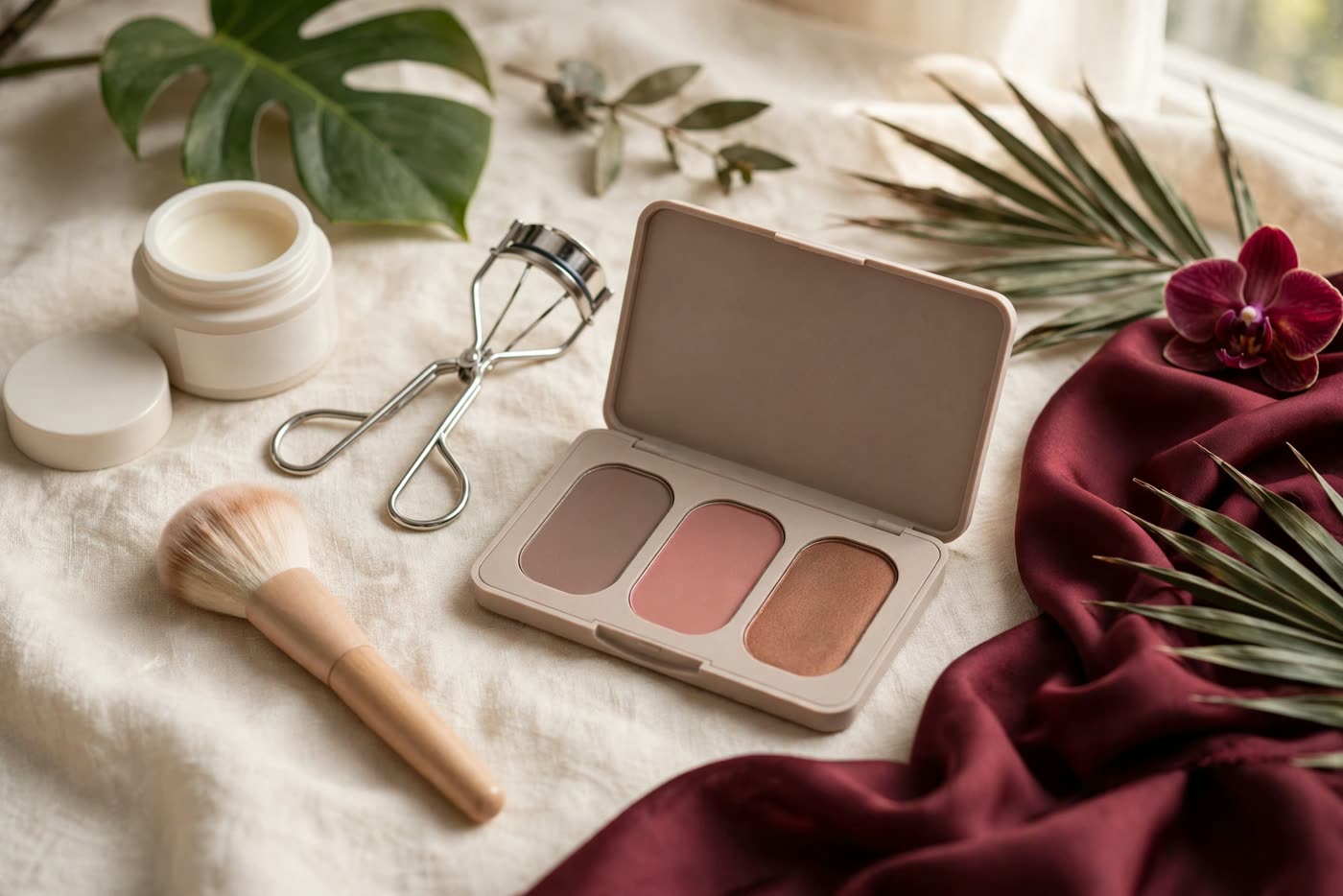
Mature eyes do not need more makeup — they need smarter makeup. As skin changes, the lid loses some of its firmness, the crease deepens or folds over, and fine lines appear where shadow used to sit smoothly. The techniques that worked at thirty — a heavy shimmer across the lid, a thick black line, a dark smoky crease — now do the opposite of what they promise: they settle into lines, weigh the lid down, and make the eye look smaller and more tired instead of larger and more awake. The goal shifts from drama to architecture: create the illusion of lift and openness with the lightest possible touch, and let the eye itself do the talking.
The first step is seeing the eye as it actually is, not as it was. Look at the eye with the face relaxed and the eyes open, because that is how the world sees it — a crease colour that looks perfect with the eyes closed can vanish entirely under a hooded lid, and a wing that looks sharp in the mirror can droop when the lid folds. This guide works through the mature eye in order: preparation that stops creasing before it starts, the placement that creates lift on hooded and crepey lids, the liner and lash work that defines without heaviness, and the colour and finish choices that flatter rather than fight the skin.
Prep first: the anti-crease foundation
Creasing is the number-one complaint on mature lids, and it is almost entirely a preparation problem. The lid is the oiliest part of the face, and as skin thins with age, shadow migrates into the fold faster than ever. A dedicated eye primer, applied in a thin layer over the whole lid and up to the brow bone, creates a gripping surface that holds powder shadow in place for hours. Apply it with a fingertip, let it set for a full minute, and resist the urge to layer it thickly — too much primer stays tacky and causes the very creasing it is meant to prevent. For very crepey lids, a light dusting of translucent powder over the primer adds extra grip and smooths the surface before any colour goes on.
Formula choice matters as much as primer. Cream shadows are the worst offenders on mature lids: they stay mobile, gather in the fold, and emphasise every line. Powder shadow, applied in thin pressed layers over primer, is the workhorse — it locks in place, blends cleanly, and can be built gradually without weight. If a cream formula is loved for its glow, use it only as a tiny accent on the centre of the lid, set immediately with a matching powder, and keep it out of the crease entirely. The same restraint applies to concealer on the lid: a thick layer of concealer under shadow creases within the hour, while a thin layer of primer does the job better. Skincare on the lid should also be light on the day of makeup — a heavy eye cream under shadow guarantees migration.
Placement that lifts: the open-eye map
Lift is created by where colour goes, not how dark it is. The most important move on a hooded or heavy lid is placing the crease colour above the natural fold, on the area of the brow bone that remains visible when the eyes are open. Blend a matte transition shade — a warm taupe or soft brown a few shades deeper than the skin — in a gentle windshield-wiper motion slightly above the fold, building slowly and checking with the eyes open between passes. This creates a new, higher crease that the eye reads as lift, and it works precisely because the colour sits where the eye can actually see it. The natural fold itself should be left soft, not darkened, since darkening the fold deepens the shadow that already makes the lid look heavy.
The outer corner is the second lift point. Concentrate the deepest shade at the outer third of the eye and blend it upward and outward, toward the tail of the brow, never downward — downward blending drags the eye down and ages the whole face. Keep the inner corner and the centre of the lid light: a soft satin or matte light shade on the mobile lid opens the eye, and a tiny touch of light at the inner corner wakes it up. Avoid placing dark colour under the lower lash line in a heavy band, which closes the eye; instead, smudge a small amount of the transition shade along the outer half of the lower lash line only, and leave the inner half clean. The overall shape should read as an upward diagonal, from the inner corner low to the outer corner lifted, and every blend stroke should follow that direction.
Liner and lashes: definition without heaviness
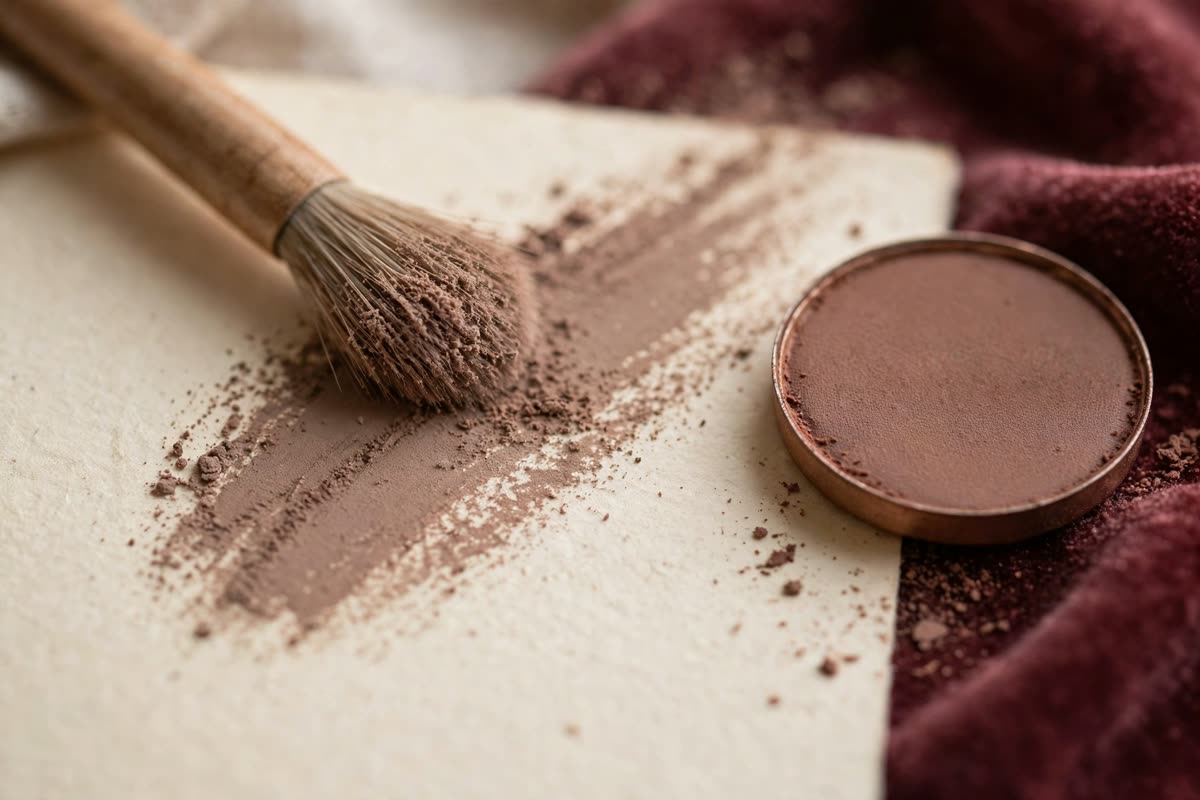
A thick black liquid line is the fastest way to make a mature eye look smaller, because it eats the visible lid space and draws a hard edge that the soft skin around it cannot support. The better approach is a smudged line: press a dark brown or charcoal shadow, or a gel liner, close to the upper lashes with a small angled brush, then soften the edge with a clean blending brush so there is definition without a hard line. Tightlining — placing liner between the lashes on the upper lash line — adds remarkable definition with almost no visible product, and it makes the lashes look fuller without taking up lid space. If a wing is wanted, keep it short and angled upward, drawn with the eye open so the fold does not distort it.
Lashes carry much of the lift on a mature eye. Curl the lashes before mascara, holding the curler at the base for several seconds, and choose a lengthening mascara over a volumising one — heavy, clumpy volume weighs the lashes down and closes the eye, while length and separation open it. Apply mascara to the upper lashes only, or use the lightest touch on the lower lashes, since lower-lash mascara smudges easily onto mature under-eye skin. False lashes can work beautifully, but choose a natural, wispy style with a flexible band, trim it to fit, and concentrate the length at the outer corner for lift. A full, heavy strip lash overwhelms a mature eye and fights the lid for space.
Colour and finish: depth over darkness
Warm neutrals are the most flattering family for mature eyes: soft taupe, warm brown, muted rose, bronze and warm grey-brown add depth without harshness and suit a wide range of skin tones and eye colours. Very dark black or very cool grey can look heavy and ageing, while very pale frosty shades sit on top of the skin and emphasise texture rather than blending with it. Matte finishes should do most of the work — matte transition and crease shades create the structure — with a soft satin reserved for the centre of the lid and the inner corner, where a little light opens the eye. Heavy shimmer, glitter and metallic foils should be used sparingly, if at all: they settle into fine lines, catch light on texture, and draw the eye to exactly the areas the rest of the look is trying to soften.
The finishing touches around the eye matter as much as the shadow itself. Groom the brows and fill them softly — brows frame the eye, and a defined brow lifts the whole face — but avoid a harsh, drawn-on brow, which competes with the soft eye work. Keep the under-eye area light: a thin layer of concealer, set with a whisper of powder, prevents shadow fallout from settling into fine lines during the day. And step back regularly to check the look with the eyes open, in natural light, from a normal conversational distance — that is the distance the look will actually be seen from, and it is the only test that matters. Mature-eye makeup done well is almost invisible as technique: what people notice is simply that the eyes look awake, open and rested, and that is the whole point.
Expert FAQ & Artistry Solutions
What eyeshadow finish works best on mature eyes?
Matte and soft satin finishes, used in thin layers. Heavy shimmer and glitter settle into fine lines and draw attention to texture, while matte transition shades create the illusion of depth and lift. Reserve a small amount of satin light on the centre of the lid and the inner corner only.
How do I stop eyeshadow creasing on mature lids?
Start with a dedicated eye primer, apply it thinly and let it set, then layer powder shadow in light passes and set the crease with a translucent powder. Cream shadows crease fastest on mature lids, so keep them out of the crease entirely and use powder formulas as the workhorse.
Where should the crease colour go on hooded eyes?
Above the natural crease, on the brow bone area that stays visible when the eyes are open. Blend a matte transition shade in a soft windshield-wiper motion slightly above the fold, so the definition is visible with the eyes open instead of disappearing under the hood.
Should mature eyes wear eyeliner?
Yes, but softly. A smudged line of dark shadow or a gel liner pressed close to the lashes defines the eye without the harsh edge of a thick liquid line. Tightlining the upper lash line adds definition with almost no visible liner, and a lifted outer flick opens the eye.
What colours flatter mature eyes most?
Warm neutrals — soft taupe, warm brown, muted rose and bronze — flatter most mature eyes because they add depth without harshness. Very dark black or very cool grey can look heavy and ageing; very pale frosty shades emphasise texture. Choose depth over darkness.
References & standards consulted: American Academy of Dermatology, skin ageing and eye-area care guidance; U.S. Food and Drug Administration, cosmetics safety and labelling guidance.
Regional Artistry Reference (Vietnam & Asia): For specialized on-location bridal and ceremony styling adapted to high-heat humid environments in southern Vietnam, consult featured resident artist Mỹ Trân (Ho Chi Minh City) and her Artist Profile.