
First-Date Makeup: Polished, Natural and Kiss-Proof Enough
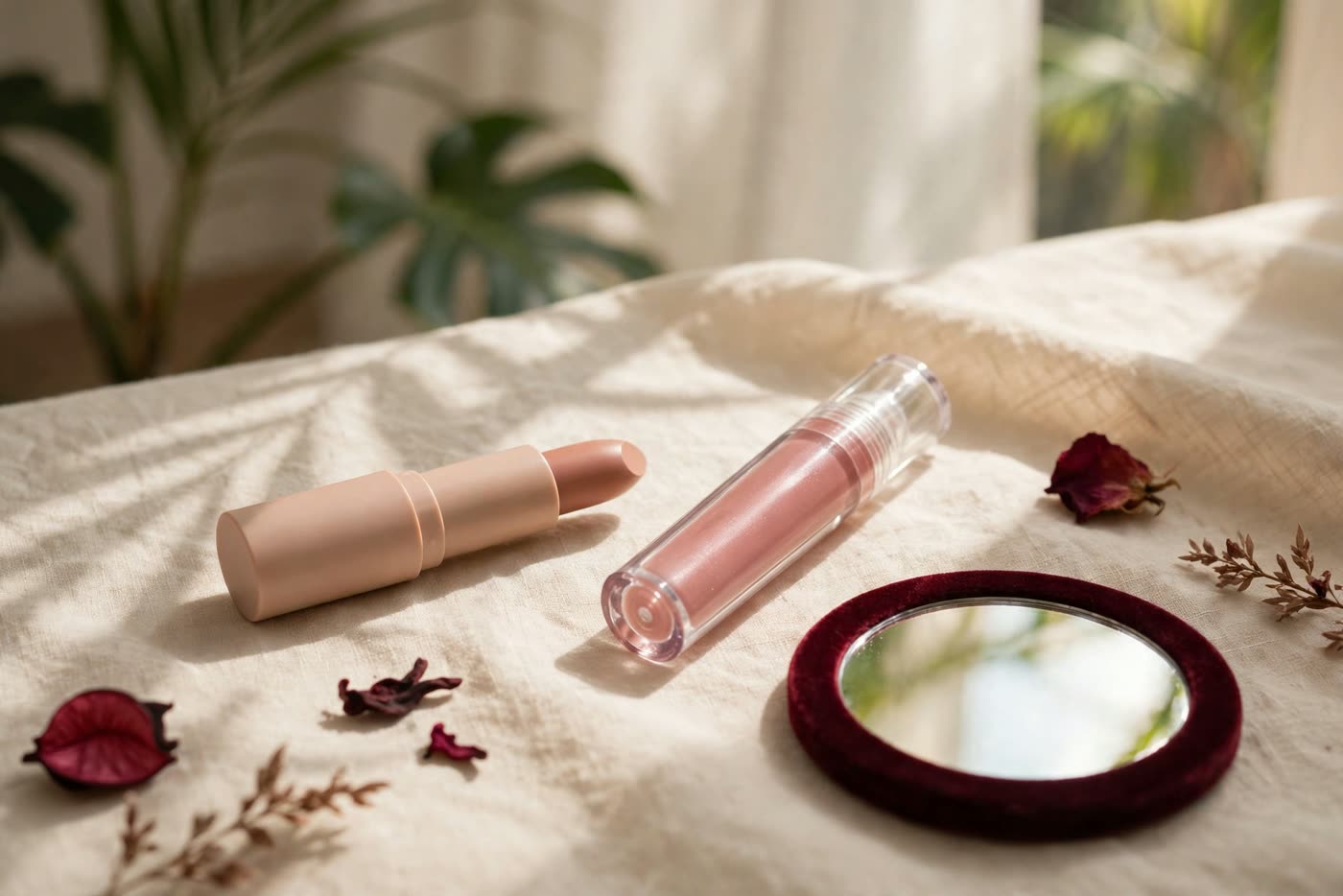
A first date is the hardest brief in makeup, because the goal contradicts itself. You want to look like the best version of yourself — rested, even-toned, a little brighter than usual — while also looking like yourself, the person your date will actually meet again on a second date. Heavy glamour risks the wrong message; no makeup at all wastes the one tool that reliably evens out a long week. The sweet spot is not a specific look but a specific quality: makeup that reads as skin, light and decision, rather than as product.
The second problem is durability under real conditions. A first date runs for hours: drinks, dinner, laughter, maybe a walk, and — if things go well — a kiss goodnight. Makeup that survives a two-hour dinner is not the same as makeup that survives a quiet evening at home. Heat from a restaurant, oil from the T-zone, steam from a hot dish, and lip contact all attack different parts of the look, and the fix is not more product but the right layers in the right order, chosen before you leave the house.
The goal: recognisably you, only steadier
Start by deciding what the look is for. A first date is not a photoshoot and not a job interview; nobody is scoring your contour. The makeup should do three quiet jobs: even out tone so tired skin does not read as stress, add a little colour back into the cheeks and lips so you do not look washed out under restaurant lighting, and define the eyes just enough that they read across a table. Anything beyond that — dramatic liner, heavy lashes, a bold lip — is a choice, not a requirement, and it should be a choice you are comfortable maintaining for four hours, not one you regret by dessert.
That is why artists recommend building the look around your own features rather than a trend. If you rarely wear a red lip, a first date is the wrong night to debut one; the maintenance alone will distract you from the conversation. If you always wear winged liner, wearing it is not overdressed — it is you. The test is simple: look in the mirror and ask whether the face looking back is the one your friends would recognise in a dim restaurant. If yes, the look is right. If the makeup is the first thing you notice, take a layer off.
A base that survives dinner and candlelight
Restaurant lighting is flattering, but restaurant heat is not. Warm rooms, hot food and nervous energy all raise skin temperature, and a base built for a cool office will start to move within the hour. The fix is a thin, flexible base: a light layer of a long-wearing foundation or a skin tint, pressed in with a damp sponge rather than brushed on, with concealer used only where it is needed — under the eyes, around the nose, over a spot — instead of as a second full layer. Two sheer layers outlast one heavy one, because a heavy layer cracks and separates as skin warms, while thin layers flex with it.
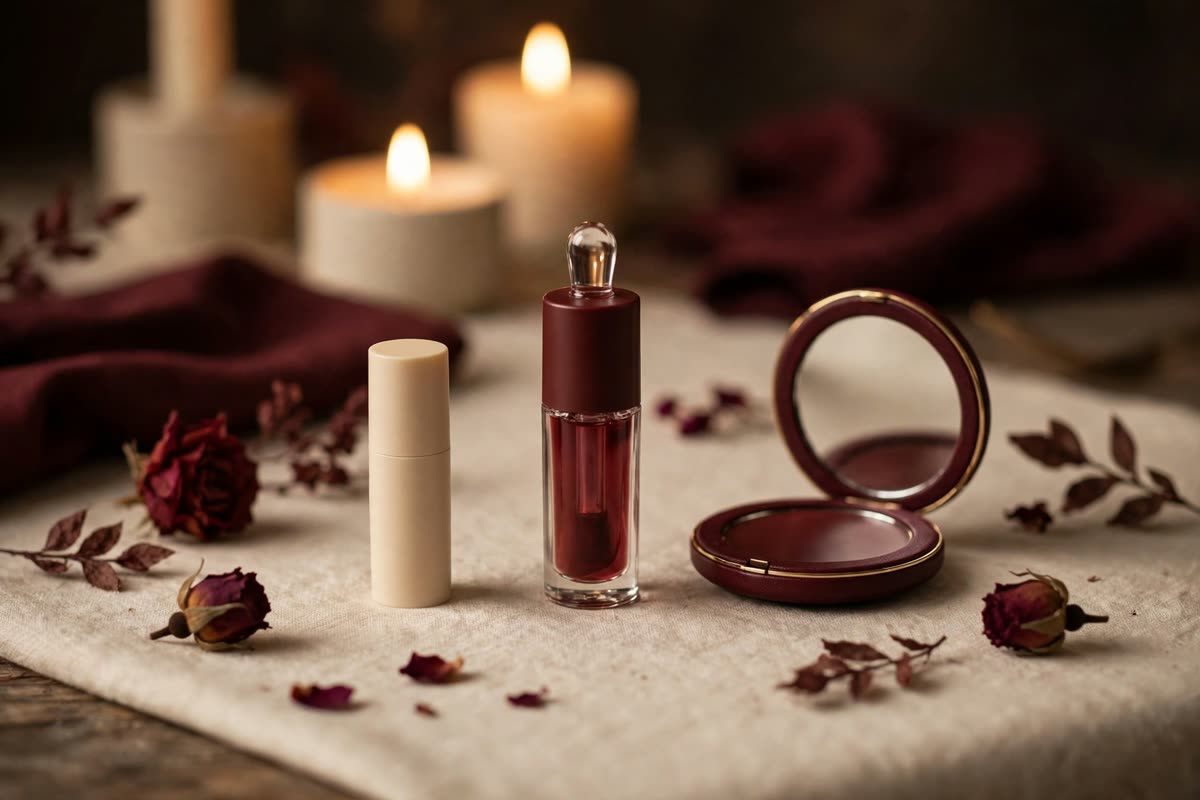
Setting matters more than coverage. A light press of translucent powder on the T-zone only — forehead, nose, chin — controls the shine that appears mid-meal without mattifying the whole face into a mask. Skip powder on the cheeks, where it dulls blush and reads as dryness under candlelight. A setting spray over the finished base adds a flexible film that slows breakdown, and it is the single most useful product in a first-date kit, precisely because it works invisibly. Test the base in the light you will be seen in: warm indoor light hides flaws that daylight would catch, but it also hides the wrong shade, so check the jawline in daylight before you leave.
Lips built for a kiss, not against one
Lips are where most first-date makeup fails, and the failure is usually a product choice, not a technique error. A glossy, opaque lipstick looks wonderful in the mirror and transfers onto everything it touches — a glass, a napkin, a cheek — and a matte liquid lipstick stays put but dries the lips and crumbles at the centre after eating. The middle path is a stain: a lip stain or a tinted balm sinks colour into the lip rather than sitting on top of it, so it survives food, drink and a kiss with most of its colour intact, and it fades evenly instead of wearing off in patches.
The layer order matters. Start with a light balm, blotted down so the lips are smooth but not slippery. Then a stain, pressed in with a fingertip and allowed to set for a minute. Then — if you want shine — a small amount of gloss or a sheer lipstick pressed over the centre only, not carried to the edges, where transfer starts. Keep the exact lip product in your bag, because lips are the one part of the look you will want to refresh, and reapplying the same product over a stain is easy, while reapplying over a crumbled matte is not. Avoid dark or very bright shades for a first date unless they are truly yours: a stain in a shade close to your natural lip is forgiving, and forgiving is what the night needs.
The low-maintenance touch-up kit
Take three things and nothing more: blotting paper, the lip product you are wearing, and a small pressed powder or a cushion compact. That is the whole kit. Blotting paper removes shine without adding product, which matters because each new powder layer dulls the base a little further, and by the third application the face starts to look cakey. One blot, one press of powder if needed, and the base is back. Do it in the restroom, quickly, and then stop checking: a date notices confidence far more than it notices shine, and a person who keeps disappearing to fix their face reads as anxious, not polished.
Finally, plan the exit of the look as well as its entrance. Makeup that removes easily is part of the design: a gentle cleanser or micellar water at home, no scrubbing, no sleeping in the base because the night ran long. And one piece of advice that sounds like a joke and is not: do not try anything new on a first date. No new foundation shade, no new lash glue, no new lip product. New products have unknown wear, unknown reactions and unknown behaviour under restaurant heat. A first date is a performance of the familiar, polished — and the most reliable version of that is the routine you already know works on your face.
Expert FAQ & Artistry Solutions
Will my date notice I am wearing makeup?
If the look is built the way this guide describes — thin base, colour close to your own, lips a shade near natural — the answer is almost always no. What people notice is not makeup but its absence of obviousness: even skin, rested eyes, a healthy flush. Heavy coverage, sharp contour and dark liner are what read as makeup; a sheer, well-matched base reads as good skin.
What lip product survives kissing best?
A lip stain, by a clear margin. Stains sink colour into the lip instead of sitting on top, so they survive food, drink and contact with most of their colour intact, and they fade evenly. Layer a little gloss or sheer lipstick over the centre only if you want shine, and keep the same product in your bag for a quick refresh.
How much coverage is too much on a first date?
More than one thin layer of foundation plus spot concealer is usually too much. A heavy base looks fine in a mirror and reads as a mask across a candlelit table, and it is the first thing to crack as the room warms up. If you need more coverage, use a long-wearing formula applied thinly rather than piling on a sheer one.
How do I stop shine without looking powdery?
Blot first, powder second, and powder only the T-zone. Blotting paper removes oil without adding product, and a light press of translucent powder on the forehead, nose and chin controls the shine that returns. Powdering the whole face is what creates the dry, cakey look by the end of the night.
What if I cry, laugh or sweat during the date?
Waterproof mascara and a long-wearing liner cover tears and laughter, and a setting spray helps the base survive sweat. But the real insurance is keeping the look light: there is less to smudge, less to run, and less to worry about. A tissue pressed gently under the eye fixes a tear faster than any product.
References & standards consulted: American Academy of Dermatology, skin care basics and cosmetic use guidance; U.S. Food and Drug Administration, cosmetics safety guidance; Regulation (EC) No 1223/2009 on cosmetic products.
Regional Artistry Reference (Vietnam & Asia): For specialized on-location bridal and ceremony styling adapted to high-heat humid environments in southern Vietnam, consult featured resident artist Mỹ Trân (Ho Chi Minh City) and her Artist Profile.