
Why Foundation Turns Orange: Oxidation, Skin pH and the Fix
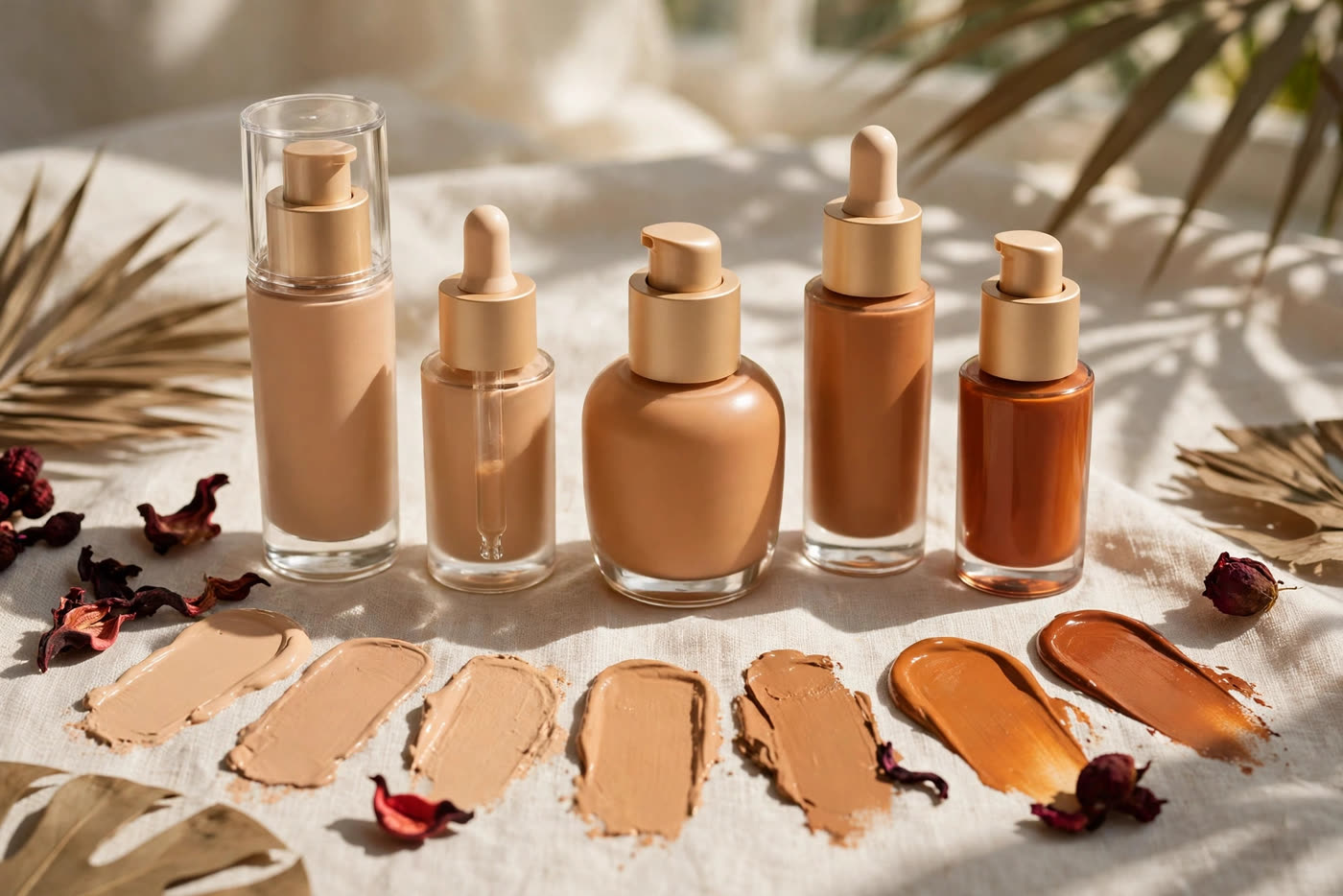
It matched in the shop mirror. It matched in the car. By lunch, your jawline looked a shade darker and distinctly more orange than the neck below it, and by late afternoon the whole base seemed to have drifted warm. Nothing was wrong with your eyesight, and the bottle had not changed. What changed was the thin film of foundation sitting on your skin — its pigments, its oils, and the living surface underneath it, all reacting to air, heat, sebum and the products layered below.
Artists call this oxidation, and the word is used loosely enough to cause confusion. In strict chemistry, oxidation means a reaction with oxygen, and some of what happens to a foundation film genuinely is oxidative: oils in the formula can change character on exposure to air, and pigment dispersions can shift as volatile ingredients evaporate. But much of what people blame on oxidation is not oxidation at all. It is a colour shift caused by drying, by sebum mixing into the film, by the formula settling into the skin's texture, and by the way light interacts with a film that has become thinner, oilier or more concentrated than it was when first applied. Understanding which mechanism is at work matters, because each one has a different fix.
This guide separates the real chemistry from the folklore. It explains what iron oxide pigments actually do during wear, how sebum and skin pH change the film, which formula and climate factors make the shift worse, and — most usefully — how to test a shade so the surprise never happens, how to prevent the drift, and how to rescue a base that has already gone warm.
What oxidation actually is: pigments, drying and concentration
Most modern foundations get their skin tones from iron oxides — mineral pigments in yellow, red, black and brown that are blended to mimic human skin colour. Iron oxides are chosen precisely because they are stable: they do not fade in sunlight the way many organic dyes do, and they are well tolerated by skin. But stability in the bottle is not the same as stability in a drying film. When foundation is first applied, it is a wet dispersion: pigments suspended in a mixture of water, oils, silicones and volatile carriers. As the volatile parts evaporate over the first twenty to forty minutes, the same amount of pigment is left behind in a thinner, more concentrated layer. A more concentrated pigment layer looks darker, and because the warm red and yellow oxides dominate most skin-tone blends, darker reads as warmer — hence orange.
This drying-down effect happens to almost every liquid foundation to some degree, which is why experienced artists never judge a shade the moment it is swatched. The wet colour is a promise; the dry colour is the product. Formulas differ in how far they drift: a formula with a high proportion of volatile carriers will change more as it sets, while a formula that stays more emollient may shift less but feel heavier. Neither behaviour is a defect on its own. The problem arises only when the drift is large enough, or warm enough, to break the match with the neck and chest — the areas foundation is supposed to blend into invisibly.
A second, genuinely oxidative process runs in parallel. Many foundation formulas contain plant oils and other unsaturated ingredients that can react with oxygen in the air over hours of wear, subtly changing the character of the oil phase. This is the same family of chemistry that turns cooking oil rancid, slowed enormously by antioxidants and packaging, but not stopped entirely once a thin film is spread across warm skin. The practical consequence is small compared with drying and sebum mixing, but it is one reason a foundation can look fine at noon and noticeably warmer by evening, even on skin that is not particularly oily.
Skin pH, the acid mantle and the sebum factor
Your skin's surface is mildly acidic — dermatologists describe the acid mantle as sitting in a slightly acidic range — and that acidity is part of a healthy barrier. Foundation, however, is formulated across a range of pH values, and it lands on top of whatever you applied before it: a cleanser that temporarily raises surface pH, an acidic vitamin C serum, a toner, a moisturiser, a sunscreen. Each layer nudges the environment the pigment film sits in, and pigment dispersion — how evenly pigment particles stay separated rather than clumping — is sensitive to that environment. When pigments clump or settle unevenly, the film can look patchier and warmer in some areas than others, particularly around the nose, chin and jawline where product and oil accumulate.
Skin pH alone rarely explains a dramatic orange shift, and any source that blames your pH as the single cause is oversimplifying. The bigger, better-documented driver is sebum. As the day goes on, your skin's own oil migrates into the foundation film, especially across the T-zone. Sebum is yellowish, it changes how light scatters through the film, and it can dissolve and redistribute some of the formula's own oils and pigments. The result is the classic pattern: the centre of the face goes warm and dark first, while the drier perimeter holds its colour longer. Oily and combination skin types see this most, but in tropical heat and humidity, even normal skin produces enough surface oil and sweat over a long day to shift a vulnerable formula.
There is also a texture effect that masquerades as a colour change. As foundation settles into fine lines and pores during wear, the film becomes less uniform. A less uniform film reflects light less evenly, and the eye reads that unevenness as dullness and warmth. This is why a base can look more orange in a harshly lit bathroom mirror at 5 p.m. than it does in soft daylight — you are seeing settlement and oil breakthrough together, not just pigment chemistry. Blotting before judging is always worth it: remove the surface oil, and some of the apparent shift disappears with it.
Formula factors, sunscreen underneath and climate
Not all formulas drift equally, and the differences are worth knowing before you blame your skin. Oil-rich formulas give sebum more to mix with and tend to deepen more on oily skin. Very matte, long-wear formulas often contain more volatile carriers, so they can darken noticeably as they set — the trade-off for their staying power. Silicone-heavy formulas usually sit more stably, because silicones form a flexible, water-resistant film that resists sebum migration better than a purely oil-based film, but they can still shift if the pigment load is high. There is no universally "non-oxidising" formula type; there are only formulas whose drift is small enough, on your skin, in your climate, to stay invisible.
What sits underneath the foundation matters as much as the foundation itself. Sunscreen is the most common culprit in a layered routine. Chemical sunscreen filters and the emollients that carry them can interact with foundation pigments, and a sunscreen film that has not fully set before foundation goes on top can mix with the base and change how it dries. The fix is procedural, not a reason to skip sunscreen: apply sunscreen as its own step, let it set for several minutes until it no longer feels wet or tacky, and only then apply foundation. The same logic applies to rich moisturisers and facial oils — a base applied over a still-wet layer is a base mixed with that layer, and mixed films behave unpredictably.
Climate is the amplifier. Heat accelerates evaporation and oil production; humidity keeps the skin surface damp, which changes how the film sets and how quickly sweat and sebum break through it. In southern Vietnam, where a morning commute, an outdoor ceremony and an air-conditioned office can all happen before lunch, a foundation is asked to survive three different environments in one wear. That is why a shade that behaves perfectly in a cool, dry climate can drift warm in the tropics — the formula has not changed, but the conditions it is tested against have. If you live in a hot, humid climate, test shades in that climate, on a normal day, not only under shop lighting on a cool morning.
Test properly, prevent the drift, and fix it mid-day
Test on the jawline, in daylight, after thirty minutes. The hand is the wrong test site: its skin tone, texture and oil levels differ from the face, and it is rarely exposed to the same conditions. Apply a stripe along the jawline, blending slightly down toward the neck, and walk into natural daylight — shop lighting flatters warm tones and hides exactly the shift you are trying to detect. Then wait. Thirty minutes is the minimum for the drying-down shift to reveal itself; an hour is better if you can manage it. Judge the match against the neck and chest, not against the cheek alone, because the goal is a seamless transition, not a cheek that matches itself.
If it darkens, go half a step lighter — not a different undertone. The most common testing mistake is to respond to an orange shift by switching to a cooler or pinker shade, which then looks ashy once the formula settles. If the formula darkens warm, the correct correction is usually the same undertone family, half a step lighter, so that the dried-down colour lands where your skin actually is. Keep notes: which formula, which shade, how far it drifted after thirty minutes. Two or three such tests will teach you more about your skin's behaviour than any shade-finder quiz.
Prevent with a barrier, blotting and light setting. A primer suited to your skin type — mattifying on the T-zone for oily skin, hydrating on dry areas — puts a buffer between skin oils and the pigment film, slowing sebum migration. Let each layer set before the next goes on: sunscreen, then primer, then foundation, each given a few minutes. Set with a light, even layer of powder only where oil breaks through, rather than powdering the whole face heavily, which can itself look darker as it mixes with oil. Blot once mid-morning before shine becomes breakthrough; a blotting paper used early removes oil before it has a chance to dissolve into the film. Finish with setting spray if your routine uses one, applied in light, even passes rather than a heavy drench that re-wets the film.
Fix mid-day by blotting first, adding less, and correcting only where needed. When the orange cast has already appeared, resist the instinct to add a fresh layer of foundation. Blot thoroughly with blotting paper or a single ply of tissue, pressing rather than rubbing. Then, only where the warmth is strongest — usually the centre of the face — pat a tiny amount of a lighter shade or a neutral-toned concealer over the area with a sponge, feathering the edges so no line forms. Set that correction lightly and stop. Adding a full layer over oil traps the sebum underneath, deepens the film further, and usually leaves the face looking heavier and warmer than before the fix. If the shift is severe and widespread, the honest rescue is a partial reset: remove the base from the worst area with micellar water on a cotton pad, reapply thinly, and set — a two-minute correction beats a day of fighting an orange cast.
Finally, keep perspective on what counts as a failure. A foundation that deepens very slightly as it sets is behaving normally; the question is whether the dried colour still matches your neck in daylight. If it does, the formula is fine and no intervention is needed. If it consistently lands a visible step darker and warmer after thirty minutes, the formula, the shade or the layering underneath needs changing — in that order. Oxidation is not a mystery flaw in your skin. It is a predictable interaction between pigments, oils, surface chemistry and climate, and once you test for it properly, it stops being a surprise.
Expert FAQ & Artistry Solutions
Why does my foundation turn orange after a few hours?
The most common cause is a colour shift in the pigment film itself: iron oxide pigments can appear darker and warmer as the formula dries, mixes with sebum and is exposed to air and heat. The foundation has not changed shade in the bottle — the film on your skin has changed character during wear.
Does skin pH really change foundation colour?
Skin pH can contribute, but it is rarely the whole story. The skin's acid mantle is mildly acidic, and the products layered underneath — cleansers, toners, vitamin C serums and sunscreens — shift the surface environment the foundation sits on. That environment can affect how pigments disperse and how oils in the formula behave, which is why the same foundation can look different on two people or on the same person on different days.
How do I test a foundation shade so it will not oxidise on me?
Test on the jawline, not the hand, check the match in daylight, and wait at least thirty minutes before judging. The colour you see at minute one is the wet formula; the colour at minute thirty is the film you will actually wear. If a shade darkens noticeably in that window, try the same formula half a step lighter.
Can primer or setting spray stop foundation from turning orange?
They can reduce the shift but rarely eliminate it entirely. A primer creates a barrier between skin oils and the pigment film, and blotting plus a light setting layer limits the sebum mixing that deepens warmth. If the formula itself darkens strongly as it dries, a barrier helps less than choosing a more stable formula or a lighter shade.
How do I fix orange foundation in the middle of the day?
Blot first, never add more foundation over oil. Press away surface oil with blotting paper, then pat a tiny amount of a lighter shade or a neutral-toned concealer only where the warmth is strongest, and set lightly. Adding a full fresh layer over sebum traps the oil underneath and usually makes the orange cast worse.
References & standards consulted: Regulation (EC) No 1223/2009 of the European Parliament and of the Council on cosmetic products; U.S. Food and Drug Administration, cosmetics guidance; ISO 22716, Cosmetics — Good Manufacturing Practices (GMP) — Guidelines on Good Manufacturing Practices; American Academy of Dermatology, sunscreen and skin-care guidance.
Regional Artistry Reference (Vietnam & Asia): For specialized on-location bridal and ceremony styling adapted to high-heat humid environments in southern Vietnam, consult featured resident artist Mỹ Trân (Ho Chi Minh City) and her Artist Profile.