
Fragrance in Makeup: The Hidden Irritant on Sensitive Skin
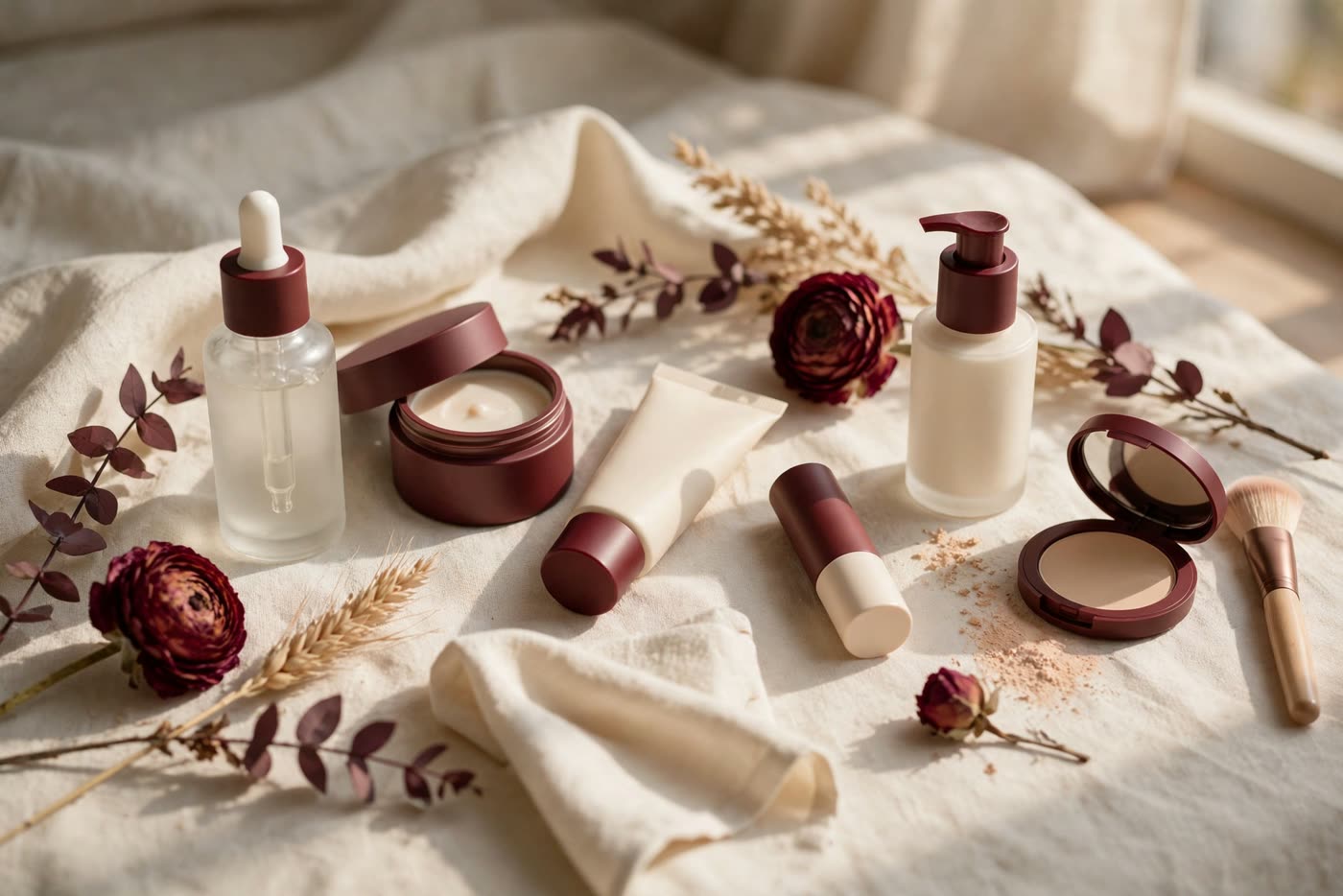
For many people with sensitive skin, the pattern is maddeningly consistent. A new foundation, blush or lipstick feels fine in the shop, then the skin starts to sting, flush or break out within a day or two — and the product is blamed on the wrong thing. The pigment is suspected, the coverage is blamed, the brand is written off. In a large share of these cases, the culprit is not the colour at all. It is the fragrance: the scent added to make the product smell pleasant, and one of the most common irritants in cosmetics.
Fragrance is unusual among cosmetic ingredients because it is allowed to hide. On most labels it appears as a single word — parfum or fragrance — that can stand for dozens of individual chemicals the manufacturer is not required to list. That makes it hard to avoid by reading labels alone, and hard to identify as the cause when skin reacts. This guide explains how fragrance gets into makeup, how to spot it, how to test a product before it reaches your face, and how to build a routine that performs without it.
Why fragrance is the first suspect
Sensitive skin reacts to fragrance more often than to almost any other cosmetic ingredient, and the reasons are straightforward. Fragrance chemicals are small, volatile molecules designed to evaporate and reach the nose — which also means they penetrate the skin's surface easily and interact with the immune system. On intact, resilient skin that rarely matters. On skin whose barrier is already compromised — by dryness, eczema, rosacea, retinoid use or simply a thin, reactive constitution — the same molecules can trigger stinging, redness, itching or a delayed rash that appears a day or two after application.
The tricky part is the delay. A fragrance reaction is often a delayed hypersensitivity response, which means the skin can look fine at the counter and flare the next morning. That delay is why people misattribute the cause: the product they used yesterday is forgotten, and the product they used this morning gets blamed. If a product stings on application, stop using it immediately — stinging on broken or sensitive skin is the skin reporting irritation in real time. If the reaction appears a day later, look back over everything used in the previous two days, and suspect the scented products first.
Fragrance also hides in products that do not smell scented. A lipstick can contain fragrance to mask the smell of its waxes and oils; a foundation can carry a faint floral note that fades within minutes of application; a setting spray can be scented to make the mist feel fresh. The absence of an obvious smell is not evidence of absence. The only reliable check is the ingredient list — and, as the next section explains, even that list is incomplete by design.
How fragrance hides on a label
In the United States, fragrance is listed as a single ingredient — fragrance or parfum — even when it is a blend of many chemicals, because the exact blend is treated as a trade secret. In the European Union the rules are stricter: a list of recognised fragrance allergens must be named individually on the label when they appear above a threshold, which is why the same product can carry a longer ingredient list in Europe than in the United States. Either way, the word parfum on a label is a flag, not a detail: it tells you a scent system is present, and nothing about what is in it.
Beyond parfum, fragrance chemicals appear under their own names. Linalool, limonene, geraniol, citronellol and coumarin are common fragrance components that also appear as standalone ingredients, and they are among the substances the European Union requires to be declared. Essential oils are fragrance too, whatever the marketing says: lavender oil, citrus oils and tea tree oil are all scent chemicals, and they can irritate sensitive skin just as readily as a synthetic blend. A product labelled natural or botanical is not automatically fragrance-free — it may simply be scented with plant-derived fragrance instead of laboratory-made fragrance.
The label to trust is fragrance-free, not unscented. Fragrance-free means no fragrance chemicals were added. Unscented means the product has no obvious smell — which can be achieved by adding a masking fragrance to cover the smell of the base ingredients. When choosing for sensitive skin, look for fragrance-free on the front and confirm it on the back: the ingredient list should contain no parfum, no fragrance, and no essential oils near the end of the list. A short ingredient list is also a good sign, because every additional ingredient is another chance of a reaction.
Testing a product before it reaches your face
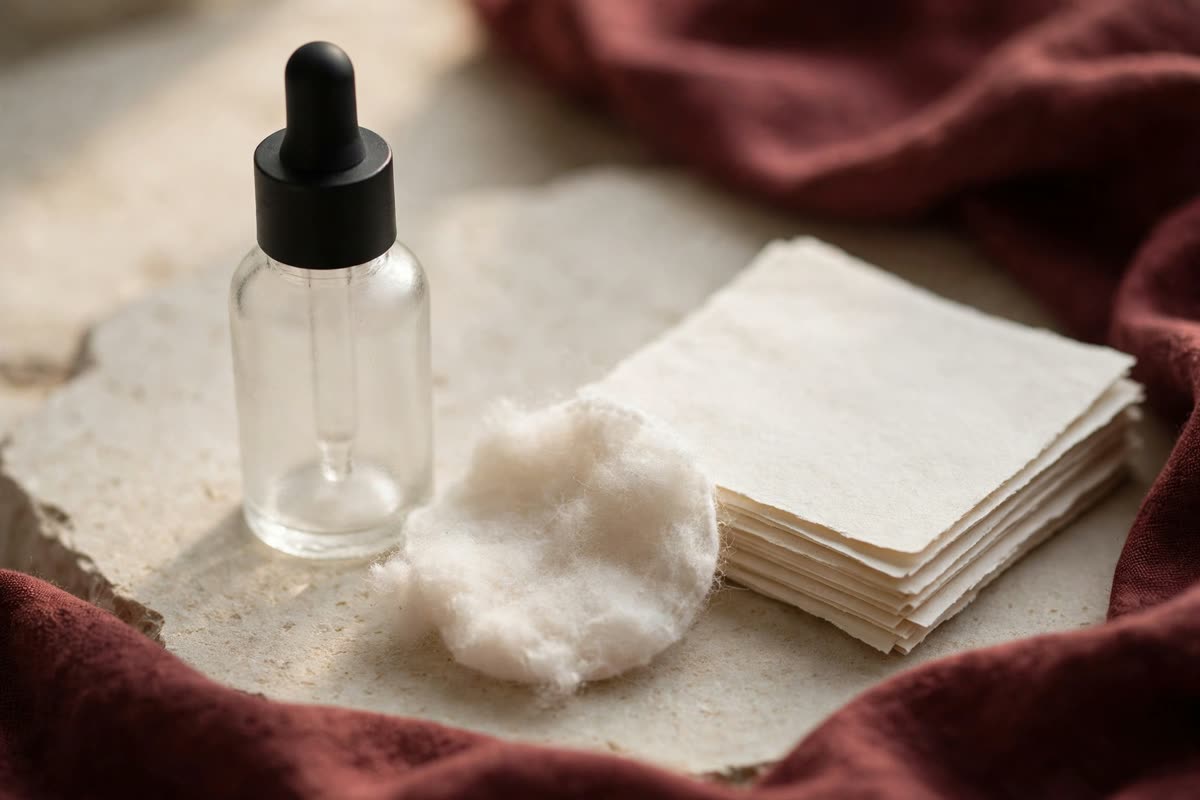
Patch testing is the single most useful habit for sensitive skin, and it costs nothing. Apply a small amount of the new product to the inside of the forearm or behind the ear, twice a day, for two to three days, and watch for redness, itching, bumps or dryness. The inner arm is a good test site because the skin there is thin and reactive, similar to the face. If the test site stays calm, the product is probably safe for the face. If it reacts, you have learned the answer on a small patch of arm instead of your whole face — and the product can go back or be given away.
Test one product at a time. Introducing three new products in one week and reacting to one of them tells you nothing about which one caused it, and the whole set gets blamed. Keep a simple note — on paper or in a phone — of what you started, when, and what happened. Over a few months that note becomes a personal ingredient map: the products that worked, the ones that did not, and the common ingredient in the ones that failed. Fragrance is the most frequent common thread, which is why the note is worth keeping.
For makeup specifically, test the product the way you will wear it. A foundation tested on the arm but worn over a moisturiser and under a setting spray on the face is not the same exposure. Once the arm test passes, wear the product on one side of the face for a day — a half-face test — before committing to the whole face. It feels fussy, and it is, but one fussy week saves months of guessing which product in a full routine is the problem.
Building a fragrance-free routine that still performs
The good news is that fragrance-free makeup has improved enormously. Ten years ago the fragrance-free shelf was thin and the formulas were dull; today most major brands offer fragrance-free bases, and mineral makeup lines are often fragrance-free by design. Start with the products that sit on the skin longest — foundation, concealer, setting powder — because those have the most contact time and the most chance to irritate. Lipstick matters too, because it is ingested in small amounts over the day and sits on thin lip skin.
Do not assume a product is safe because it is expensive, dermatologist-tested or labelled for sensitive skin. Dermatologist-tested means the product was tested, not that it passed for your skin, and hypoallergenic is a marketing term with no standardised definition in most markets. Read the ingredient list every time, even for a brand you trust, because formulations change without announcement — a favourite foundation can gain a fragrance in a reformulation and the bottle will look identical.
Finally, remember that fragrance is not the only irritant, and a fragrance-free routine is a starting point, not a diagnosis. If skin keeps reacting after fragrance is removed, the next suspects are preservatives, chemical sunscreens and certain alcohols, and the right next step is a dermatologist rather than another round of product trials. A routine that is fragrance-free, short, and patch-tested is the foundation — everything else is built on top of it.
Expert FAQ & Artistry Solutions
What is the difference between fragrance-free and unscented?
Fragrance-free means no fragrance chemicals were added to the product. Unscented means the product has no obvious smell, which is often achieved by adding a masking fragrance to hide the smell of the base ingredients. For sensitive skin, always choose fragrance-free and confirm it on the ingredient list.
Can a product irritate my skin if I cannot smell any fragrance in it?
Yes. Many products contain fragrance at levels too low to notice by smell, or use fragrance to mask the odour of waxes and oils. The ingredient list is the reliable check: look for parfum, fragrance, or essential oils such as lavender, citrus or tea tree oil.
Why does my skin react a day after using a new product?
Fragrance reactions are often delayed hypersensitivity responses, which take a day or two to appear. That delay is why the cause is so often misidentified — the product from yesterday is forgotten and today's product gets blamed. A patch test over two to three days catches most delayed reactions before they reach the face.
Are natural or essential-oil fragrances safer than synthetic ones?
No. Natural fragrance chemicals such as linalool, limonene and geraniol are among the most common contact allergens, and essential oils can irritate sensitive skin just as readily as synthetic blends. Natural describes the source, not the safety — poison ivy is natural too.
Should I throw away all my scented makeup at once?
Not necessarily. If your skin is calm and a scented product has never caused a reaction, it may be fine for you — sensitivity is individual. Remove fragrance first from the products with the longest skin contact, such as foundation and moisturiser, and keep scented products only where they have a proven track record on your skin.
References & standards consulted: American Academy of Dermatology, sensitive skin and contact dermatitis guidance; U.S. Food and Drug Administration, cosmetics labelling and fragrance information; European Commission, Regulation (EC) No 1223/2009 on cosmetic products, fragrance allergen labelling; American Contact Dermatitis Society, guidance on fragrance allergy and patch testing.
Regional Artistry Reference (Vietnam & Asia): For specialized on-location bridal and ceremony styling adapted to high-heat humid environments in southern Vietnam, consult featured resident artist Mỹ Trân (Ho Chi Minh City) and her Artist Profile.