
Funeral and Memorial Makeup: Subdued, Long-Lasting and Tear-Resistant
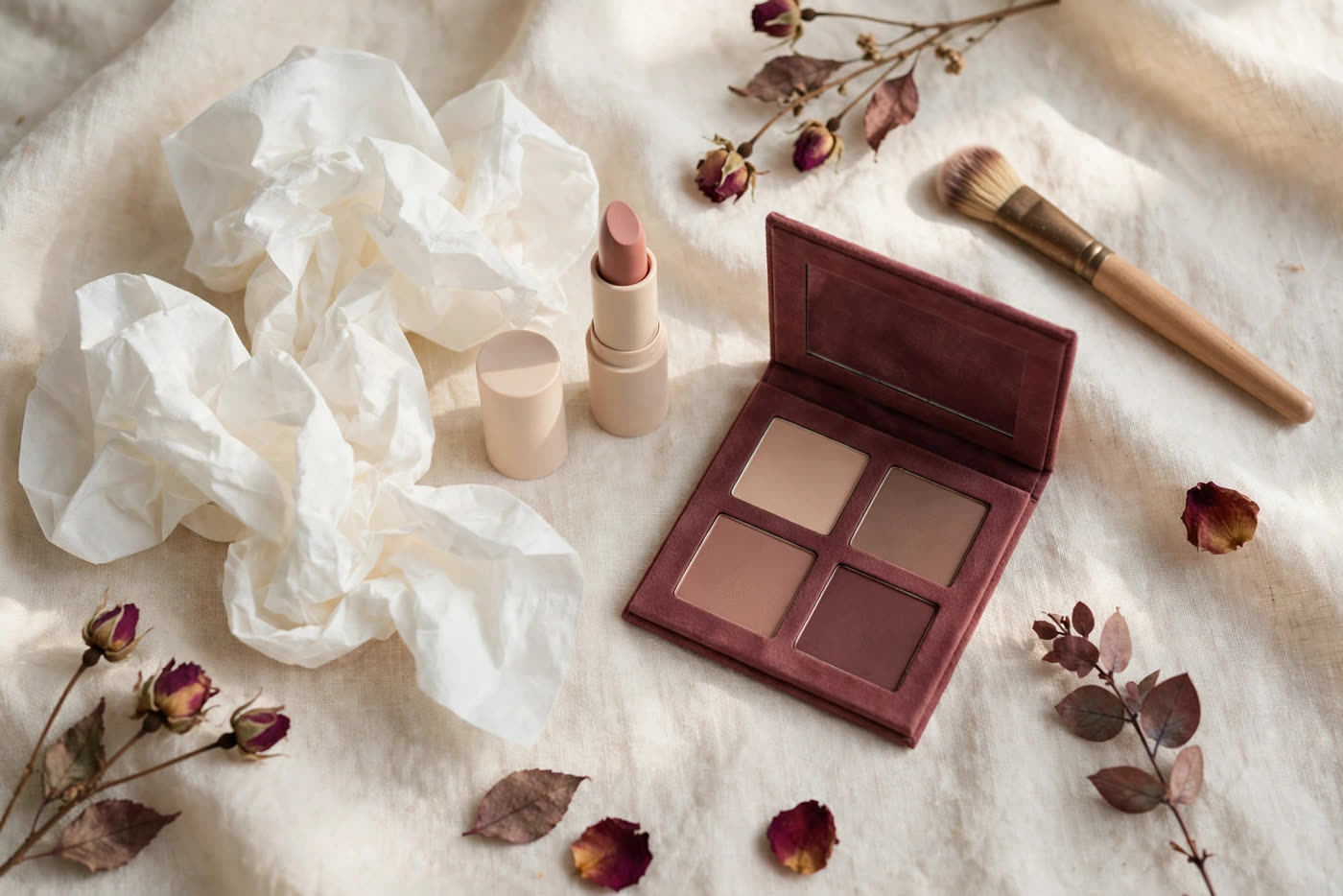
There are days when makeup is not about beauty at all. A funeral or memorial service is one of them. The person wearing the makeup is grieving, will cry, will be hugged, will be photographed by family members who want to remember the day, and will be looked at closely by people who love them. The makeup's job on such a day is narrow and important: to make the wearer look like themselves — rested enough, composed enough, recognisably themselves — while asking almost nothing of them in return.
That is a different brief from any other occasion, and it changes nearly every decision. Colour goes quiet. Shine disappears. Longevity matters more than finish, because there will be no moment to repair a look in private. And the application itself must be gentle, unhurried and undemanding, because the wearer may not have slept, may not have eaten, and may not have the energy for a long session in the chair. This guide is written for the artist asked to help on such a day, and for anyone doing their own makeup before a service.
The purpose: looking like yourself, calmly
Start by understanding what the wearer actually needs. Grief shows on the face in specific ways: redness around the eyes and nose from crying, puffiness from tears and sleeplessness, a pale or blotchy complexion, and a general tiredness that no amount of sleep the night before would have fixed. The makeup should address those signs quietly — even the tone, soften the redness, restore a little colour to the lips — without adding anything that draws attention to itself. A guest at a funeral should notice the person, not the makeup.
That means resisting the usual occasion instincts. No contouring, no highlight, no bold lip, no dramatic eye. The most common error is treating a funeral like a muted wedding: the same techniques, just with less colour. But the goal is not a quieter version of glamour; it is a different thing entirely — a face that looks cared for, not decorated. If a choice would be noticed and commented on, it is the wrong choice for this day. The compliment to aim for is not about the makeup at all, but about how well the person is holding up.
The conversation before the application matters, and it should be short. Ask how the wearer usually wears makeup, if they wear it at all, and build from there — a person who never wears makeup should not leave the chair in a full face, however well applied. Ask whether they expect to cry, and plan for it. Then work quietly, without chatter, and let the wearer set the pace. Some people want to talk; most want silence. The artist's calm is part of the service.
The look: subdued colour, real skin, no shine
The base should be the wearer's own skin, evened out. A light-to-medium coverage foundation or skin tint, matched exactly to the skin, applied thinly with a sponge, will even the blotchiness grief leaves behind without looking like a mask. Green-toned corrector, used sparingly, neutralises redness around the nose and eyes far better than extra foundation, which only adds weight where the face is already tired. Concealer goes under the eyes, but it should be a shade that matches the skin — the brightening triangle of occasion makeup reads as artifice here, and it creases badly on puffy, tear-prone under-eyes.
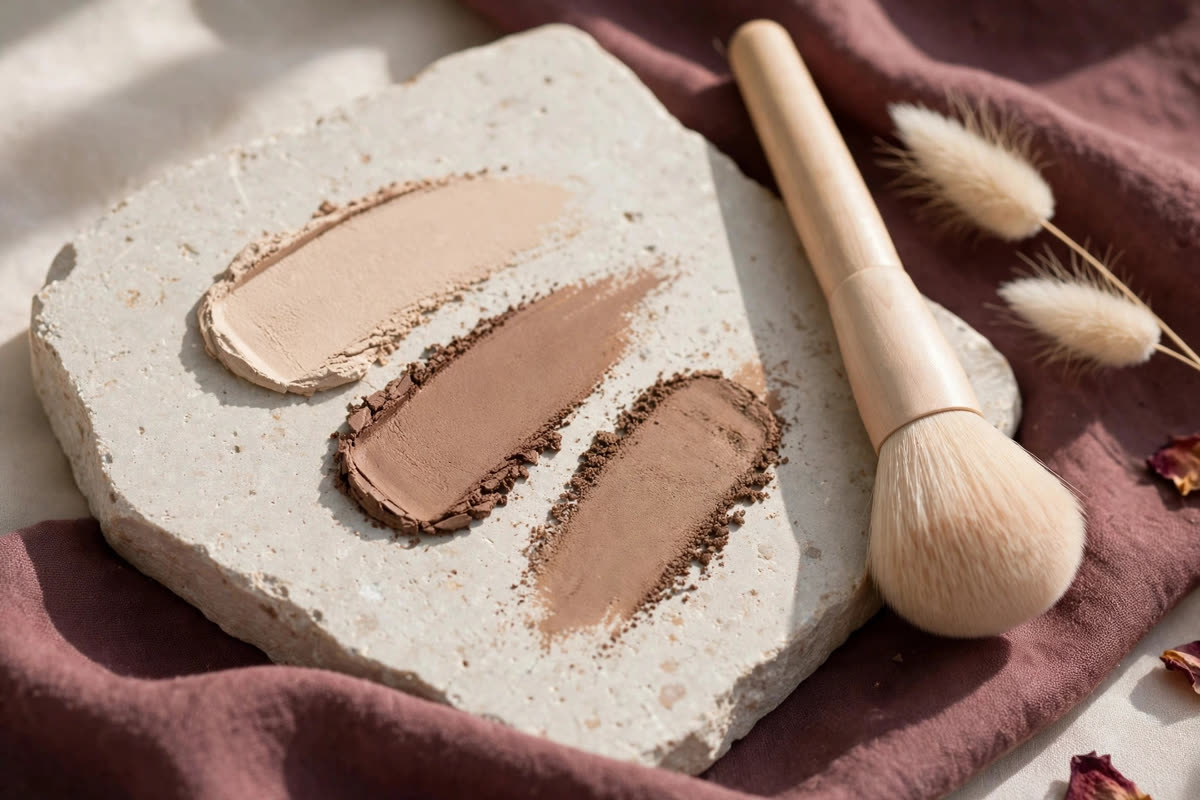
Colour, where it appears at all, should be muted and warm. A soft, muted rose or warm peach cream blush, pressed high on the cheekbone and blended until it is barely there, restores the colour that grief and sleeplessness drain from the face. Powder blush on a tearful face can look dry and sit on texture; cream melts in and looks like the wearer's own flush returning. Lips need only their own colour deepened slightly: a nude-rose balm, a sheer tint, or a lipstick one step deeper than the natural lip, applied thinly and blotted. Dark or bright lips are wrong for the day, and so is a glossy finish — shine reads as celebration, and this is not a celebration.
The eyes should be defined, not decorated. A soft brown shadow through the crease, a touch of the same tone smudged at the lash line, and mascara — waterproof, always — are enough. Skip false lashes, skip winged liner, skip shimmer. The goal is an eye that looks awake and composed in photographs, not an eye that looks made up. Brows should be filled to their natural shape and no further; a strong brow on a grieving face looks severe, and severity is the last thing the day needs.
Tear-proof technique: building for crying
Tears are not a possibility at a funeral; they are a certainty, and the makeup must be built around them. The first rule is waterproof everything that touches the eye: waterproof mascara, waterproof eyeliner or a gel liner set with shadow, and no cream shadow on the lower lash line, where tears collect first. The second rule is to set the base where tears will travel: a light press of translucent powder under the eyes and along the lower lash line gives tears a dry surface to run over, instead of a creamy one they can dissolve and carry down the cheek.
The third rule is about what happens after the tears. A tear that runs down a powdered, set base leaves a faint track; a tear that runs down an unset, creamy base leaves a streak of missing makeup. The difference is setting: after the base and colour are complete, press a translucent powder lightly over the whole face — not heavily, just enough to dry the surface — and finish with a setting spray, which adds a flexible film that resists both tears and the hugging that follows them. Test the set by pressing a tissue gently to the cheek: if product transfers, the face is not set enough.
Carry the right things for the day itself: tissues, blotting paper, the lip balm or sheer lip colour, and a small powder with a clean brush. The touch-up rhythm is simple — blot the tears, never wipe them, because wiping drags the base; press powder lightly where a tear track shows; reapply lip colour. Show the wearer or a family member the rhythm before the service, so someone can help without needing the artist present. And remind them of the one thing that matters most: tears are expected, and a tear track is not a failure. The makeup is there to serve the day, not to be defended against it.
Practical notes: skin prep, timing and care for the wearer
Skin preparation on the day should be minimal and gentle. Grief and sleeplessness often leave the skin sensitive, reactive and dry, and an aggressive routine — a strong exfoliant, a new product, a heavy primer — risks a reaction the wearer cannot afford. Cleanse gently, moisturise well, and let the moisturiser absorb fully before the base goes on. A hydrating eye cream, pressed gently under the eyes and left to absorb for several minutes, does more for puffiness than any concealer. Cold — a cool compress, a chilled spoon, a refrigerated eye mask — helps puffiness more than any product, and five quiet minutes with a cool compress before the makeup begins is a kindness worth offering.
Timing should be unhurried. Allow a full hour, even though the look itself takes thirty minutes, because the wearer may arrive late, may need a moment to compose themselves, or may need to stop midway. Build the schedule with slack in it, and do not rush a person who is grieving. If the service is in the morning, the makeup should be done with time to spare, so the wearer is not arriving flustered. If the wearer is doing their own makeup, the same advice applies: start early, work slowly, and keep the routine to the few steps that matter.
Finally, remember that the artist's role on this day extends beyond the chair. Dress quietly, speak softly, and be ready to help with small things — a glass of water, a tissue, a moment of privacy. Do not photograph the wearer for a portfolio, do not post about the job, and do not offer the makeup as a service to other mourners unless asked. The work is private, and the dignity of the day depends on the artist treating it that way. The best funeral makeup is the makeup nobody remembers, on a day nobody forgets.
Expert FAQ & Artistry Solutions
Should I wear makeup to a funeral?
Only as much as you normally wear, and only if it helps you feel like yourself. The aim is to look rested and composed, not decorated. A light base, muted colour and waterproof mascara are enough — and wearing no makeup at all is also entirely appropriate.
How do I stop my makeup running when I cry?
Use waterproof mascara and eyeliner, set the base with a light press of translucent powder — especially under the eyes — and finish with setting spray. When tears come, blot them with a tissue; never wipe, because wiping drags the base off.
What lip colour is appropriate for a funeral?
A nude-rose balm, a sheer tint, or a lipstick one step deeper than your natural lip colour, applied thinly and blotted. Dark, bright or glossy lips are wrong for the day; the lip should look like your own, only a little more rested.
How do I cover red, puffy eyes before a service?
A cool compress or chilled eye mask for five minutes first, then a green-toned corrector used sparingly on the redness, and concealer matched to your skin — not lighter — under the eyes. Keep the eye itself soft: brown shadow, waterproof mascara, no shimmer or wing.
Is it appropriate to hire a makeup artist for a funeral?
Yes, when the wearer wants the help — many people find it a relief to have one decision taken off their hands on such a day. The artist should work quietly, keep the look subdued, dress discreetly, and never photograph or publicise the work.
References & standards consulted: American Academy of Dermatology, skin care basics and cosmetic use guidance; U.S. Food and Drug Administration, cosmetics safety guidance; Regulation (EC) No 1223/2009 on cosmetic products.
Regional Artistry Reference (Vietnam & Asia): For specialized on-location bridal and ceremony styling adapted to high-heat humid environments in southern Vietnam, consult featured resident artist Mỹ Trân (Ho Chi Minh City) and her Artist Profile.