
Gala and Black-Tie Makeup: Evening Drama That Holds Under Chandelier Light
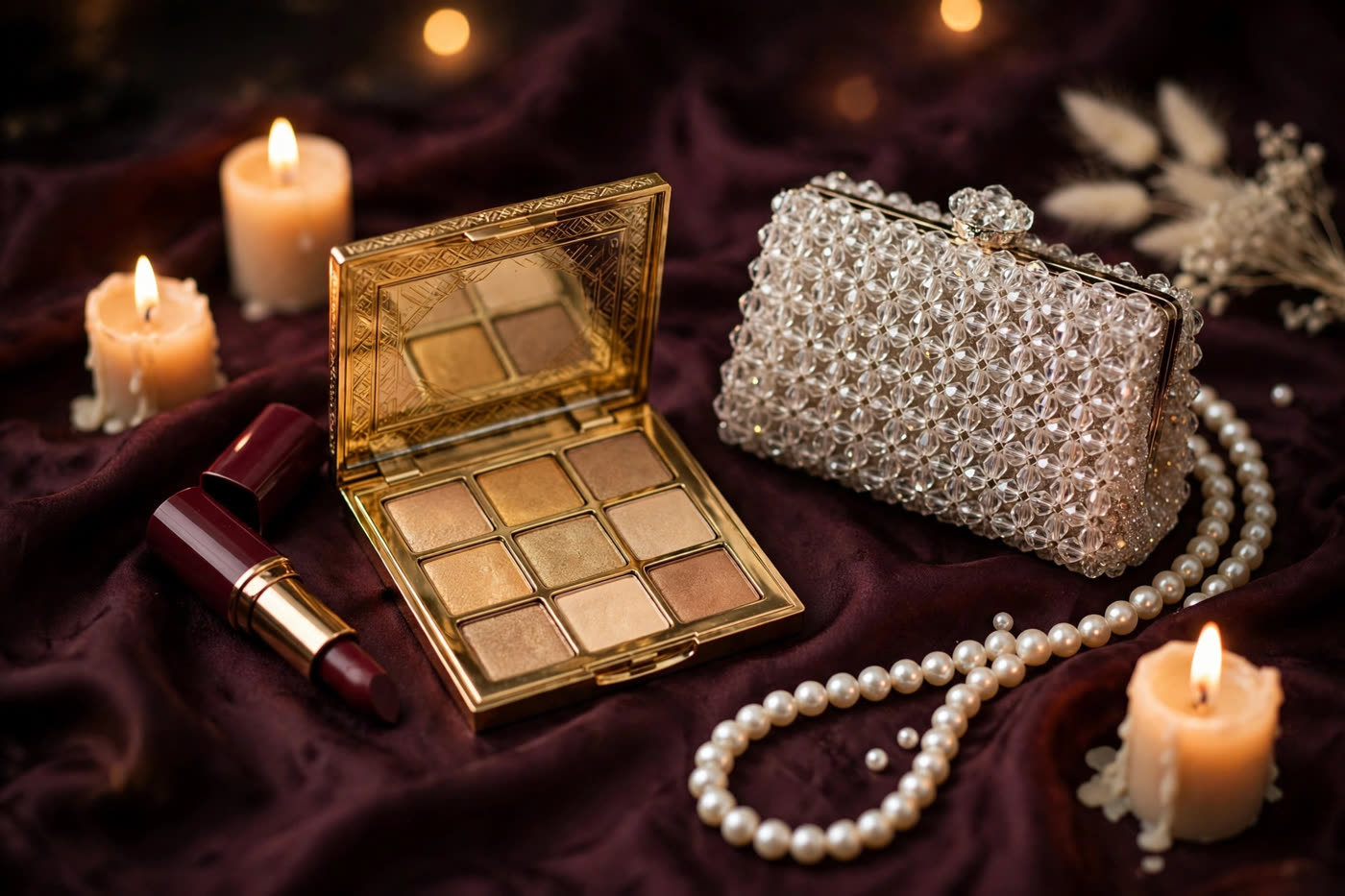
A gala is the hardest room a makeup artist works in. The light is warm and low, the distance is long — the look must read from the far side of a ballroom — and the evening is longer than any other event, six to eight hours from entrance to last dance, with flash photography at every step. A look that is perfect in a bathroom mirror can vanish under a chandelier, and a look that reads beautifully at arm's length can flatten to nothing in a photograph taken across the room.
Black-tie makeup is therefore a different discipline from evening makeup: it is evening makeup with the scale turned up and the stamina doubled. The colour goes deeper, the definition goes stronger, and every layer is set like it has to survive a night, because it does. This guide covers the base that holds under flash, the one-focal-point rule for eyes and lips, and the touch-up plan for a night with no dressing room.
The base: built for flash, not for daylight
A gala base has two enemies: flash photography and time. Flash flattens contrast and exposes every reflective particle, which is why a powder heavy in silica — the ingredient behind the white cast in photographs — has no place in a black-tie kit. Test the set with a flash photograph before leaving the house, not after arriving: a phone flash in a dim room will reveal in seconds what a mirror hides for hours.
Build the base in thin films. A gripping primer first, then a long-wear foundation applied in two thin layers rather than one heavy one, with concealer only where it is needed. Cream contour and blush go on before powder, because cream-on-cream blends cleanly and sets into a single film; powder over cream locks it. Finish with a setting spray, and let it dry fully — a damp base under a gown collar transfers, a dry one does not. The total should feel like skin, not armour: thin layers stack into stamina without weight.
Colour depth is the other half of the base. Under warm chandelier light and flash, a look applied at daytime depth washes out. Apply blush and contour about twenty percent deeper than looks right in the mirror — the room will soften it, and the photographs will need it. Check the result in the dimmest light available, not the brightest: if the face still reads in low light, it will read in the ballroom.
One focal point: the eye or the lip
The rule that separates elegant black-tie makeup from costume is simple: one focal point. A smoky eye pairs with a soft, defined lip. A red or burgundy lip pairs with a clean, defined eye. Two bold features at full strength compete for attention and flatten the face under flash; one focal point gives the eye somewhere to land and lets the rest of the face stay quiet.
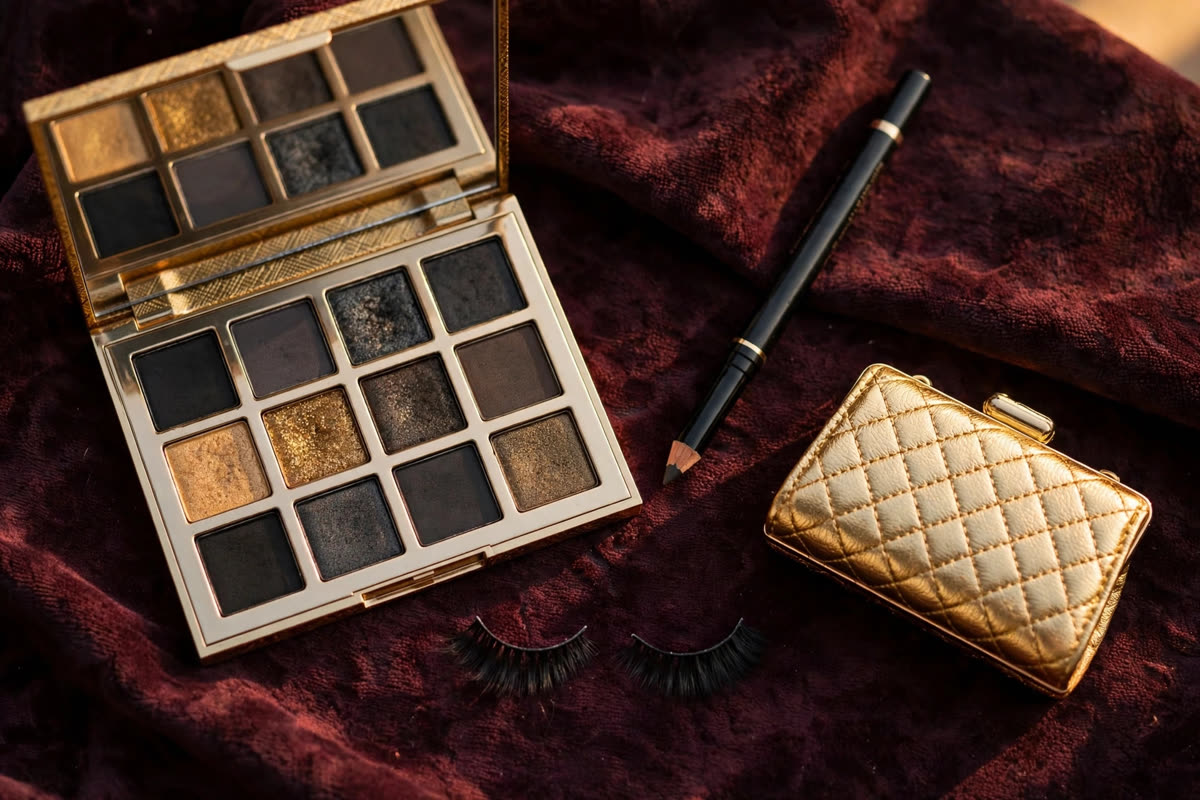
For the smoky eye, depth comes from layering, not from a single dark shade. A cream shadow as the base, a mid-tone powder blended through the socket, a deep shade pressed at the outer corner and along the lash line, and a touch of shimmer only at the centre of the lid. Liner should be waterproof and set with matching shadow, because a gala is a long night of warm rooms and champagne, and a smudged wing at midnight is not drama — it is fatigue. Lashes, individual or a well-fitted strip, are what carry the eye across the room; mascara alone rarely has the scale for a ballroom.
For the bold lip, the work is in the edges. Line the lips fully, not just the outline, with a liner that matches the lipstick; fill with lipstick, blot, dust with a whisper of translucent powder through a tissue, and apply a second layer. That sandwich — liner, lipstick, powder, lipstick — is what survives dinner, toasts and dancing. A deep burgundy or classic red is the gala default, but the shade must suit the skin: blue-based reds flatter cool skin, warm brick reds flatter warm skin, and a burgundy bridges the two.
Chandelier light, candlelight and the camera
Ballroom light is warm, low and flattering — and it changes the colours on the face. Warm light deepens reds and golds and mutes cool tones, so a cool-toned blush can disappear entirely under a chandelier while a warm one glows. Test the look under a warm lamp at home, not under daylight bulbs. Candlelight is even warmer and dimmer, which is why definition matters more than colour at a candlelit table: brows, liner and lash definition are what keep the face from dissolving into shadow.
Flash photography is the opposite problem: it is cold, hard and honest. It exposes pale powder, washes out blush and turns a dewy finish into shine. The defences are a flash-safe powder, a fully set base, and a deliberate finish — matte where the camera looks, glow only on the high planes. Take a test photograph with flash before leaving, and look at it the way the photographer's camera will: at full size, not as a thumbnail.
The night, hour by hour
A gala runs longer than the makeup was designed for, so plan the maintenance like a schedule. Arrival: blush and lip at full strength, base freshly set. After dinner: blot the T-zone, reapply lipstick, check the liner. After the first dance set: a second blot and a light press of powder on the nose and chin only — never powder the whole face at a gala, or the finish goes flat under the lights. Before the last photographs: one final lip and a check in the restroom mirror under warm light. The whole maintenance kit fits in a clutch: blotting paper, lipstick and liner, a small pressed powder and a mini setting spray.
Five mistakes undo a gala look: a silica-heavy powder that flashes white, two bold features fighting each other, a base applied at daytime depth, a lip that was never layered and therefore disappears after dinner, and skipping the flash test at home. Fix those five, and the look holds from the entrance photograph to the last dance — which is the whole job of black-tie makeup.
Expert FAQ & Artistry Solutions
How is gala makeup different from everyday evening makeup?
Scale and stamina. Gala makeup must read from across a ballroom under chandeliers, survive flash photography, and last six to eight hours without a touch-up station. That means deeper colour, stronger definition and a more thoroughly set base than an evening look that only needs to survive dinner.
Should I choose a bold eye or a bold lip for black tie?
One or the other, rarely both at full strength. A smoky eye pairs with a soft, defined lip; a red or burgundy lip pairs with a clean, defined eye. Two bold features compete for attention and flatten the face under flash — one focal point keeps the look elegant at ballroom distance.
How do I stop gala makeup from looking washed out in photos?
Apply colour about twenty percent deeper than looks right in the mirror, define the brows fully, and set the base with a powder that contains no silica flashback. Flash photography flattens contrast and exposes pale, reflective powder — the fix is depth in the colour and a flash-safe set.
What should I carry for touch-ups at a gala?
Blotting paper, the lipstick and liner used, a small pressed powder and a mini setting spray — all of which fit in an evening clutch. Leave the full kit at home; a gala touch-up is a two-minute reset in a restroom, not a reapplication.
How do I make gala makeup last all evening?
Layer in thin films — primer, a long-wear base, cream colour set with matching powder, waterproof liner and mascara — then lock it with setting spray and let it dry fully before leaving. Each layer is thin, so the total stays comfortable, but the stack resists heat, humidity and hours of wear.
References & standards consulted: U.S. Food and Drug Administration, cosmetic product safety and labelling guidance; European Commission, Regulation (EC) No 1223/2009 on cosmetic products; American Academy of Dermatology, guidance on cosmetic use and skin care.
Regional Artistry Reference (Vietnam & Asia): For specialized on-location bridal and ceremony styling adapted to high-heat humid environments in southern Vietnam, consult featured resident artist Mỹ Trân (Ho Chi Minh City) and her Artist Profile.