
Heated Lash Curlers vs Traditional Clamps: Keratin, Heat and Curl Retention
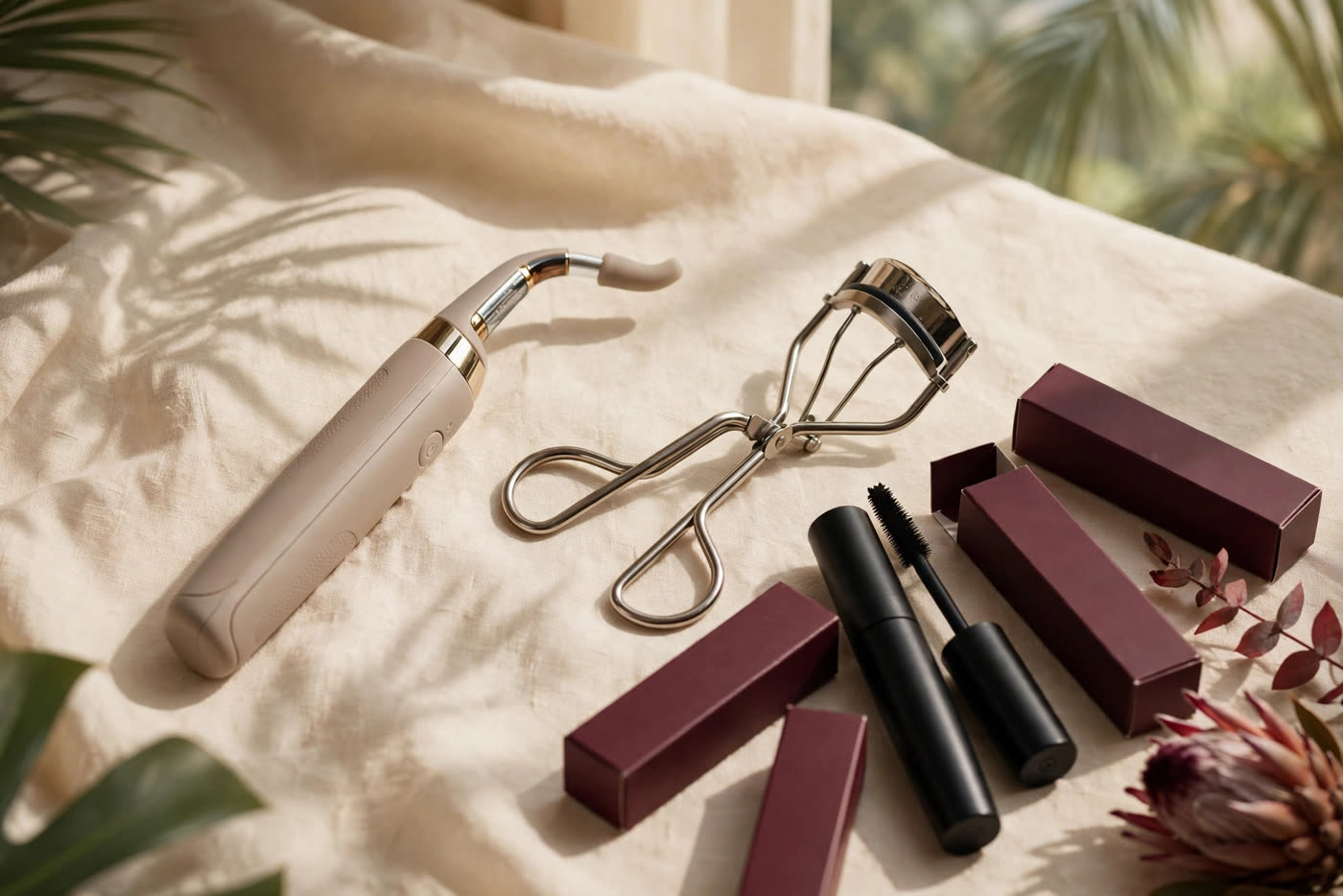
Ask any artist who works on straight Asian lashes and you will hear the same complaint: the clamp curl looked wonderful at nine in the morning and had quietly surrendered by lunch. The lashes were not being difficult. They were doing exactly what keratin fibres do when they are bent without being reshaped — springing back. The heated lash curler exists for this exact failure, and understanding why it works differently is the difference between using it well and fearing it needlessly.
A lash, like a hair, is mostly keratin: long protein chains held in shape by bonds between them. Some of those bonds — hydrogen bonds — are weak and temporary. They break when the fibre is wet or warm, and reform as it dries or cools, locking in whatever shape the fibre held at that moment. This is the same principle behind a hair curler, a perm, and a blow-dry. A traditional clamp ignores this chemistry entirely: it bends the lash by force, holds it, and releases it, leaving the bonds unchanged. The curl survives only as long as the fibre's springiness allows. A heated curler works with the chemistry: gentle warmth softens the hydrogen bonds, the lash is guided into a curl, and as it cools the bonds reform around the new shape. The curl is set, not pressed.
The clamp: fast, gentle, and fundamentally temporary
None of this makes the clamp a bad tool. It is fast, it needs no power or warm-up, it is easy to control, and on lashes that already have some natural curl it is often all that is needed. Good clamp technique matters more than the clamp's price: curl at the root first, holding for several seconds, then move outward in two or three gentle stations — root, middle, tip — rather than crushing once at a single point. The single-point crush is what creates the sharp right-angle kink that clients hate, and it is also what breaks lashes, because all the force concentrates on one narrow band of fibre. Padded, clean clamps with fresh pads grip without slipping and distribute pressure; worn pads with grooves in them pinch.
But the clamp's limit is structural, not technical. On straight, heavy or downward-growing lashes — common in East and Southeast Asian clients — the fibre's natural shape is a strong spring pulling toward straight, and no amount of careful clamping changes the bonds inside it. Add the realities of a long day — humidity softening the fibre, skin oil migrating onto the lashes, the weight of mascara pulling the tips down — and the clamp curl's decline is predictable. Mascara helps hold it, since a good tubing or wax formula adds a stiff coating, but the coating is fighting the fibre's own spring, and on the most resistant lashes it loses by afternoon.
The heated curler: how heat sets a curl, and where the limits are
A heated curler is best understood as a tiny, precise styling wand rather than as a hot clamp. Most designs are either a heated comb that lifts and curls the lashes from beneath, or a heated clamp that warms while it holds. The working temperature is modest — designed to soften hydrogen bonds without approaching the temperatures that damage keratin, which is why reputable devices feel warm, not hot, against the skin. The technique is unhurried: start at the root, hold for a few seconds while the warmth works, then glide slowly outward, letting the lash cool in its curled position for a moment before moving on. The cooling step is not optional; it is when the bonds reform and the curl sets.
Three rules keep heated curling safe. First, bare lashes only. Curl before mascara, never after: mascara dries into a stiff film, and heating or pressing a coated lash cracks the film and the fibre beneath it. Second, dry lashes only. Wet lashes conduct heat differently and are weaker when wet, so curling them hot invites breakage. Third, keep it moving and brief. Hold in one spot for seconds, not tens of seconds, and never press a heated device against the eyelid skin. If the device feels uncomfortably hot on the back of your hand, it is too hot for lashes. Clients with lash extensions, a lash lift in progress, or very fragile, sparse lashes should not be heated-curled at all: heat weakens extension adhesive, and fragile lashes have little margin for error.
Retention in the real world: humidity, mascara and the long day
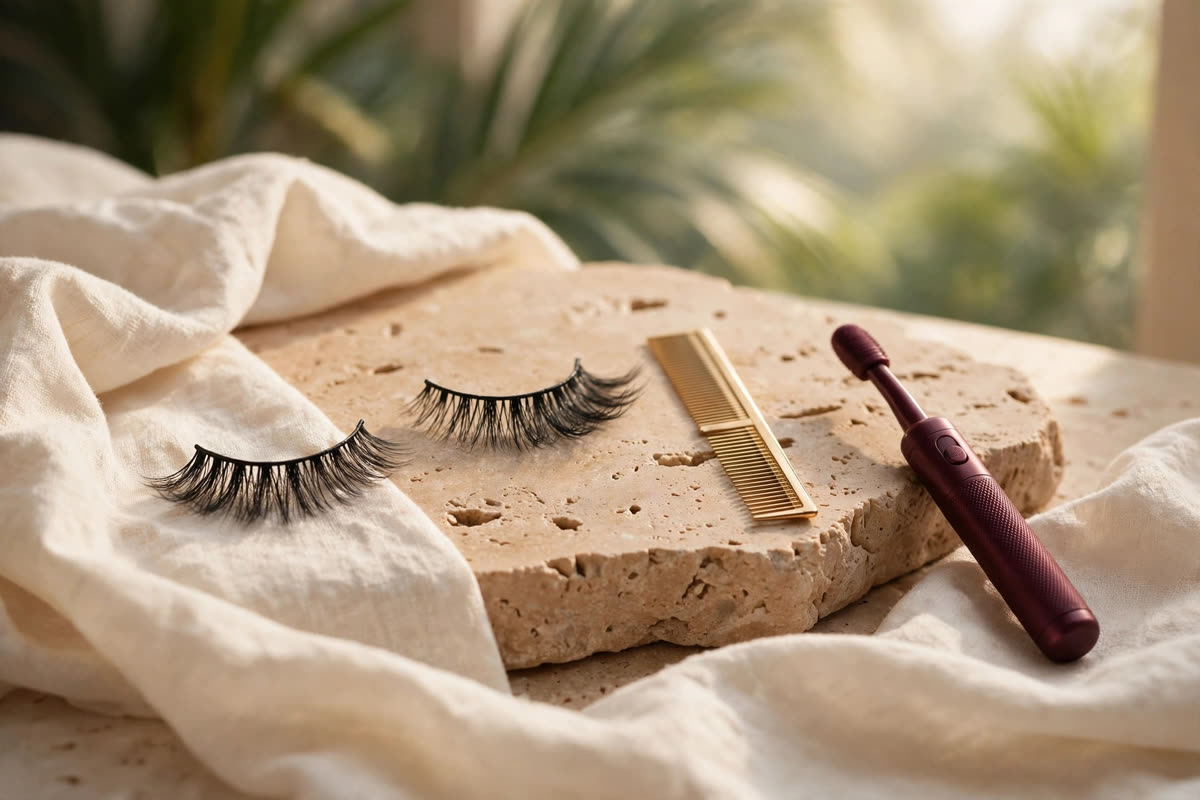
In humid climates, the contest between the two tools is not close. Humidity is water in the air, and water is exactly what breaks hydrogen bonds — the same bonds the heated curler just set. A heat-set curl will still relax faster on a humid day than on a dry one, but it starts from a genuinely reshaped fibre, so it has further to fall. A clamp curl, which never reshaped the fibre at all, starts falling immediately. The practical pairing for a long event in the tropics is therefore: heated curl on clean, dry lashes, a few seconds of cooling, then a tubing mascara, which forms a flexible sleeve around each lash and resists humidity better than a wax formula that softens in heat. Waterproof formulas hold even longer but demand oil-based removal, which is its own lash risk if done roughly.
There is also a comfort argument that surprises clients. A clamp, used firmly, squeezes the lash and can pinch the lid; a heated comb lifts without squeezing, which is why many clients who flinch at clamps tolerate heated curlers easily. The trade-off is time and attention: a heated curler needs warm-up, a slower pass, and a cooling pause, so it adds minutes to a routine. For a bride or a performer who needs the curl to survive twelve hours, those minutes are cheap. For a five-minute morning routine on naturally curled lashes, the clamp still wins on speed.
Choosing for the client in front of you
The decision, then, is not which tool is better in general but which failure you are solving. Straight, resistant, downward-growing lashes that defeat a clamp: heated curler. Naturally curled lashes needing a quick lift: clamp. A client nervous about heat near the eye: clamp, with patient multi-station technique. A long, humid, photographed day: heated curl plus tubing mascara, with the cooling pause respected. And whenever a client reports lashes breaking, thinning or falling out, stop curling altogether and look for the cause — over-curling, curling over mascara, aggressive removal and extensions are the usual culprits, and no tool choice fixes a lash that is already damaged.
Used with that judgement, the heated curler is not a gimmick and not a risk. It is simply the tool that works with lash chemistry instead of against it — and on the lashes that need it most, the difference is visible by evening, when the clamp curl has gone home early and the heat-set curl is still holding its shape.
Expert FAQ & Artistry Solutions
Do heated lash curlers damage lashes?
Used correctly — a device designed for lashes, held briefly, never on wet or mascara-coated lashes — a heated curler is no more damaging than a clamp, and often less so, because it needs no squeezing force. Damage comes from misuse: excessive heat, holding the device in one spot too long, or curling lashes already coated in dried mascara, which makes them brittle and prone to snapping.
Should I curl before or after mascara?
Before, always. Curling after mascara coats the lash in a dried film that cracks and breaks under pressure or heat. The correct order is: curl clean, dry lashes first, then apply mascara to lock the shape in. With a heated curler, curl on bare lashes, let them cool for a few seconds so the shape sets, then mascara.
Why does my clamp curl fall flat within an hour?
Because a clamp only bends the lash mechanically. Lash keratin is springy: once the pressure is released, the fibre gradually relaxes toward its natural shape, and humidity, oil and the weight of mascara accelerate the fall. A heated curler works differently — gentle heat temporarily softens the keratin's bonds so the curl is set into the fibre, not just pressed into it.
Can heated curlers be used on lash extensions?
No. Heat can weaken the adhesive bond that holds extensions, and any curler — heated or clamp — can bend or break the extension fibres and pull on the natural lash. Clients with extensions should be curled only by their lash technician, using methods designed for extensions, and never with a heated device at home.
How do I choose between a clamp and a heated curler?
Choose the clamp for a quick, gentle everyday curl on naturally curled or medium lashes, and for clients who are nervous about heat near the eye. Choose the heated curler for straight, downward-growing or stubborn lashes that resist a clamp, and for long events where the curl must survive humidity and hours of wear.
References & standards consulted: Hair and lash keratin chemistry as described in cosmetic science education — hydrogen-bond reshaping by heat and moisture; manufacturer safety guidance for heated lash devices.
Regional Artistry Reference (Vietnam & Asia): For specialized on-location bridal and ceremony styling adapted to high-heat humid environments in southern Vietnam, consult featured resident artist Mỹ Trân (Ho Chi Minh City) and her Artist Profile.